The proportion of U.S. veterans reporting suicidal thoughts rose from 9% in 2019–20 to 13.4% in the 2025–26 survey, while overall rates of suicide planning and attempts remained largely unchanged. Younger veterans (ages 18–34), women, those experiencing homelessness and individuals with health problems were at higher risk. Fewer than 37% of veterans with recent suicidal thoughts were in mental health treatment; VA users were more likely to have received care. Researchers call for expanded outreach and targeted prevention.
Suicidal Thoughts Among U.S. Veterans Rise Nearly 50% in Five Years; Attempts Remain Stable
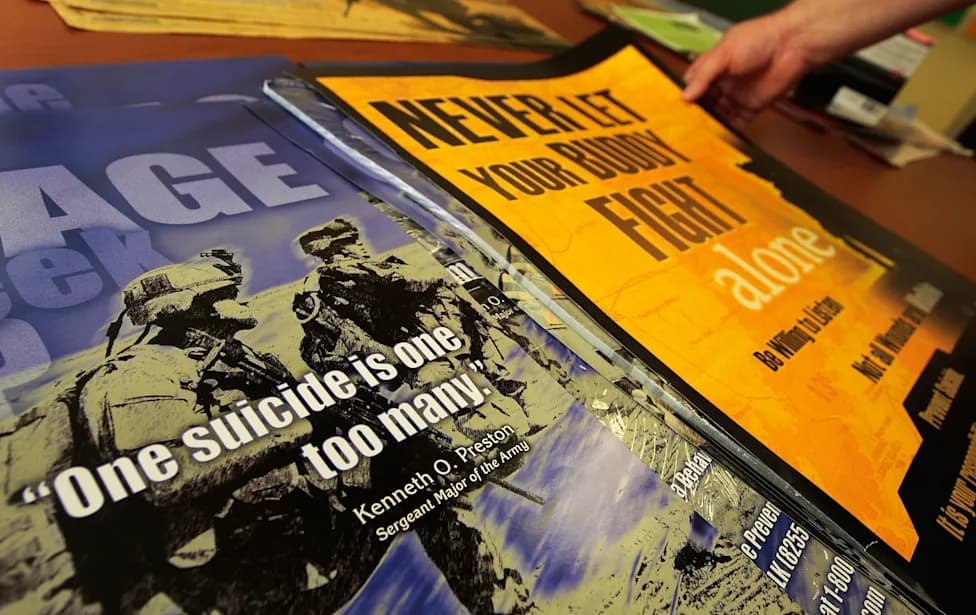
Posters raising awareness about suicide are seen in the office of the Suicide Prevention Program in Fort Riley, Kansas. (Chris Hondros/Getty Images)
Editor's note: This report contains discussion of suicide. Troops, veterans and family members experiencing suicidal thoughts can call the 24-hour Suicide & Crisis Lifeline at 988, dial 1, text 838255, or visit VeteransCrisisLine.net.
Suicidal thoughts among U.S. veterans have increased substantially over the past five years, even as rates of suicide planning and attempts remained largely unchanged overall, according to a new analysis of a nationally representative survey of 2,636 veterans.
Study Findings
Researchers from the VA National Center for PTSD and Yale School of Medicine analyzed data from the 2025–26 National Health and Resilience in Veterans Study and report that 13.4% of respondents said they experienced suicidal thoughts in the prior two weeks, up from 9% in the 2019–20 survey. The paper, published July 20 in JAMA Network Open, found no overall rise in planning or attempts across the entire veteran population during the same interval.
Who Is Most Affected
Certain groups showed higher rates of ideation, planning and attempts over the five-year span. Younger veterans (ages 18–34) and women were particularly affected; the survey also highlighted elevated risk among veterans experiencing homelessness or significant health problems. The authors note that post-9/11 veterans may face higher risk in part because of elevated trauma exposure during deployments to Iraq and Afghanistan.
Mental Health Care and the VA's Role
The study found that veterans who use the VA for primary care were twice as likely to have ever received mental health treatment, and more than half of VA users were actively enrolled in mental health care. Despite this, fewer than 37% of veterans reporting suicidal thoughts in the prior two weeks were receiving mental health treatment at the time of the survey.
"The veteran population has become younger, and there have been increases in the proportion of women veterans and shifts in its racial and ethnic composition... making it essential to monitor changes in suicidal thoughts and behaviors," said Ian Fischer, the study's lead author.
Risk Factors and Limitations
The study identified major depression, alcohol misuse and adverse childhood experiences as key risk factors for suicide attempts. PTSD, major depressive disorder and adverse childhood experiences were associated with suicidal thoughts and planning. The authors caution that the findings rely on self-reported data, which may undercount suicidality if respondents were reluctant to disclose it. The surveyed sample excluded incarcerated or institutionalized veterans and some other subgroups, so it may not fully represent the entire U.S. veteran population.
Estimated Scope
Using survey weights and population estimates, the researchers projected that roughly 2.3–2.4 million of the nation’s ~16 million veterans experienced suicidal thoughts in the measured period. They estimated about 1.4 million had planned suicide at some point and approximately 830,000 had attempted suicide during their lifetimes.
Recommendations
The authors emphasize expanding outreach, reducing barriers to care across VA and community health systems, and targeting prevention efforts toward vulnerable subpopulations. "Many veterans with recent suicidal thoughts are still not engaged in treatment," said coauthor Brandon Nichter, underscoring the need for continued efforts to connect at-risk veterans with services.
If you or someone you know is in crisis: Call the 24-hour Suicide & Crisis Lifeline at 988, dial 1, text 838255, or visit VeteransCrisisLine.net for confidential support.
Help us improve.