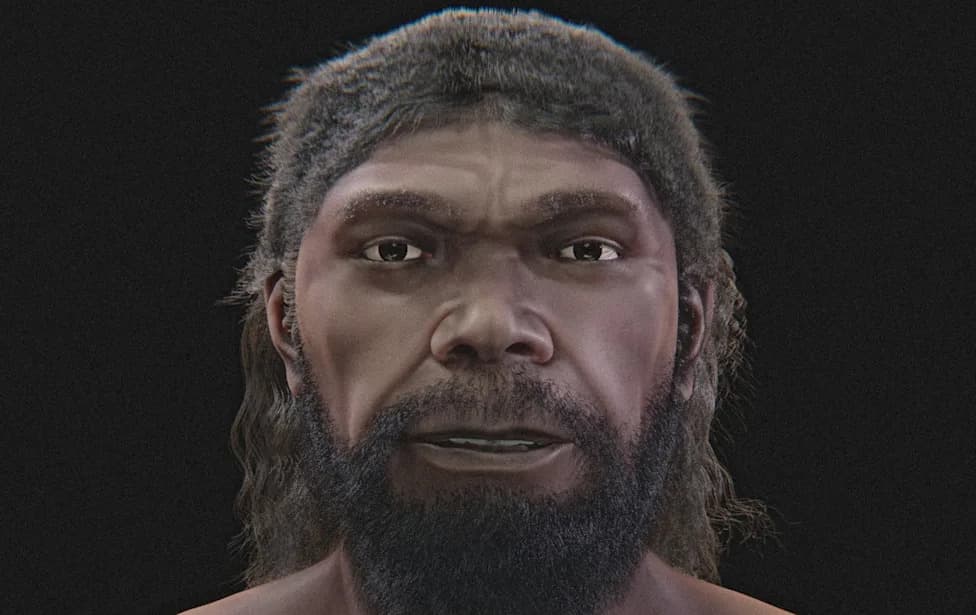
Footprints preserved at the GaJi10 site on Lake Turkana date to about 1.43 million years ago and are attributed to Paranthropus boisei. Researchers cataloged 21 prints from eight individuals and found a nearby trackway with both P. boisei and Homo erectus prints, showing they shared the same habitat. Measurements indicate P. boisei may have reached heights near 6 feet and weights around 165 pounds, and one track sequence suggests a group of mostly adult males walking together without females or juveniles, implying complex social behavior.
1.4-Million-Year-Old Footprints Suggest Paranthropus boisei Traveled in Male-Only Groups
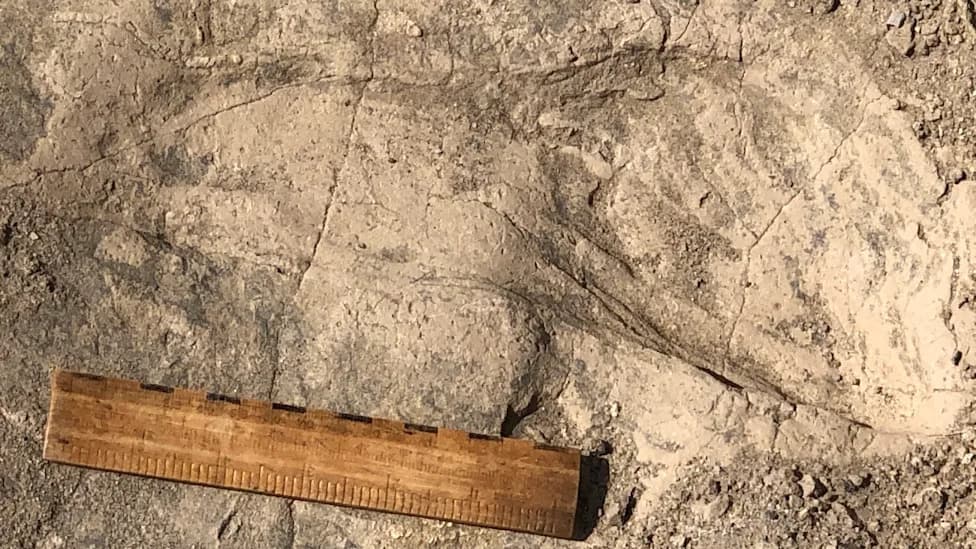
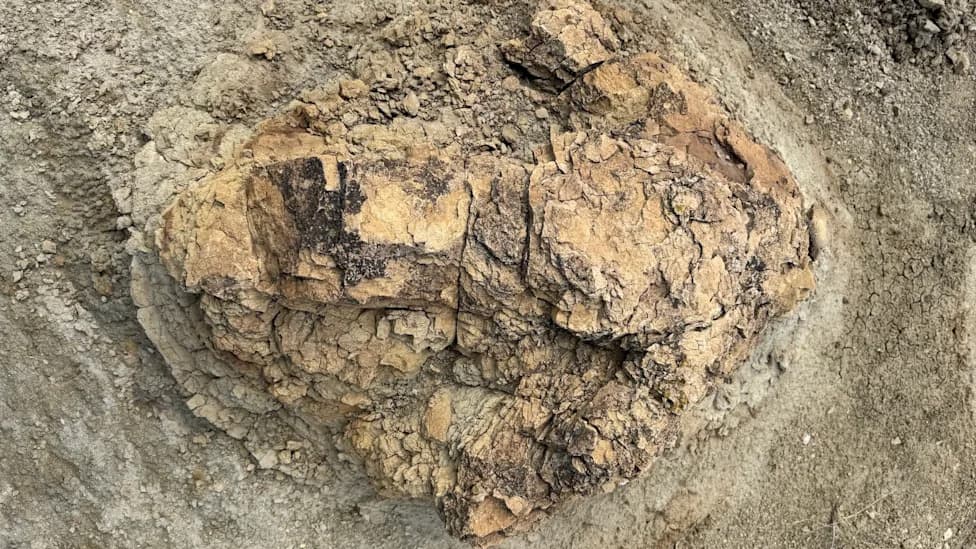
One of the larger hominin footprints with a 6" ruler for scale. The tracks were made in soft mud and then filled in with sand by gentle shorelinecurrents, preserving the impressions.
A set of footprints preserved on the shores of Lake Turkana in northern Kenya offers a rare, moment-in-time glimpse into the lives of an extinct hominin. The impressions have been attributed to the robust hominin Paranthropus boisei and are described in a new paper in the Proceedings of the National Academy of Sciences.
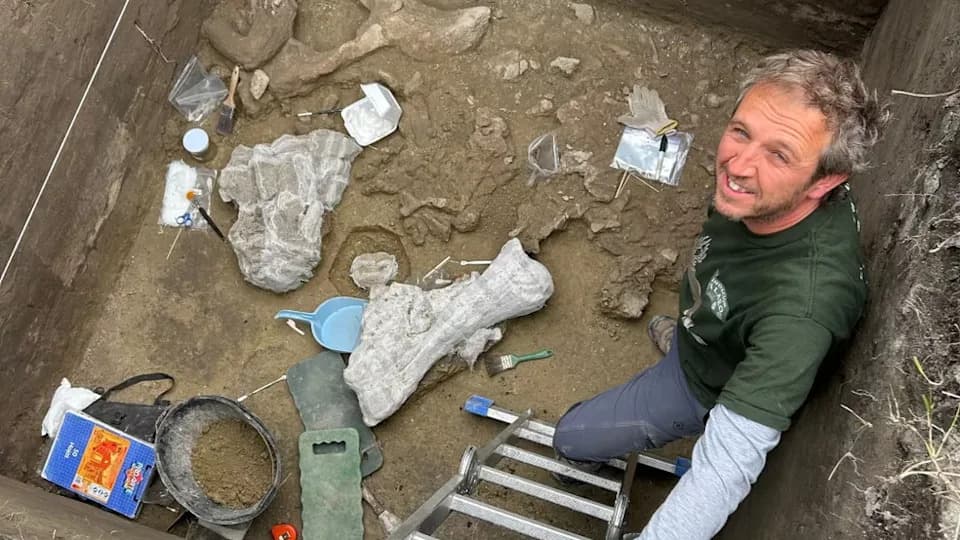
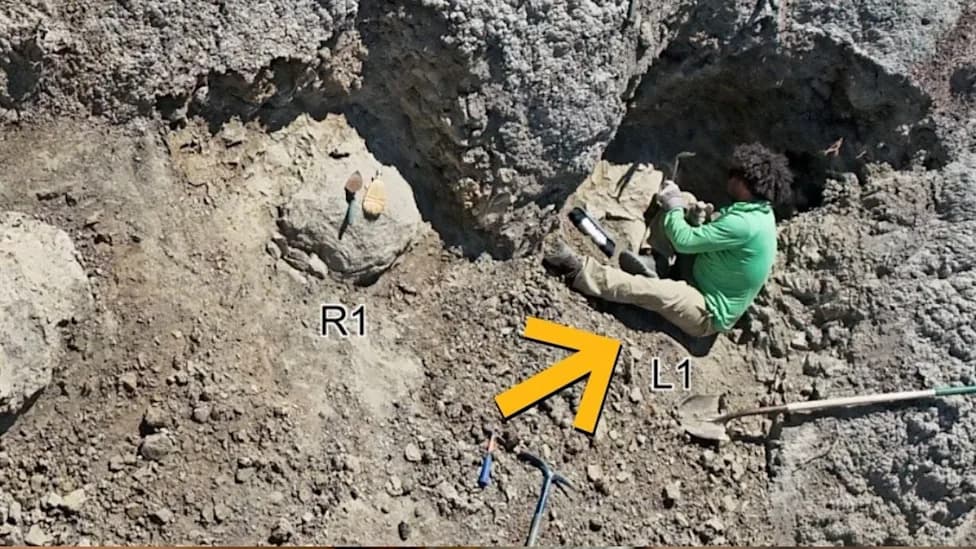
Discovered at a site designated GaJi10, the track surface was first documented by Smithsonian paleontologist Kay Behrensmeyer in 1978 and has been revisited by researchers over decades. In total, teams cataloged 21 hominin footprints made by eight individuals and dated to roughly 1.43 million years ago. Nearby trackways also preserve prints from Homo erectus, showing that these two hominin species occupied the same lakeshore environment for long periods.
What the Footprints Tell Us
Footprints provide direct evidence of body size, gait and group composition in a single instant. Measurements of stride length and footprint dimensions suggest P. boisei individuals at GaJi10 were not markedly stockier than contemporary hominins. According to study co-author Kevin Hatala, footprint sizes are consistent with body heights up to about 6 feet (≈1.8 m) and weights around 165 lbs (≈75 kg).
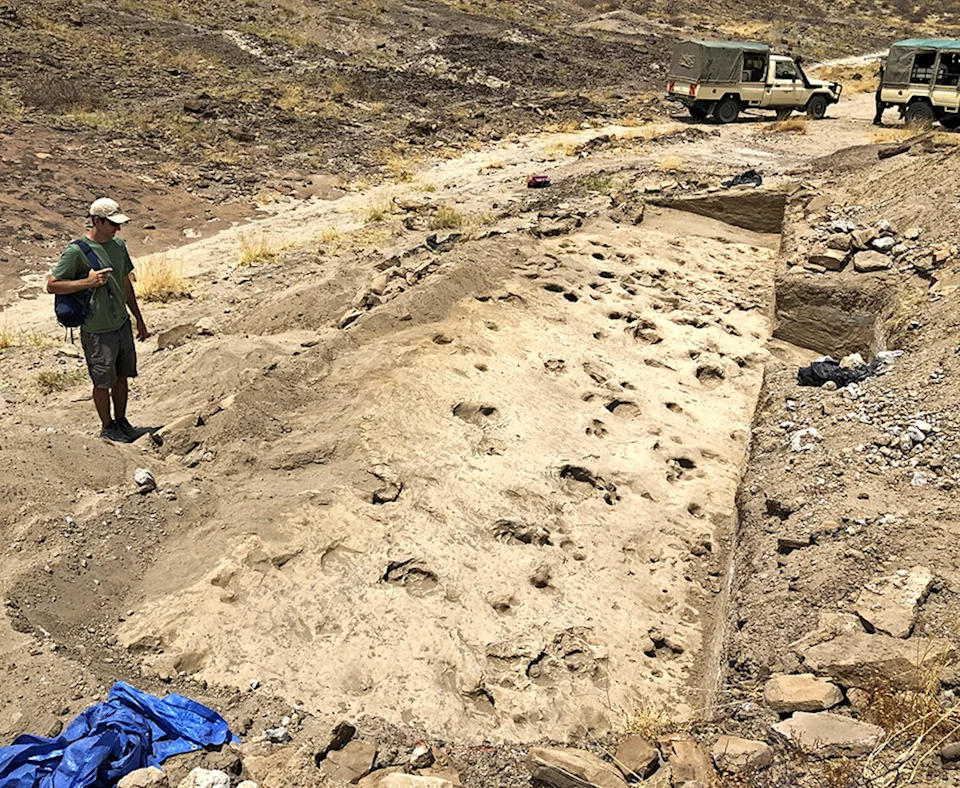
Overview of the excavated track surface with a mix of deeper hippopotamus and antelope footprints and shallower hominin tracks visible. Credit: Kay Behrensmeyer / Smithsonian
Perhaps the most striking pattern is social: one trackway at GaJi10 appears to record eight mostly adult male P. boisei walking together without obvious juveniles or females. That arrangement implies episodes of male-only grouping and more complex social dynamics than previously assumed for this species—possibilities include cooperative patrols, hunting, or mate-competition parties.
"The special thing about footprints scientifically is that they preserve an instant in time," said Kay Behrensmeyer. "They also allow people to relate to these fossils much more easily than an isolated piece of bone or jaw."
Why This Matters
Until now, much of what researchers knew about P. boisei came from a limited set of skulls and teeth, which left overall body size and behavior uncertain. The GaJi10 trackways complement skeletal evidence by providing behavioral context—showing shared habitats with H. erectus, indicating body proportions closer to other hominins, and suggesting social grouping patterns that hint at competitive and cooperative male behavior.
While footprints cannot resolve every question about daily life or long-term social structure, they supply a powerful snapshot that enriches our understanding of hominin diversity and behavior during the Early Pleistocene.
Help us improve.