UNESCO has inscribed the Theatro da Paz (Belém) and the Teatro Amazonas (Manaus) on its World Heritage List, calling them legacies of the Amazon's 'Golden Age.' Built during the rubber boom of 1879–1912, the theatres reflect the era's wealth and European-inspired urban development. UNESCO's recognition also includes the adjoining public squares and acknowledges the boom's human cost, including forced labor that harmed Indigenous communities.
UNESCO Designates Two Iconic Amazon Theatres as World Heritage Sites
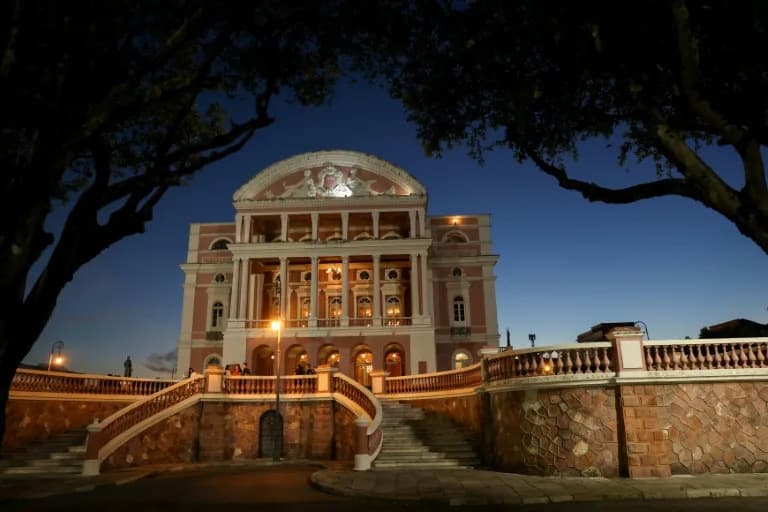
Brazil's Amazonas Theater in Manaus has been listed as UNESCO World Heritage (MICHAEL DANTAS)
UNESCO on Monday inscribed two landmark theatres in Brazil's Amazon on its World Heritage List: the Theatro da Paz in Belém and the Teatro Amazonas in Manaus. The United Nations agency described both buildings as enduring legacies of the region's so-called 'Golden Age.'
Located in the northern cities of Belém and Manaus, the two venues reflect the extraordinary wealth that flowed into the Amazon during the rubber boom from 1879 to 1912. That prosperity financed ambitious urban projects and European-influenced architecture, transforming both port and river cities into cultural centers.
UNESCO noted, however, that the rubber boom's wealth came at a terrible human cost: the period relied in many places on forced labor that devastated Indigenous communities across the region.
'These ensembles were designed as symbols of political and urban ambition,'
The agency's inscription extends beyond the theatres to include their adjoining public squares — Praça da República in Belém and Largo de São Sebastião in Manaus — recognizing the buildings as integrated urban complexes. UNESCO added that 'The Theatro da Paz and the Praça da República asserted the strategic role of the city of Belém as a port and State capital,' and that 'the Teatro Amazonas was part of the large-scale urban development of Manaus during the rubber boom.'
Today, the Theatro da Paz and the Teatro Amazonas are celebrated not only for their elegant, French-influenced design and ornate interiors but also as sites that embody both the cultural ambitions and the complex, often painful history of Amazonian development. The World Heritage designation aims to support their preservation and to promote public understanding of the full historical context behind these landmark institutions.
Help us improve.