The Vaccine Injury Compensation Program (VICP) is a no-fault, judicial program created after 1980s lawsuits threatened vaccine supply; it is funded by a 75-cent excise tax and has paid more than $5 billion. COVID-19 vaccines remain covered under the PREP Act and the Countermeasures Injury Compensation Program (CICP), which is more restrictive, has a one-year statute of limitations, and has paid far fewer claims. Moving COVID vaccines into the VICP would require CDC recommendation changes, a new congressional excise tax, and HHS action — but the court currently lacks the judges and funding to absorb a large backlog without expansion.
Why COVID Vaccines Aren't (Yet) Covered By The U.S. Vaccine Injury Court
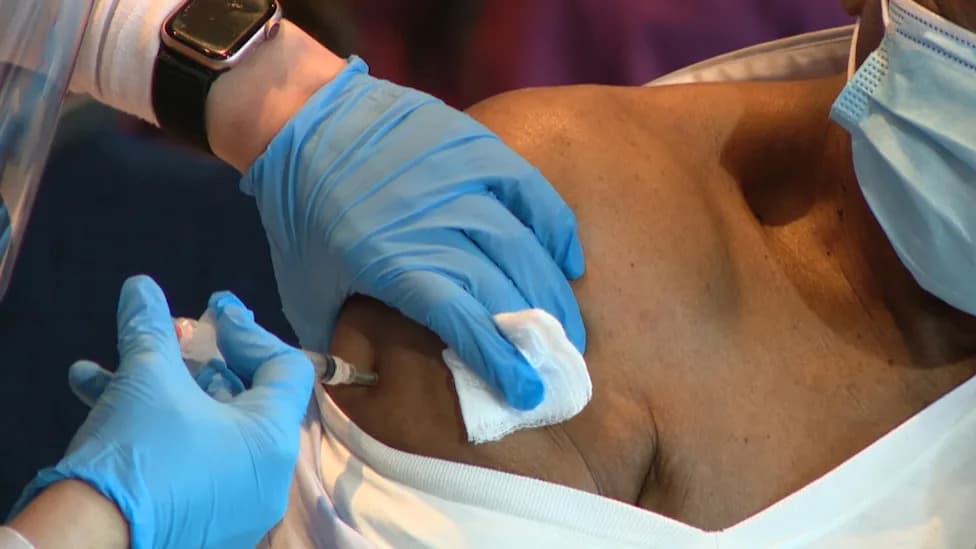
Why the COVID vaccine isn't part of an injury compensation court
Vaccines — from polio and smallpox to measles and tetanus — are among medicine's most successful public-health tools, credited with preventing millions of deaths over recent decades. Rare adverse reactions can occur, and the United States has long maintained a specialized system to compensate people who claim they were harmed by routine immunizations.
How The Vaccine Injury Compensation Program (VICP) Works
The Vaccine Injury Compensation Program, often called "vaccine court," was created after lawsuits in the 1980s over an older DTP vaccine threatened the vaccine supply. The VICP is a no-fault, judicial program: petitioners do not need to prove negligence, only that it is more likely than not the vaccine caused the injury. Cases are decided by one of eight judges known as special masters, rather than by juries.
Funding comes from a 75-cent excise tax added to each recommended childhood vaccine dose. Since the program began, roughly 13,000 people have received more than $5 billion in awards. The VICP is organized around a Vaccine Injury Table listing covered vaccines and presumptive injuries, which streamlines many claims.
Why COVID Vaccines Are Different
COVID-19 vaccines are not on the Vaccine Injury Table because they remain covered under emergency authority. In 2005, Congress passed the Public Readiness and Emergency Preparedness Act (PREP Act) to protect public health during emergencies. The PREP Act provides broad liability shields for manufacturers and providers using certain countermeasures, including vaccines deployed during a declared emergency.
People who suffer serious harm from PREP-covered countermeasures can seek compensation through the Countermeasures Injury Compensation Program (CICP). The CICP is an administrative program with narrower eligibility rules, a one-year statute of limitations, and limited categories of compensable damages. Unlike the VICP, the CICP generally does not provide compensation for pain and suffering and has fewer public appeal mechanisms.
Claims And Compensation So Far
As of June, the countermeasures program had received more than 14,000 claims tied to COVID-19 countermeasures; roughly 11,000 of those were linked to COVID-19 vaccinations. More than 7,000 COVID-related countermeasure claims were denied, 109 were found eligible for compensation, and 60 had been paid. Myocarditis has been among the most commonly compensated injuries.
Public-health authorities, including the Centers for Disease Control and Prevention (CDC), continue to endorse COVID vaccines as safe and effective, citing rigorous clinical trials and real-world data. By May 2023, more than 676 million COVID vaccine doses had been administered in the U.S.; the CDC's COVIDVaxView also reported about 23.3 million doses of the 2025–26 COVID vaccine administered as of April 25.
Steps Needed To Move COVID Vaccines Into The VICP
Legal experts and former court officials say adding COVID vaccines to the VICP would improve access to compensation but would require three changes:
- CDC Recommendation: The vaccine would need to be designated as a recommended childhood vaccine or otherwise included in CDC guidance that triggers VICP coverage. The CDC's advisory committee recently moved to a recommendation model for people over 6 months based on individual decision-making.
- Funding: Congress would need to authorize an excise tax on COVID vaccine doses so the VICP has funding to cover claims.
- HHS Action: The Secretary of Health and Human Services would need to add COVID vaccines to the Vaccine Injury Table.
HHS Secretary Robert F. Kennedy, Jr., told 60 Minutes he would accept CDC recommendations regarding COVID vaccines. The Department of Health and Human Services in 2024 extended certain PREP Act protections for COVID countermeasures through 2029, preserving liability shields for manufacturers and distributors.
Practical Concerns: Capacity And Backlog
One major obstacle is court capacity. The number of special masters has remained at eight since the late 1980s while caseloads have increased. Advocates warn that transferring the existing backlog of COVID claims from the CICP to the VICP — plus potentially many additional future claims — could overwhelm the court without additional judges, staff, and funding.
"Without any improved infrastructure, without any additional special masters, it's going to be crushing," said Renée Gentry, head of the Vaccine Injury Litigation Clinic at George Washington University Law School, referring to the estimated 10,000 unresolved COVID cases in the countermeasures program.
The VICP's chief special master has warned Congress the court's ability to resolve claims efficiently would be "crippled" without more judicial officers. Former special masters argue that despite the potential for public concern, the right policy response is to preserve vaccine availability while ensuring a fair, adequately resourced compensation channel for those harmed.
Bottom Line
Policymakers face a choice: maintain COVID countermeasures under emergency protection with a narrower compensation route, or integrate them into the established vaccine court after resolving funding and capacity challenges. That decision will shape how Americans injured by COVID countermeasures are treated for years to come.
Video originally published October 5, 2025. Produced by Denise Schrier Cetta, Brit McCandless Farmer, Elizabeth Germino, and Jane Greeley; edited by Scott Rosann.
Help us improve.