The University of Michigan team built an "electron lighthouse" that launches and steers a directional, ballistic beam of electrons through a semiconductor using only two intersecting infrared laser pulses and no applied voltage. The effect arises from quantum interference and is controlled by adjusting laser polarization and wavelength. Careful fabrication at U‑M's Lurie Nanofabrication Facility minimized stray electric fields so the light‑driven current could be detected. Published in Physical Review Letters (2026), the result could aid quantum sensing, imaging, telecommunications, and material characterization.
Physicists Build an 'Electron Lighthouse' — Steering Electric Current With Light Alone
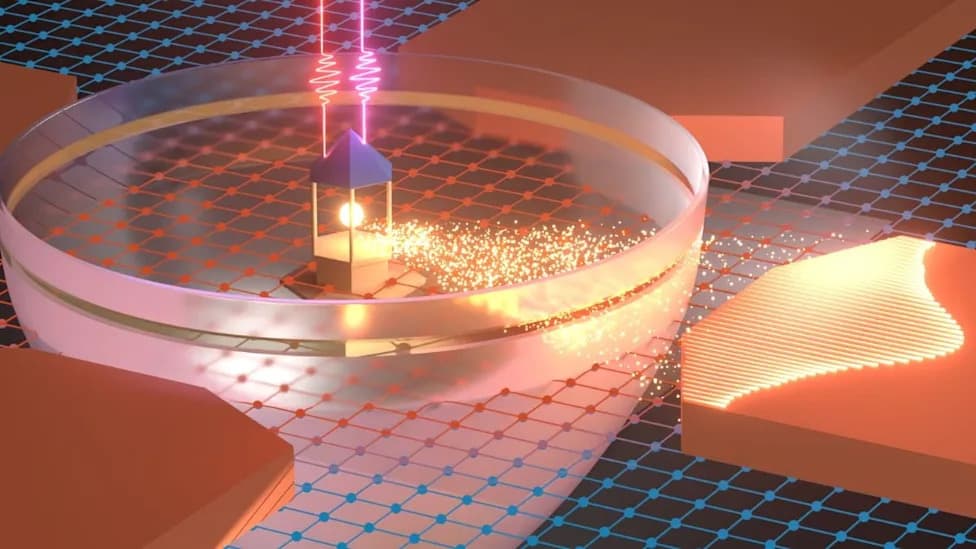
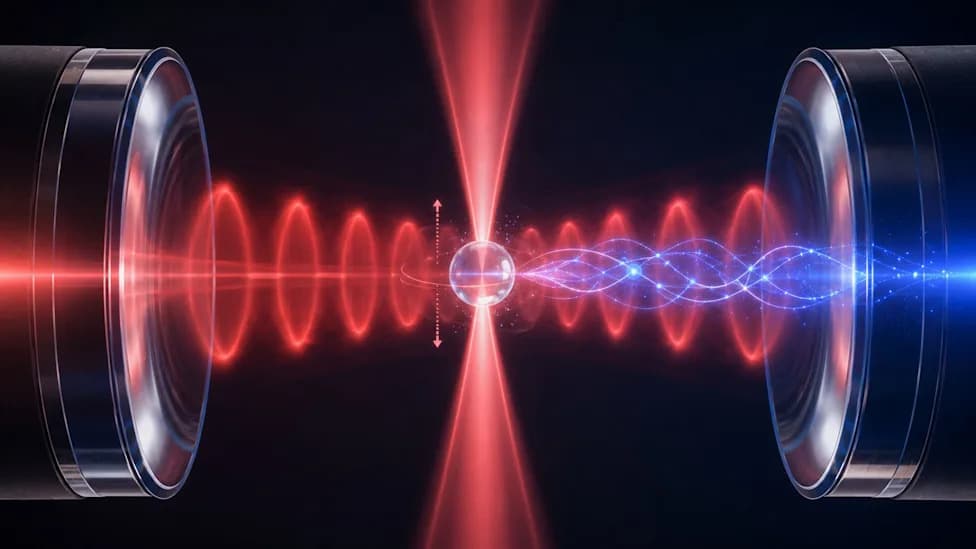
An illustration of the 'electron lighthouse' created at the University of Michigan. (Yiming Gong)
Electrons power our modern world, but at the quantum scale they behave in ways that can seem counterintuitive. In a new experiment, researchers at the University of Michigan demonstrated an "electron lighthouse": a device that launches and steers a directional beam of electrons inside a semiconductor using only light, with no applied voltage.
What the team built
Supported by the U.S. National Science Foundation, the researchers used two infrared laser pulses of different wavelengths that intersect in a semiconductor sample. The interaction creates a measurable, directional electron current that the team detected with electrodes at the sample edge. The current is ballistic — electrons travel along trajectories set by their initial launch velocities rather than diffusing through scattering.
How it works
The effect relies on quantum interference between light-driven excitation pathways. By changing properties of the lasers — notably their polarization and relative wavelengths — the researchers can rotate and steer the electron beam without applying any external electric field. "Here, using light, you can effectively squirt electrons in a chosen direction without applying a field," says Steven Cundiff, the study's senior author.
Fabrication challenges
A key experimental hurdle was avoiding stray electric fields from the fabrication process that could obscure the light-driven current. First author Yiming Gong worked with the Lurie Nanofabrication Facility to develop processes and temperature recipes that minimized unintended fields and allowed reliable detection of the light‑driven signal.
Significance and outlook
The device confirms theoretical predictions — including earlier work by John Sipe and collaborators — that light alone can launch directional, voltage‑free electron currents. Beyond demonstrating a striking new form of light‑matter control, the technique could become a tool to probe the quantum geometry of materials and inform applications in quantum sensing, imaging, telecommunications, and information processing. The work was published in Physical Review Letters (2026).
Key quote: "The light no longer merely switches the current on; it also aims it," — Steven Cundiff.
Further details: The laboratory used a prism sequence to separate wavelengths (rather than simple beam splitters) and specialized electrode placement to read out the directionality. Because the currents are ballistic and light‑driven, they reveal information about initial electron launch velocities and the underlying quantum mechanics of the material.
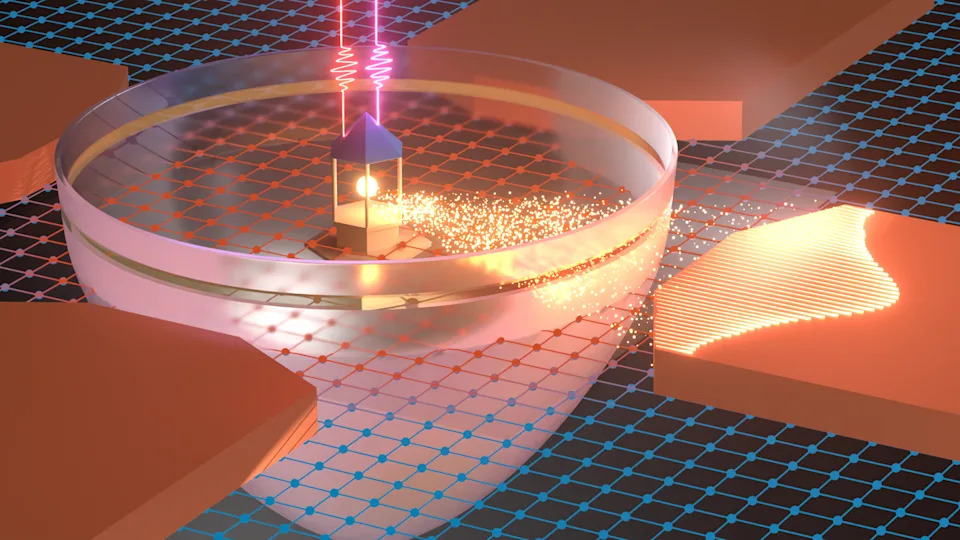
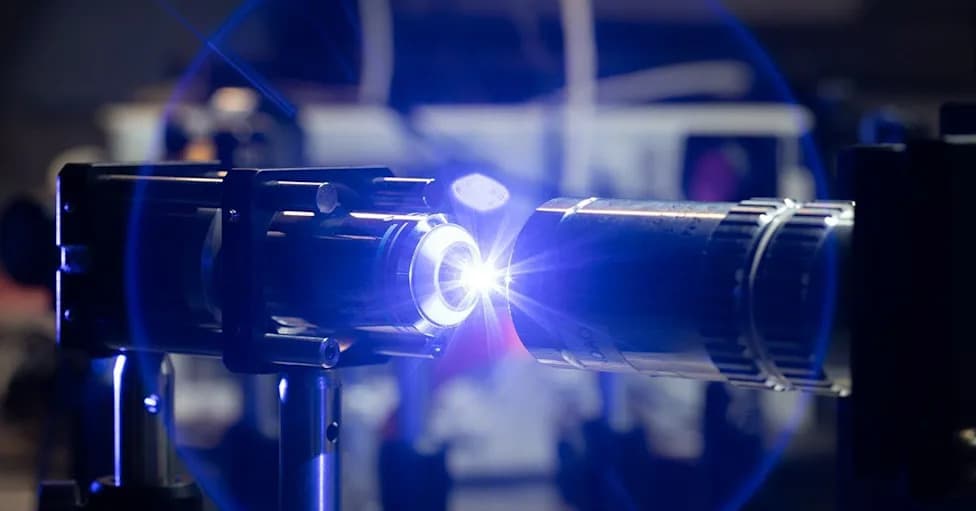
The new electrical device created at the University of Michigan, in which two laser pulses meet to yield a beam of electrons that can be directed by switching the wavelengths of the beams.(Yiming Gong)
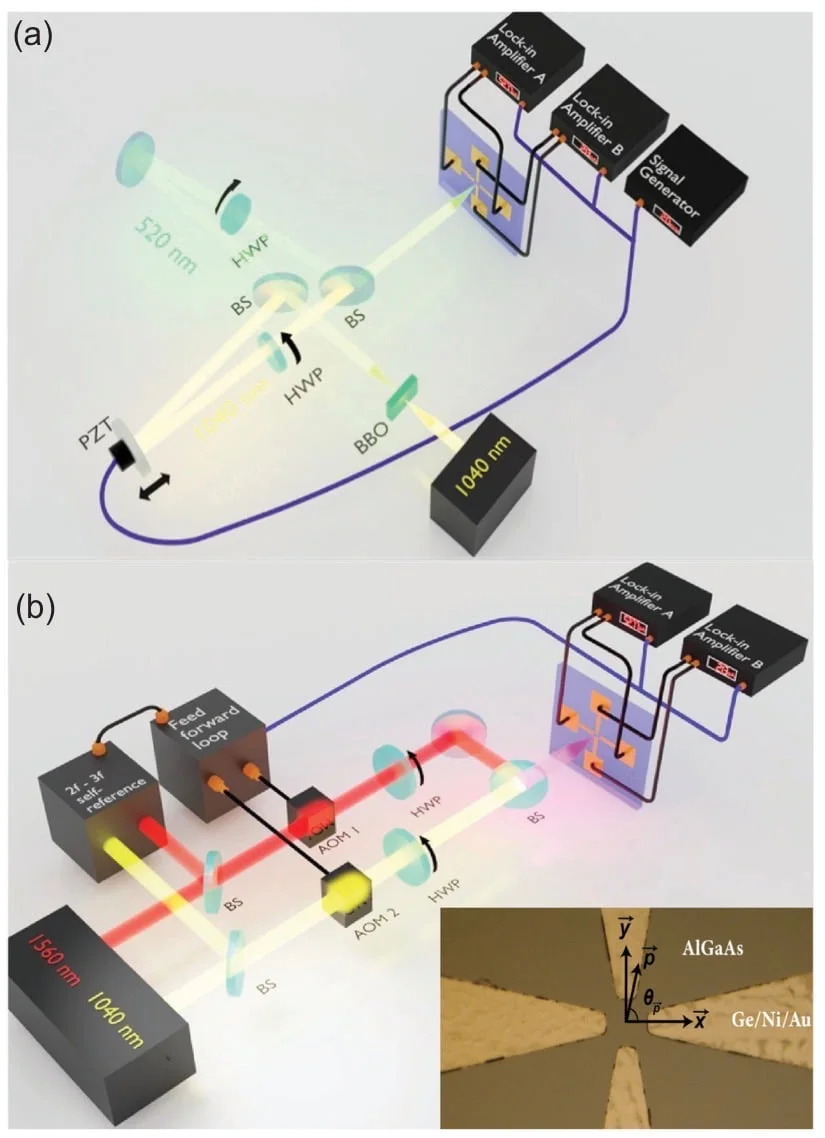
An illustration of a conceptual apparatus in this study, though the actual experimental setup differs because it uses a prism sequence rather than beam splitters to separate the 'colors.' The electrodes pictured at bottom right helped detect the direction of electron flow.(Gong et al.,Phys. Rev. Lett., 2026)
YouTube Thumbnail

Subscribe to ScienceAlert's free fact-checked newsletter
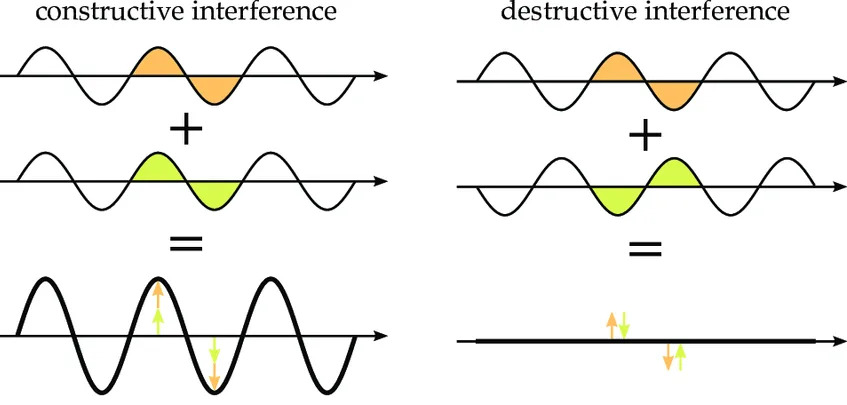
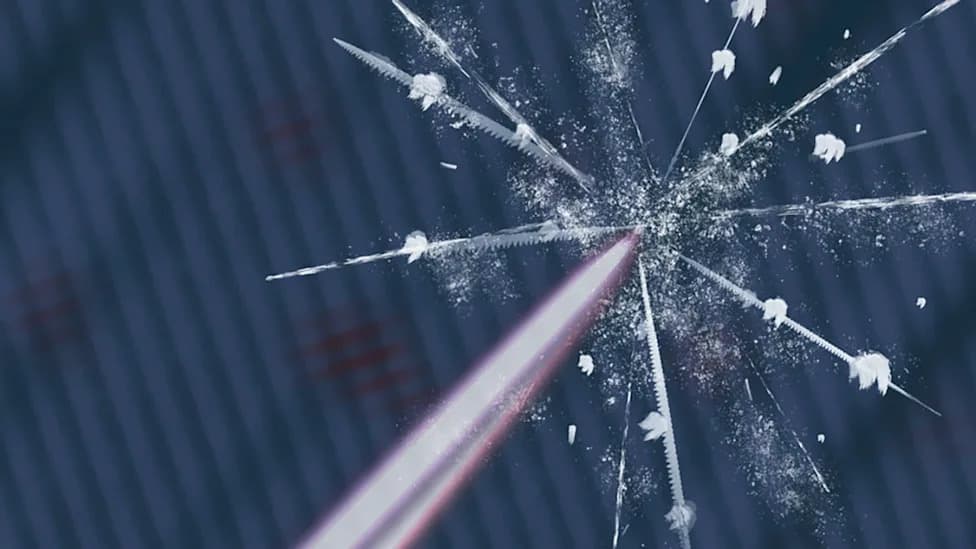
Waves can add up or cancel out, colloquially speaking.(Martin Pätzold via Illinois Physics)
Help us improve.