A near-complete Cretaceous snake fossil, Tametara mirim (about 75–85 million years old), ranks among the best-preserved early snake skeletons. High-resolution CT scans produced digital reconstructions of the skull, braincase, cranial nerves and inner ear, allowing detailed anatomical comparisons with living snakes. Bone microstructure and brain shape suggest burrowing adaptations but also point to multiple ground-dwelling lifestyles, indicating early snakes experimented with diverse sensory and ecological strategies. The study highlights how modern imaging combined with classical anatomy can reveal behavior and sensory evolution in prehistoric reptiles.
Exceptionally Preserved Cretaceous Snake Fossil Tametara mirim Illuminates 75–85 Million Years Of Evolution
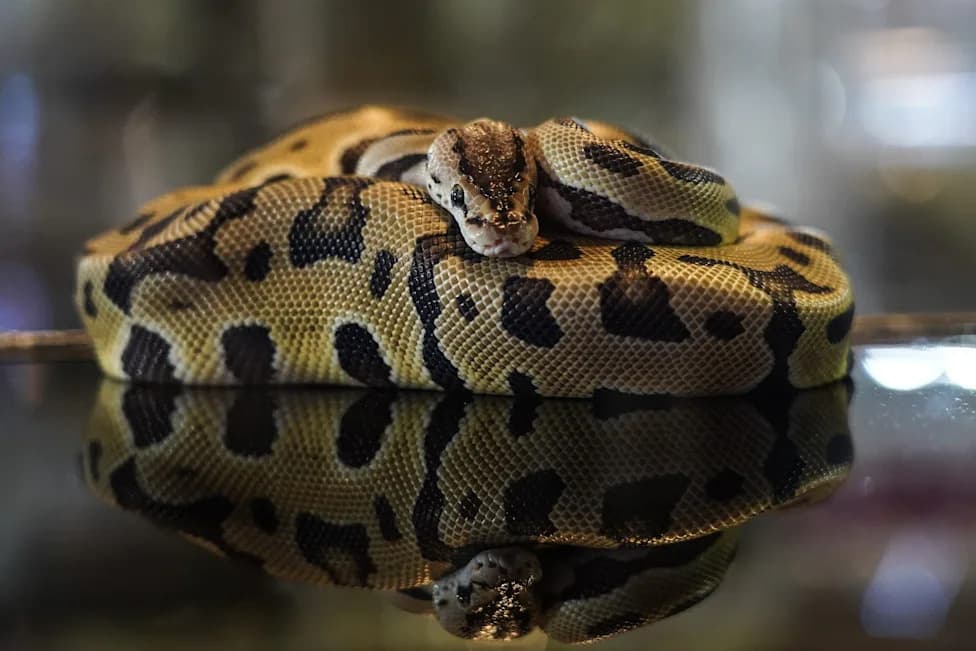
Ball Pythons are displayed at The Grand Exotic Pet & Ball Python International 2026 in Bangkok, Thailand. The event exhibits hundreds of exotic animals from breeders for sale as pets to enthusiasts.
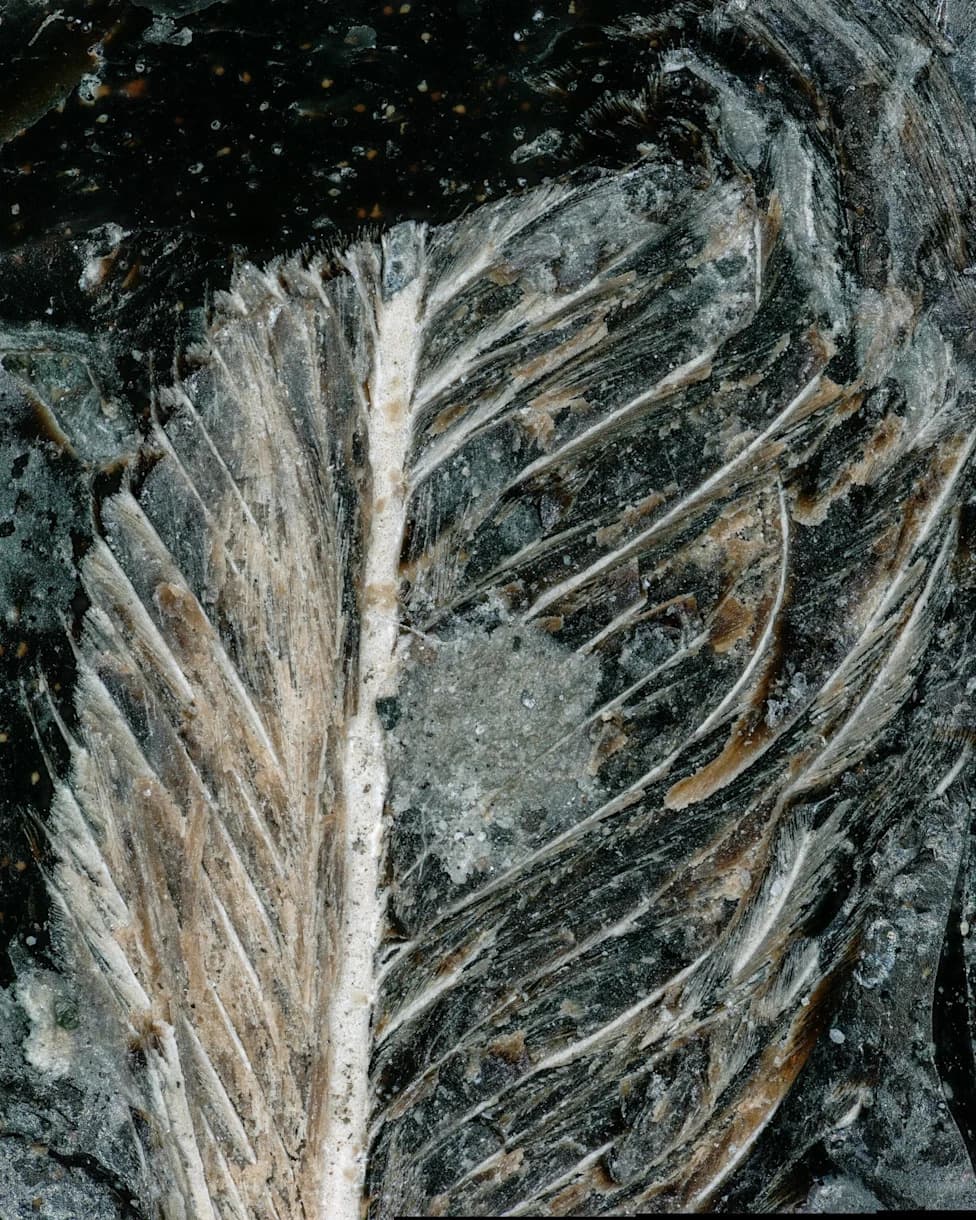
Paleontologists have described an unusually well-preserved snake fossil from the Late Cretaceous, dated to roughly 75–85 million years ago. The specimen, identified as Tametara mirim, is among the most complete early snake skeletons discovered and offers an unprecedented view into early snake anatomy and behavior.
Ball Pythons are displayed at The Grand Exotic Pet & Ball Python International 2026 in Bangkok, Thailand. The event exhibits hundreds of exotic animals from breeders for sale as pets to enthusiasts.
Researchers applied a combination of detailed morphological study and modern molecular-based analyses to place the fossil within the early snake evolutionary tree. Work led in part by teams connected to Princeton University and the University of Helsinki used high-resolution computed tomography (CT) scanning to digitally reconstruct the skull and adjacent structures.
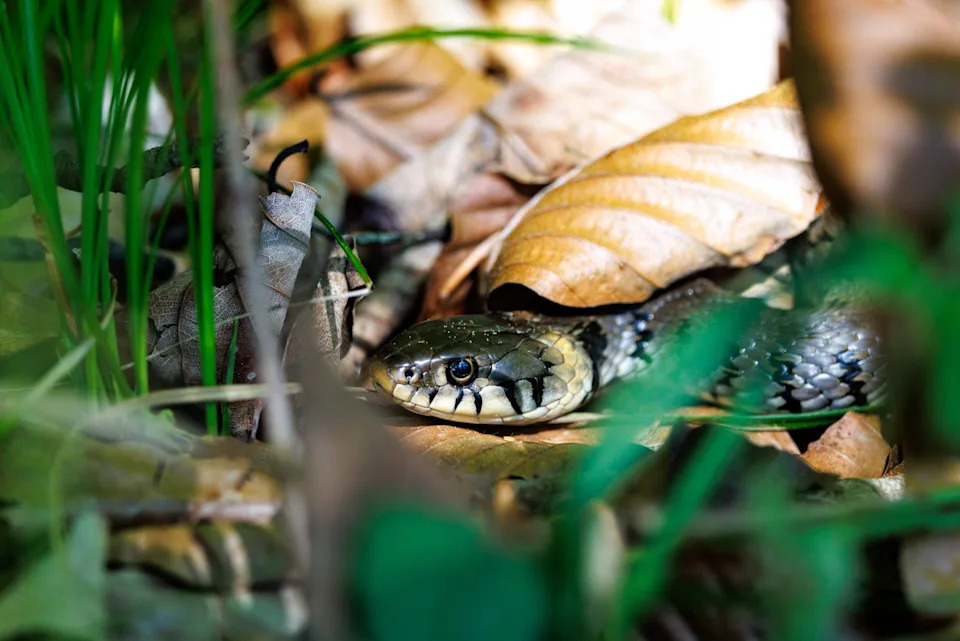
13 May 2026, Bavaria, Walchensee: A grass snake (Natrix natrix) slithers through the grass and leaves at the edge of a hiking trail at Walchensee in Bavaria (Germany). The snake is easily recognizable by the distinctive yellow or white spots on its neck behind its head. Grass snakes live primarily near water sources, are harmless to humans, and bite only very rarely when they feel strongly threatened.
Skull, Brain And Inner-Ear Reconstruction
The skull proved to be the fossil's best-preserved element. CT data enabled virtual reconstruction of the braincase, cranial nerves and inner-ear anatomy, revealing fine anatomical details rarely preserved in fossils. Those reconstructions make it possible to compare sensory and neural anatomy directly with living snake species.
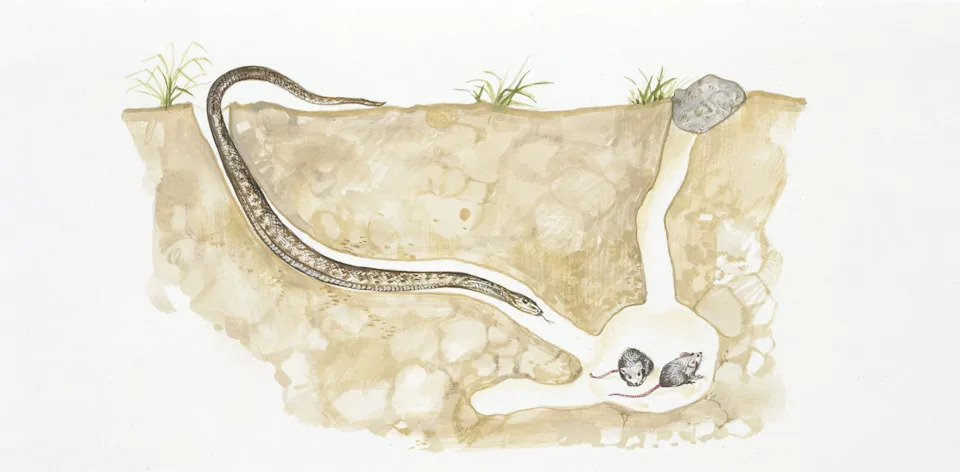
UNSPECIFIED - DECEMBER 10: Smooth snake (Coronella austriaca) slithering into cave with two mice, illustration.
Ecology And Behavior: More Than A Single Niche
Microscopic analysis of skull bone microstructure together with the reconstructed brain shape indicate adaptations consistent with a burrowing, ground-dwelling lifestyle. At the same time, the evidence suggests T. mirim was not strictly specialized for one habitat: early snakes appeared to be experimenting with multiple sensory and ecological strategies rather than evolving in a single linear direction toward modern forms.
"By combining CT-based brain reconstructions with comparative data from living snakes, we could show that early snakes were not simply progressing toward a single modern condition," said Nicolas Di-Poï, Research Director at the Institute of Biotechnology for the University of Helsinki. "They were already experimenting with different sensory and ecological strategies."
Why This Matters
The exceptional preservation and the integration of digital imaging with comparative anatomy give paleontologists greater confidence when reconstructing fossil brains and sensory systems. This approach opens new possibilities for inferring the diets, hunting strategies and daily behaviors of extinct snakes — and clarifies how early lineages diversified into the variety of snake lifestyles we see today.
As CT and molecular techniques continue to improve, similarly preserved fossils will likely yield even richer insights into the sensory evolution and ecological diversification of reptiles across tens of millions of years.
Help us improve.