Summary: MIT engineers developed a lung-inspired hydrogel that embeds a stable network of microscopic air channels while retaining ~70% water content, raising oxygen permeability to about 185 barrer—roughly 10× typical hydrogels. The material transmits water vapor 10–100× faster than silicone or polyurethane patches, reduces sweat pooling and skin heating, and retained ~95% air permeability after 10,000 stretches. Small human trials showed improved comfort and clearer ECG signals during exercise, but larger safety, biocompatibility and scale-up studies are still needed before clinical use.
Lung-Inspired 'Breathable' Hydrogel Boosts Comfort and Signal Quality for Wearable Health Patches
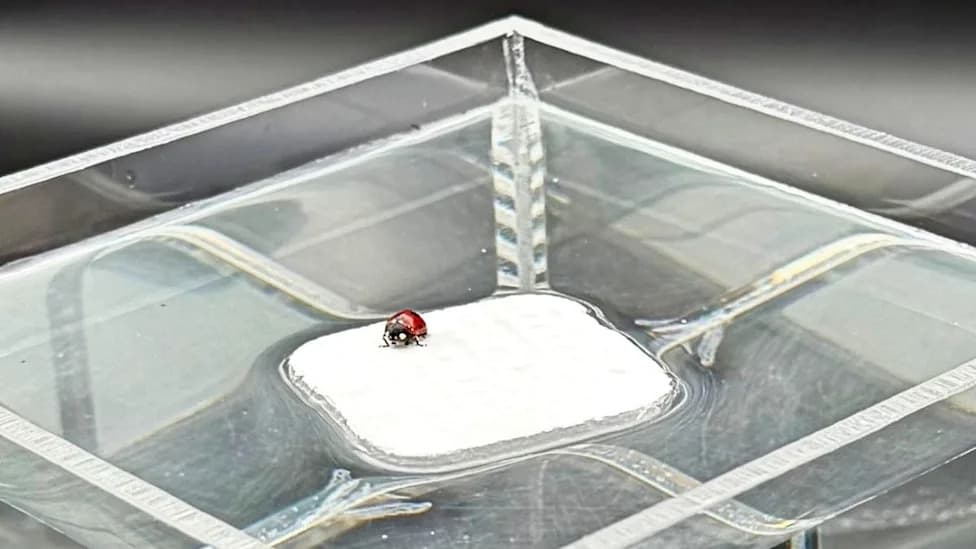
A ladybug rests on an air-permeable hydrogel floating on water. (Xuanhe Zhao, Yan et al., Nature, 2026)
Wearable health sensors, long-contact monitoring patches and wound dressings increasingly rely on water-rich hydrogels for comfort and biocompatibility. But conventional hydrogels trap heat and sweat, irritating skin and degrading sensor performance. In a new study published in Nature, engineers at the Massachusetts Institute of Technology (MIT) report a hydrogel that retains a high water content while embedding a stable, three-dimensional network of microscopic air channels to allow gas and vapor transport.
How it works
The researchers started with a standard hydrogel formulation and added a small concentration of silica aerogel particles—water-repellent, highly porous particles that act like solidified air pockets. During fabrication, these particles self-organize into an interconnected network of thin, air-filled channels inside the bulk gel. The channels allow oxygen and water vapor to pass through while the matrix preserves about 70% water content and the soft mechanical feel of hydrogels.
YouTube Thumbnail
Performance highlights
Laboratory tests showed oxygen permeability up to about 185 barrer (a standard unit for gas permeability), roughly ten times that of a typical hydrogel. Water vapor transmission rates were 10–100× higher than common silicone or polyurethane patches, helping moisture escape from the skin rather than pooling underneath the patch.
Mechanical testing indicated strong durability: the material retained approximately 95% of its air permeability after 10,000 stretch cycles, suggesting resilience under repeated motion.
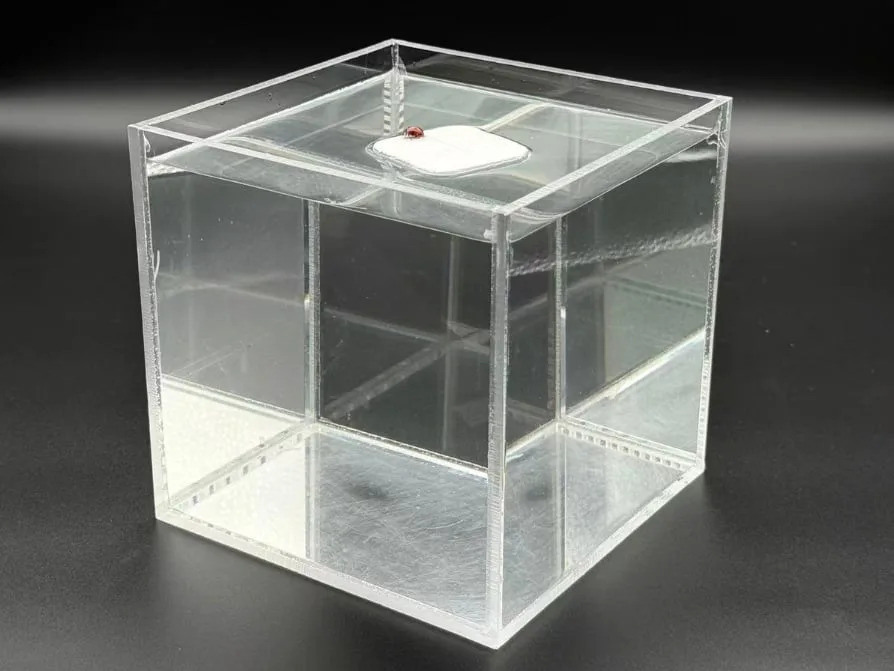
A ladybug rests on the new air-permeable hydrogel, floating on water. (Yan et al.,Nature,2026)
Human tests and wearable demonstrations
To test wearability, the team compared the breathable hydrogel to commercial silicone patches. Infrared imaging taken two minutes after removing patches following a 20-minute workout showed that skin beneath a silicone patch had warmed by about 6.5°C, while skin under the air-permeable hydrogel was roughly 1°C cooler than baseline—likely because the hydrogel lets heat and vapor escape more efficiently. Sweat visibly pooled beneath the silicone patch but not beneath the breathable hydrogel.
In a comfort trial, 10 volunteers wore the patches on their chests during one hour of moderate exercise; none reported itching, irritation or other adverse skin reactions. The team also adapted the hydrogel as an electrode for electrocardiogram (ECG) monitoring: during cycling tests, conventional hydrogel electrodes degraded as sweat accumulated, whereas electrodes made from the air-permeable hydrogel produced clearer ECG traces during and after exercise. In extended trials, these hydrogel electrodes provided usable ECG recordings continuously for 10 days during sleeping, working, walking and exercising.
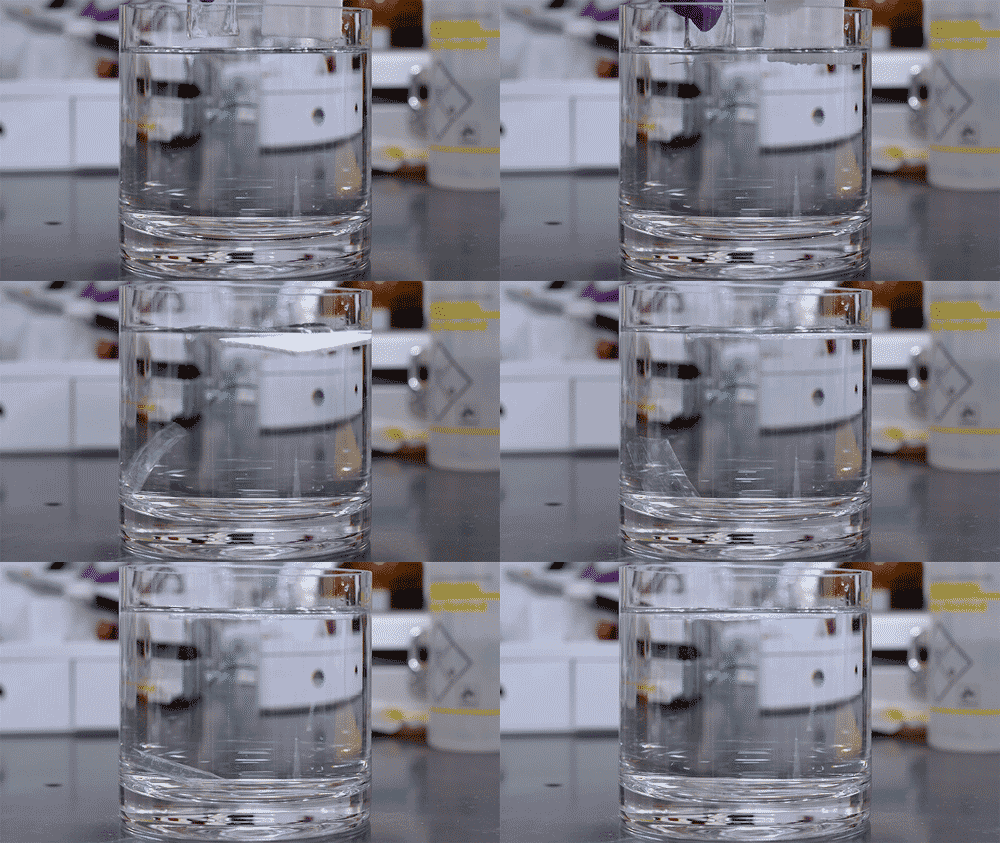
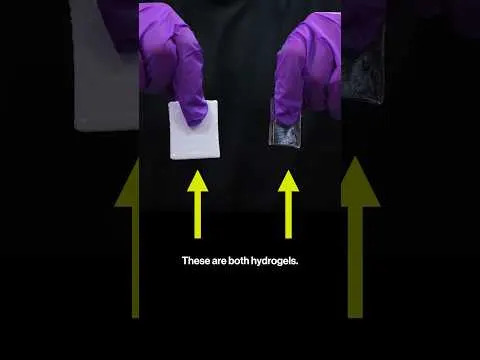
The new design of the breathable hydrogel (white) floats on water due to its air tunnels. The old design (clear) drops to the bottom of the water. (Melanie Gonick, MIT)
Limitations and next steps
Although promising, the work is preliminary with small human cohorts: some skin physiology measurements included only two participants and the exercise ECG comparison involved three. The comfort trial involved up to 10 volunteers. The team emphasizes that further studies are required to establish long-term biocompatibility, performance in large-animal models, sterilization protocols, scalable manufacturing, shelf life and regulatory safety.
Practical product integration will also require adaptations: the current formulation is not inherently adhesive and will need a backing or attachment mechanism for many applications. The researchers note potential longer-term uses in tissue engineering and implantable devices—fields that require efficient oxygen transport to sustain cells—but they stress that implantable applications would need substantially more testing.

Subscribe to ScienceAlert's free fact-checked newsletter
Conclusion
The MIT lung-inspired hydrogel offers a compelling approach to improve gas and vapor transport through soft, hydrated materials, improving comfort and sensor stability during prolonged skin contact. The design could accelerate development of more comfortable, reliable wearable sensors and wound dressings, pending additional safety and scale-up work.
Image credits: Yan et al., Nature (2026); Melanie Gonick, MIT. Related prior work: Science Advances (2024) demonstrated a different gas-permeable hydrogel sensor reinforced with a polyurethane nanomesh.
Help us improve.