Uruguay’s cooperative housing movement—legally enshrined since the 1968 National Housing Law—now includes 2,197 cooperatives housing roughly 5% of households. Two main models (savings and mutual aid) let both savers and low-income people access permanent, inheritable housing that is collectively owned and kept off the private market. Strong state support, federations and Technical Assistance Institutes enabled scaling and adaptation from peripheral developments to central-city rehabilitation projects such as MUJEFA and COVIVEMA 5.
What the World Can Learn From Uruguay’s Cooperative Housing Model
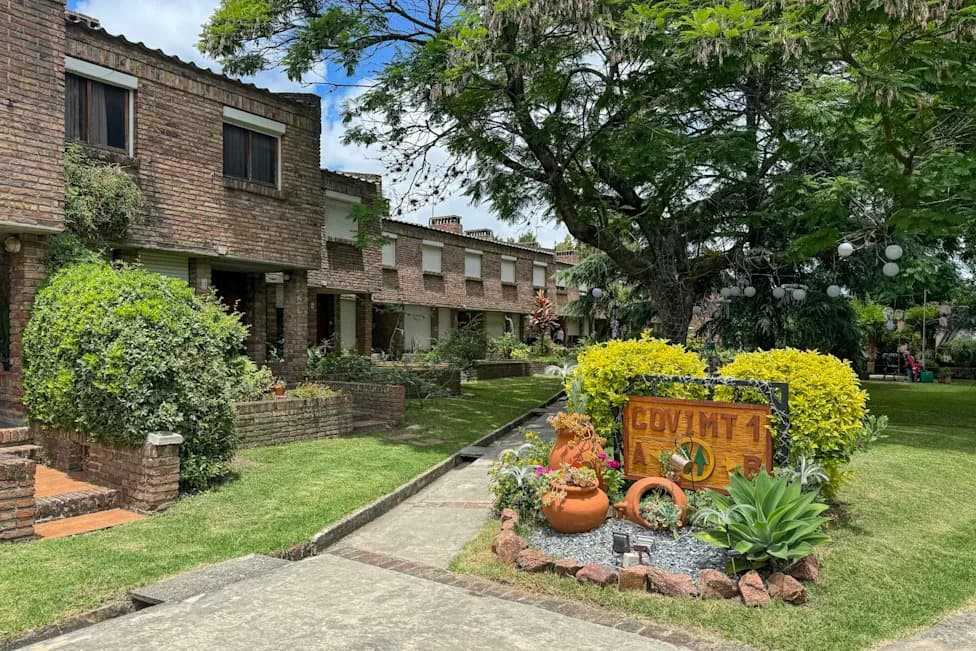
Located in the Peñarol neighborhood of Montevideo, COVIMT 1 was the city's first mutual aid housing cooperative. It was founded by textile workers, who completed construction of the complex in 1972. Bé Estudio,CC BY-SA
More than 1.8 billion people worldwide lack access to adequate, affordable housing. As governments and cities search for durable responses, Uruguay’s long-running cooperative housing movement offers practical lessons about scale, inclusion and public support.
How Uruguay Built A Scalable Cooperative System
Cooperative housing in Uruguay began in the 1960s during a period of economic turmoil. Early pilot projects—financed by a mix of government funds, loans from the Inter-American Development Bank and member contributions—proved faster, less expensive and higher in quality than many conventional approaches. Those early successes helped drive passage of the 1968 National Housing Law, which formally recognized cooperatives and created a legal framework to support multiple models and the institutions that serve them.
Two Core Models: Savings And Mutual Aid
Savings Cooperatives: Members pool savings (typically covering about 15% of capital costs) and access government-subsidized mortgages to finance construction. Participants buy "social shares" that correspond to the cost of their housing unit. Shares are reimbursed if a member exits and can be inherited by heirs.
Mutual-Aid Cooperatives: Households without savings can participate by contributing labor—about 21 hours per week—on construction and organizational tasks. Contributions range from manual work to administrative duties like ordering materials. Both models rest on a shared principle: land and housing units are held collectively and removed from the private market to preserve long-term affordability.
How Membership Works
Households typically pay a monthly fee that covers loan repayments and maintenance. Members receive a perpetual, inheritable right of "use and enjoyment" of a quality apartment. When members leave, they are usually partially reimbursed for their contributions; cooperatives commonly retain a modest deduction (around 10%) to cover collective costs and preserve affordability for remaining members.
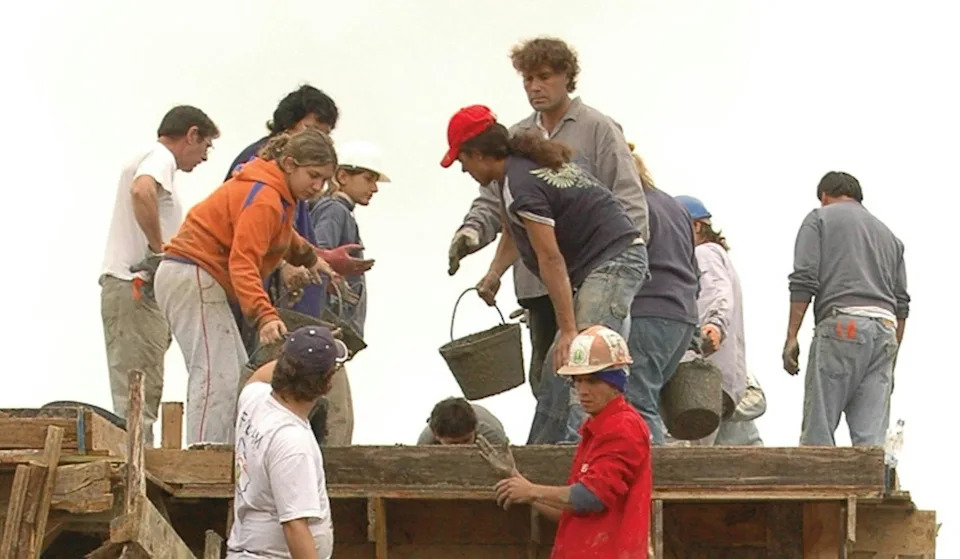
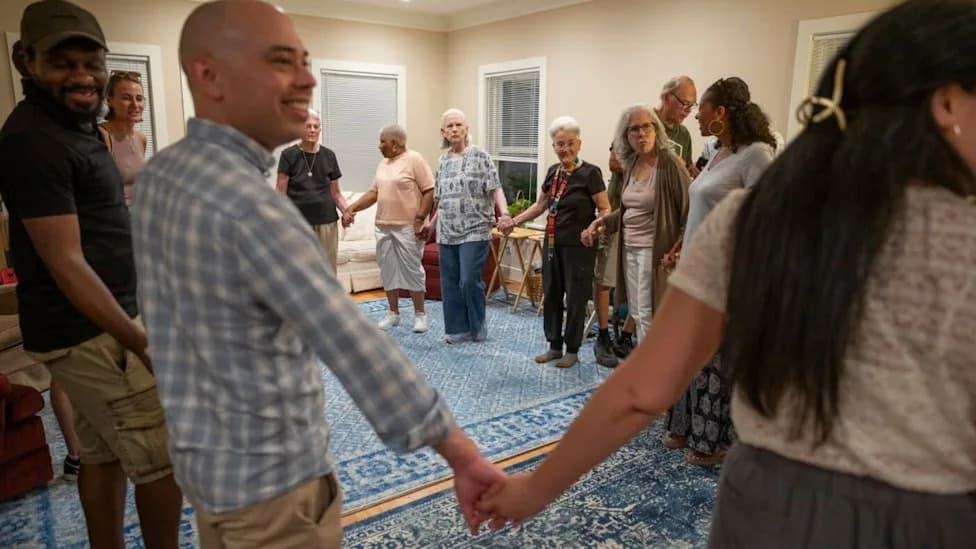
By contributing their labor, Uruguayans without savings can still participate in cooperative housing.Federación Uruguaya de Cooperativas de Vivienda por Ayuda Mutua,CC BY
Institutions That Made Scaling Possible
Uruguay’s cooperative sector grew to 2,197 cooperatives providing homes to roughly 5% of households—about half of them in Montevideo. Several institutional pillars made this possible:
- National Law: The 1968 National Housing Law defined rights, responsibilities and state obligations—oversight, financial-assistance criteria and access to land.
- Federations: FECOVI (savings cooperatives) represents over 100 cooperatives (~5,000 households). FUCVAM (mutual-aid cooperatives) is larger and more politically active, representing 35,000+ households across about 730 cooperatives.
- Technical Assistance Institutes: Independent nonprofit institutes recognized by law provide essential construction, management and legal advice—critical because most members start with little experience in building or large-project administration.
Adapting To Urban Change: From Sprawl To Central Rehabilitation
Early projects emphasized low-density housing at city edges, reflecting Garden City influences, cultural preferences for single-family homes and cheaper peripheral land. Over time this contributed to urban sprawl and higher infrastructure costs. In response, cooperatives and municipalities shifted to rehabilitating central neighborhoods and building higher-density projects.
For example, 13 mutual-aid cooperatives now operate in Montevideo’s Ciudad Vieja, accounting for about 6% of local housing units. Mujeres Jefas de Familia (MUJEFA), founded in 1995 by low-income single mothers, rehabilitated a heritage building into 12 apartments tailored to women’s needs—proximity to jobs, childcare and community services—after temporary regulatory flexibility and targeted training enabled the adaptation.
Another milestone, COVIVEMA 5 (completed in 2015), was the first high-rise mutual-aid cooperative in central Montevideo. With 55 units across two buildings and about 300 residents, it demonstrates how mutual-aid methods can be adapted to vertical construction when supported by Technical Assistance Institutes and targeted training.
Lessons For Policymakers
Uruguay’s experience shows that cooperative housing can be a durable "third way"—neither purely public nor private—that secures long-term affordability while empowering residents.
Key takeaways include the importance of legal recognition, sustained public financing and oversight, active federations to organize and advocate, and technical-assistance networks to manage the complexity of construction and governance. When these elements align, cooperative housing can supply affordable, secure homes and enable community-led urban renewal without displacing vulnerable residents.
Policy Implication: For countries confronting large-scale housing shortages, Uruguay’s model suggests that pairing legislative backing with capacity-building and predictable finance can allow cooperative housing to scale while protecting affordability.
Help us improve.