Employment tribunals in the UK are increasingly hearing cases linked to ADHD and other forms of neurodivergence as diagnosis rates and awareness rise. Recent rulings stress employers must consider reasonable adjustments during both performance management and disciplinary procedures — failure to do so can lead to costly awards. Experts recommend manager training, low-cost workplace changes, and clearer processes to reduce disputes and better support neurodivergent staff.
ADHD Is Reshaping Workplaces: What Employers And Employees Need To Know
[BBC]
Taking one of the UK's largest supermarket chains to an employment tribunal consumed much of Ryan Toghill's life for more than a year. Toghill, a deputy store manager at Lidl who had told his employers he had been diagnosed with Attention Deficit Hyperactivity Disorder (ADHD), was called to a disciplinary meeting after using equipment he said he had not been trained to use. He was dismissed for gross misconduct.
After successfully appealing and rejecting a lower-paid role offered by Lidl, Toghill took his case to tribunal. He was awarded more than £45,000 when the judge found Lidl had not properly considered his ADHD during the disciplinary process or offered reasonable adjustments, such as additional breaks. The tribunal also concluded that comments from managers about a "lack of remorse" were linked to communication differences associated with ADHD rather than deliberate insubordination.

Ben Branson advocates for people struggling with ADHD [BBC]
Why These Cases Are Increasing
Campaigners, lawyers and HR professionals say cases like this reflect a broader shift: diagnosis rates and awareness of neurodivergence (including ADHD, autism, dyslexia and Tourette's) have risen sharply in recent years. That greater visibility is showing up in workplace disputes. Irwin Mitchell, a major UK law firm, identified 517 tribunal cases mentioning neurodivergent conditions in 2025, up from 265 in 2020 — though the Ministry of Justice warns its online database is a live, partial record and not official statistics.
Long NHS waiting lists for assessments mean many people remain undiagnosed for years. Research indicates diagnoses have increased dramatically — for example, University College London reported a near 20-fold rise in adult ADHD diagnoses between 2000 and 2018 — but other studies suggest ADHD and autism are still underdiagnosed, particularly among older adults.

Trying to work out what requests are and aren't reasonable can be tricky [Getty Images]
Legal Protections And What Employers Must Consider
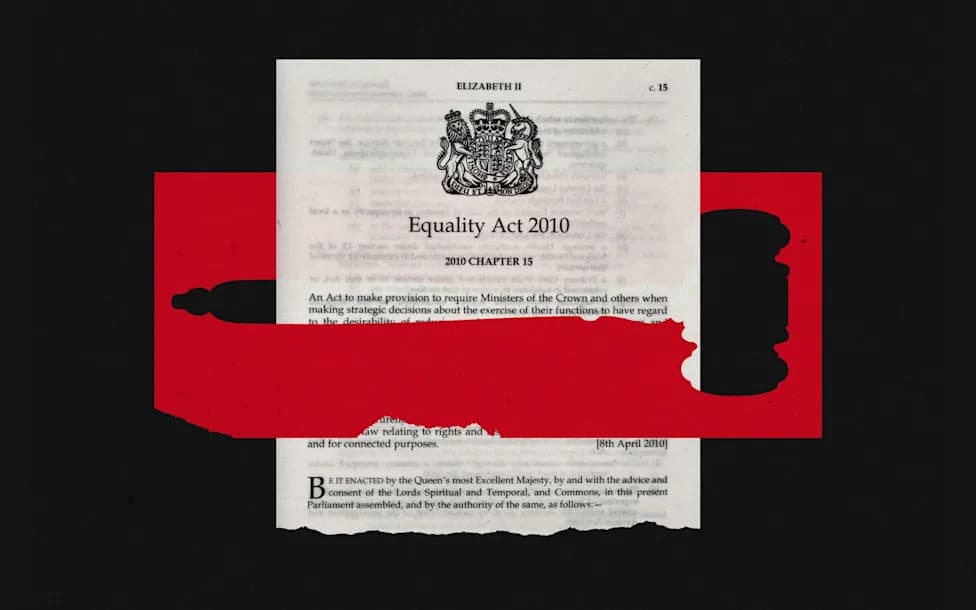
Under the Equality Act 2010, people whose conditions have a substantial and long-term adverse effect on normal day-to-day activities can qualify for disability protections even without a formal diagnosis. That can oblige employers to make "reasonable adjustments" both for regular performance and during disciplinary procedures. Tribunals have found employers liable where they failed to consider adjustments or misinterpreted differences in communication, behaviour or expression as misconduct.
"What we're seeing in tribunals is rarely the result of deliberate discrimination," says Lutfur Ali, a diversity and inclusion adviser at the Chartered Institute of Personnel and Development. "More often it's reasonable adjustments being overlooked, performance systems not designed for different thinking styles, and managers given little training or time to have the right conversations."
Practical Steps And Common Mistakes
Employers commonly make two avoidable errors: insisting on a formal diagnosis as proof, and pursuing disciplinary or dismissal processes for performance issues before considering whether a disability could be a factor. Many reasonable adjustments cost little or nothing — structured meetings, clear written instructions, regular breaks, quiet spaces and flexible working arrangements are examples that frequently help.

Detecting hidden bias in the workplace can be challenging [Getty Images]
Some tribunals have also set limits. One case involving the Judicial Appointments Commission found that requests for unusually extensive changes to recruitment material went beyond what was reasonable, while other rulings show small measures (a Bluetooth headset for a dyslexic chef, for instance) can prevent job loss and costly awards.
Business Responses And Wider Impacts
Some employers are taking proactive, inclusive approaches: offering adjustments to all staff (such as flexible hours, quiet zones and visual "busy" indicators), or creating targeted hiring programmes to attract neurodivergent talent. Large organisations including Microsoft and BAE Systems have run such initiatives, recognising distinct strengths these candidates can bring.
But the growing volume of tribunal claims is colliding with capacity problems in the justice system. The Ministry of Justice reports a record high of 531,000 open claims, and law firms warn some tribunal hearings are being listed years in advance. Changes to the law from January 2027 — reducing the qualifying period for unfair dismissal claims from two years to six months — could increase unfair dismissal claims and add further pressure on employers and the tribunal system.
What Employers Should Do Now
- Train managers to recognise and sensitively respond to neurodivergent needs rather than assuming deliberate misconduct.
- Focus on pragmatic, low-cost adjustments (structured meetings, written follow-ups, quiet spaces, regular breaks).
- Document considerations and alternatives when refusing an adjustment, showing a reasoned and consistent process.
- Consider universal design measures (flexible working, clear systems) that benefit all staff and reduce stigma.
Toghill, who says he has not worked since leaving Lidl because of poor health, remains ambivalent about disclosing his diagnosis to future employers. Yet he hopes cases like his will prompt workplaces to adapt. "You've got to manage people differently if they're neurodivergent," he says. "You can get the best out of them if you adapt a little bit."
Lead image: Getty Images. Source: BBC reporting and cited research.
Help us improve.