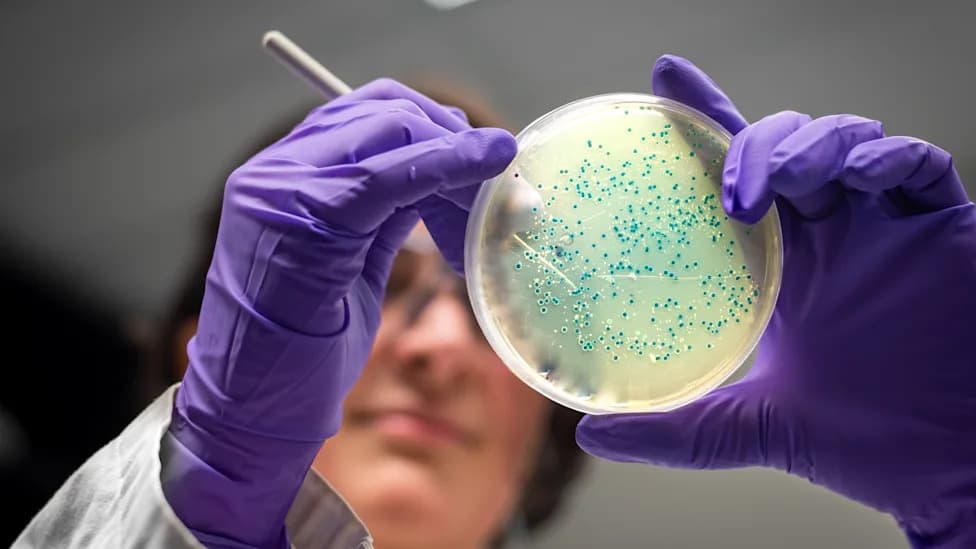
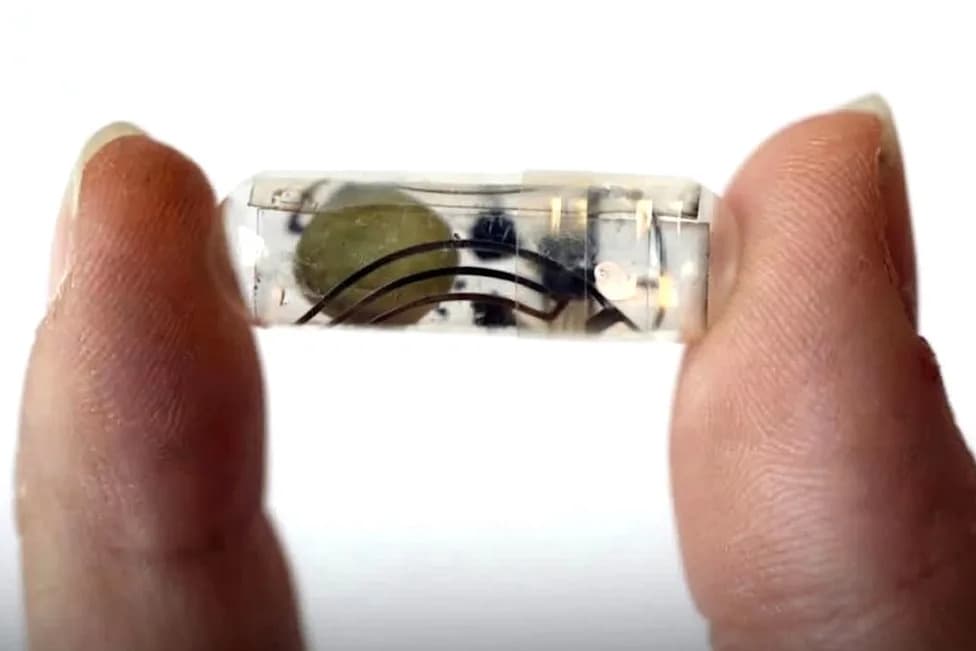
A team embedded engineered Bacillus subtilis spores into polycaprolactone to create a programmable “living plastic” that remains stable until activated by a warm nutrient broth (122°F / 50°C). Once awakened, two sequential enzymes cleave and then reduce polymer fragments, enabling complete degradation within six days without producing microplastics. A wearable electrode made from the material worked normally and disintegrated within two weeks after activation. The technology is promising but still in the research stage, with work needed to adapt activation for water, scale production, and address biosafety and regulatory issues.
Engineered ‘Living Plastic’ Self-Destructs in Six Days — No Microplastics
Photo Credit: iStock
Researchers report a programmable “living plastic” that remains durable during use but can be triggered to fully break down on command, offering a potential way to reduce short-lived plastic waste. The work, published in ACS Applied Polymer Materials and summarized by ScienceDaily, combines engineered Bacillus subtilis spores with polycaprolactone (PCL), a polyester used in some 3D printing materials and surgical sutures.
How It Works
The spores remain dormant inside the polymer until activated by adding a warm nutrient broth (122°F / 50°C). Once awakened, the microbes produce two cooperating enzymes: one enzyme cleaves long polymer chains into shorter fragments, and a second enzyme reduces those fragments to basic molecular building blocks. The researchers identify this two-step, sequential enzymatic action as the key improvement over earlier designs that relied on a single enzyme and often left behind microplastic fragments.
Lab Results
Using this staged enzymatic process, the material decomposed completely within six days in laboratory tests, with the team reporting no formation of microplastics during breakdown. To demonstrate a practical application, the group fabricated a wearable plastic electrode from the living material. The electrode performed as intended and fully disintegrated within two weeks after activation.
Performance and Next Steps
Early tests indicate the living plastic has mechanical behavior comparable to standard PCL films. The researchers say their next goals are to make the system work in aqueous environments (a major locus of plastic pollution) and to adapt the approach to other polymers used in disposable packaging, medical devices, and short-lived electronics.
Benefits and Limitations
Potential benefits: A material that stays durable while needed but can be made to vanish could reduce landfill and environmental accumulation of short-life plastics, lower cleanup and waste-management costs, and cut a pathway for microplastic contamination by returning polymers to basic components rather than shedding tiny fragments.
Current limitations: The activation method demonstrated so far requires a warm nutrient broth (50°C) to wake the spores — a condition that will need practical, safe solutions before consumer or environmental deployment. The technology is still at the research stage and will require work on scaling, water-based activation, regulatory review, biosafety controls, and lifecycle assessment.
As corresponding author Zhuojun Dai said, "The long persistence of traditional plastics, while many applications are short-lived, led us to ask whether degradation could be built directly into the material’s life cycle. By embedding these microbes, plastics could effectively 'come alive' and self-destruct on command."
Overall, the approach fits into broader efforts to design smarter, more sustainable materials — from recyclable batteries to non-petroleum packaging — that treat end-of-life as part of product design rather than an afterthought.
Note: Findings are preliminary and reported at the laboratory scale. Practical use will require further validation, safety assessments, and scalable activation methods.
Help us improve.