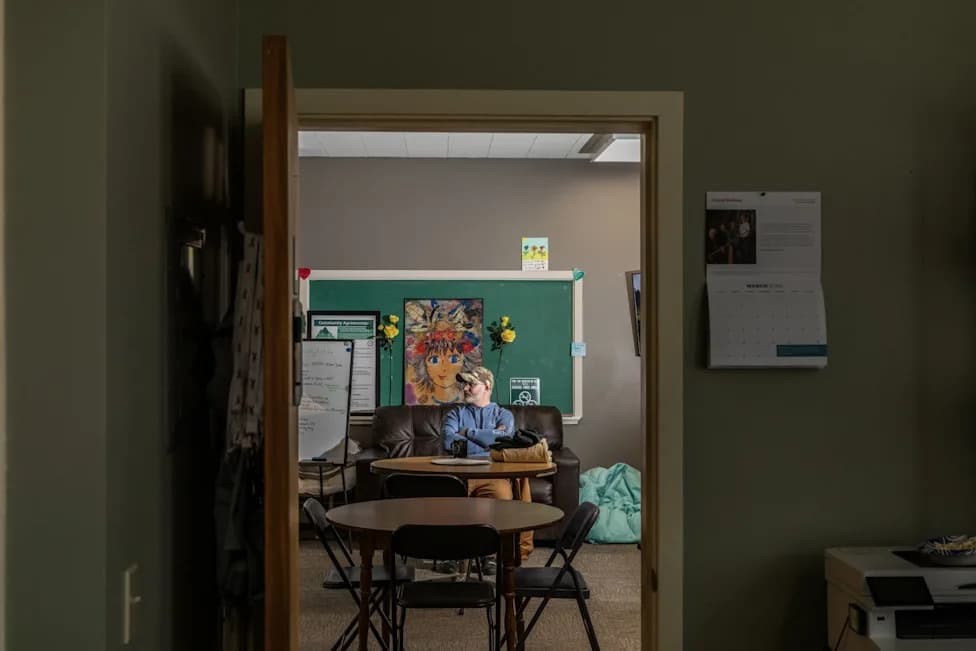
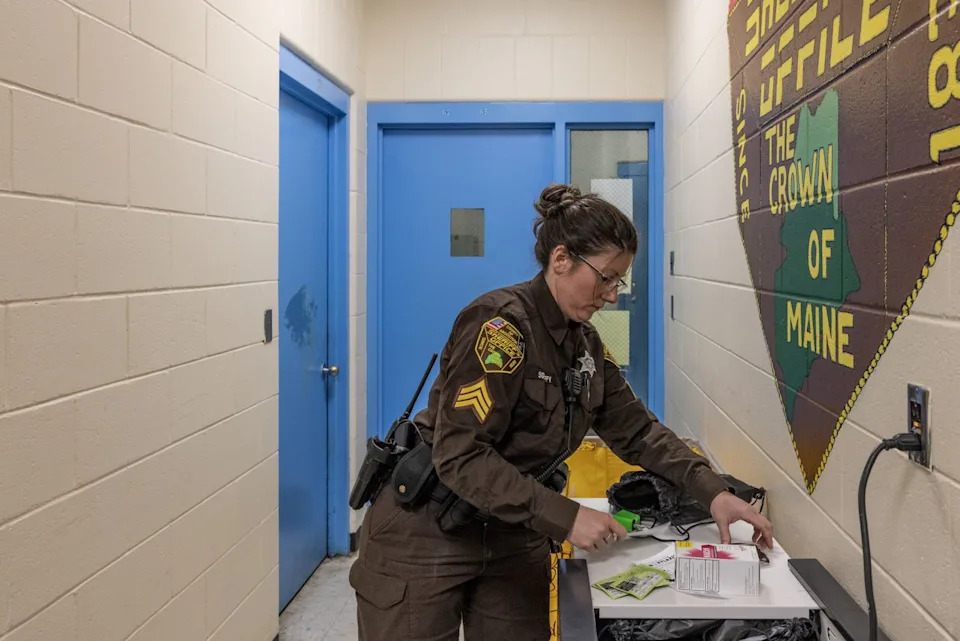
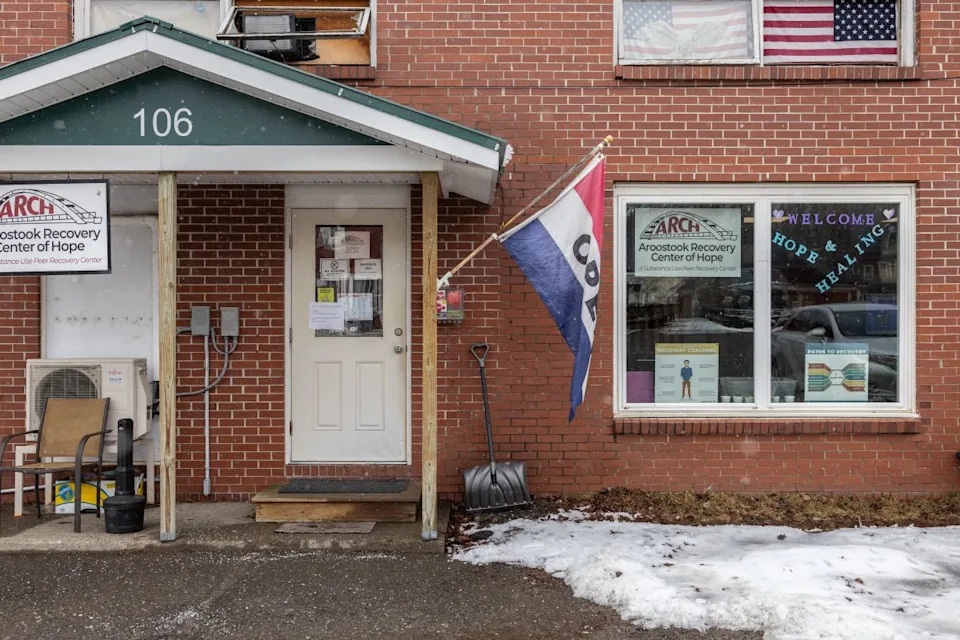
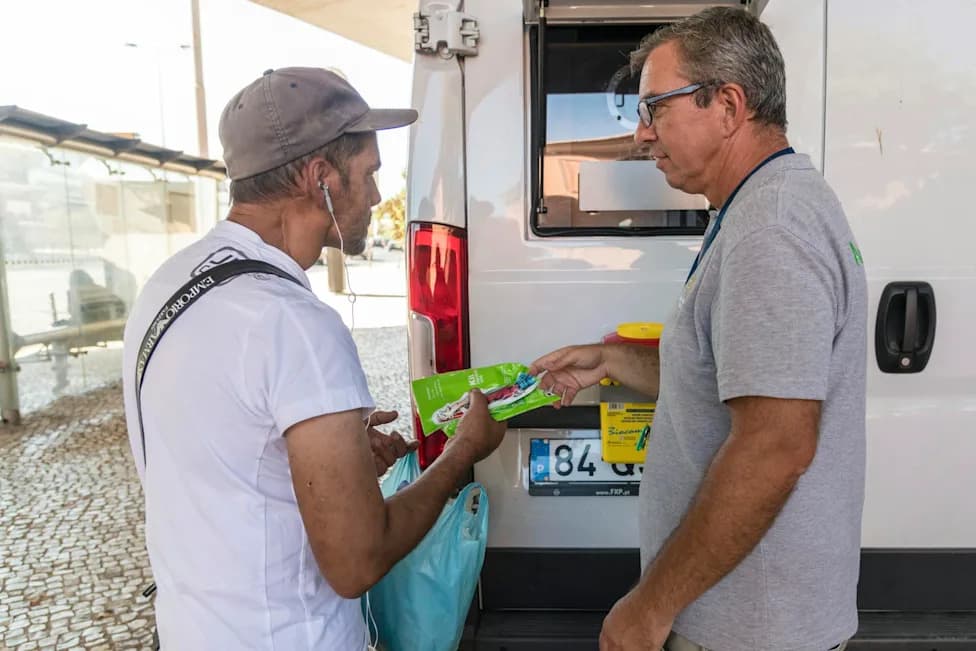
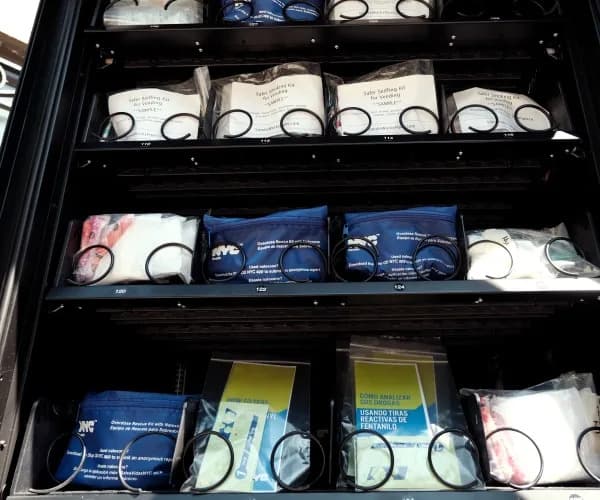
When people leave the Aroostook County Jail in Houlton, corrections officers hand them a small bag containing naloxone, drug test strips, a first-aid kit and a brochure for the nearby Aroostook Recovery Center of Hope. The center, a two-minute walk from the jail, offers peer recovery coaching, group meetings, referrals to treatment and a low-barrier place to connect with others in recovery.
Left: Sgt. Shanna Duffy organizes information and supplies — including a box of Narcan, an opioid overdose-reversing nasal spray — offered to prisoners on their way out of the Aroostook County Jail in Houlton in April. Right: Drug-testing kits and medical supplies at the Aroostook Recovery Center of Hope in Houlton in April. Photos by Greta Rybus forThe Maine Monitor.
Why The Transition Matters
Opioid-related overdose is the leading cause of death among people recently released from jail or prison, and post-release overdose rates are significantly higher than in the general population. More than two-thirds of Aroostook County Jail inmates have a substance use disorder or mental health diagnosis, and many receive medication-assisted treatment while incarcerated. Yet only a small fraction of the roughly 1,000 people released from the jail last year visited the nearby recovery center.
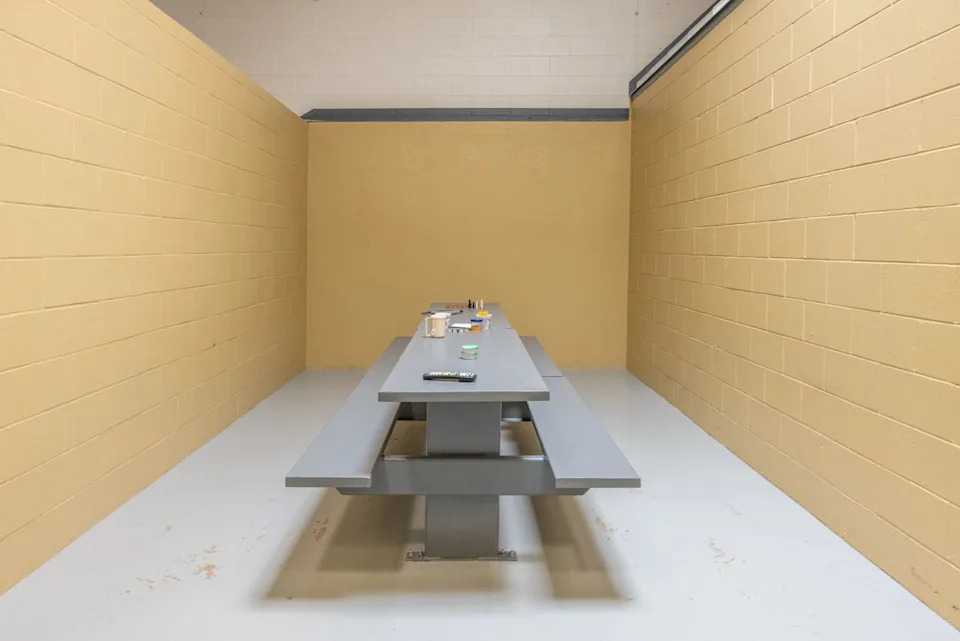
The Franklin County Detention Center in Farmington in March. The facility can hold a maximum of 39 prisoners, making it the third-smallest jail in the state. Photo by Greta Rybus forThe Maine Monitor.
Barriers To Sustained Recovery
Leaving custody often exposes people to immediate obstacles: unstable housing, limited employment opportunities for those with criminal records, scarce transportation and difficulty accessing medical care. Research indicates that people who can secure stable housing, health coverage and employment after release are less likely to return to custody, but delivering those supports requires more than in-jail treatment programs. It requires coordinated re-entry planning and strong community connections.
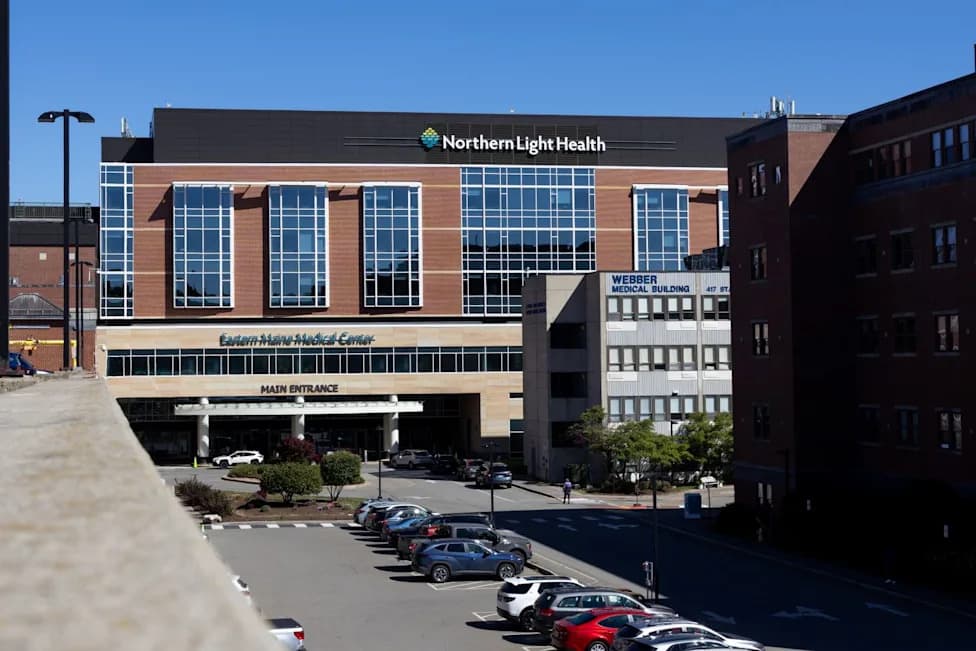
Left: The Aroostook Recovery Center of Hope, seen above in April, moved into its current location at 106 Main St. in Houlton, less than half a mile from the jail, in 2022. Right: Zach Jeffrey, one of the center's recovery coaches, considers himself an affected other — someone who has been impacted by a loved one's addiction. Photos by Greta Rybus forThe Maine Monitor.
Rural Challenges
In rural counties like Aroostook and Piscataquis, the safety net is thin. As of June, Aroostook had only three recovery homes and its single inpatient detox unit lacked a physician. The county warming shelter is an hour away from Houlton. Those gaps often push people back into the same networks that contributed to past substance use, jail nurse Lea Riley said: 'They blossom during incarceration and then they wilt after release.'
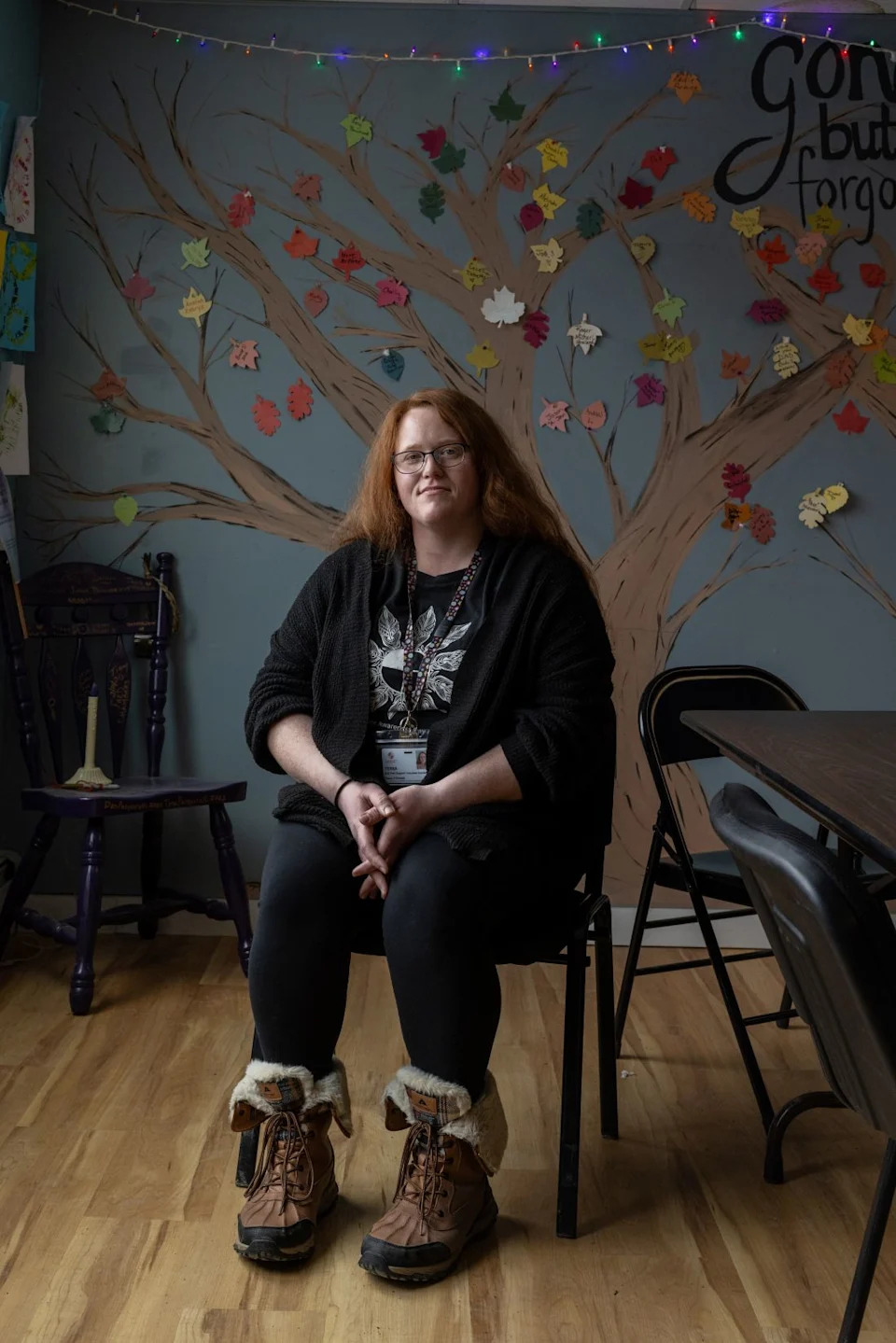
Tessa O'Donnell is a peer recovery coach at the Aroostook Recovery Center of Hope in Houlton. Photo by Greta Rybus forThe Maine Monitor.
What Works: Bridging Care From Jail To Community
Across Maine, counties rely on a patchwork of supports: OPTIONS liaisons who provide overdose prevention outreach, DHHS intensive case managers who help enroll people in MaineCare and arrange services, and contracted medical providers who coordinate medication-assisted treatment. Success varies widely, and jails can sometimes become 'black holes' if access to services depends on written requests or encounters long delays.
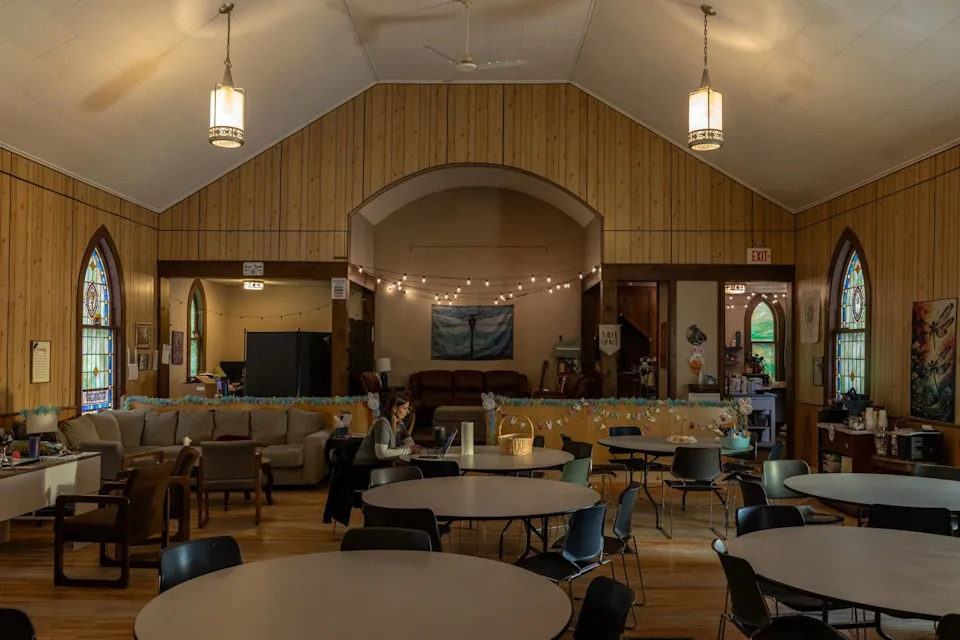
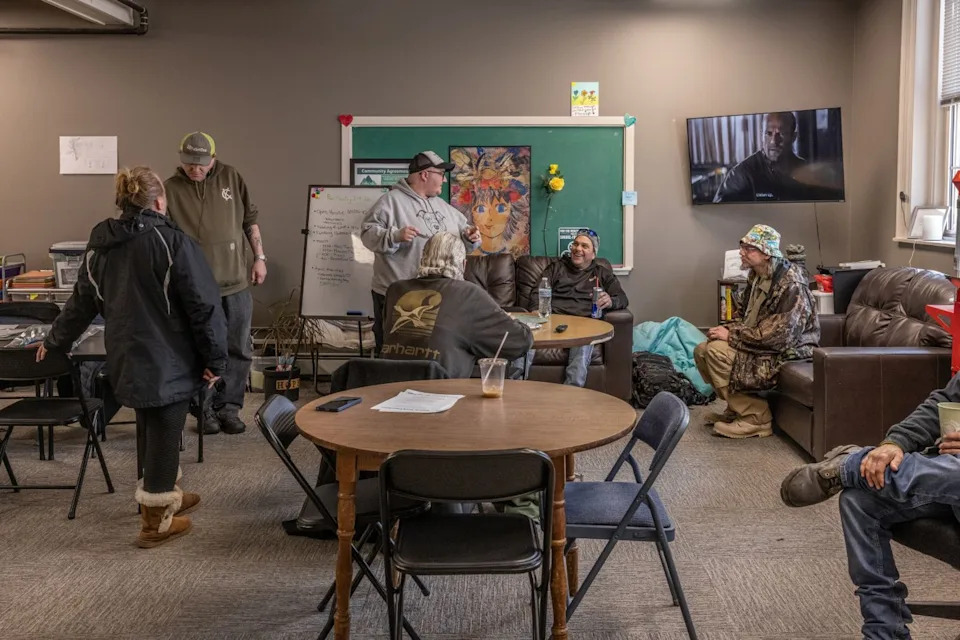
a worker sits inside the Recovery Wellness Community Center
Vikki Wachino, executive director of the Health and Reentry Project, said: 'If you start services before someone leaves and build that bridge back to the community, you can reduce deaths from opioid overdose and improve public safety.'
Hands-On Re-Entry Support
Franklin County offers a concrete example of a more proactive approach. Using a $1 million DOJ grant, the Franklin County Detention Center expanded medication-assisted treatment and hired a full-time re-entry coordinator and two corrections officers dedicated to the program. The re-entry coordinator meets with virtually everyone booked for longer than 24 hours, pursues bed-to-bed transfers to recovery housing, makes referrals to treatment, and shares a direct cell number with people leaving custody.
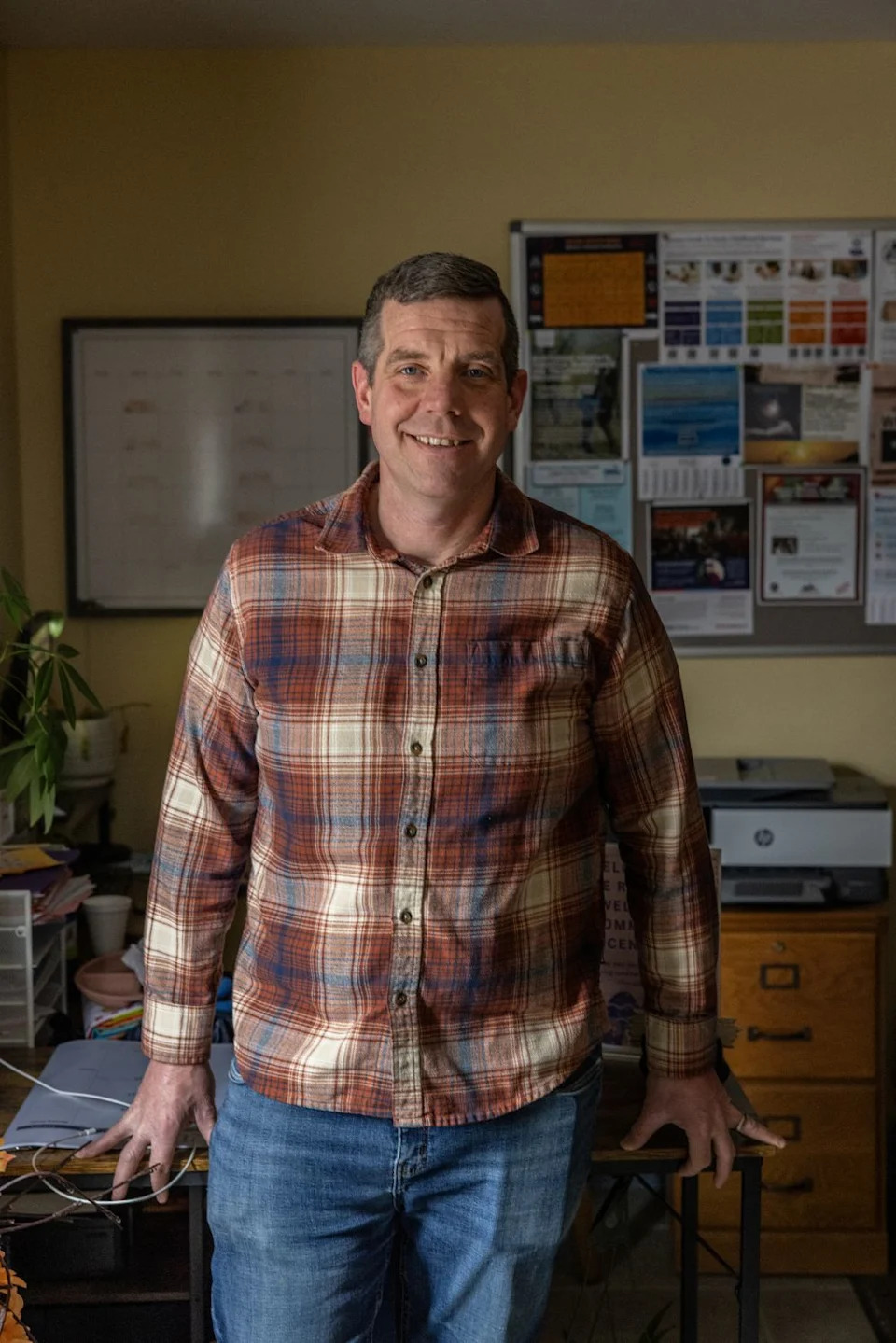
The Recovery Wellness Community Center in Sangerville in March. Top: Crystal Hoffman, the OPTIONS liaison for Piscataquis County, catches up on work at the center, an old church. Bottom left: Alan Burgess, the center's programs manager and a Guilford native. Photos by Greta Rybus forThe Maine Monitor.
Those human connections are essential. Options recovery coaches and peer navigators often provide the 'last-mile' support—picking people up from jail, driving them to appointments or housing, and making sure they do not immediately return to high-risk situations. As one recovery coach put it, 'If I can make it where you’re not walking down the street to your dealer’s house, and I can drive you home and I know you’re safe, I’ll do it all day.'
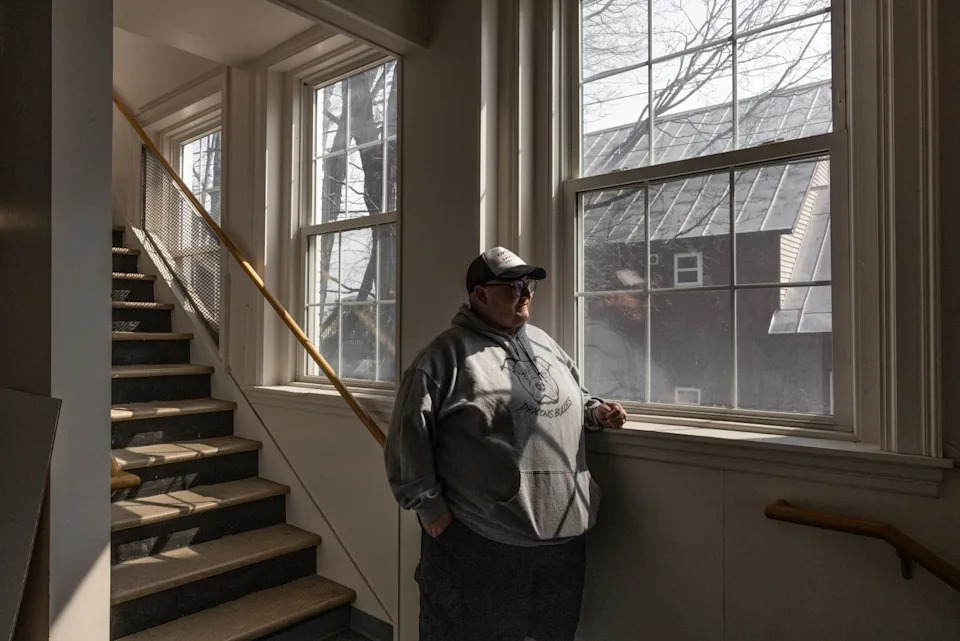
Alison Prior, the re-entry coordinator at the Franklin County Detention Center in Farmington, in March. Prior tries to meet with every single prisoner booked at the jail for longer than 24 hours. Photo by Greta Rybus forThe Maine Monitor.
Peer Services And Stigma
Peer recovery coaches play a critical role in building trust. Many clients arrive in a contemplative phase — curious but unsure — and stigma can deter them from seeking help, especially in tight-knit communities. Centers try to 'meet people where they are,' offering low-barrier services, checking daily for openings in treatment beds, and arranging bus vouchers or rides when available. Timing matters: arriving on the right day or having immediate transportation can determine whether someone gets into treatment or falls through the cracks.
Left: Visitors at the Franklin County Recovery Center in Farmington gather in March. Right: From left to right, center staff Sarah Mulcahey, LeeAnna Lavoie, Holly Richards and Kristen Webster. Photos by Greta Rybus forThe Maine Monitor.
Progress And Persistent Gaps
Some counties show promising results. The Franklin County Recovery Center reports an 85 percent return rate among visitors since opening in April 2023, reflecting consistent engagement for many clients. Yet other counties are still building basic infrastructure: Piscataquis County only recently opened a recovery center in a converted church, and it will take time to build relationships with people inside the local jail.
Franklin County OPTIONS recovery coach Manny Reis, seen above at the Franklin County Recovery Center in Farmington in March, calls himself a "sober taxi" for people leaving the jail. Photo by Greta Rybusfor The Maine Monitor.
Conclusion
Delivering medication in jail is a necessary step, but it is not sufficient on its own. Reducing post-release overdose and recidivism requires integrated, person-centered re-entry planning, reliable transportation and stable housing options, expanded treatment capacity and ongoing peer support. Where counties invest in warm handoffs, intensive case management and last-mile transportation, people leaving jail stand a better chance of sustaining recovery and avoiding fatal overdoses.