Breton, a tagged adult great white shark weighing over 1,400 pounds, has been monitored by OCEARCH since his September 2020 tagging off Scatarie Island, Nova Scotia. Recent pings place him off eastern Florida—including a July 20, 2026 surface reading of about 87°F—an unusual location for this time of year. Scientists say warm surface temperatures do not rule out suitable habitat because Breton can dive to much cooler depths, and he may be following deep schools of pelagic fish. Ongoing tracking through the OCEARCH Global Shark Tracker will help researchers learn more about white shark migration drivers.
Massive 1,400+ lb Great White “Breton” Surprises Scientists After Pinging Off Eastern Florida

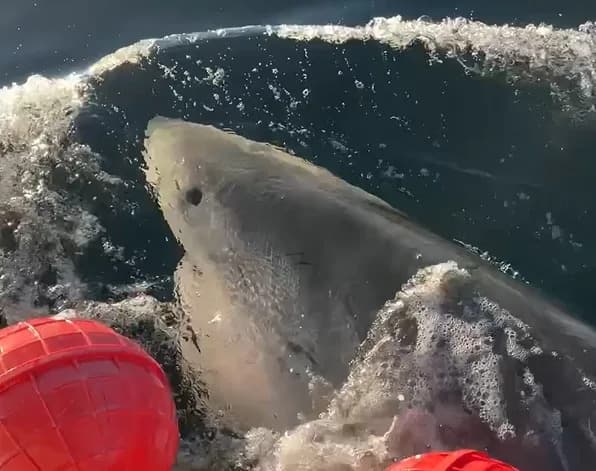
Breton the shark being released in 2020 after his evaluation and tagging.
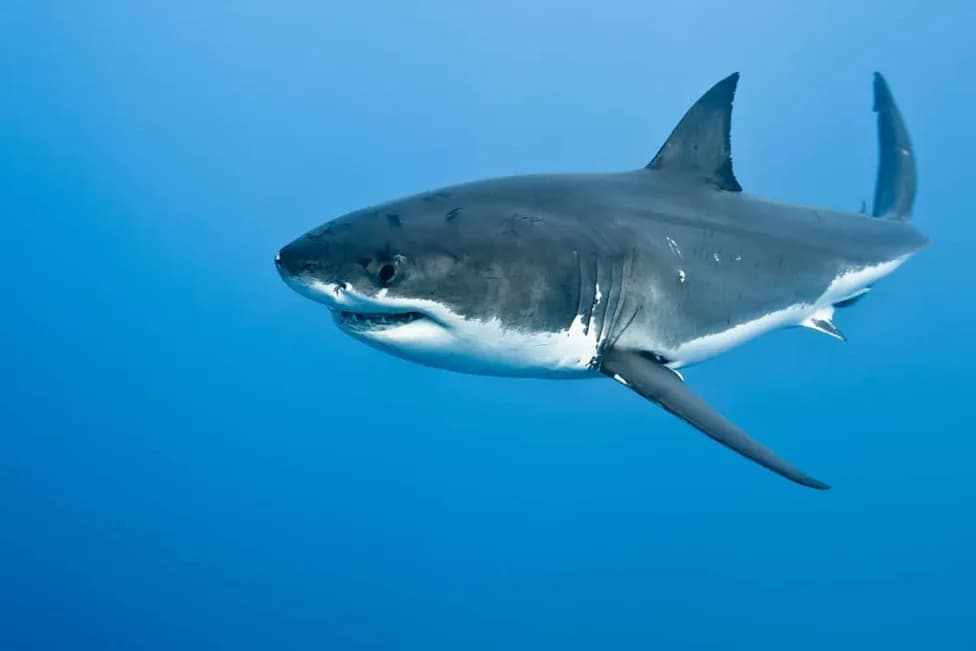
Breton, a tagged adult great white shark weighing more than 1,400 pounds when fitted with a transmitter, has drawn attention after recent location reports placed him off Florida's east coast—an uncommon location for white sharks at this point in the season.

Breton the shark being released in 2020 after his evaluation and tagging.
Tagged by OCEARCH in September 2020 off Scatarie Island, Nova Scotia, Breton has been tracked continuously on the OCEARCH Global Shark Tracker. While many tracked white sharks congregate around Cape Cod and Atlantic Canada during summer, Breton's latest positions show a southerly route into much warmer surface waters.
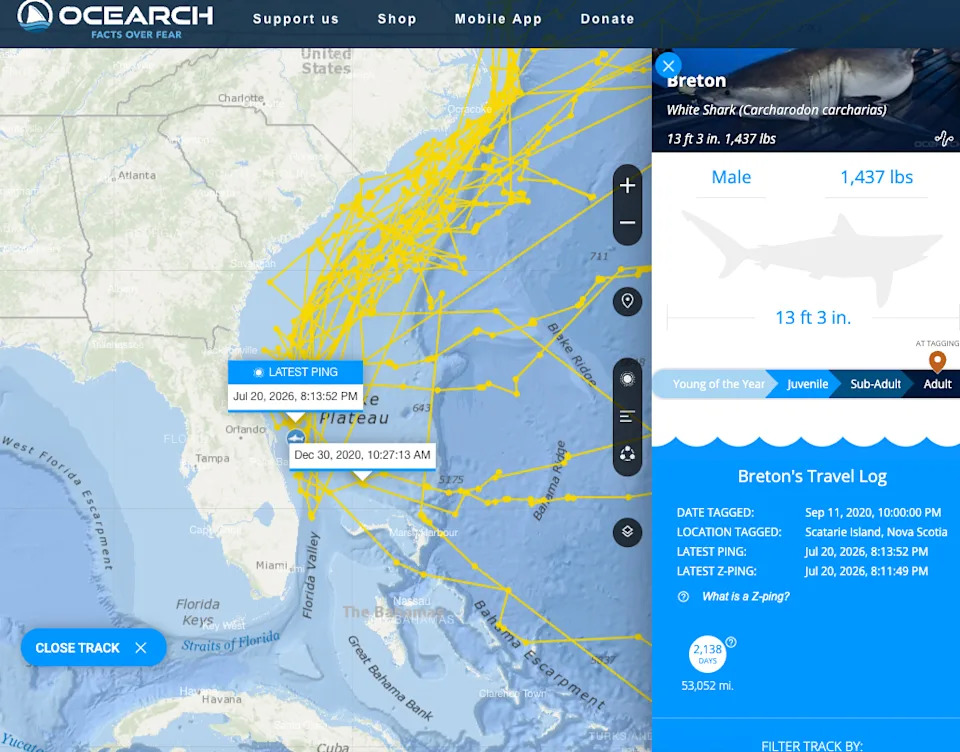
Breton's latest ping on July 20, 2026 off the eastern coast of Florida.
Warm Surface Waters, Cooler Depths
One of Breton's pings, recorded on July 20, 2026, logged a sea surface temperature of about 87°F (31°C)—quite warm for a white shark at the surface. However, researchers caution that warm surface readings do not necessarily indicate unsuitable habitat for white sharks.

Breton swims by the camera during his tagging in Sept. 2020.
"Warm surface water doesn't necessarily mean unsuitable habitat," said OCEARCH Senior Data Scientist John Tyminski. "Breton likely has access to much cooler water at depth."
Tyminski noted that great whites commonly dive hundreds of meters below the surface to find cooler temperatures and to hunt. These deep, vertical movements allow them to tolerate warm surface conditions that might otherwise seem unfavorable.
Why Is Breton Heading South?
Scientists do not yet know the exact reason for Breton's unexpected route, but a leading hypothesis is that he is following pelagic fish that form large, deep schools off parts of the Florida coast. Such prey can draw predators into atypical areas and temperatures.
Breton was visible on video during his tagging operation in September 2020, and his tracking transmitter remains active. OCEARCH currently follows more than 400 ocean animals in real time; the free OCEARCH Global Shark Tracker app lets the public monitor Breton and many other tagged marine animals as positions update.
Continued monitoring of Breton will help researchers better understand the environmental and biological drivers behind white shark movements along the Atlantic seaboard.
Help us improve.