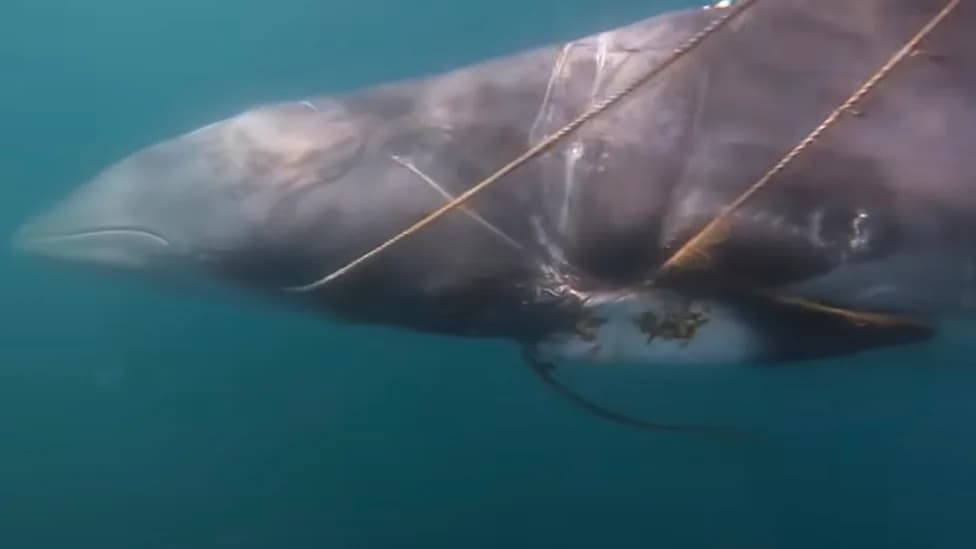
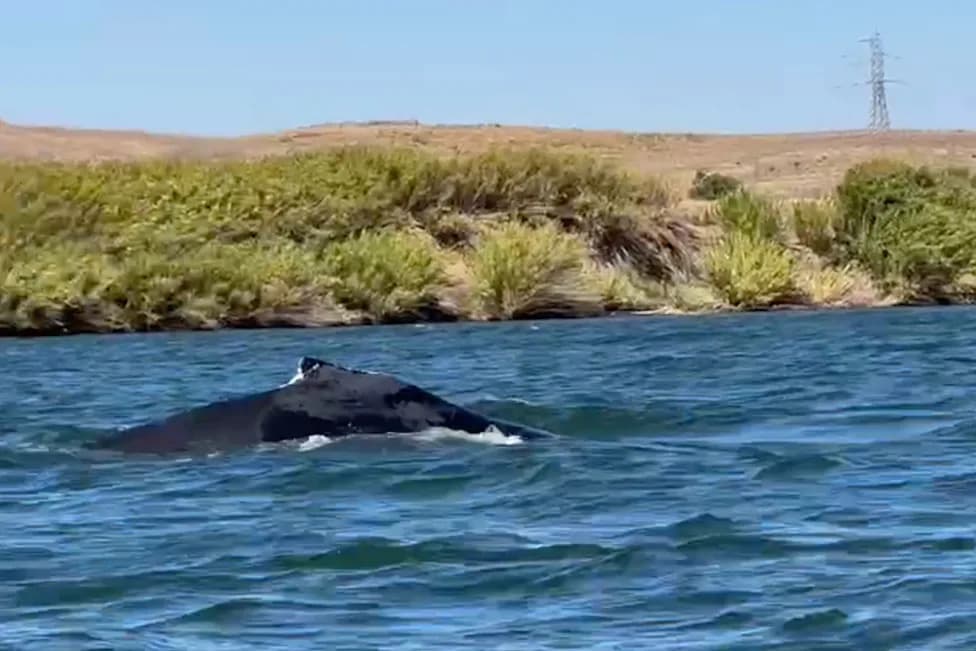
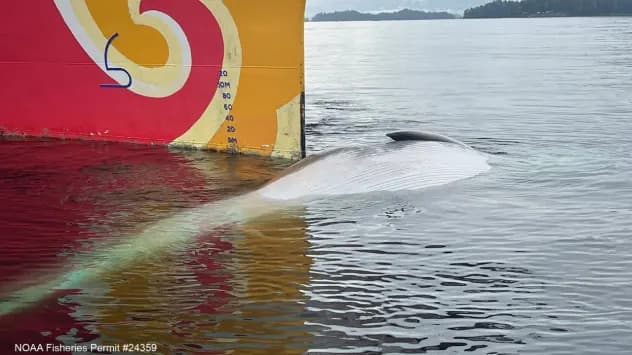
A juvenile humpback about 30 feet long and an estimated 35,000 pounds was found wedged under a private dock in Winthrop, Massachusetts, prompting a multi-agency response led by WDC-NA. The whale has not yet been identified and its cause of death is unknown; photos were sent to the Center for Coastal Studies to check the Gulf of Maine catalog. WDC-NA and NOAA are coordinating removal for a necropsy that could take several days, while investigators consider entanglement, vessel strike or disease. Authorities urge boaters to slow in whale habitat and report distressed animals to the hotline.
30-Foot Humpback Found Wedged Under Private Dock in Winthrop, Massachusetts — Multi-Agency Response Underway
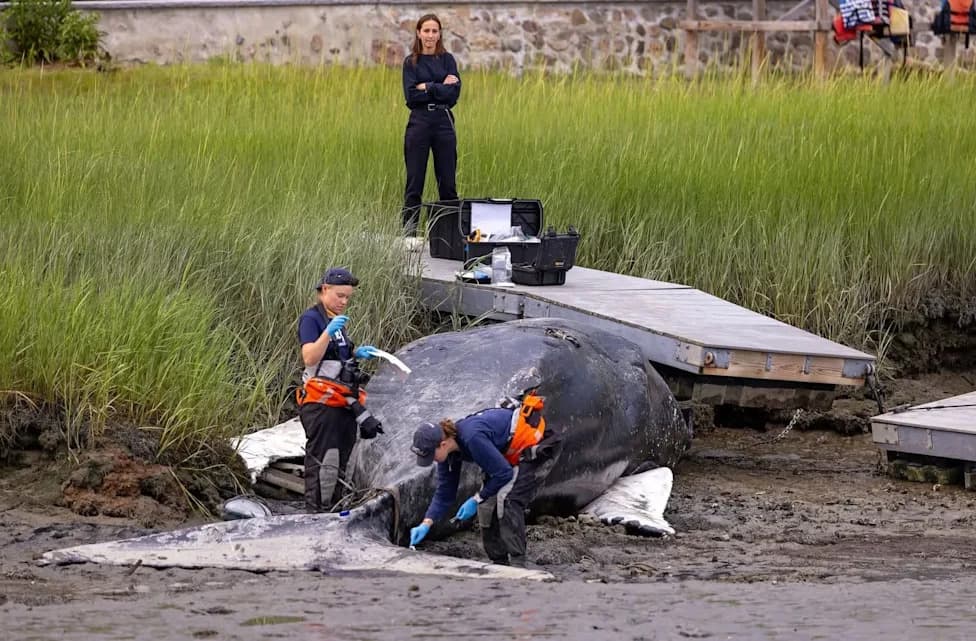
Photo Credit: Whale and Dolphin Conservation
A juvenile humpback whale, roughly 30 feet long and estimated at about 35,000 pounds, was found washed up and lodged beneath a private dock in Winthrop, Massachusetts, as the tide rose. The discovery prompted a multi-agency response led by Whale and Dolphin Conservation of North America (WDC-NA) with support from the Massachusetts Environmental Police and the Winthrop Harbormaster.
Eyewitnesses reported seeing the animal near Washington Avenue around 12:30 p.m., but response teams did not reach the scene until the evening when conditions and resources allowed. Officials say the whale's identity is not yet known and the cause of death remains under investigation.
Photographs of the carcass were sent to Provincetown's Center for Coastal Studies to compare against the Gulf of Maine Humpback Whale Catalog as investigators work to confirm the individual. WDC-NA and the National Oceanic and Atmospheric Administration (NOAA) are coordinating the complicated removal and transport of the whale for a necropsy, a process that could take several days while crews arrange equipment, permits and safe handling procedures.
What Investigators Are Looking For
Responders will conduct internal and external examinations to look for signs of entanglement, vessel strike trauma, illness, or other causes. NOAA has classified a series of East Coast strandings dating back to 2016 as an Unusual Mortality Event, a designation that has included humpbacks, minke whales and the critically endangered North Atlantic right whale.
Major causes of death documented in regional strandings include entanglement in fishing gear, collisions with vessels and infectious disease. Entanglements and vessel strikes are tightly linked to human activity—incidents have increased as boat traffic, coastal development and lost or abandoned fishing gear have grown in nearshore whale habitat.
Community and Cultural Response
"The federal funding freezes and delays in funding opportunities we have experienced in the past year do not stop whales from stranding, but they do disrupt our ability to respond," said Regina Asmutis-Silvia, Director of WDC-NA.
WDC-NA has reached out to tribal liaisons, including the Wampanoag Tribes, recognizing the cultural significance of the loss. "We are heartbroken at the loss of this young animal," said Lauren Brandkamp, WDC-NA's stranding response coordinator.
How the Public Can Help
If you find a distressed marine mammal along the coast between Plymouth and Revere, call WDC-NA's stranding hotline at 617-688-6872. Boaters and recreational mariners can help by slowing down and staying vigilant in known whale habitat, reporting sightings, and avoiding loose fishing gear.
State officials noted that no other large whale had washed up in Massachusetts earlier this year; responders dealt with six strandings in 2024. As the investigation continues, authorities emphasize that necropsy results and further analysis are needed to determine the whale's cause of death and whether human activity played a role.
Help us improve.