Amir Baram, Israel’s Defense Ministry director-general and a 38-year IDF veteran, is negotiating a new US–Israel defense partnership for 2028–2038 while pushing a major domestic munitions-production effort. Talks with Washington have been delayed, raising the risk the MOU won’t be finalized before a newly seated US Congress. Baram is also diversifying export markets—especially deepening ties with India—and driving reforms to care for tens of thousands of wounded and traumatized soldiers.
‘Mr. Security’: How Amir Baram Is Recasting Israel’s Defense Partnerships and Industrial Base
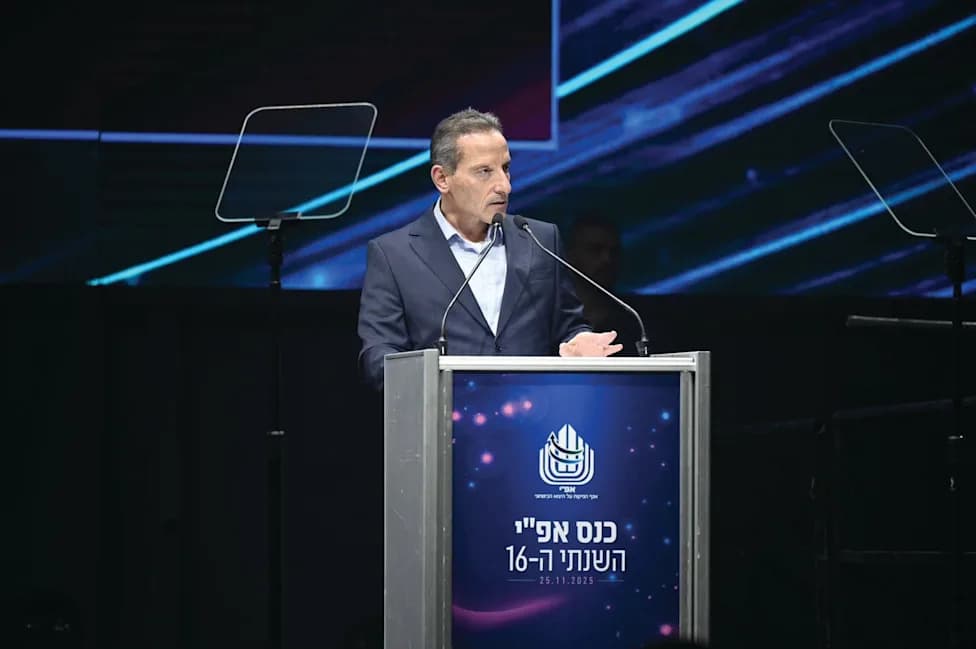
DEFENSE MINISTRY Director-General, Maj.-Gen. (res.) Amir Baram, speaks at a Defense Export Controls Agency's conference last November about the ministry's strategic priorities for defense exports. These pertain to expanding activities in existing markets, establishing national leadership (photo credit: COURTESY DEFENSE MINISTRY)
Amir Baram, Israel’s Defense Ministry director-general and a 38-year veteran of the IDF, is leading a high-stakes effort to remake Israel’s long-term military relationships and build greater domestic defense independence. Baram—known for frontline service in Lebanon, Gaza and the West Bank and for occasional maverick initiatives such as restoring brigade parachute training—took the ministry’s top apolitical post in early 2025 and has since been traveling to secure Israel’s defense interests amid intense regional and diplomatic turbulence.
Negotiating a New US-Israel Defense Framework
Baram is Israel’s chief negotiator for a proposed memorandum of understanding (MOU) with the United States intended to replace the traditional “aid MOU” model with a strategic partnership that would define cooperation for 2028–2038. The shift reflects Israel’s evolution from a recipient of military aid to a regional defense and industrial power. But the move also poses a structural challenge: past MOUs were written as aid agreements, and there is no clear precedent for the new partnership format Baram is attempting to design.
Talks with Washington have been slow and were further affected by regional conflicts. An expected visit to Washington has been postponed, and Israeli officials worry a new MOU may not be finalized before a newly seated US Congress in January. That timing matters because a change in congressional control could increase legislative scrutiny or opposition: recent votes in the US Congress—such as senators blocking certain weapons sales and a House Democratic amendment targeting the $3.3 billion in annual foreign military financing to Israel—underscore the political risks.
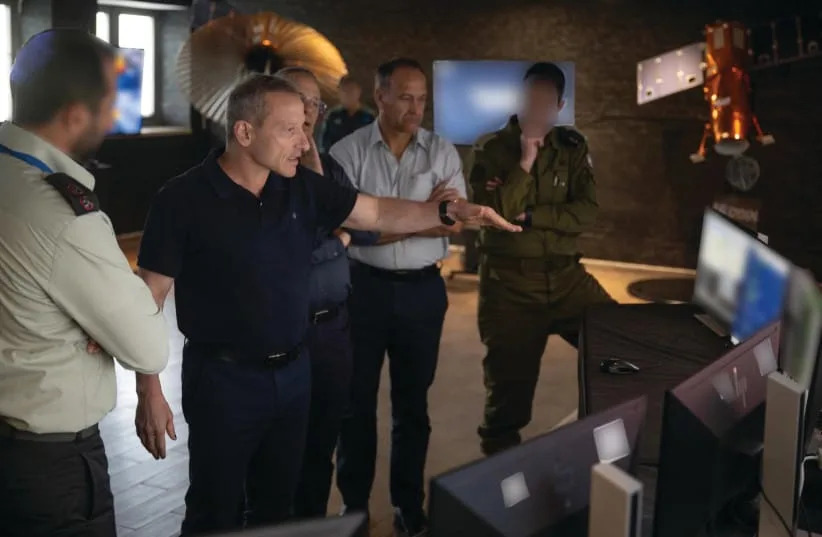
BARAM VISITS the 9900th Unit, the IDF's visual intelligence and geospatial division, accompanied by the unit's commander, Brig.-Gen. 'S,' and the head of the Space Directorate within the Defense Ministry's Directorate of Defense, Research & Development, Avi Berger, last week. (credit: COURTESY DEFENSE MINISTRY)
Domestic Industrial Push And Doctrinal Change
Domestically, Baram must reconcile the MOU negotiations with Israel’s accelerated drive to mass-produce both unguided and precision munitions. The aim is to reduce reliance on foreign suppliers during extended conflicts and to embed readiness for longer, protracted campaigns into doctrine. Prime Minister Benjamin Netanyahu has pledged funds to expand weapon self-sufficiency; Baram’s responsibilities include securing those resources from the Finance Ministry and translating them into procurement, industrial scaling and organizational change across the defense establishment.
Not all defense figures agree with preparing for sustained wars. Some former senior officials advocate a return to shorter conflicts, citing Israel’s limited size, population and diplomatic bandwidth. Baram has publicly rejected the notion that Israel should plan only for brief wars, arguing the IDF must retain the capacity for longer-duration operations while preferring shorter campaigns when possible.
Diplomatic And Export Challenges
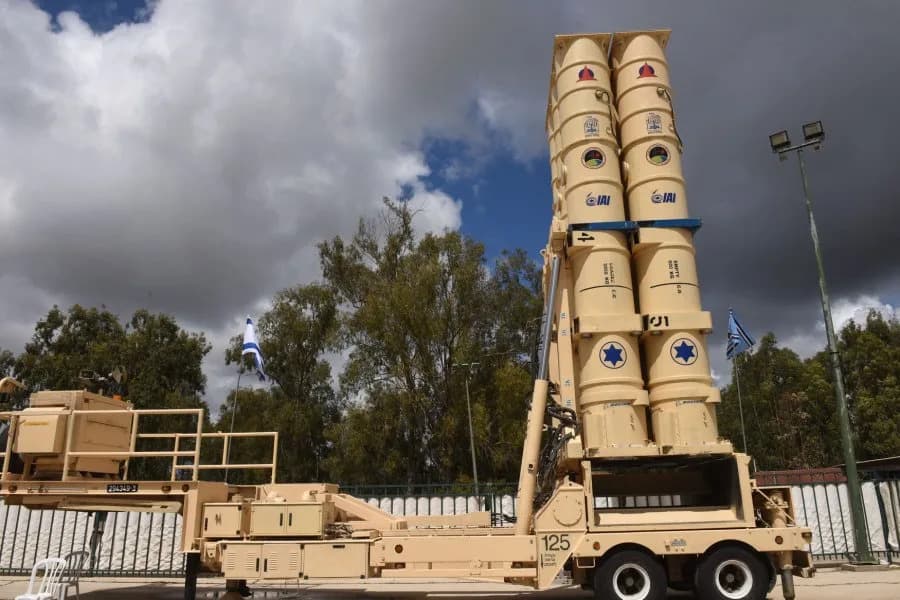
European defense markets and politics present mixed signals. Israel’s sales to Europe remain significant in some areas—Germany’s purchase of the Arrow 3 interceptor system being a prominent example—but overall European defense sales dipped between 2024 and 2025. Officials attribute much of the change to a record-high sales year previously, combined with political caution in some capitals following disagreements over Israel’s conduct in recent conflicts.
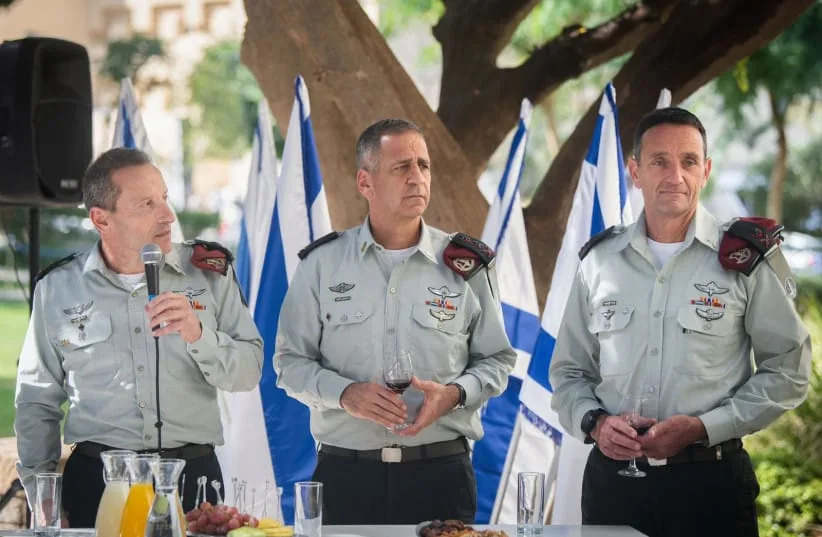
Amir Baram stands with Aviv Kohavi and incoming Chief of Staff Herzi Halevi, October 31st, 2022. (credit: IDF SPOKESPERSON UNIT)
France has been a particular point of friction: after Paris limited certain arms transfers and constrained Israeli participation at some defense forums, the Defense Ministry said it would reduce procurement from France and substitute domestic or allied-sourced systems. Ministry sources framed the move as part of a broader diversification strategy, while analysts debated the long-term consequences of cooling ties with a major European defense player.
Pivoting East And Deepening India Ties
Under Baram’s stewardship, Israel has broadened defense cooperation with partners beyond traditional Western customers. Relations with India, Greece, Cyprus and the UAE have deepened, with India emerging as a major and rapidly expanding defense partner. Ahead of Prime Minister Narendra Modi’s recent visit, Israel and India approved programs to expand cooperation, including joint development and local production. Reports indicate substantial arms deals to India in 2026 and multibillion-dollar sales across 2020–2024.
Baram is pushing for a shift from simple buyer–seller relationships toward joint production and technology co-development—examples under discussion include local production of interceptors and collaborative next-generation systems. Sources close to the ministry say Israel is prepared to share highly sensitive capabilities with select partners as part of a broader strategy to diversify strategic anchors, while stressing this does not replace close ties with the United States.
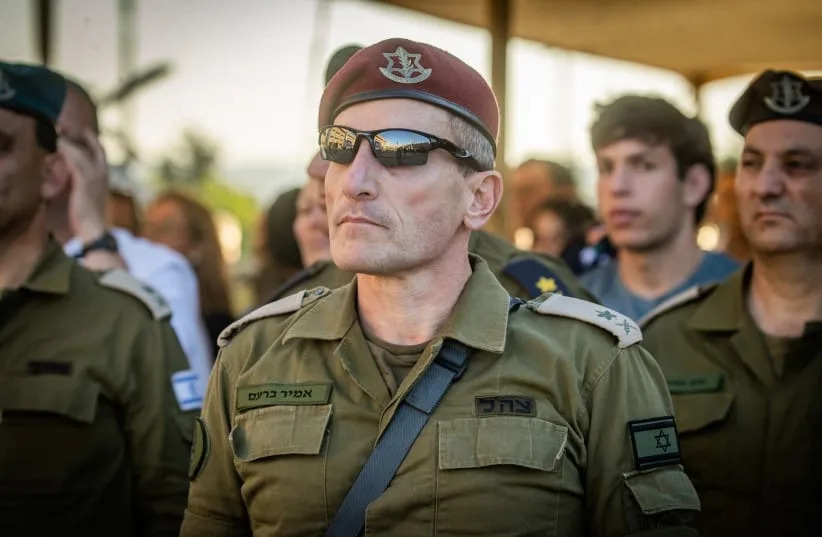
IDF Deputy Chief of Staff Maj.-Gen. Amir Baram attends a ceremony held at the IDF Central Command headquarters in Jerusalem, July 8, 2024 (credit: OREN BEN HAKOON/FLASH90)
Technology, AI And US Cooperation
Baram sees strategic technology transfers, including in artificial intelligence, as a bargaining chip in talks with the US. While Israel is widely respected in cybersecurity, it entered the global AI race later than the US and other major powers and lacks scale in certain resources. Baram and Israeli defense leaders are prioritizing niche AI capabilities where Israel can excel and are seeking deeper US cooperation to bolster those efforts.
Personnel And Rehabilitation Reforms
Domestically, Baram has championed social and personnel reforms. On July 16 the government approved a comprehensive overhaul of services for the surge of wounded and emotionally traumatized soldiers, following recommendations from a committee led by Prof. Shlomo Mor Yosef. The reforms propose a near-independent authority to manage tens of thousands of trauma cases and call for increased annual funding plus a one-time investment to establish the new agency. Baram characterized implementation as a national priority and a personal obligation.
Outlook And Career Trajectory
With a long record in uniform and in ministry roles, Baram is widely regarded as a possible future candidate for IDF Chief of Staff when the current chief’s term ends in 2028–2029. His current portfolio—negotiating a redefined US relationship, expanding Israel’s industrial base, diversifying export markets and driving social reforms—has reinforced his standing among policymakers and defense leaders.
Bottom Line: Amir Baram is steering Israel toward a more self-reliant defense posture while navigating uncertain international politics and complex domestic reforms. Success will depend on securing international partnerships, sustained industrial investment and political buy-in at home.
Help us improve.