Brazil's federal police operate a 'gold lab' in Brasilia that uses geochemical 'fingerprinting' to trace the origin of seized gold and detect illegal mining in protected Amazon areas. Developed with university partners since 2019, the lab uses XRF, SEM and laser ablation mass spectrometry to compare samples to a growing database. Independent monitoring groups estimate large recent increases in mining-related forest loss, and health studies show dangerous mercury contamination in fish and children. Authorities are pursuing stronger traceability measures and a draft plan to phase out mercury is open for public comment until Aug. 7.
Brazil’s "Gold Lab": Forensic Science Traces Illicit Amazon Mining and Mercury Pollution
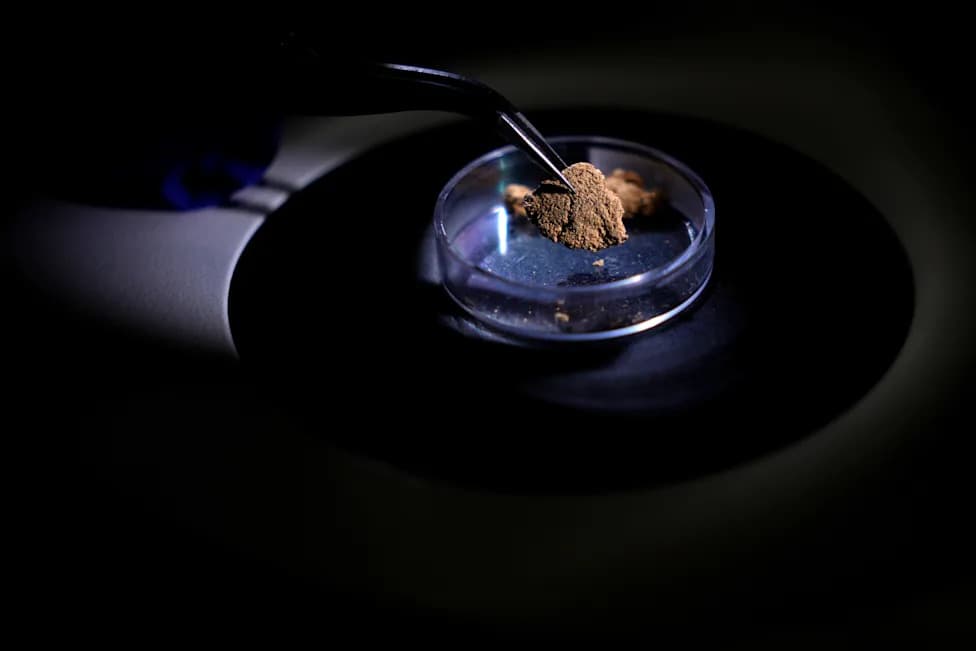
A forensic expert handles a gold-bearing sample during analysis at the National Institute of Criminalistics in Brasilia, Brazil, Monday, July 13, 2026. (AP Photo/Eraldo Peres)(AP Photo/Eraldo Peres)
Brazil is deploying advanced forensic techniques to fight illegal gold mining in the Amazon — a leading threat to the rainforest, Indigenous communities and public health. At the National Institute of Criminalistics in Brasilia, federal police operate a dedicated 'gold lab' that collects and analyzes samples from across the country to establish where gold was mined and whether it was extracted from protected lands.
How Gold Fingerprinting Works
As gold forms in rock or riverbeds, it incorporates trace elements from its surroundings, such as silver, copper and other mineral signatures. Investigators call this unique chemical mix a 'fingerprint.' Analysts compare seized gold against a growing database of geochemical signatures from known legal and protected sites to determine whether a sample matches the location claimed by its owner or instead originates in a national forest, Indigenous territory or other banned area.
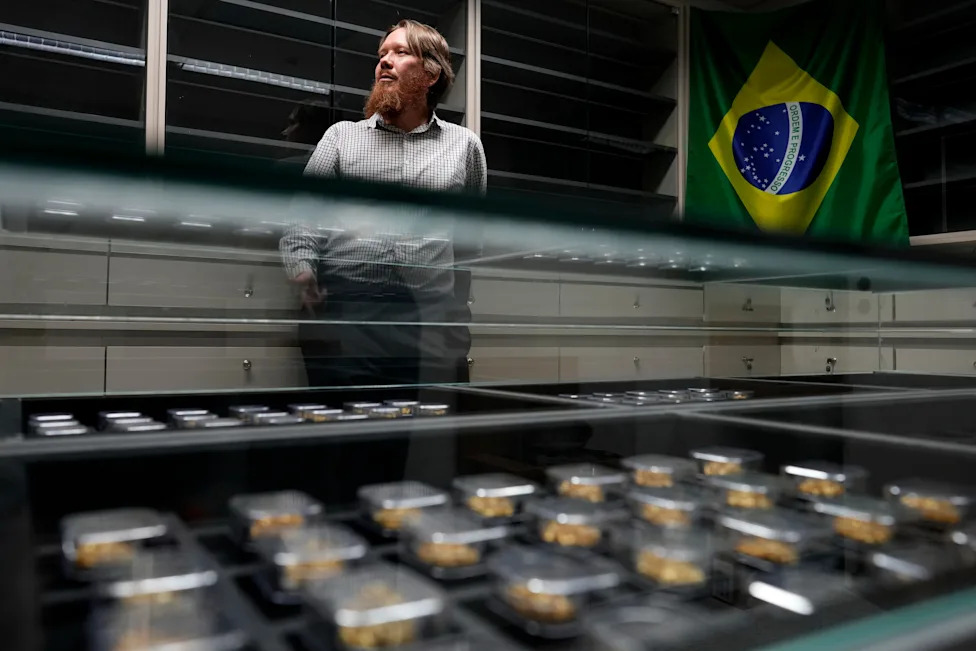
Gustavo Geiser, a federal police forensics expert, stands beside the reference collection of gold samples seized in investigations across the Amazon and neighboring countries at the National Institute of Criminalistics in Brasilia, Brazil, Monday, July 13, 2026. (AP Photo/Eraldo Peres)(AP Photo/Eraldo Peres)
Techniques and partnerships: The lab has developed its methods since 2019 in collaboration with Brazilian universities and uses instruments including X-ray fluorescence (XRF) spectrometry, scanning electron microscopy (SEM) and laser ablation mass spectrometry (LA‑ICP‑MS). Those tools reveal elemental and isotopic patterns that can tie metal to specific regions.
'As we advanced, the forensic examinations became increasingly complex,' said Gustavo Geiser, a federal police forensics expert. 'The central question is always: where did this gold come from?'
From Evidence To Enforcement
When laboratory results indicate that a sample was extracted illegally, the data become evidence for police investigations and potential prosecutions. The lab also helps strengthen traceability in global supply chains by demonstrating legitimate origin — a point that can affect whether gold is accepted into national reserves or bank holdings.
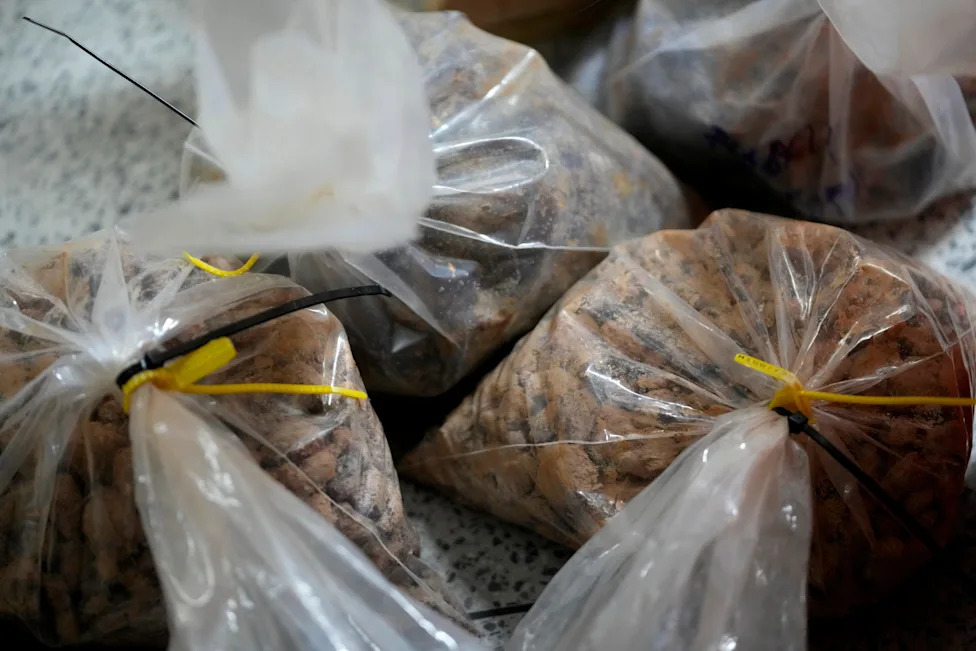
Bags containing soil and sediment samples collected during federal police operations against illegal mining are stored for forensic analysis at the National Institute of Criminalistics in Brasilia, Brazil, Monday, July 13, 2026. (AP Photo/Eraldo Peres)(AP Photo/Eraldo Peres)
Criminal networks frequently use paperwork fraud to introduce illegally mined gold into legal markets. Investigations and NGO reports describe 'ghost mine' schemes in which permits are issued for small, inactive legal sites while large-scale mining occurs on nearby Indigenous lands where extraction is banned.
Scale Of The Problem And Regional Response
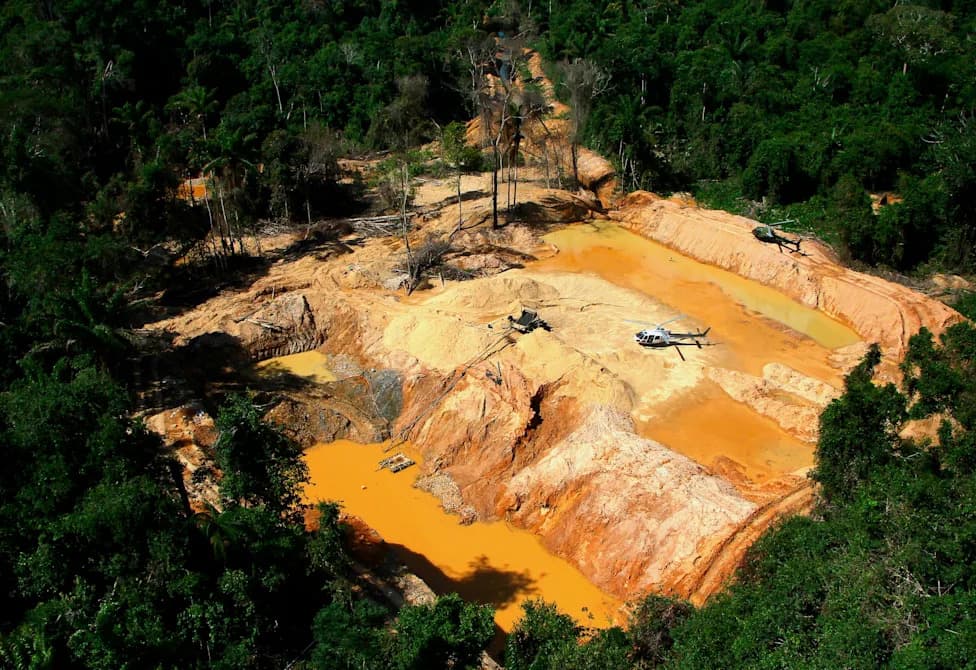
Independent monitoring platforms estimate rapid growth in mining-related deforestation: Amazon Mining Watch places the total area cleared for mining since 2023 at about 496,000 hectares (1.2 million acres), including roughly 223,000 hectares in the Brazilian Amazon. A 2023 MapBiomas analysis found that more than 90% of Brazil's mining occurs in the Amazon and that nearly 40% of that activity is illegal.
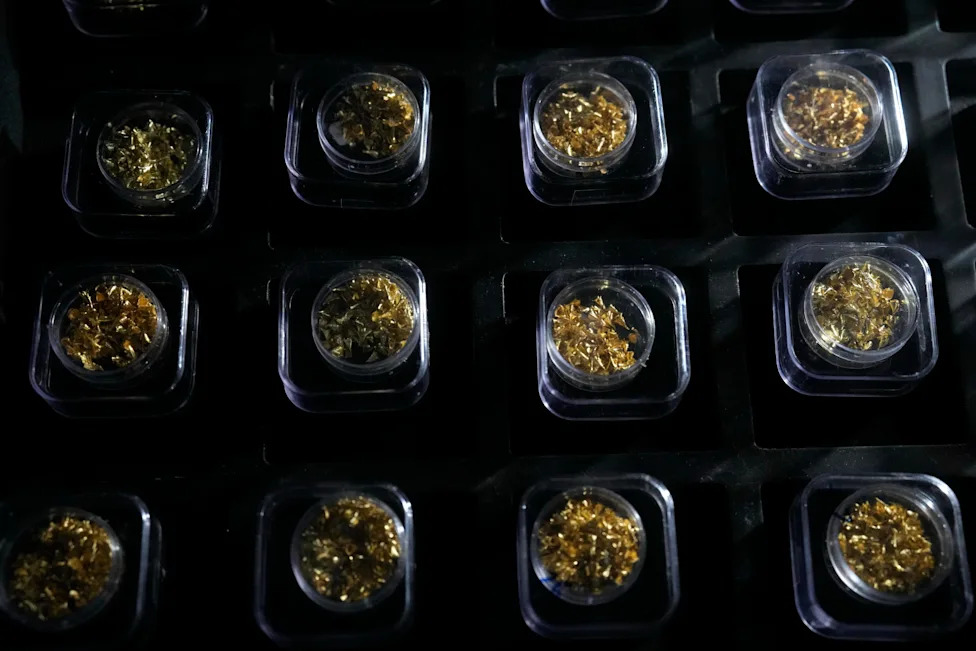
Gold samples seized during federal police investigations are displayed at the National Institute of Criminalistics in Brasilia, Brazil, Monday, July 13, 2026. (AP Photo/Eraldo Peres)(AP Photo/Eraldo Peres)
Concerns about permit abuse prompted Brazil's Federal Court of Accounts to flag evidence that mining permits issued to small-scale operators were being used to launder gold from protected areas. Prosecutors have filed lawsuits seeking stronger oversight of the National Mining Agency, and a federal court in Pará ordered institutions such as the Central Bank and the mining regulator to implement effective traceability from mine to market.
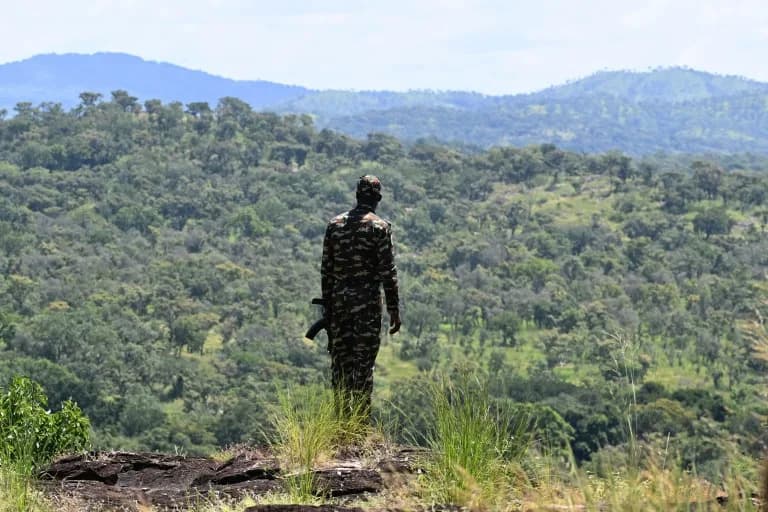
Cross-border laundering has expanded into neighboring countries, with samples from Venezuela, French Guiana and Suriname arriving at the Brasilia lab and being added to its database. Regional cooperation has increased through mechanisms such as the Amazon International Police Cooperation Center in Manaus.
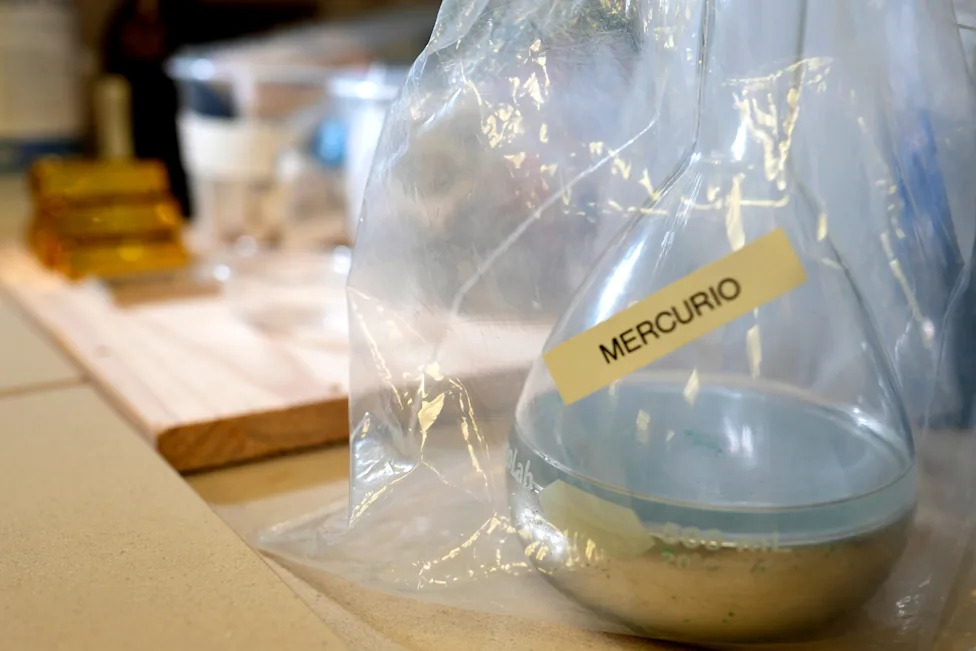
A laboratory container labeled mercury is visible at the National Institute of Criminalistics in Brasilia, Brazil, Monday, July 13, 2026. (AP Photo/Eraldo Peres)(AP Photo/Eraldo Peres)
Health, Environment And Policy
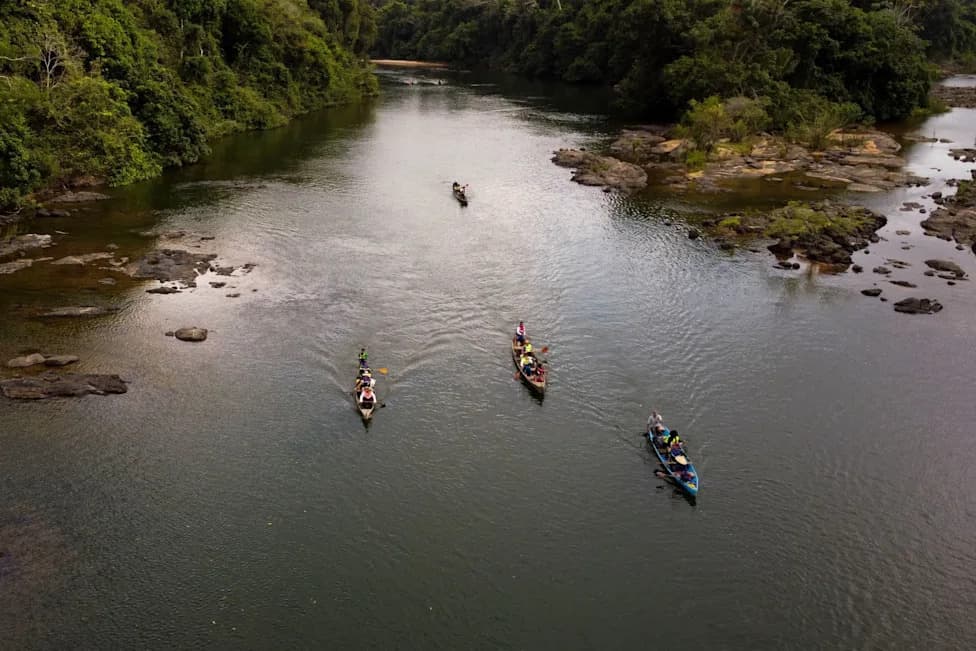
While illegal gold mining is a smaller driver of Amazon deforestation than agriculture, its environmental and health impacts are severe and long-lasting because mercury is widely used to extract gold. Mercury released into rivers contaminates fish and water supplies relied upon by Indigenous and riverine communities.
A 2023 study by Fiocruz found that 21.3% of fish sold in Amazonian markets exceeded World Health Organization safety limits for mercury, and that children aged 2 to 4 were consuming mercury at levels up to 31 times the recommended maximum. Brazil is a signatory to the U.N.'s Minamata Convention on Mercury, which commits countries to eliminate mercury use in gold mining.
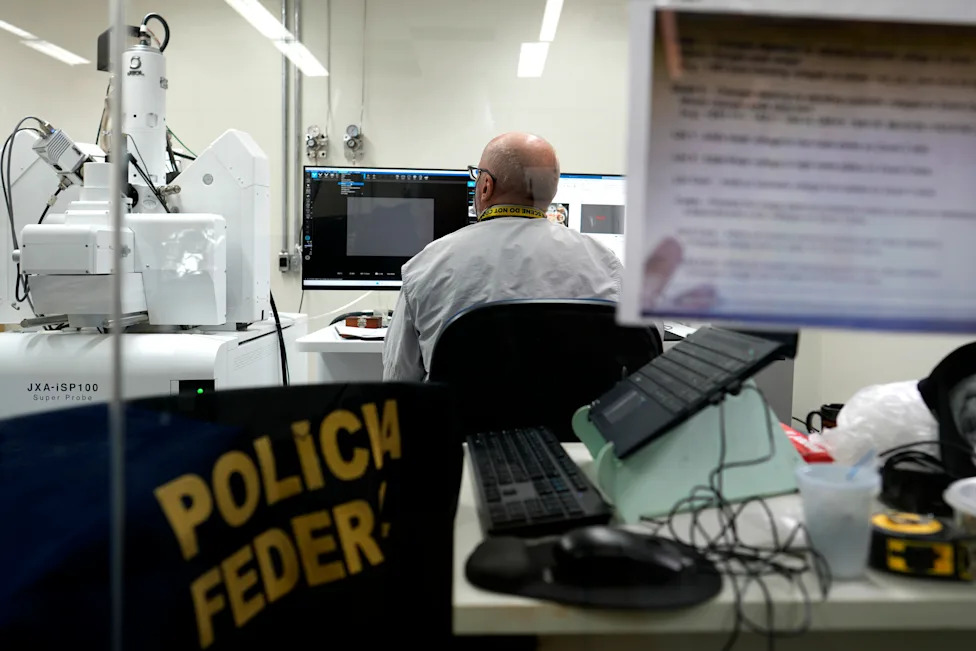
A federal police forensic expert works at an electron microscope analyzing gold samples at the National Institute of Criminalistics in Brasilia, Brazil, Monday, July 13, 2026. (AP Photo/Eraldo Peres)(AP Photo/Eraldo Peres)
This month the Ministry of Mines and Energy published a draft plan to phase out mercury, open for public comment until Aug. 7; federal prosecutors have urged that Indigenous groups be consulted as part of the process. Forensics experts say a full ban on mercury would not only reduce contamination but also make it easier to prove illegal mining, since mercury residues are detectable in samples.
'Being able to state that it (gold) has a legitimate origin ... provides solidity not only to the market but also to the countries' financial bonds,' Geiser said.
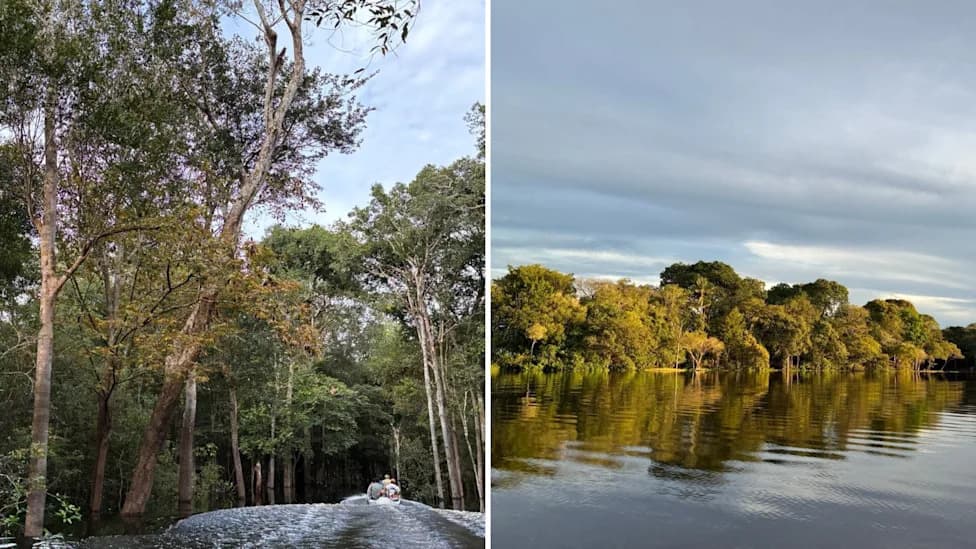
As Brazil scales up traceability, forensics and regional cooperation, the gold lab in Brasilia stands out as a high-tech tool to help clamp down on illegal mining, protect vulnerable communities, and preserve the Amazon's role in regulating the global climate.
Reporting note: The Associated Press' climate and environmental coverage receives foundation support; AP retains full editorial control of content.
Help us improve.