Tilly, a two-year-old golden Labrador, is Ontario’s first conservation detection dog, deployed by Credit Valley Conservation to find invasive species early in the Credit Valley watershed. Trained on the hemlock woolly adelgid, spotted lanternfly and red swamp crayfish, she began training at eight weeks and uses box-based scent work and food rewards. With a sense of smell far keener than humans, Tilly could expand monitoring across roughly 6,919 acres and improve early detection where crews previously covered about 40% of target habitat.
Meet Tilly: Ontario’s First Conservation Detection Dog Hunting Invasive Species
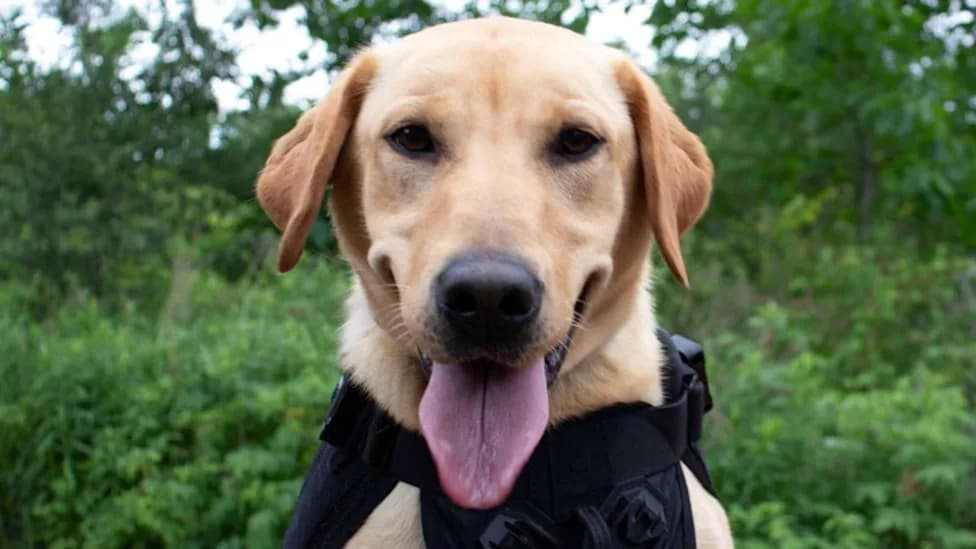
Photo Credit: Credit Valley Conservation
Tilly, a two-year-old golden Labrador, has become Ontario’s first conservation detection dog as part of a pilot program led by Credit Valley Conservation. Trained to detect invasive species early, she will search the Credit Valley watershed to help protect local ecosystems and infrastructure.
Why it matters
Invasive species — often spread by human activity — can damage trees, disrupt food webs, and burden local economies. Credit Valley Conservation estimates invasives cost Canada about $7.5 billion annually across agriculture, fisheries and infrastructure. Early detection is critical to stopping infestations before they cause irreparable harm.
What Tilly Is Trained To Find
Tilly’s current training targets three species: the hemlock woolly adelgid, the spotted lanternfly, and the red (swamp) crayfish. The hemlock woolly adelgid attacks eastern hemlock trees, causing needle loss, branch die-off and eventual tree death if left unchecked.
How She Was Trained
Tilly began formal training at eight weeks old with WorkingK9 trainer Antonio Pallotta. The program adapts detection methods used for military and law enforcement dogs but uses different target odors. Trainers started with target scents placed in boxes, then gradually increased difficulty by adding decoys and similar smells. Food rewards and Tilly’s natural drive for treats reinforced her scenting behaviors.
“Basically, it’s still detection work, so it falls under the same training protocols, just the target odors are obviously different,” Pallotta told CTV News Toronto.
What She Can Do In The Field
Because a dog’s sense of smell is far more sensitive than a human’s — estimated by Credit Valley Conservation to be roughly 100,000 times stronger — Tilly can cover more ground more effectively. Her deployment could expand monitoring coverage across roughly 6,919 acres and improve screening of hemlock woolly adelgid habitat where crews previously reached about 40% of the expected area.
Tilly is expected to begin field detection for red swamp crayfish at two Mississauga sites where the species has been found and will likely move toward Hamilton in the fall to search for hemlock woolly adelgids. The pilot program remains small and Credit Valley Conservation is not adding more dogs at this time.
Bottom line: Tilly’s keen nose and targeted training offer a faster, more accurate tool for early detection of invasive species, which can help protect regional ecosystems and reduce costly long-term damage.
Help us improve.