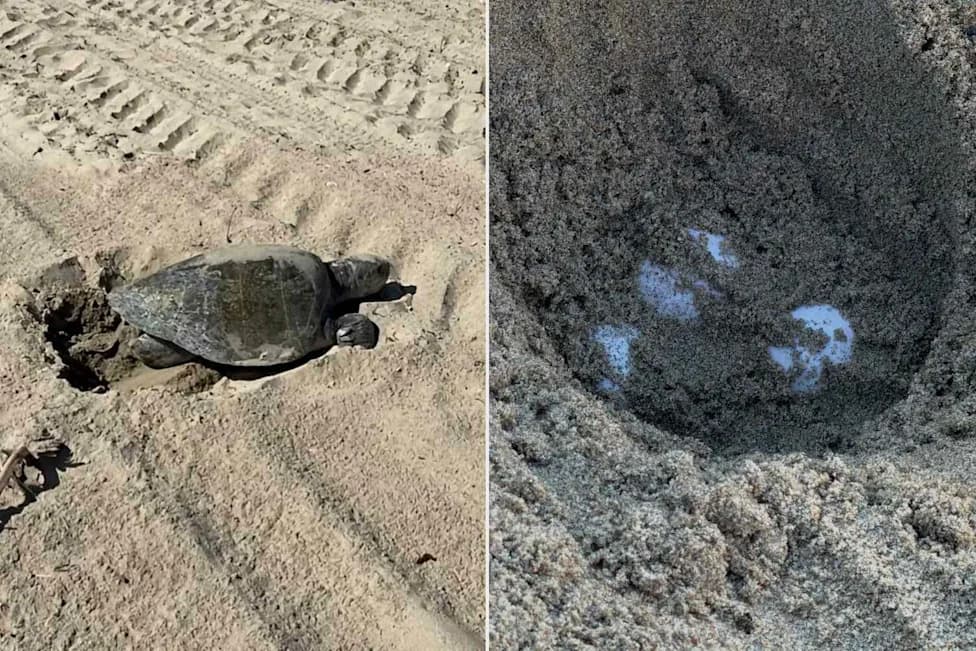
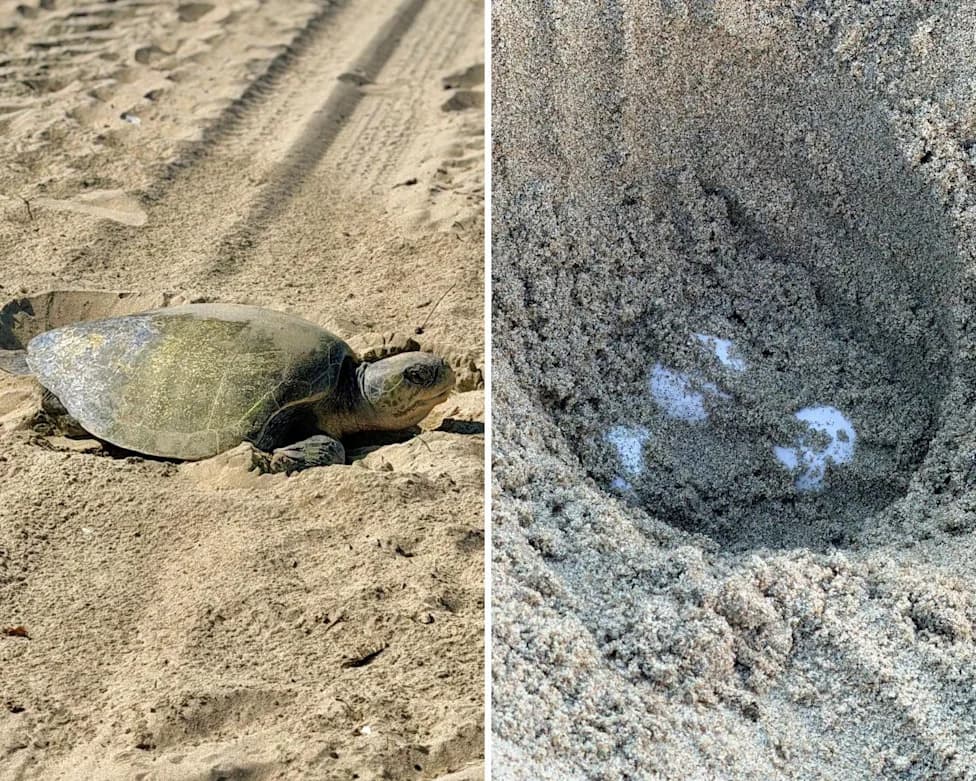
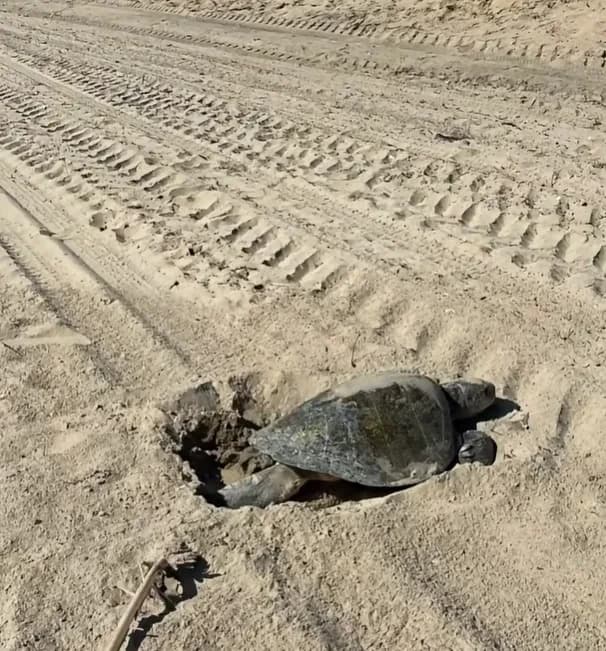
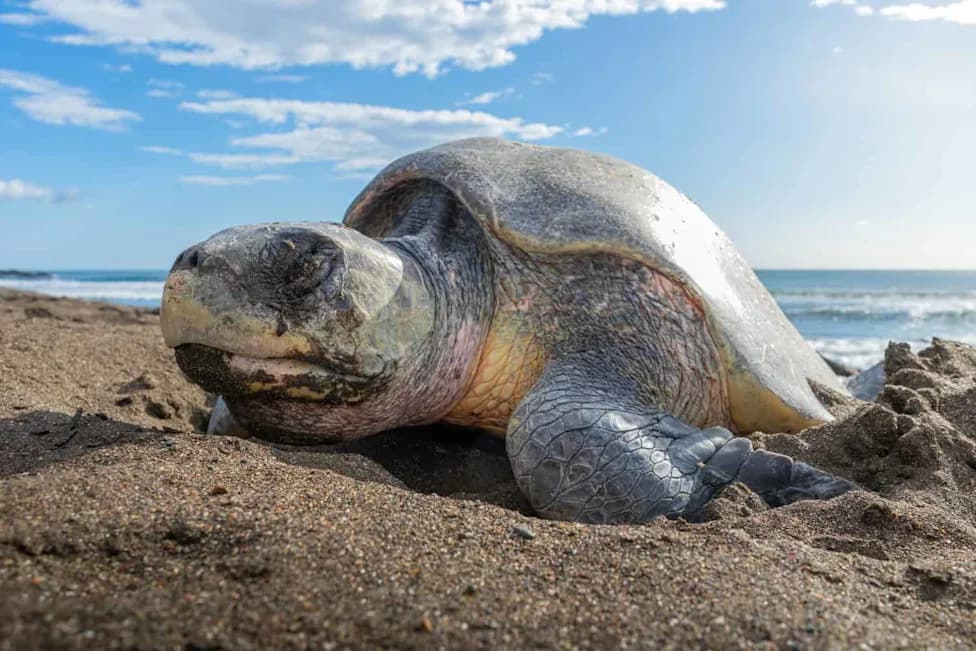
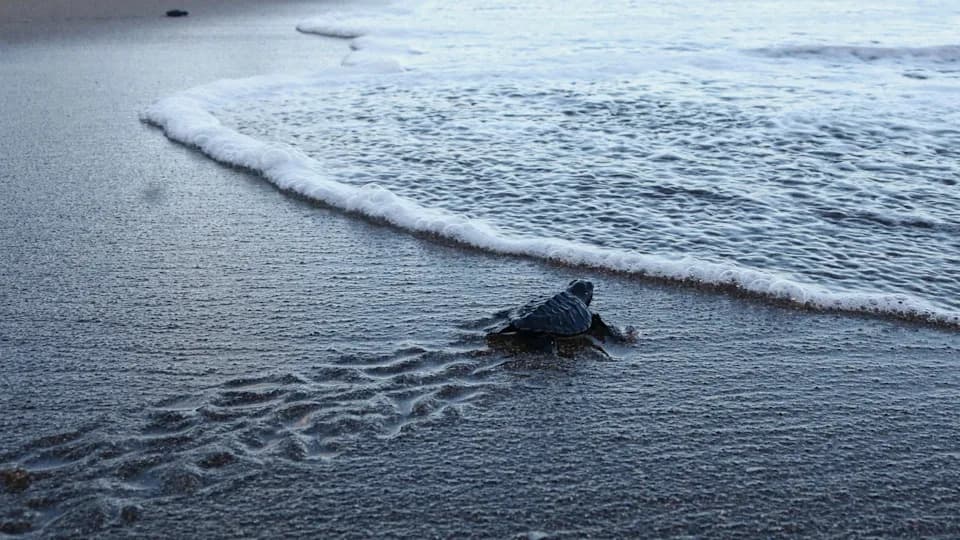
The first recorded leatherback sea turtle nest in Virginia was found on the Atlantic shore near Naval Air Station Oceana's Dam Neck Annex. U.S. Fish and Wildlife Service confirmed the finding and the nest has been fenced to protect the eggs. Leatherbacks — the largest sea turtles, reaching up to 8 feet and nearly 2,000 pounds — usually nest from Florida through the Caribbean. Biologists will monitor the site as they await hatching and study what the discovery may indicate about turtle distribution.
Leatherback Sea Turtle Makes First-Ever Recorded Nest In Virginia

World's largest sea turtle species nests in Virginia for first time in recorded history
A leatherback sea turtle has laid eggs on Virginia's Atlantic shoreline, marking the first recorded nesting of this species in the state, officials confirmed.
The U.S. Fish and Wildlife Service and personnel at Naval Air Station Oceana located and identified the nest on the beach in front of the base's Dam Neck Annex. The area was promptly fenced to protect the eggs from disturbance and to give hatchlings the best chance of reaching the sea.
The site benefits from restricted access because it sits on military property, which reduces human traffic and other hazards. This event highlights how some military installations unintentionally serve as valuable wildlife havens, with expansive, protected beaches providing important habitat for nesting sea turtles and other species.
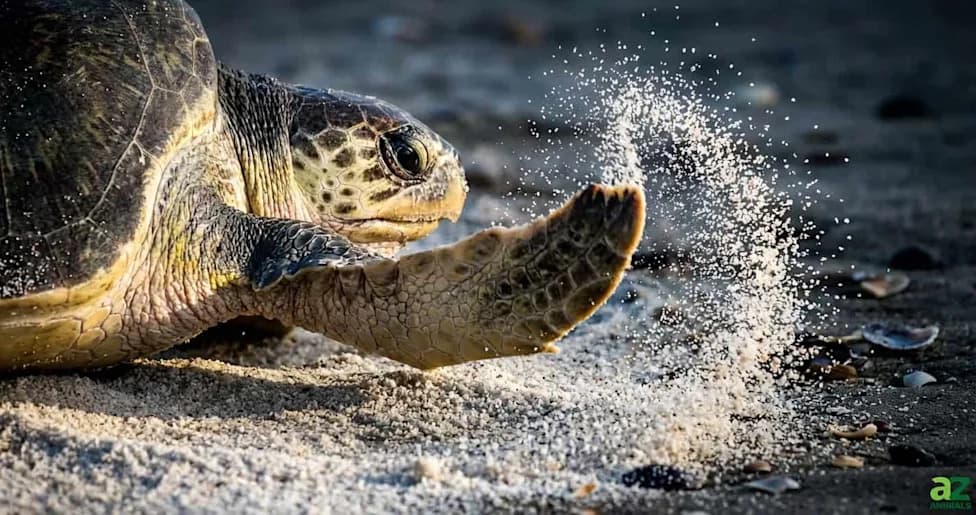
About the species: Leatherback sea turtles are the largest of all sea turtles. The U.S. Fish and Wildlife Service reports they can reach lengths up to about 8 feet and weights approaching 2,000 pounds. Unlike other sea turtles, leatherbacks lack a hard, bony shell; instead, their backs are covered by thick, flexible, leathery skin that enables them to dive deeper and travel farther into colder waters than other turtles.
Leatherbacks typically nest on warmer beaches from Florida through the Caribbean, so a nest on Virginia's Atlantic coast is an unusual and noteworthy occurrence. Wildlife biologists are monitoring the fenced site and coordinating protective measures while awaiting the eggs' incubation and eventual hatching.
Scientists and conservationists are watching closely to learn whether this event reflects a temporary anomaly, a shift in nesting behavior, or changing coastal conditions. For now, officials urge the public to avoid fenced nesting areas and to report any injured or stranded turtles to local wildlife authorities.
Help us improve.