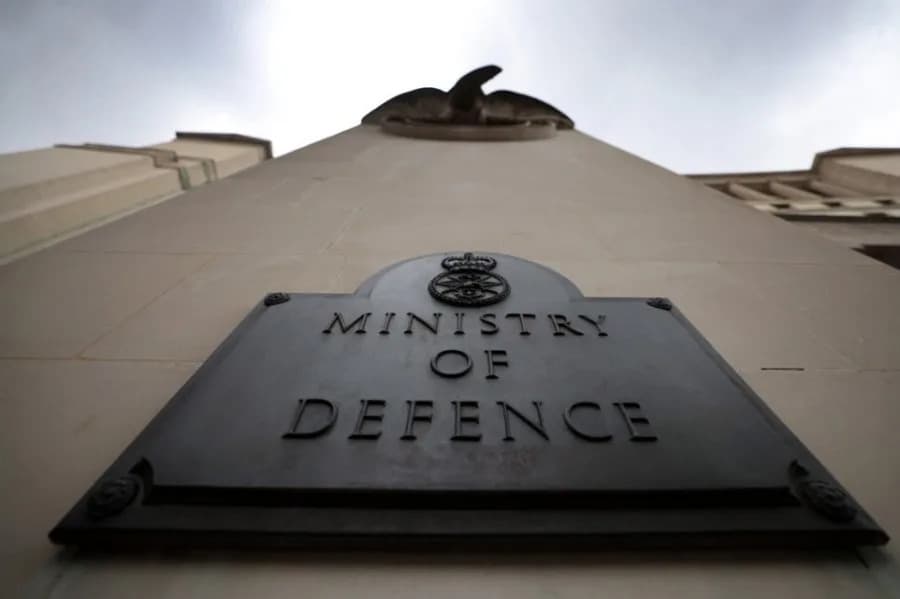
Iran threatened RAF Fairford after reports that U.S. B‑1B bombers staged from the base struck targets inside Iran. The warning followed the arrival of two EA‑37B Compass Call electronic‑warfare jets at Fairford, underscoring heightened tensions. London says its layered air and missile defences — backed by recent funding boosts — can protect the U.K. Analysts say a long‑range strike on Fairford is unlikely; nearer‑field attacks or sea‑launched one‑way drones are more plausible. The moves form part of a wider U.S. force repositioning across Europe and the Middle East.
EA‑37B Compass Call Jets Land at RAF Fairford as Iran Issues Threat to UK Base
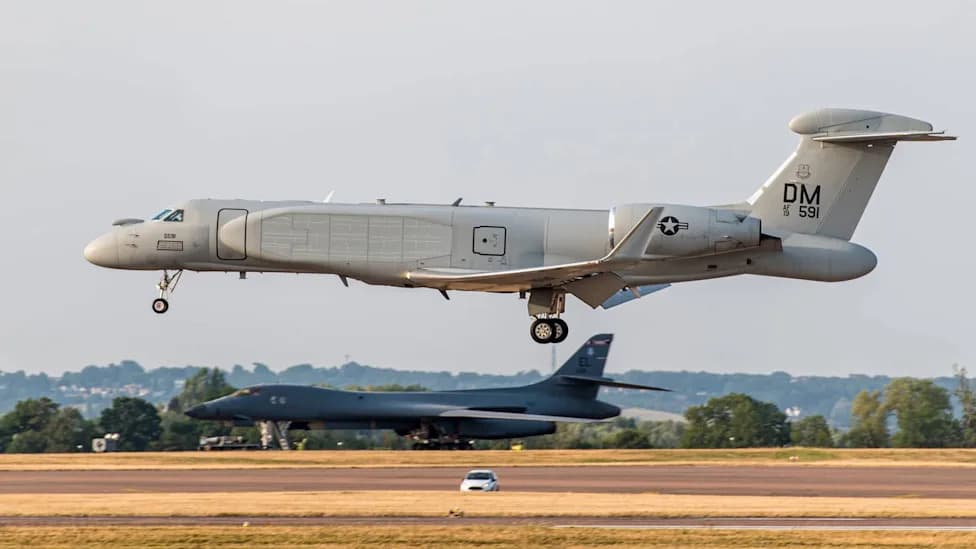
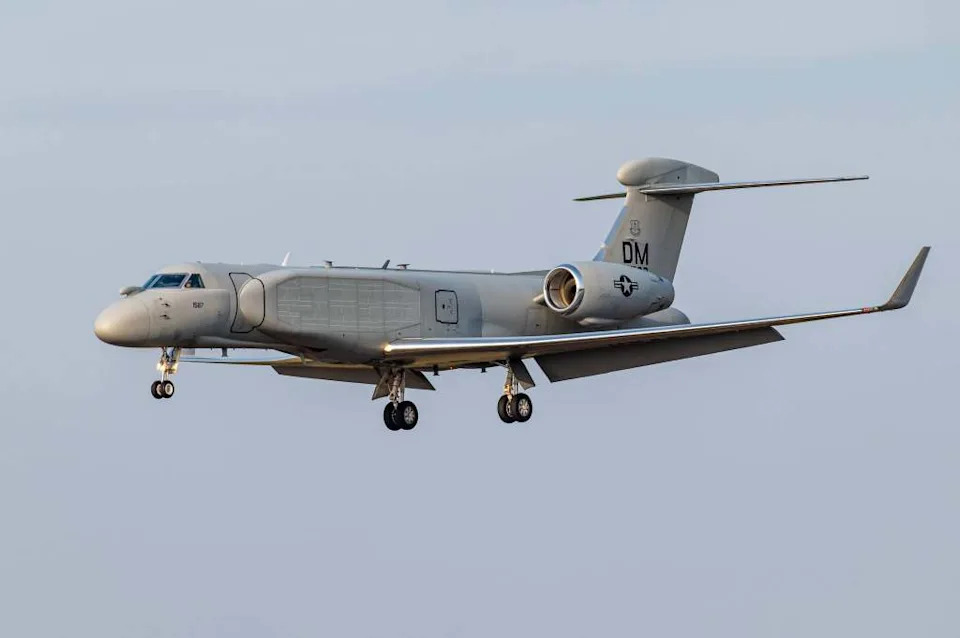
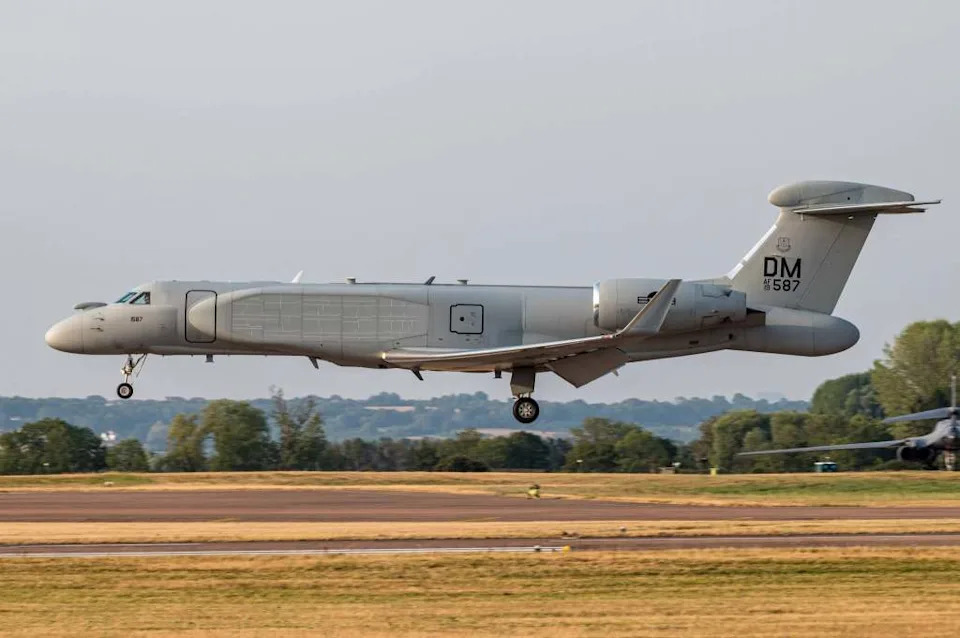
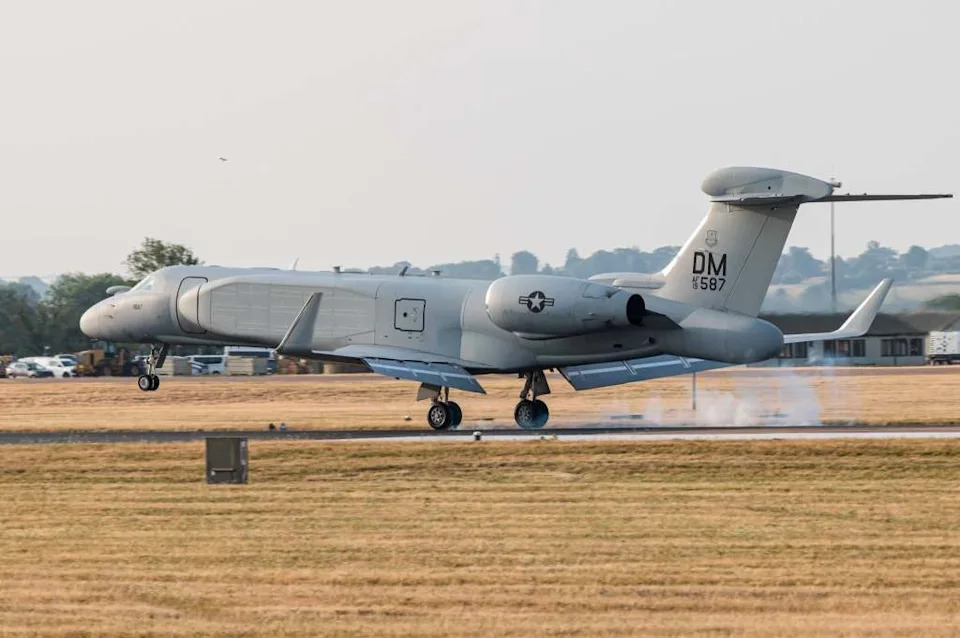
Two EA-37B Compass Call electronic warfare jets arrived at RAF Fairford amid a new buildup of U.S. forces as tensions with Iran mount.
Iran on Thursday threatened RAF Fairford in southern England after reports that U.S. B‑1B Lancer bombers operating from the base participated in strikes against targets inside Iran. The warning came hours after two EA‑37B Compass Call electronic‑warfare jets arrived at Fairford from the United States, highlighting elevated tensions and an intensified U.S. military posture across Europe and the Middle East.
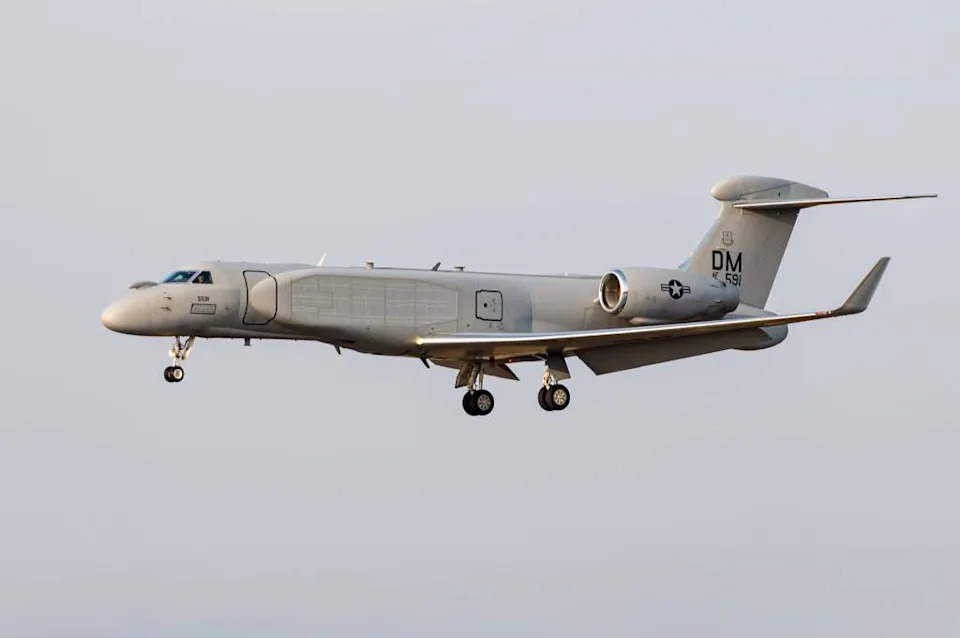
(Matt Belcher)
What Happened
Multiple open‑source flight trackers and later reporting by Axios suggested B‑1B bombers staged from RAF Fairford took part in Tuesday's strikes on Iran; CENTCOM declined to comment and TWZ could not independently verify the claim. Hours after those reports, Tasnim, a news outlet aligned with Iran's Islamic Revolutionary Guard Corps (IRGC), published a Telegram post saying U.S. forces had shifted to using B‑1 aircraft flying from Fairford and warning that "any base that is used to invade Iran's territory is our legitimate goal."
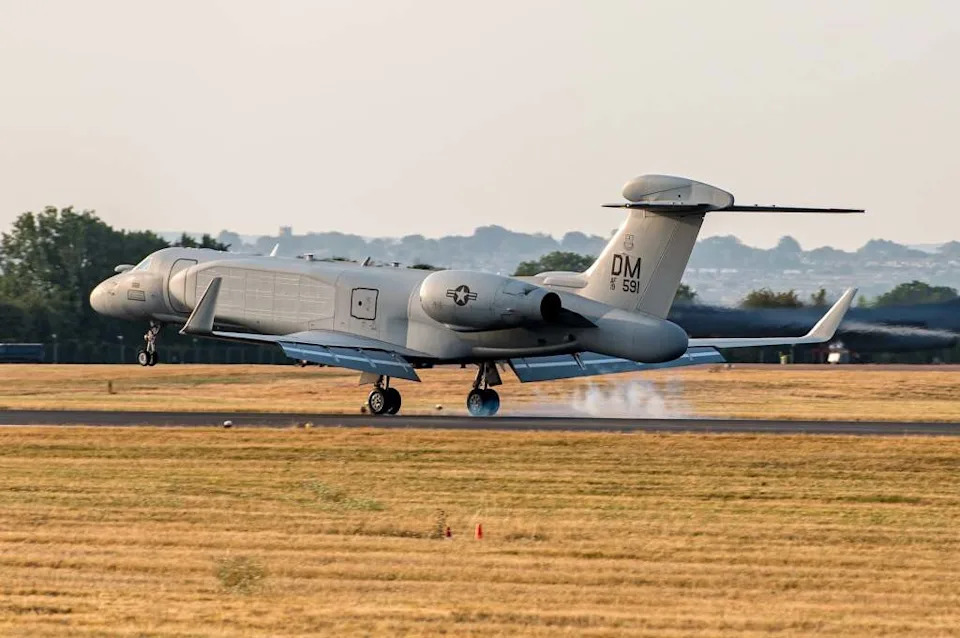
(Matt Belcher)
The Threat And The U.K. Response
British officials told TWZ the United Kingdom is prepared to defend itself. A government spokesperson emphasized a layered air and missile‑defence approach provided by Royal Navy, British Army and Royal Air Force systems, working closely with NATO partners. The spokesperson also cited recent funding decisions in the Defence Investment Plan, including a £790 million allocation to improve homeland and overseas base protections and more than £2 billion for further air‑defence, counter‑drone capabilities and Typhoon sustainment.
(Matt Belcher)
How Real Is The Threat To Fairford?
Iran did not specify how it might strike RAF Fairford, and technical and operational constraints make a successful long‑range attack unlikely. In March, Iran reportedly fired two missiles at the U.S.–U.K. base on Diego Garcia — roughly 2,400 miles from Iran, a similar distance to Fairford — but one was intercepted and the other failed. Those outcomes cast doubt on Tehran's ability to hit southern England with comparable weapons.
(Matt Belcher)
Analysts point to more plausible nearer‑field options, including short‑range drones launched from nearby staging areas or one‑way attack drones launched from ships at sea, tactics Iran has trained for. Reporters and analysts have also highlighted operations like Ukraine's "Operation Spider Web" in June 2025, which used short‑range drones concealed near airfields to strike aircraft, as an example of how nontraditional attackers can threaten exposed aviation assets.
(Matt Belcher)
Why The EA‑37B Arrival Matters
The EA‑37B Compass Call electronic‑warfare jets are modified Gulfstream G550s configured to provide stand‑off jamming against enemy radars and communications and to carry secondary ISR (intelligence, surveillance and reconnaissance) missions by detecting and geolocating emitters. The U.S. Air Force plans to procure 10 EA‑37Bs to replace the aging EC‑130H Compass Call turboprops; the 43rd Electronic Combat Squadron flew the type's first training sortie on May 2, 2025, and the platform made its initial European deployment earlier this year.
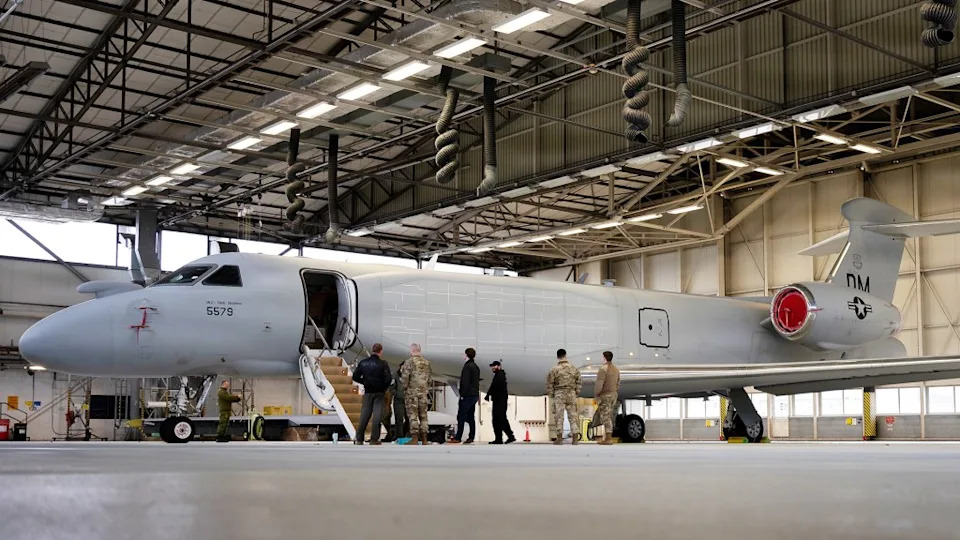
A U.S. Air Force EA-37B Compass Call aircraft assigned to the 55th Electronic Combat Group at Davis-Monthan Air Force Base, Arizona, is parked at Ramstein Air Base, Germany, as part of its first stop in the European theater for a scheduled road show, Jan. 26, 2026. (U.S. Air Force photo by Senior Airman Edgar Grimaldo) Senior Airman Edgar Grimaldo
An Air Force spokesperson told TWZ that U.S. operating locations in Europe, including the 501st Combat Support Wing at RAF Fairford, routinely host transient U.S. military aircraft under existing basing and overflight agreements. Local photographer Matt Belcher documented the EA‑37B arrivals at Fairford shortly after 07:00 BST.
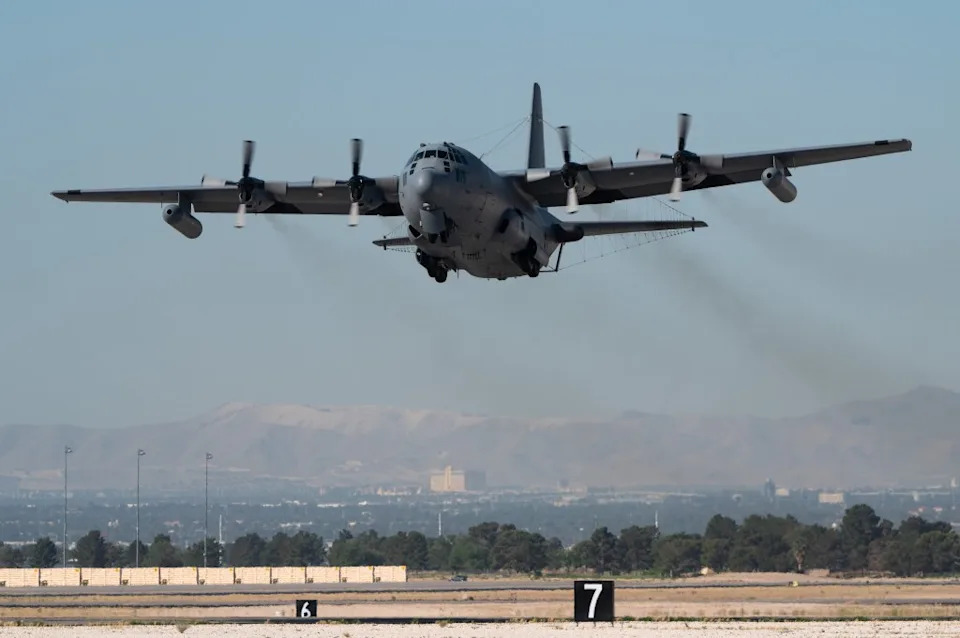
An EC-130H Compass Call assigned to Davis-Monthan Air Force Base, Arizona, takes off for a Weapons School Integration mission at Nellis Air Force Base, Nevada, May 29, 2024. (U.S. Air Force photo by Senior Airman Jose Miguel T. Tamondong) Staff Sgt. Jose Miguel Tamondong
Wider Force Movements
The arrival of electronic‑warfare jets at Fairford comes amid a broader U.S. repositioning of forces. Recent movements include F‑16 deployments to Jordan, rotations of medics to Landstuhl Regional Medical Center in Germany, the temporary withdrawal or repositioning of some bombers and fighter types, and reports of special operations forces moving into the CENTCOM area of operations. President Donald Trump's public comments — telling Axios he is "considering a massive attack" — further underscore how political signals and force posture are interacting in this period of heightened tensions.
What To Watch Next
Key indicators to follow include official confirmations from CENTCOM or the U.S. Air Force about specific aircraft operations, further deployments of electronic‑warfare or defensive assets to Europe and the Middle East, and any credible Iranian operational claims with verifiable details. For now, the direct Iranian threat to RAF Fairford appears to be a significant escalation in rhetoric, but available evidence suggests physical attack options would be challenging for Tehran to execute at long range.
Sources: TWZ reporting, Axios, Tasnim (IRGC‑aligned), CENTCOM statements, U.S. Air Force comments, open‑source flight trackers and local aviation photography.
Help us improve.