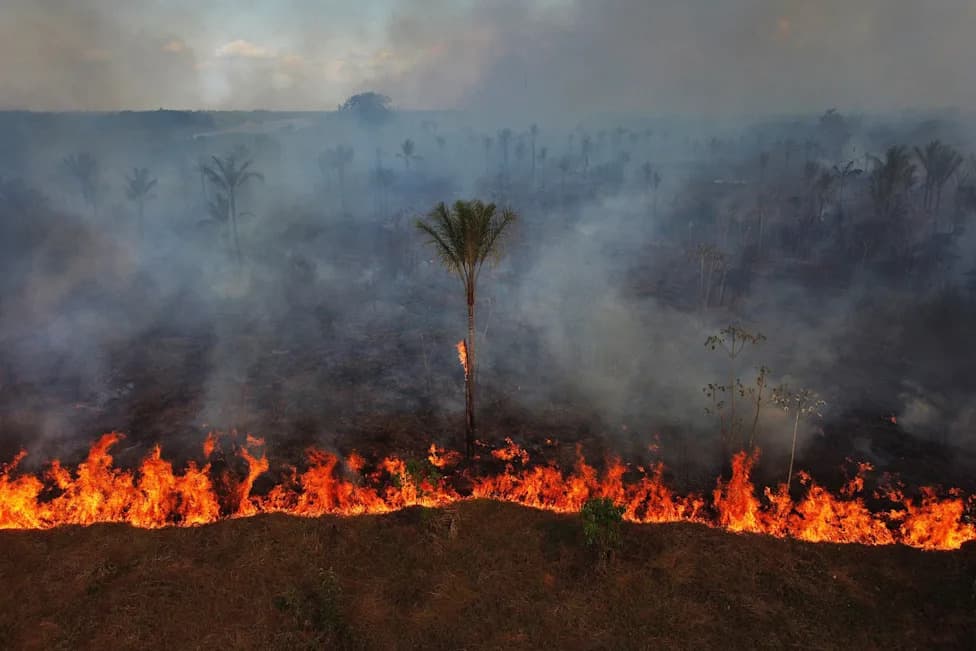
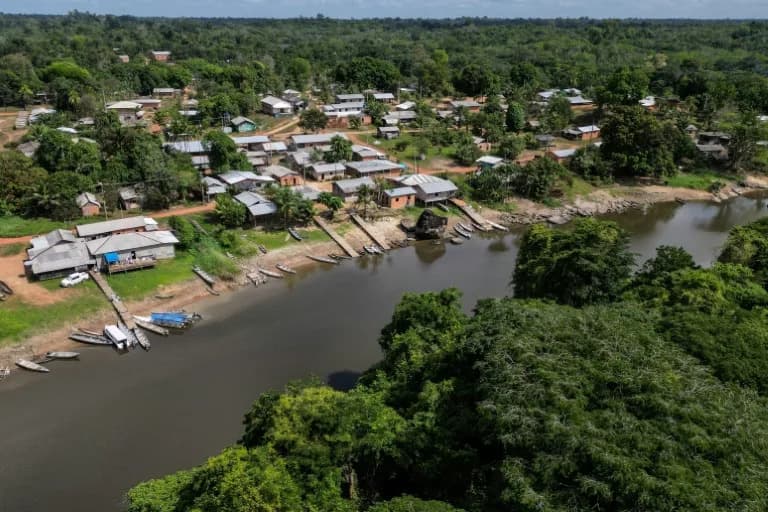
The Ashaninka people, who reclaimed territory along Brazil's border with Peru three decades ago and have combined agriculture with forest protection, now face growing incursions from gangs and drug traffickers along the Solimoes River route. Community leaders reported a July 6 armed incursion and have requested sustained federal protection; security forces were deployed temporarily. Experts warn that remote Indigenous territories are both vital to curbing deforestation and vulnerable to recruitment, violence and criminal control of trafficking corridors.
Ashaninka Seek Protection as Drug Gangs Expand Along Solimoes River Route
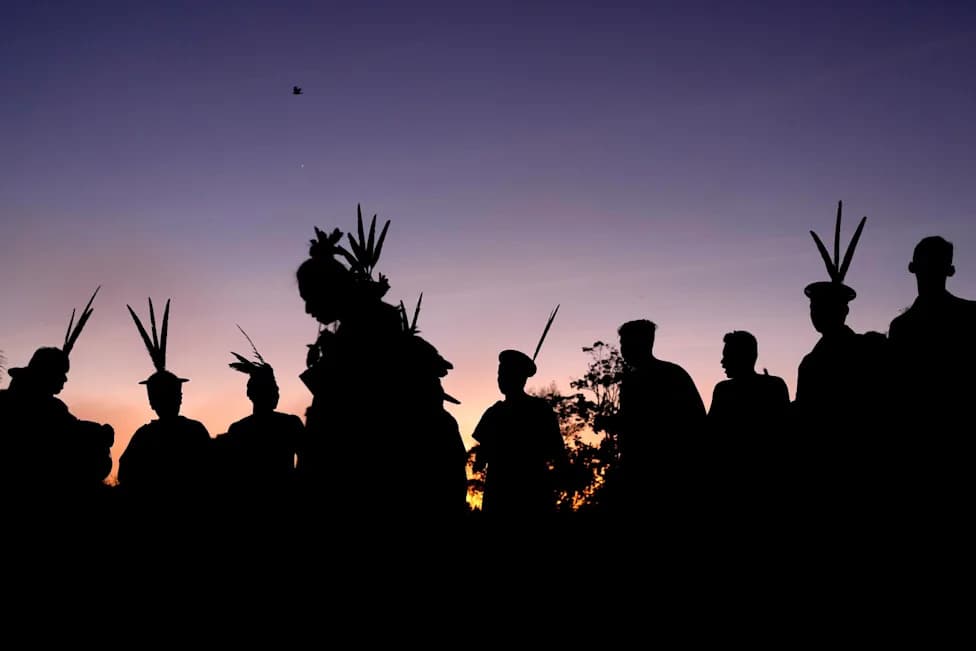
FILE - Ashaninka Indigenous people from Brazil and Peru dance and sing at dawn during the annual celebration recognizing the Ashaninka territory in the Apiwtxa village, Acre state, Brazil, June 24, 2024. (AP Photo/Jorge Saenz, File)(AP Photo/Jorge Saenz)
The Ashaninka Indigenous community in Brazil's western Amazon—who reclaimed land along the Peru border three decades ago, built local governance and combine farming with active forest stewardship—now face escalating violence and incursions by criminal groups.
Criminal Routes and Local Threats
Leaders say gangs and drug traffickers are increasingly using rivers and adjoining forest land as trafficking corridors, part of a broader expansion along the Solimoes River route. Community representatives have reported violent episodes as recently as this month and traveled to Brasilia to request continued federal protection. Local and Indigenous leaders warn that security deployments tend to be temporary while the dangers persist.
Why Indigenous Territories Are Targeted
Experts say Indigenous territories play a critical role in preventing deforestation and protecting the Amazon, but their remoteness, dense tree cover and limited state oversight also make them attractive to traffickers seeking concealment and operational space. According to retired Col. César Mello, the Solimoes route has increasingly fallen under the influence of the Red Command gang, which now controls much of the transit corridor used to move cocaine toward Brazilian Atlantic ports.
"There is an institutional and intercultural blind spot in the public security services provided to Indigenous peoples," said Maj. Jonatas Soares, a police officer based in Tabatinga. "The state formally recognizes their territories, yet it fails to translate that presence into continuous protection tailored to their specific needs."
Recruitment, Violence and a Recent Incursion
Criminal groups often try to recruit Indigenous youth by offering money and status in communities with few legal economic opportunities; when recruitment fails, they have resorted to threats and violence, experts say. The Ashaninka have historically resisted such pressures. In the past they rejected proposals by traffickers to build a clandestine airstrip on their land.
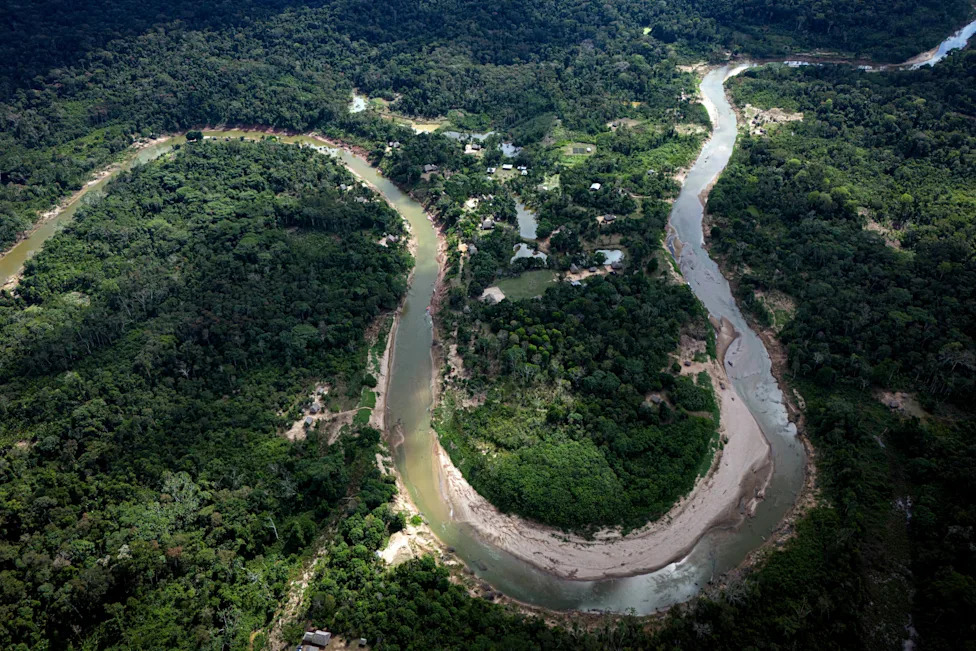
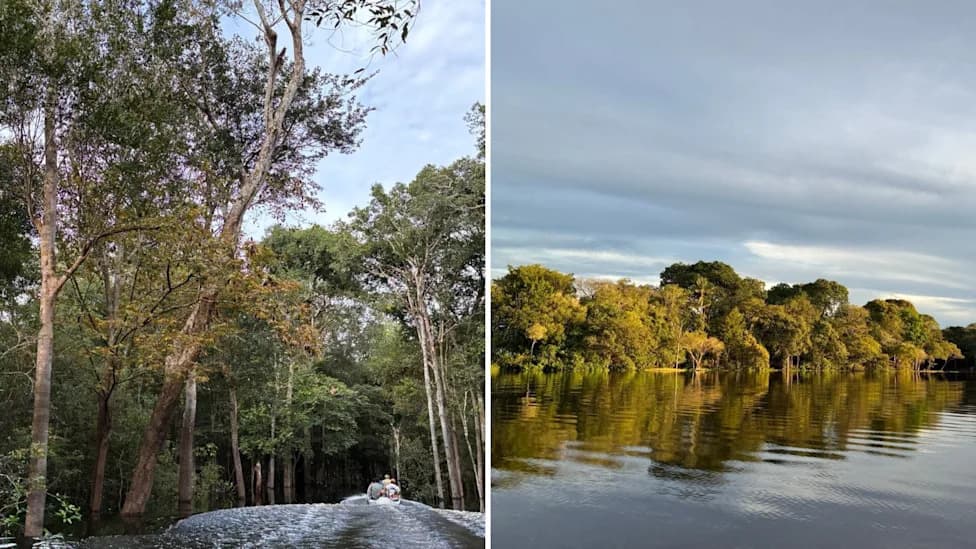
FILE - Ashaninka's territory sits along the winding Amonia River in Acre state, Brazil, June 22, 2024. (AP Photo/Jorge Saenz, File)(AP Photo/Jorge Saenz)
Tensions rose on July 6 when five Spanish-speaking, armed intruders reportedly entered the Kampa Indigenous territory along the Amonia River, threatened families and searched for community leaders. Francisco Piyãko, coordinator of the Organization of Indigenous Peoples of the Jurua River, filed formal complaints with Acre state authorities and the Brazilian Army, triggering a temporary security deployment.
"It's one thing for outsiders to enter our territory to steal timber or wildlife," Piyãko said. "This was different: they entered our land looking for our leaders, intending to kill them. Confronting armed criminal groups is not our responsibility alone; it is the duty of the state."
State Response and Legal Pressure
Brazil's Ministries of Indigenous Peoples and Justice, the Brazilian Army and Acre state's press office did not respond to requests for comment. The Foreign Ministry said it would welcome Ashaninka leaders in Brasilia to hear their concerns and coordinate action with Peru. Earlier this year, Brazilian Supreme Court Justice Flávio Dino ordered the federal government to intensify measures against criminal organizations operating in the Amazon, citing investigations that documented their growing presence and threat to Indigenous communities.
Outlook
The Ashaninka community remains shaken but resolute. Leaders emphasize that continuous, culturally informed state protection and cross-border cooperation between Brazil and Peru are essential to safeguard Indigenous lives, defend the forest they steward and disrupt trafficking networks operating in the Amazon.
The Associated Press contributed reporting to this story.
Help us improve.