Researchers at the University of Adelaide have built a laser-based prototype that can detect methanol inside sealed bottles without opening them, with sensitivity down to 0.2% concentration. The method works regardless of bottle colour or spirit type and could be converted into a handheld scanner for health officials, retailers and distributors. Methanol poisoning can cause blindness, organ failure and has a 20–40% fatality rate if untreated; aid groups report over 2,000 cases in the past year. The device promises proactive, non-destructive screening but remains at the lab stage and requires further testing and validation.
New Laser Scanner Detects Methanol Through Sealed Bottles — Could Prevent Hundreds Of Deaths

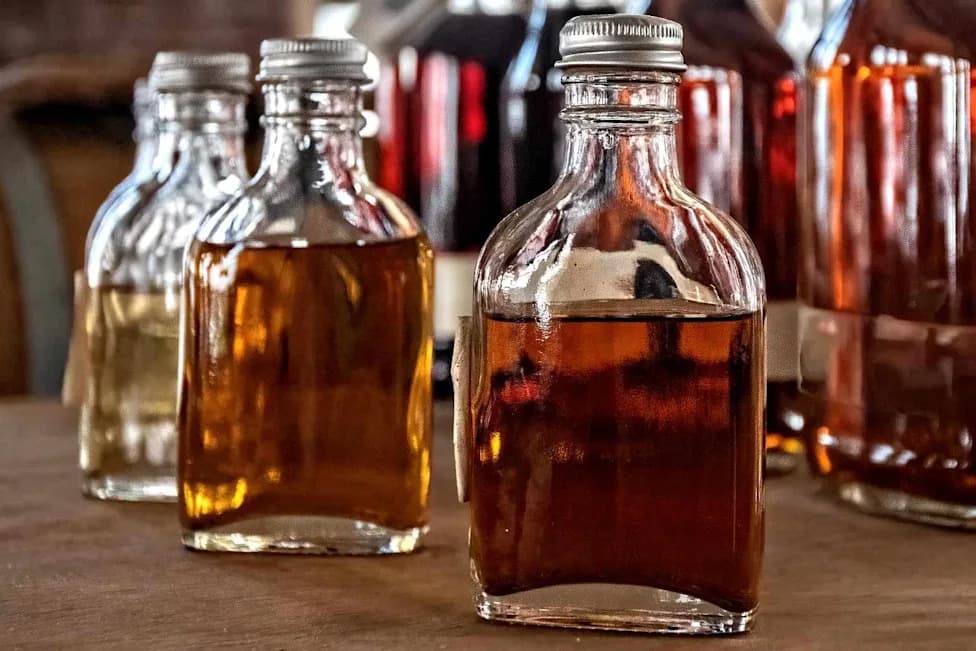
(Photo: Eva Bronzini/Pexels)
Australian researchers at the University of Adelaide have developed a laser-based system that can detect methanol inside sealed bottles of liquor and wine without opening them. If scaled and mass-produced, the technology could help prevent hundreds of deaths each year from methanol-adulterated alcohol.
How the System Works
The prototype, created by Ané Kritzinger and Ralf Mouthaan, uses a physical cone to direct laser light into glass bottles and measure how the light interacts with the liquid inside. By slightly changing the colour (wavelength) of the laser while taking measurements, the system can pick up spectral signatures characteristic of methanol — allowing detection of concentrations as low as 0.2% regardless of glass colour or spirit type.
“We change the colour, or the wavelength of the laser slightly, while we're taking measurements, and this allows us to pick up very small amounts of the methanol that's inside of the bottle,” Kritzinger told ABC News Australia.
Why This Matters
Methanol is metabolised in the body into formaldehyde and formic acid, toxic compounds that can cause blindness, organ failure and death even at low doses. Bootleggers sometimes add methanol to spirits as a cheap, high-alcohol substitute to stretch supplies.
Doctors Without Borders reports that more than 2,000 people were affected by methanol poisoning in the past year, with particularly high incident rates in Indonesia, India and Bangladesh. If left untreated, methanol poisoning carries a fatality rate of roughly 20–40%. The problem gained renewed international attention after the recent deaths of six tourists, including two Australian teenagers, in Laos.
Limitations And Next Steps
Currently the device remains at the laboratory stage. The research team says the technique is straightforward and believes the hardware could be miniaturised into a handheld scanner for use by health officials, distributors or retailers. Before that can happen the prototype will need further engineering, field testing and regulatory review to validate accuracy across a wide range of commercial products and bottle types.
Traditionally, methanol testing has relied on laboratory chromatography, which requires liquid samples and specialist equipment. While chromatography is accurate, it is impractical for routine, wide-scale screening — a gap this laser approach aims to fill by enabling rapid, non-destructive checks.
Implications
If developed into a reliable, affordable handheld tool, this laser system could shift responses to methanol contamination from reactive outbreak testing to proactive screening — helping retailers, public health teams and regulators spot dangerous products before they reach consumers.
Note: The research is promising but preliminary. Widespread deployment will depend on further validation, commercial development and regulatory approval.
Help us improve.