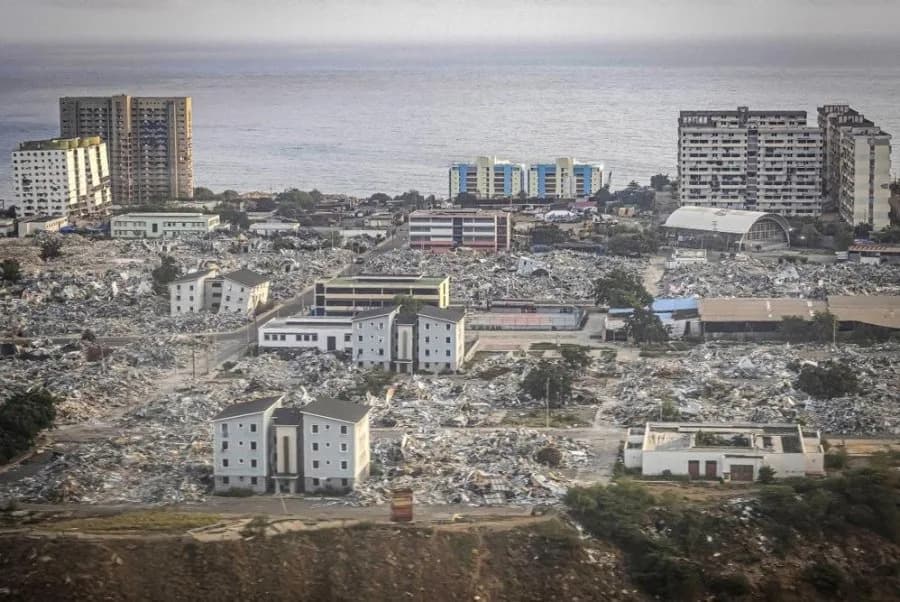
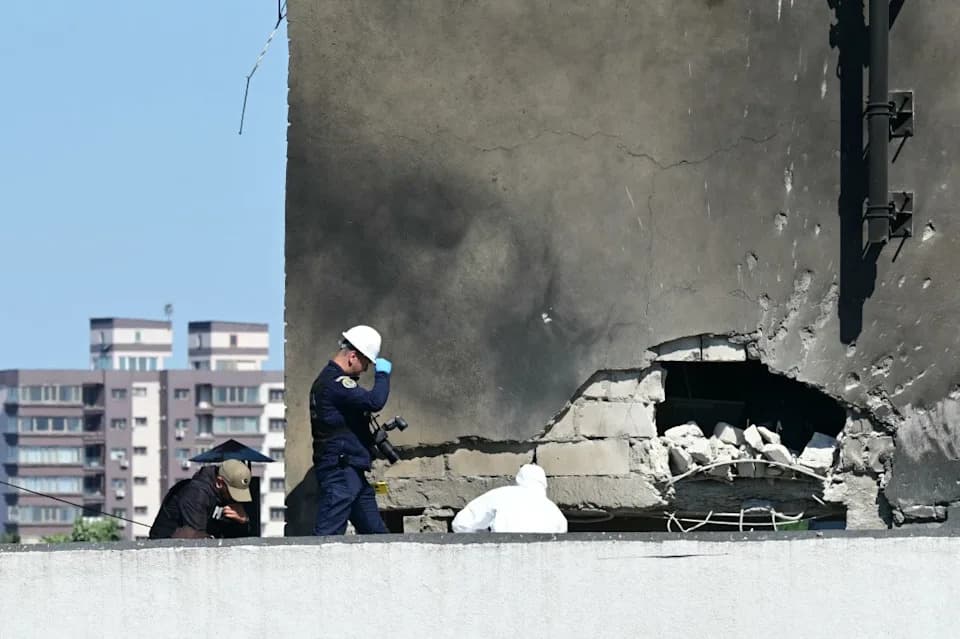
World Bank GRADE estimates the 24 June earthquakes caused about $19.6 billion (€17.2bn) in direct damage. Nearly half of losses were to residential buildings, and La Guaira plus Distrito Capital absorbed roughly 50% of the impact. The assessment warns reconstruction could exceed a decade under current investment levels but says prioritising rapid, well-funded rebuilding can substantially reduce long-term economic and social harm. Restoring basic services for vulnerable households is highlighted as an immediate priority.
World Bank: June 24 Venezuela Quakes Caused Nearly $19.6B In Damage — Urgent, Resilient Reconstruction Needed
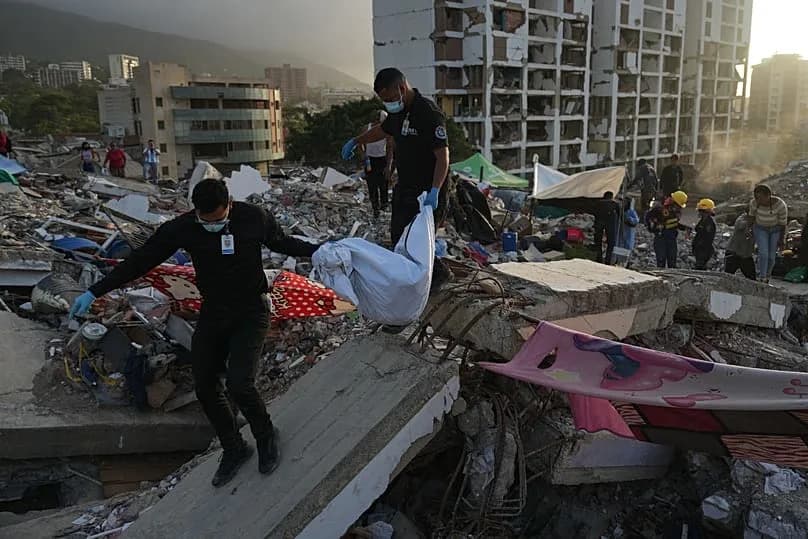
Authorities recover bodies in the rubble of a building collapsed by the twin earthquakes, La Guaira, Venezuela, 15 July 2026 - AP Photo/Ariana Cubillos
The World Bank Group's Global Rapid Damage Estimation (GRADE) finds that the 24 June earthquakes in Venezuela likely caused about $19.6 billion (€17.2 billion) in direct physical damage. The assessment underlines the urgent need for timely, resilient reconstruction to limit long-term economic and social harm.
Key Findings
GRADE estimates that 47% of the damage was to residential buildings, 27% to infrastructure, and 26% to non-residential buildings. La Guaira state and Distrito Capital together absorbed roughly half of the total impact. Seven heavily affected states — Miranda, La Guaira, Distrito Capital, Carabobo, Yaracuy, Aragua and Falcón — are home to about 11.5 million people, nearly 40% of Venezuela's population, and contain almost half of the country’s exposed building and infrastructure stock, valued at about $657 billion (€576.8 billion).
“The earthquakes have disrupted lives, damaged critical infrastructure, and created new challenges for Venezuela's recovery,” said Susana Cordeiro Guerra, World Bank Vice President for Latin America and the Caribbean. “Recovering effectively begins with reliable evidence. This assessment gives the Government of Venezuela and its partners an early objective foundation for recovery planning, and the World Bank Group is committed to supporting that effort every step of the way.”
Reconstruction Scenarios And Economic Implications
World Bank modelling shows two broad reconstruction pathways. Under current public and private investment levels, reconstruction funding would likely be diverted from other projects, stretching recovery over more than a decade and inflicting substantial negative effects on economic activity. Conversely, prioritising rapid reconstruction and mobilising higher levels of public and private investment could significantly reduce long-term economic and social costs.
Methodology And Support
GRADE produces fast, independent estimates of direct physical damage after major disasters by combining satellite imagery, exposure data, remote sensing, catastrophe and earthquake-damage modelling, engineering assessments of structural vulnerability, ground-motion data, and reported on-the-ground damage information from governments, community organisations, media and social platforms. The Venezuela assessment received financial support from the Government of Japan through the Program for Mainstreaming Disaster Risk Management in Developing Countries and from the Global Facility for Disaster Reduction and Recovery (GFDRR).
Authorities recover bodies in the rubble of a building collapsed by the twin earthquakes, La Guaira, Venezuela, 15 July 2026 (AP Photo/Ariana Cubillos).
Social Vulnerabilities And Priority Actions
The report stresses that reconstruction must prioritise household vulnerability: age, income, housing quality and health status shape how communities are affected. Vulnerable groups identified in the most impacted states include female-headed and single-parent households and families with elderly or disabled members. Disruptions to basic services — especially water and electricity — can have outsized consequences for these households, even where structural damage is limited. Restoring and maintaining essential services is therefore a high-priority, cost-effective intervention during recovery.
Challenges Ahead
Large population concentrations in the affected areas and constrained institutional capacity are major obstacles to delivering a speedy, high-quality response and rebuilding program. The GRADE findings are intended to give Venezuelan authorities and development partners a practical, evidence-based starting point to prioritise interventions and mobilise resources for a resilient recovery.
Help us improve.