Elon Musk told The Economist his interventions in European politics are about supporting "normal people" and defending "the West collectively," not about backing far‑right parties. He rejected media characterizations of his views as "fringe," warned of a future "reckoning" if certain beliefs spread, and cited his wealth and ownership of X as means to influence debate. Musk also denied accusations of racism and dismissed widespread dislike as secondary to his large following.
Elon Musk: I'm Defending "The West Collectively," Not Backing The Far‑Right
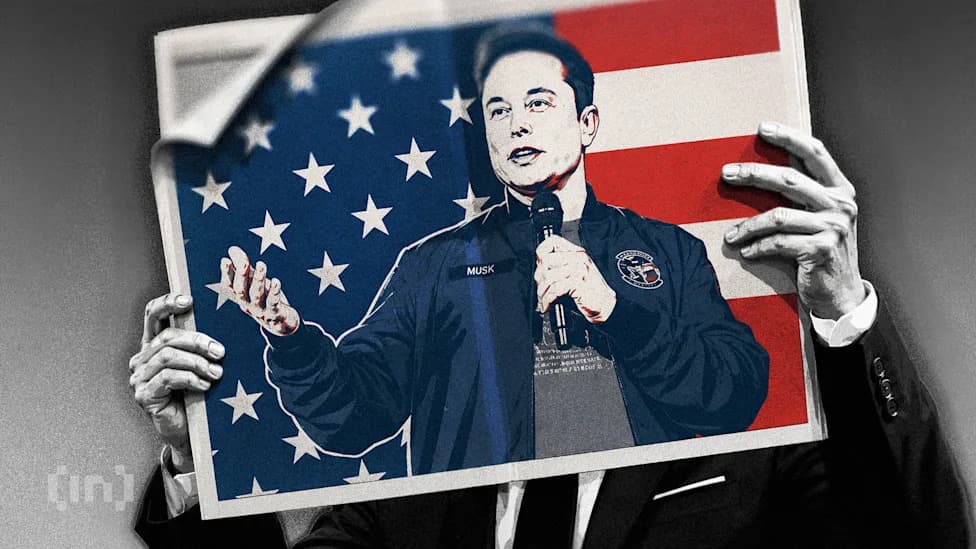
Elon Musk Admits He 'Got Too Involved' in Politics. Photo by BeInCrypto
Elon Musk told The Economist that his political interventions in Europe are motivated by support for "normal people" and a desire to defend "the West collectively," not by allegiance to far‑right parties.
The Tesla and SpaceX founder sparred with The Economist's Editor‑in‑Chief, Zanny Minton Beddoes, in an interview recorded on Monday. The full conversation is scheduled to air on The Economist's Insider programme at 18:00 UK time on Thursday.
Minton Beddoes opened by accusing Musk of supporting "very fringe parties" in some countries. Musk rejected that label and insisted the relevant segment remain in the broadcast. "It's just normal people, and here are the principles, and tell me which of these sound terrible," he said, asking whether secure borders, safe cities and sensible spending should be considered "far right fringe."
"I would like to just admonish you and the media for the absurd characterization of the far right. Which is false and misleading." — Elon Musk
The interviewer pushed back, noting a Musk post that said civil war in Britain is "inevitable," his absence from the UK for several years, and data showing violent crime has fallen and that London is safer than many U.S. cities. Musk stood by his view, warning that a growing group holding beliefs he described as "antithetical to western beliefs" could lead to "a reckoning."
Asked why he is trying to shape European politics from abroad, Musk gave a broad answer rather than naming a party: "I think of it as sort of the West collectively." He framed his actions as defending a way of life rather than endorsing any single political organisation, and noted his ability to influence debate — as the world’s richest person (reported net worth above $800 billion) and owner of X, which he says has roughly 250 million followers on the platform.
Musk also rejected accusations of racism, pointing to his partner (whom he described as half Indian), their four children, and the racial diversity among executives at his companies. When asked whether he understood why some people loathe him, he shrugged: "Maybe some people do loathe me, and that's probably true. I don't care... a quarter of a billion people follow me, so I think a lot more people actually like me than don't." He closed the exchange by telling the editor that "a lot of people hate you and the media more than you realize."
The full interview will be available on The Economist's website on Thursday evening.
Help us improve.