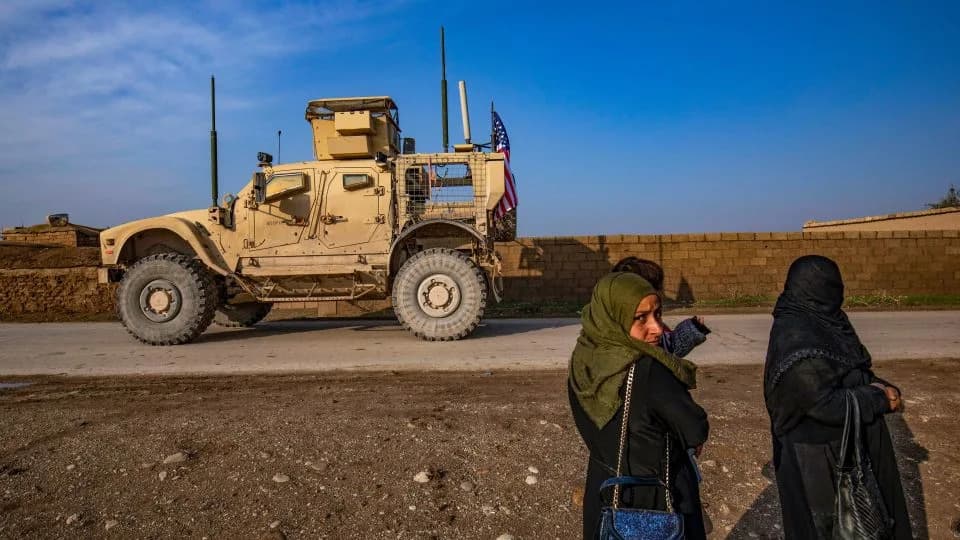
President Trump has ordered a reinforcement of U.S. forces in the Middle East amid escalating tensions with Iran, deploying special operations units, fighter squadrons, long-range bombers, tankers and more than 150 medical personnel. The buildup follows the deaths of four U.S. service members and what U.S. Central Command described as a 12th consecutive day of strikes inside Iran aimed at degrading threats to commercial shipping. Lawmakers approved increased defense funding while U.S. leaders warned Tehran against disrupting navigation through the Strait of Hormuz.
U.S. Bolsters Military Presence in Middle East as Tensions With Iran Escalate
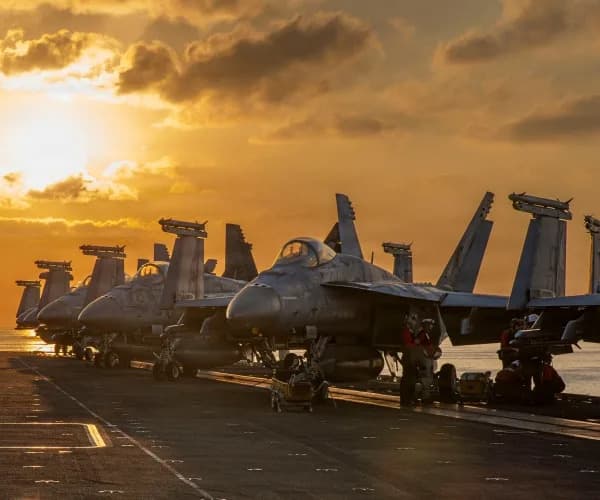
(U.S. Navy via Getty Images)
President Donald Trump has ordered an expansion of U.S. military forces across the Middle East, broadening Washington's options as tensions with Iran persist into a fifth month and Tehran continues to threaten commercial shipping through the Strait of Hormuz.
Deployment Details
The Wall Street Journal, citing U.S. officials and others familiar with the situation, reported that special operations units, additional fighter squadrons, long-range bombers, aerial refueling tankers and more than 150 medical personnel have been sent to the region or placed on heightened alert. The Pentagon has declined to discuss specific troop movements, citing operational security.
Recent Strikes and Casualties
The deployment follows the deaths of four U.S. service members in recent attacks attributed to Iranian forces. U.S. Central Command reported that it carried out what it described as a 12th consecutive day of strikes inside Iran intended to degrade Tehran's ability to threaten commercial shipping and civilian mariners in regional waterways.
Political and Regional Reactions
President Trump: "We will destroy one bridge or power plant every time the Islamic Republic attacks a vessel transiting the Strait of Hormuz."
Iranian Foreign Minister Abbas Araghchi warned that any attack on Iranian infrastructure would elicit a "powerful and decisive response." Senator Marco Rubio, speaking at an international summit, cautioned against allowing any state to control a key international waterway, saying that permitting such behavior would create “a very dangerous precedent.”
Wider Strategic Concerns
Officials told reporters the buildup could also support operations against Yemen's Iran-backed Houthi rebels, who have threatened to blockade Saudi shipping in the Red Sea. On Wednesday, two Saudi oil tankers were reportedly struck by projectiles near the Bab al-Mandeb chokepoint, underscoring risks to global energy supplies and trade routes.
Congressional Funding And Costs
Congress moved this week to increase military funding. The Republican-controlled House approved a $95 billion budget framework that includes roughly $73 billion for military and intelligence programs and also passed its version of the annual National Defense Authorization Act. In testimony to Congress, Pete Hegseth said the conflict has cost approximately $37.5 billion so far.
Why It Matters
Administration officials argue that sustained military pressure is necessary to prevent Iran from acquiring a nuclear weapon and to preserve freedom of navigation through the Strait of Hormuz, a critical passage that normally carries about one-fifth of the world’s traded oil. As operations and rhetoric intensify, diplomats and military planners warn that the risk of wider conflict and disruption to global energy markets is rising.
Reporting includes material from The Wall Street Journal and The Associated Press.
Help us improve.