Conservationist Issah Seidu discovered in 2018 that guitarfish (locally called "esene") along Ghana's coast are collapsing and has since worked with fishing communities to protect them. His NGO, AquaLife Conservancy, helped introduce snail farming as an alternative livelihood and equipped fishers with GPS devices to map about 15 km² of critical habitat. Ghana has also designated a 703 km² marine protected area to be co-managed with coastal communities. Long-term success depends on fishers choosing to protect nursery grounds and changing incentives driven by international fin markets.
Ghana's Race to Save the Guitarfish: One Conservationist and Coastal Communities Fight to Protect 'Esene'
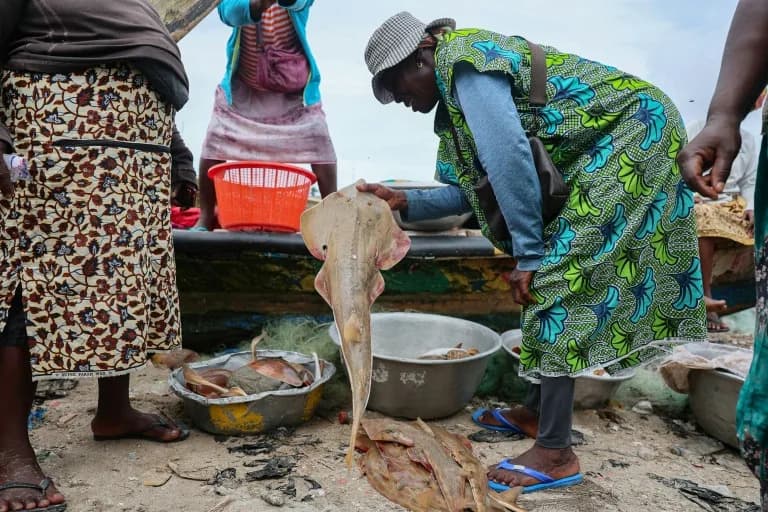
Guitarfish are among the world's most threatened marine fish, red-listed as 'critically endangered' by the International Union for Conservation of Nature (Nipah Dennis)
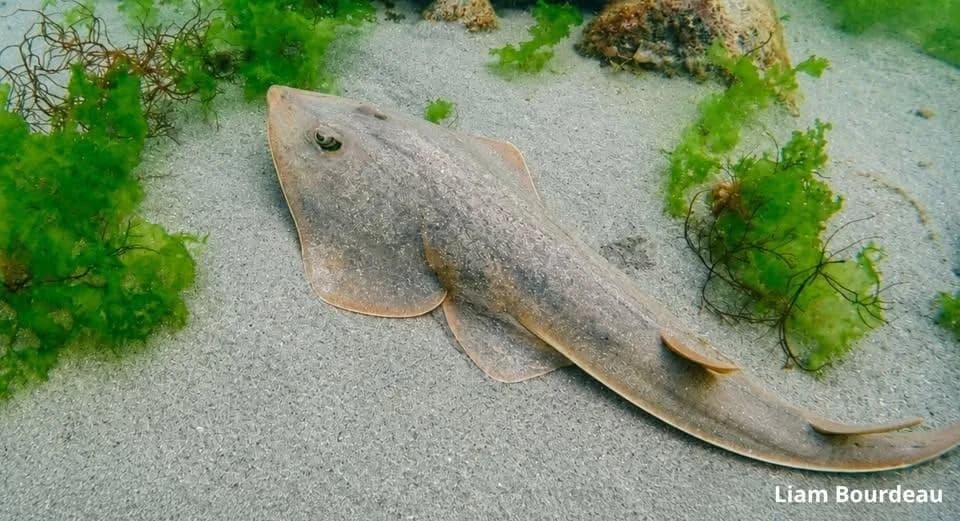
As dawn spills over Ghana's Atlantic shoreline, small artisanal boats return bearing baskets of snapper, crabs, rays and a peculiar fish locals call "esene"—the guitarfish, a species that combines a ray-like flattened body with a shark-like tail. Once common along these coasts, guitarfish are now increasingly rare, and for conservationist Issah Seidu, every landing is a stark reminder that time is running out.
Seidu, a 36-year-old wildlife biologist who began working with coastal communities in 2018, discovered what scientists have described as one of the world's least visible marine conservation crises: large numbers of sharks, rays and guitarfish being landed with little awareness of their declining status.
Why Guitarfish Are At Risk
Guitarfish (esene) are listed as Critically Endangered by the International Union for Conservation of Nature (IUCN). Their meat is valued locally, while fins command high prices on international markets, creating strong incentives to catch them. Across West Africa, populations of guitarfish and close relatives—such as wedgefish and sawfish—have collapsed; sawfish may already be gone from Ghanaian waters.
Winning Over Fishers With Practical Alternatives
Rather than demanding an immediate stop to fishing, Seidu's NGO, AquaLife Conservancy, has worked with communities to raise awareness and offer realistic alternatives. In Adjoa and other coastal villages, families now raise giant African snails in wooden pens as a complementary livelihood. The snails have proven popular, and local demand already outstrips supply.
"The fishers themselves chose snail farming," Seidu says. "They cannot meet the demand."
Locals Mapping Critical Habitat
In a practical demonstration of community stewardship, Seidu equipped fishers with GPS trackers to identify where guitarfish gather and spawn. Together they have mapped roughly 15 square kilometres of critical habitat and established a locally managed marine area as a pilot for co-management.
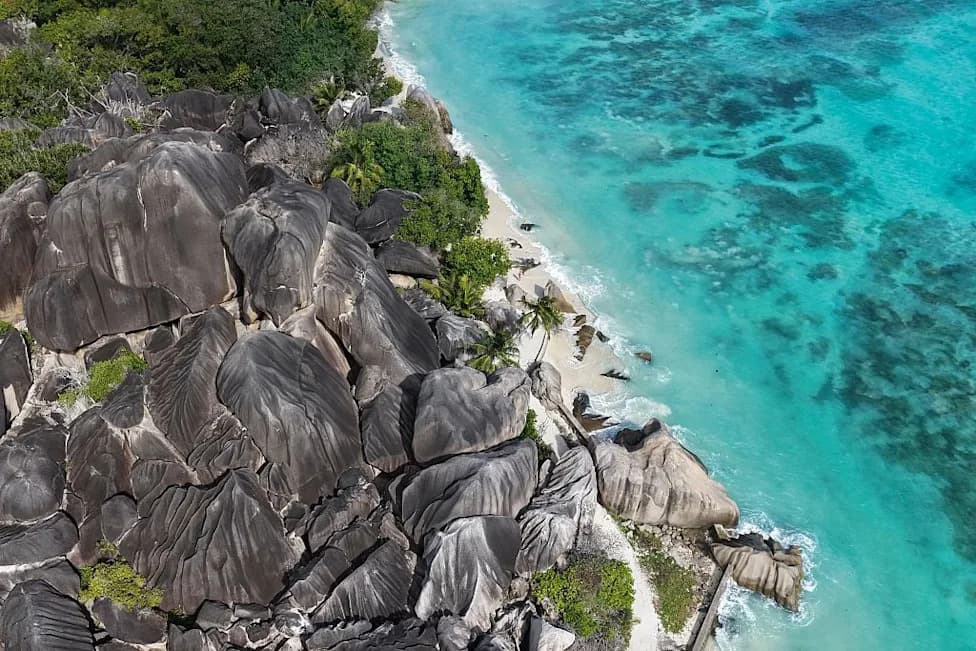
At the national level, Ghana designated a 703-square-kilometre (271-square-mile) stretch of the Atlantic as a marine protected area (MPA) in April to be co-managed by coastal communities and the government—an important step toward protecting unique species and nursery grounds.
Threats From Local Practices And Global Demand
Local declines are linked to pollution, changing fishing methods—such as the use of bright lights at sea that attract and trap fish—and broader climate impacts. International trade also plays a role: fins are collected and sold into markets where shark-fin products remain prized, increasing pressure on already depleted stocks.
What Success Looks Like
For Seidu, success is not only measured by population counts. It will come when the majority of fishers understand that their choices affect future catches and choose to protect critical habitats themselves. The combination of community mapping, alternative livelihoods, and the new national MPA aim to make that vision achievable.
Local voices: Traders and older residents recall far larger catches decades ago. "When I was young, guitarfish were everywhere," says a former local lawmaker. Today, families rely on mixed catches—guitarfish, crabs and other species—to pay school fees and cover household expenses.
Help us improve.