R. James Woolsey, who led the CIA from early 1993 to 1995, has died at 84. His wife said he suffered a stroke after years of declining health linked to symptoms described as "Havana syndrome." Woolsey's tenure included criticism over the Aldrich Ames espionage scandal and pressure to cut budgets after the Cold War. Earlier, he served as undersecretary of the Navy, advised presidents on arms control, and helped negotiate European force-reduction talks that led to the CFE Treaty.
R. James Woolsey, Former CIA Director and National Security Figure, Dies at 84
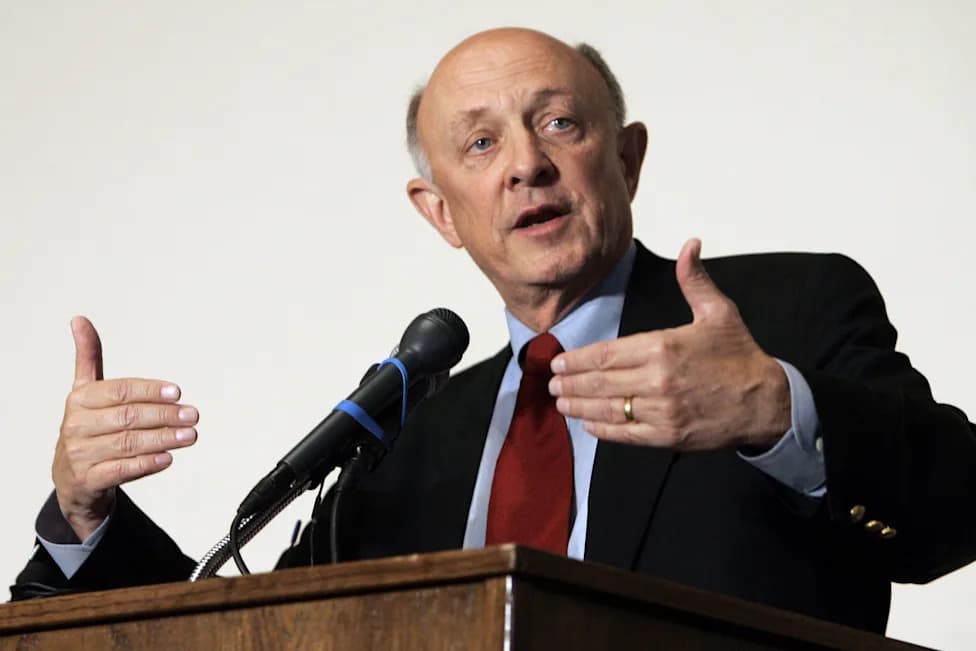
R. James Woolsey, CIA director during the Clinton administration, dies at 84
R. James Woolsey, a prominent national security expert who oversaw the Central Intelligence Agency from early 1993 until 1995, has died at the age of 84. His wife, Conchita Sarnoff Woolsey, said he died at his Washington home from a stroke after several years of declining health.
Conchita Woolsey told The Washington Post that his later health problems were linked to symptoms commonly described as "Havana syndrome," a puzzling cluster of complaints — including headaches, balance problems, cognitive difficulties and sleep disruption — first reported by U.S. diplomats in Cuba in 2016.
Career and Controversies
Woolsey led the CIA during a turbulent post–Cold War period. He left the agency in early 1995 after a tenure that included criticism for the agency's handling of the fallout from the Aldrich Ames espionage case. Ames, a career CIA officer, admitted receiving about $2.5 million from Moscow in exchange for U.S. secrets from 1985 until his arrest in 1994. Critics said supervisors of Ames were not sufficiently sanctioned; Woolsey responded that some insider betrayals cannot be entirely prevented and cautioned against overreacting with measures that could foster "a mood or attitude of paranoia and false accusations," further damaging morale.
As the Cold War ended, Woolsey also faced congressional pressure to trim CIA budgets and adapt the agency to a changing strategic landscape.
Earlier Service and Legacy
Before becoming CIA director, Woolsey served as Undersecretary of the Navy in the Carter administration and advised presidents of both parties on arms control. In 1989, President George H.W. Bush appointed him as a special negotiator to revive stalled NATO–Warsaw Pact talks on reducing forces and weapons in Europe; those efforts helped lead to the 1990 signing of the Conventional Armed Forces in Europe (CFE) Treaty by Bush and Mikhail Gorbachev.
Woolsey was born in Tulsa, Oklahoma, on Sept. 21, 1941. A Stanford graduate and Rhodes Scholar, he earned his law degree from Yale University. He began federal service in 1970 on the National Security Council staff and later served as general counsel to the Senate Armed Services Committee. Between government assignments he practiced law in Washington.
On Security and Morale: Woolsey warned that overly draconian internal security measures could erode trust and morale inside the intelligence community.
He is remembered as an energetic and sometimes controversial leader who sought to steer U.S. intelligence through a difficult transitional era.
Help us improve.