Researchers at the University of Texas Medical Branch developed two live-attenuated vaccines, LMA and LMP, that protected 100% of mice from lethal Yersinia pestis infection, including pneumonic plague. A "prime-pull" regimen combining an intramuscular prime with an intranasal adenovirus booster generated strong antibody responses and durable protection in most groups. Protection fell to 80% only in interferon-gamma–deficient mice that did not receive the nasal booster. Nonhuman primate testing and human clinical trials are needed before these candidates could be used clinically.
Two Experimental Vaccines Protect 100% of Mice From Plague, Including Deadly Pneumonic Form
(DBenitostock/Getty Images)
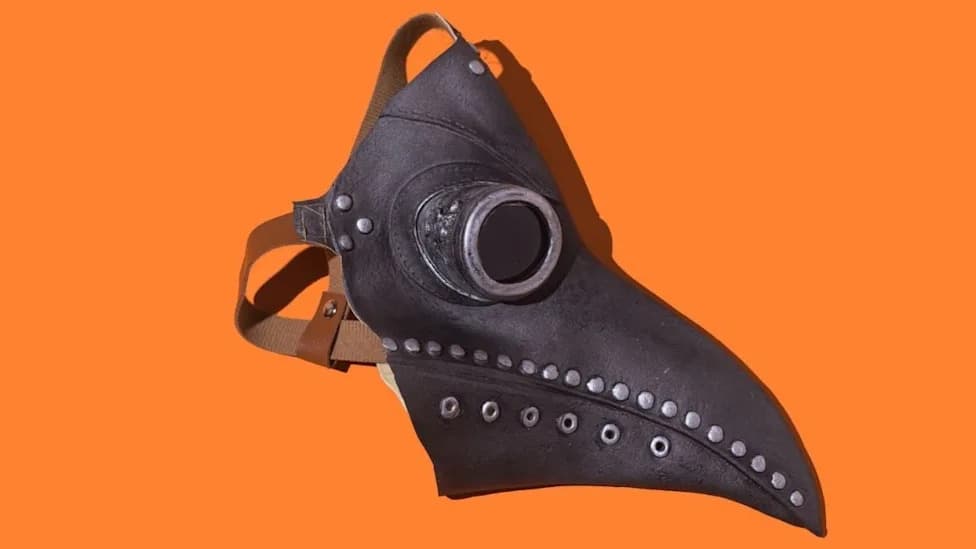
When people picture the plague they often recall medieval scenes of painful swellings and beaked masks. The disease, however, persists today and can be rapidly fatal if untreated. New laboratory research reports two experimental vaccines that fully protected mice from Yersinia pestis, the bacterium that causes plague—including the particularly lethal pneumonic form.
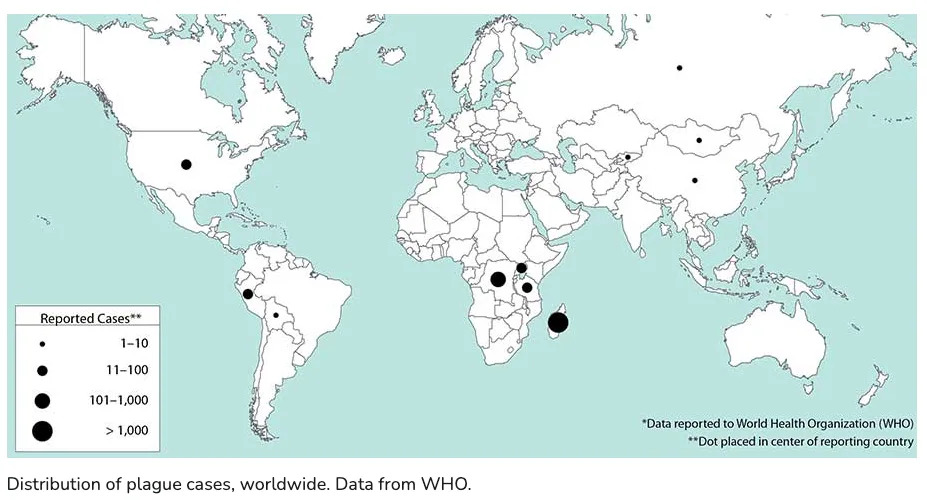
Most human plague cases since the 1990s have occurred in Africa, though there have also been cases in Asia, and South and North America. This map shows cases by country, reported between 2013 and 2018. (WHO/CDC)
Key Findings
Researchers at the University of Texas Medical Branch at Galveston developed two live-attenuated vaccine strains, named LMA and LMP, and tested several immunization regimens in mice (Hendrix et al., Science Translational Medicine, 2026). The standard protocol used an intramuscular injection followed by a booster 21 days later. That booster was either a second intramuscular dose or an intranasal adenovirus-based vaccine delivering three plague antigens.
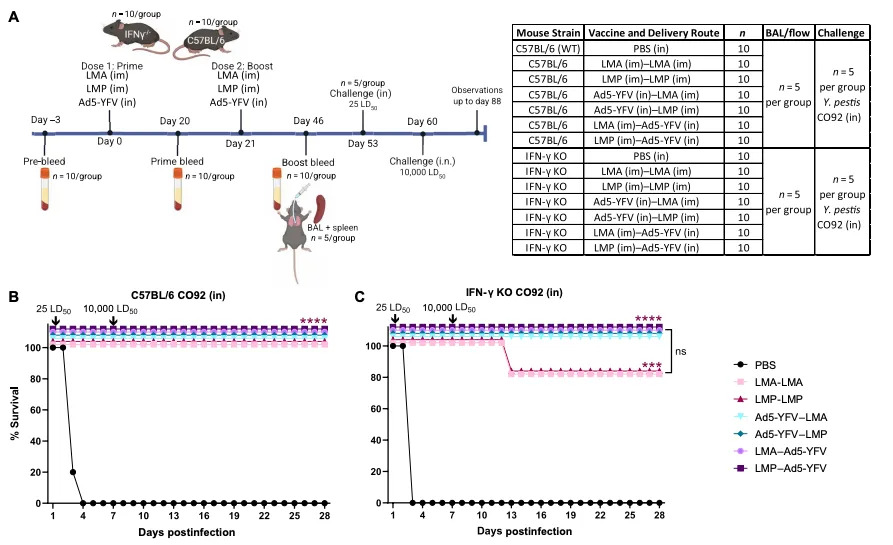
The researchers tested different vaccine formulations and compared the survival of immunized mice compared to untreated controls. (Hendrix et al.,Sci. Transl. Med., 2026)
The combined approach employs a "prime-pull" strategy: an intramuscular prime to stimulate systemic immunity and an intranasal booster to recruit immune cells to the respiratory tract, the likely entry point in pneumonic plague. Thirty-two days after the second dose, mice were challenged with a lethal dose of Y. pestis. All unvaccinated control animals died within four days, while every vaccinated mouse survived the initial challenge.

Subscribe to ScienceAlert's free fact-checked newsletter
One week later the animals faced a much higher "monster" dose. Most vaccinated groups remained 100% protected; protection fell to 80% in one group composed of mice genetically engineered to lack interferon-gamma and that had received only two intramuscular doses (no intranasal booster). Analyses of serum, mucus and other samples showed robust antibody responses induced by the vaccines.
Why This Matters—and What Comes Next
Pneumonic plague can be almost uniformly fatal within days if untreated, and rising antibiotic resistance among bacterial pathogens increases the importance of effective vaccines. These mouse results are encouraging, but the authors caution that nonhuman primate studies and carefully controlled human trials are required before any vaccine could be approved for clinical use. The researchers write that combinatorial approaches that generate rapid, respiratory-focused immunity could be valuable for emergency or reactive scenarios.
"Our vaccines and vaccination strategies are promising and should be further evaluated in nonhuman primates, followed by human clinical trials," the authors wrote. "In addition, the ability of combinatorial vaccines to elicit rapid and efficacious immunity against plague should be evaluated for their use in reactive/emergency scenarios and ability to generate durable immunity."
Publication: Science Translational Medicine (Hendrix et al., 2026). Note: These results are limited to mice; translation to humans requires additional testing.
Help us improve.