Ceratocaudia antiqua, discovered in Gujarat’s Kaladongar site, extends the record of neosauropods to as much as 190 million years ago — about 10 million years earlier than previously documented. More than 180 fragments from a single individual were recovered from Early Jurassic–Bajocian rocks in the Kachchh Basin. Digital reconstructions indicate the dinosaur likely held its tail horizontally and could swing it laterally as a defensive deterrent. The fossils are curated at IIT Bombay.
Indian Fossil Pushes Back Neosauropod Origins By 10 Million Years
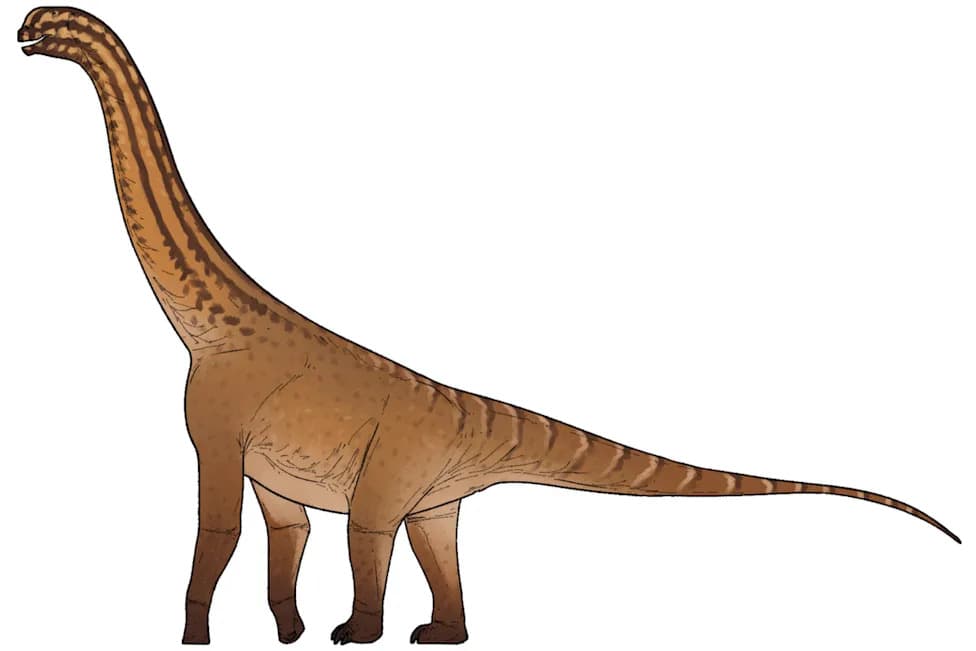
Unique Indian fossil transforms our understanding of one of most popular dinosaur groups
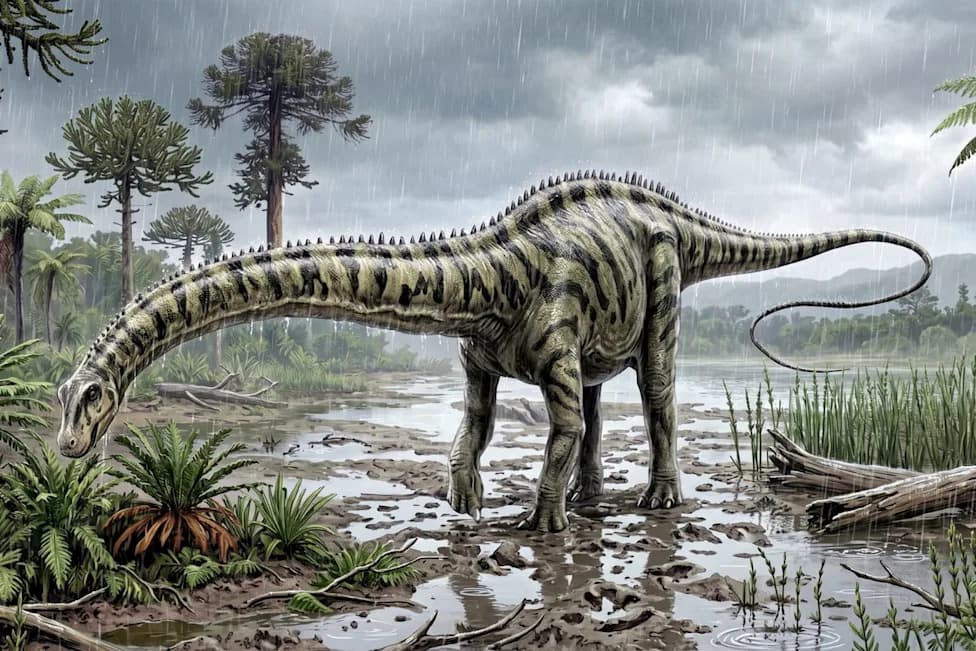
A distinctive long-necked dinosaur discovered in western India has forced paleontologists to revise the timeline for the rise and spread of neosauropods. The new species, Ceratocaudia antiqua, was identified from more than 180 skeletal fragments recovered in Gujarat’s Kaladongar site and appears to be an unexpectedly early member of the group that later produced giants such as Diplodocus, Brachiosaurus and Argentinosaurus.
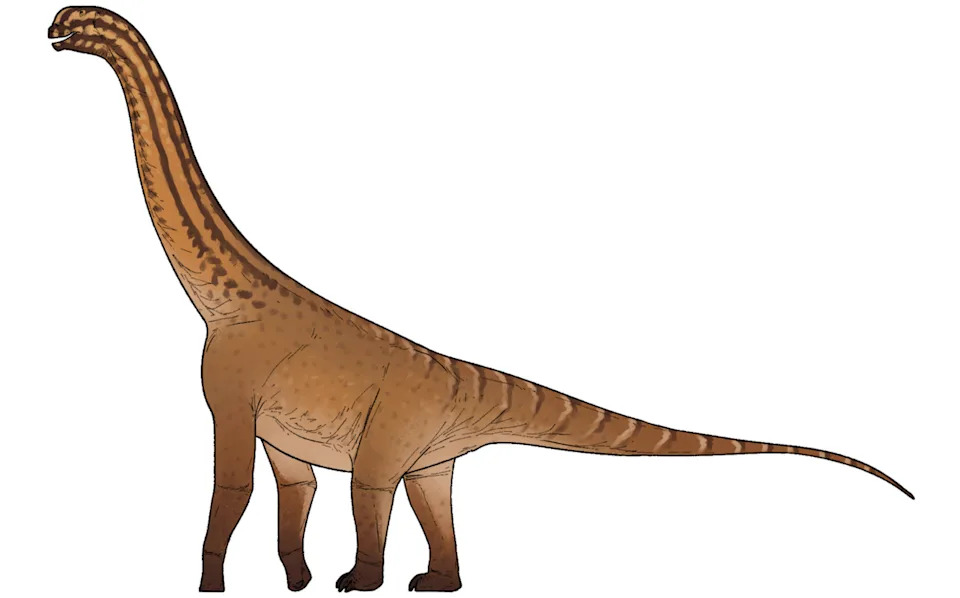
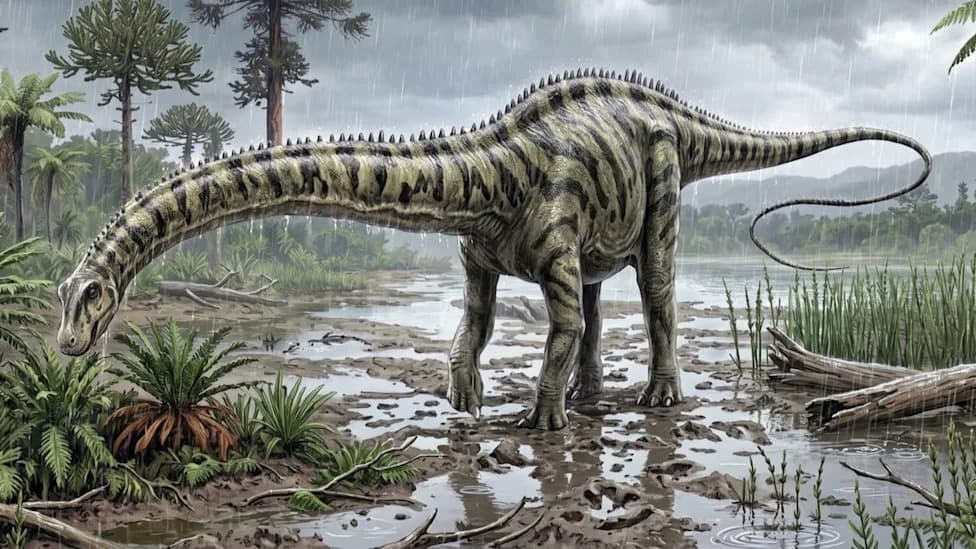
Life reconstruction of Ceratocaudia antiqua (Connor Ashbridge via Wikimedia Common CC 4.0)
Discovery and Geological Age
Excavations in the Kaladongar area of the Kachchh Basin produced vertebrae, ribs and limb elements that researchers interpret as coming from a single individual. The host rocks span the Early Jurassic into the Bajocian stage of the Middle Jurassic, giving an age of up to about 190 million years — roughly 10 million years older than the previously oldest identified neosauropods.
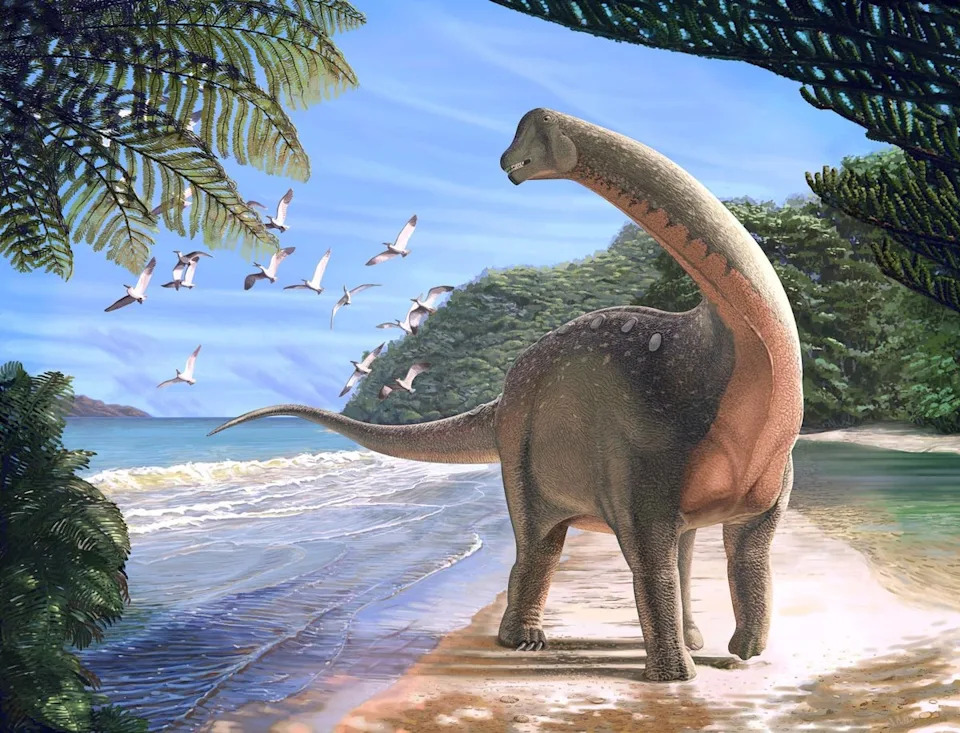
life reconstruction of the titanosaurian dinosaur Mansourasaurus shahinae (Carnegie Museum of Natural History)
What the Fossil Tells Us
Although later neosauropods included truly gigantic forms, Ceratocaudia antiqua was modestly sized at around 7 m (23 ft) long. The discovery makes it the oldest diagnosable macronarian neosauropod from India and one of the earliest global occurrences of the clade, suggesting these animals were already diversifying and spreading across Gondwana much earlier than thought.
Digital Reconstruction and Behavior
The research team produced a digital, retrodeformed reconstruction of the specimen’s tail and modelled its caudal musculature, comparing results with modern crocodiles and lizards. Their biomechanical analysis suggests the animal habitually held its tail horizontally and could swing it laterally with force, using it as a mild deterrent against predators.
"A hypothetical caudal musculoskeletal reconstruction of C. antiqua, generated using retrodeformed and reconstructed elements of the holotype, is used to determine tentative functional morphological implications, including the use of the tail as a mild deterrent to predators," the authors write in the Journal of Vertebrate Palaeontology.
Context and Curation
Previous finds from China — including specimens interpreted as Dashanpusaurus dongi and Yuzhoulong qurenensis — already hinted that neosauropods had achieved a near-global distribution by about 170 million years ago. The new Indian specimen pushes that timeline back and enriches our picture of early sauropod evolution. The fossils are curated at the Vertebrate Palaeontology Lab of the Indian Institute of Technology Bombay (IIT Bombay).
Help us improve.