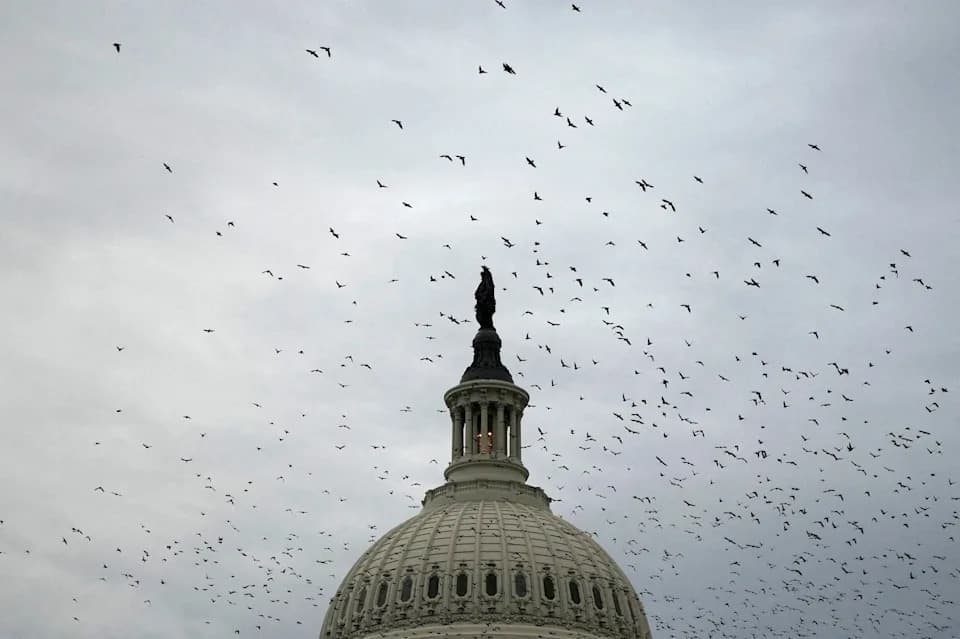
The House narrowly approved, 215-214, an amendment creating a legal presumption that qualified service members and Pentagon civilian employees can carry personal firearms on military bases, though it would not automatically permit weapons. The vote followed an August 2025 Fort Stewart shooting and split members across party lines. The measure was one of many controversial amendments to the FY2027 NDAA, which would authorize about $1.15 trillion in defense policy and spending and remains subject to further House-Senate negotiations.
House Narrowly Adopts Presumption Allowing Troops, Pentagon Civilians To Carry Personal Firearms On Bases
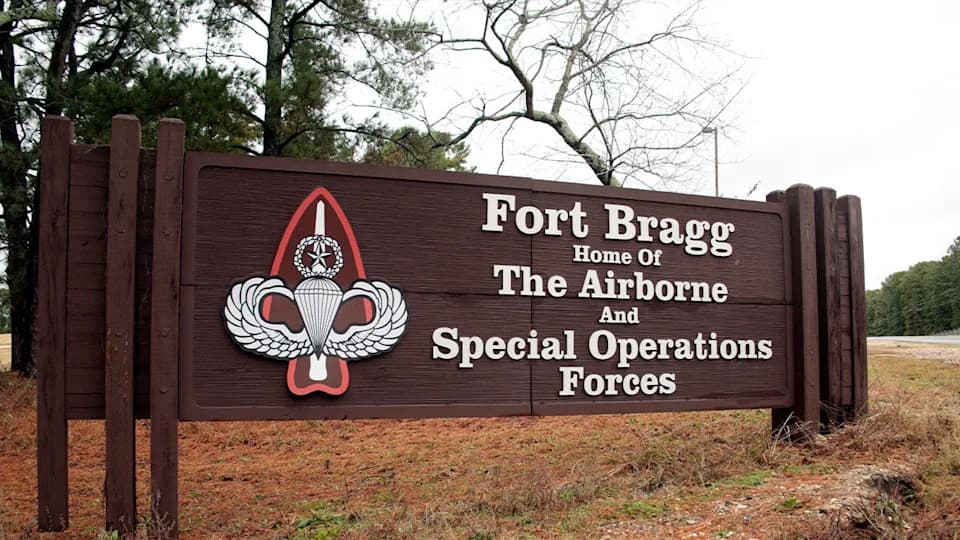
A picture of an entrance to Fort Bragg in North Carolina.
The House on Tuesday night approved a narrowly divided amendment that would create a legal presumption in favor of allowing qualified service members and Pentagon civilian employees to carry personal firearms on military installations. The measure passed 215-214 and is part of a contentious round of changes to the fiscal year 2027 National Defense Authorization Act (NDAA).
Sponsored by Rep. Jeff Crank (R-Colo.), the amendment does not automatically authorize personal weapons on base. Instead, it would establish that installation commanders should be presumed to approve requests from qualifying personnel unless they determine otherwise.
Context And Key Votes
The close vote came less than a year after an August 2025 incident at Fort Stewart, Georgia, in which an Army sergeant allegedly used a personal handgun to wound five fellow soldiers. Military officials said personal firearms had been prohibited on post at the time and that other soldiers subdued and disarmed the suspect; all five victims survived.
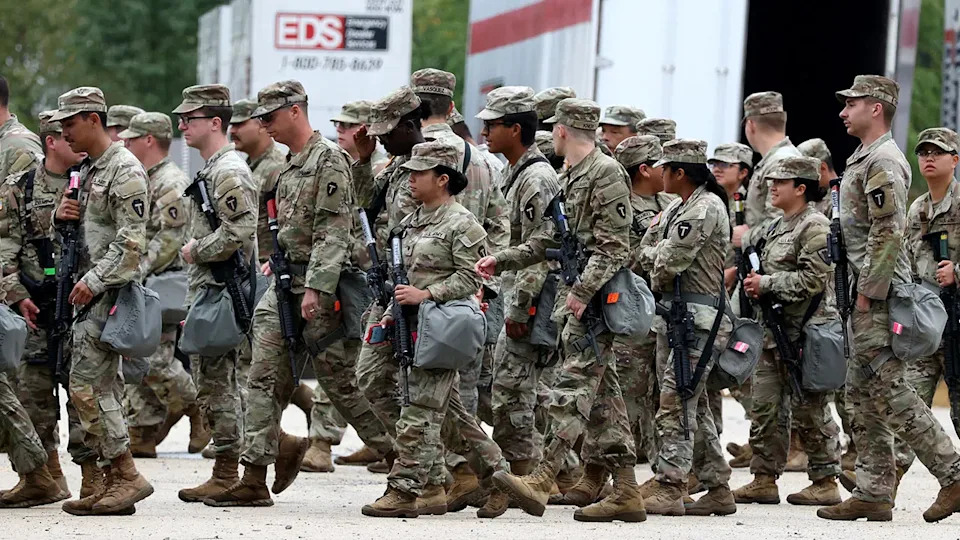
Members of the Texas National Guard assemble in Elwood, Illinois, at the Army Reserve Training Center in the southwest suburb of Chicago, on Oct. 7. 2025.
Three House Democrats joined most Republicans to support the firearms presumption amendment. Three Republicans and independent Rep. Kevin Kiley (Calif.) voted against it.
Other High-Profile Amendments
Lawmakers considered dozens of other amendments during the multi-day NDAA amendment process. Notable votes included:
- TRICARE Transition-Care Ban: An amendment from Rep. Nancy Mace (R-S.C.) to prohibit TRICARE coverage for transition-related hormones, puberty blockers and surgeries for service members and dependents passed 219-208. The change would expand prior restrictions and codify them in law.
- DoDEA Sports Policy: A second Mace amendment, banning transgender girls from participating in girls' sports at Department of Defense Education Activity (DoDEA) schools, passed 221-203.
- Boebert Transgender Service Ban Failed: Rep. Lauren Boebert’s (R-Colo.) amendment to codify President Donald Trump’s 2025 executive order barring transgender troops and requiring service according to biological sex failed, 217-212.
- Ukraine Aid Cut Defeated: An attempt by Rep. Eli Crane (R-Ariz.) to largely strip funding from the Pentagon’s Ukraine Security Assistance Initiative — limiting funds to U.S. Embassy security in Kyiv — attracted 76 Republican votes but ultimately failed.
- Foreign Cadet Ban Rejected: The House overwhelmingly rejected an amendment (360-61) that would have barred foreign nationals from attending U.S. service academies, preserving long-standing allied training programs.
- Santa Ynez Pipeline Language Approved: Lawmakers narrowly approved provisions to ensure continued operation of California’s Santa Ynez Pipeline System, which supplies crude oil to refineries serving military installations (215-214).
Bill Scope And Process
The House is debating amendments to the FY2027 NDAA, which would authorize roughly $1.15 trillion for national defense — about $252 billion more than fiscal 2026 defense appropriations. The bill would authorize pay raises of roughly 5%–7% for service members, expand weapons and munitions production, and accelerate investment in missile defense, hypersonics, autonomous systems and other emerging technologies. The NDAA sets policy and authorization levels but does not appropriate funds; separate appropriations bills are required to fund the programs.
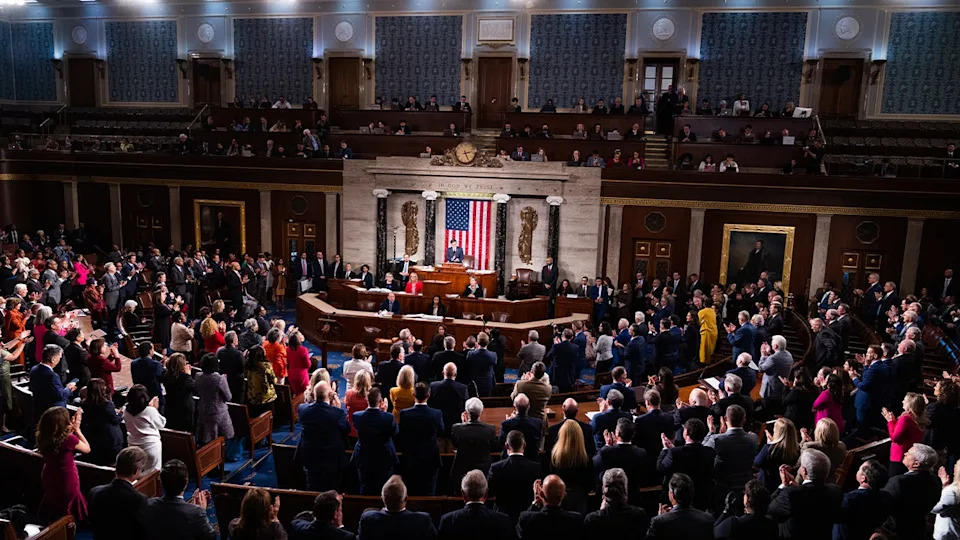
Speaker of the House Mike Johnson, R-La., addresses the House chamber of the U.S. Capitol after winning the speakership on Wednesday, Oct. 25, 2023.
House leaders made 320 amendments eligible for consideration, eight more than in an earlier package that collapsed amid GOP opposition to the separate SAVE America Act. Debate over amendments is expected to continue before a final House vote on passage and subsequent negotiations with the Senate.
Political Dynamics And Next Steps
The addition of controversial measures on firearms access and transgender policy strained Democratic support and forced Republican leaders to rely on a slim majority to advance the bill. Republican efforts to attach the SAVE America Act — election legislation requiring documentary proof of citizenship to register to vote — to the NDAA through procedural maneuvers have been a recurring flashpoint.
The Senate’s NDAA has also encountered obstacles: Senate Democrats recently blocked consideration in protest over the administration’s handling of the war with Iran. Meanwhile, the White House has requested an $87.6 billion supplemental package that includes roughly $67.1 billion for defense needs related to the Iran conflict and other priorities.
As the House and Senate work toward conference negotiations, key remaining questions include funding levels, policy riders, and whether controversial provisions added in the House will survive reconciliation with the Senate version.
Bottom line: A narrow House majority adopted a presumption favoring approval for qualified personnel to carry personal firearms on military bases, amid a broader and politically charged NDAA amendment process that touches on transgender policy, foreign aid, and defense spending priorities.
Help us improve.