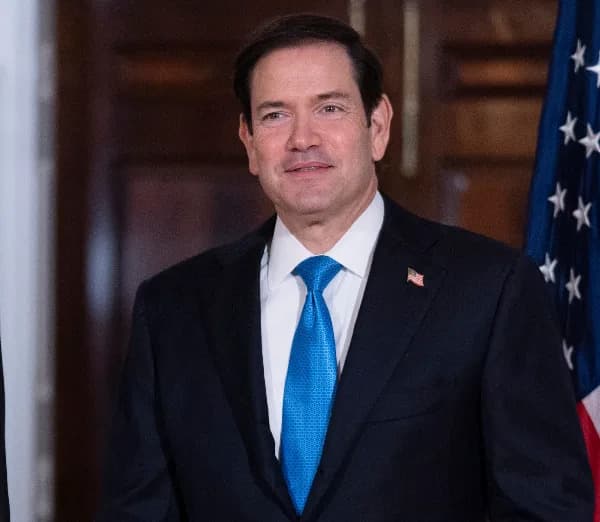
At ASEAN meetings in Manila, U.S. Senator Marco Rubio warned that Iran’s demand to control and charge tolls in the Strait of Hormuz would jeopardize global trade and the principle of freedom of navigation, and could encourage similar actions elsewhere. He reassured Southeast Asian leaders of U.S. commitment to the region and met Quad partners to discuss maritime and transnational security. Rubio also conferred with India’s S. Jaishankar on regional issues and an almost-complete interim trade deal, and was due to meet China’s Wang Yi on the sidelines.
Rubio: Iran's Demand To Charge Tolls In Strait Of Hormuz Would Set A Dangerous Global Precedent
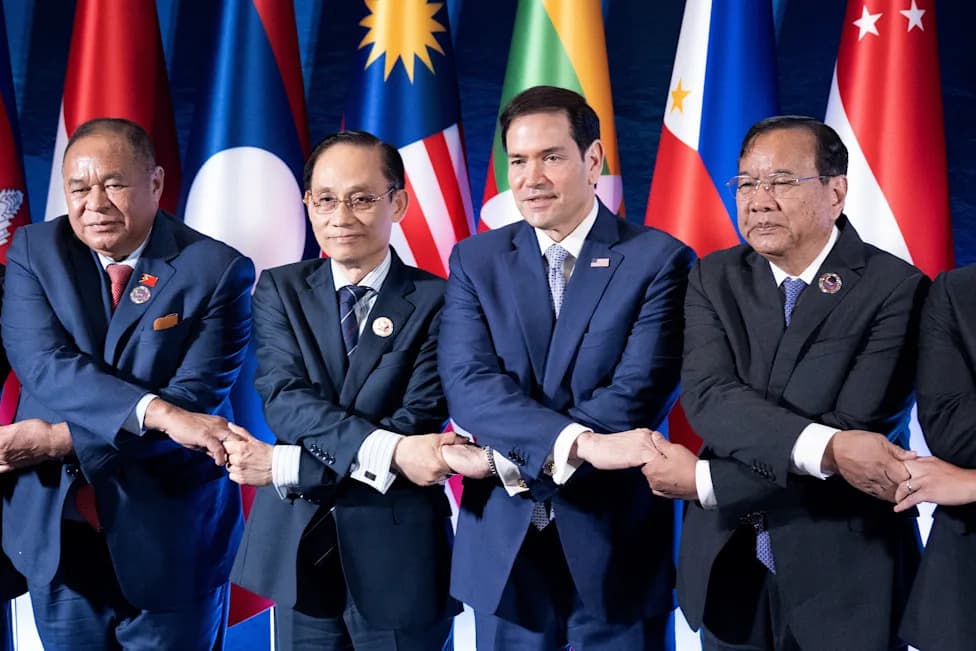
From left, East Timor's Foreign Minister Bendito dos Santos Freitas, Vietnam Foreign Minister Le Hoai Trung, U.S. Secretary of State Marco Rubio and Cambodia's Foreign Minister Prak Sokhonn join hands during the ASEAN Post-Ministerial Conference with the United States on the sidelines of the Association of Southeast Asian Nations (ASEAN) Foreign Ministers' Meeting in Pasay city, Metro Manila, Philippines Wednesday, July 22, 2026. (Brendan Smialowski/Pool Photo via AP)(Brendan Smialowski/Pool AFP via AP)
Manila — U.S. Senator Marco Rubio warned Wednesday that Iran's assertion of a right to control the Strait of Hormuz and levy tolls there would threaten the global economy and the long-standing principle of freedom of navigation — risks he said would extend to Asia as well.
Rubio made his remarks at the opening of annual foreign minister meetings in Manila with counterparts from the Association of Southeast Asian Nations (ASEAN). The gathering comes amid regional concern over renewed conflict in the Middle East and its wider economic and security implications. Rubio sought to reassure ASEAN ministers that, despite Washington's focus on multiple global crises, the United States remains committed to the region: "We're with ASEAN 100%."
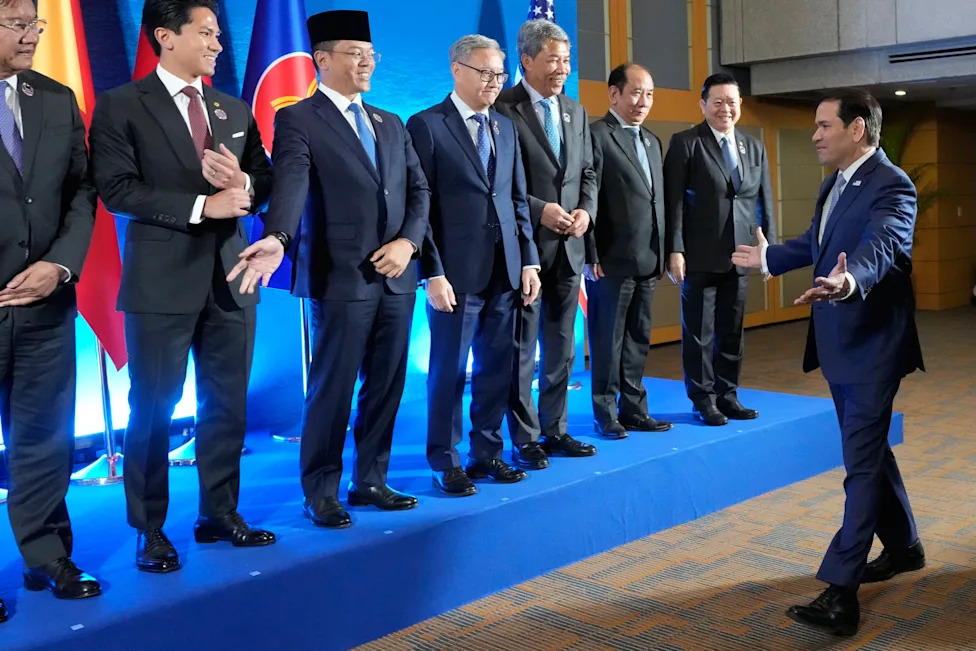
U.S. Secretary of State Marco Rubio, right, arrives for a group photo session during the ASEAN Post Ministerial Conference with the United States on the sidelines of the Association of Southeast Asian Nations (ASEAN) Foreign Ministers' Meeting in Pasay city, Metro Manila, Philippines Wednesday, July 22, 2026. (AP Photo/Aaron Favila, Pool)(AP Photo/Aaron Favila)
"If we create a precedent in the Middle East where a nation state can decide that they are going to control an international waterway, charge a toll and, if you don't pay them, blow up your ships, we have created a very dangerous precedent which will repeat itself in other parts of the world, including in this region," Rubio said.
On the sidelines of the meetings, Rubio met with foreign ministers from the four-nation Quad partnership — the United States, Australia, India and Japan — to review shared priorities including technology cooperation, humanitarian assistance, emergency response and both maritime and transnational security.
The Quad ministers issued a joint statement reaffirming their commitment to maritime security initiatives intended to counterbalance growing strategic competition in the region. "We are united in our conviction that peace and stability in the Indo-Pacific maritime domain underpin the security and prosperity of the region," the statement said.
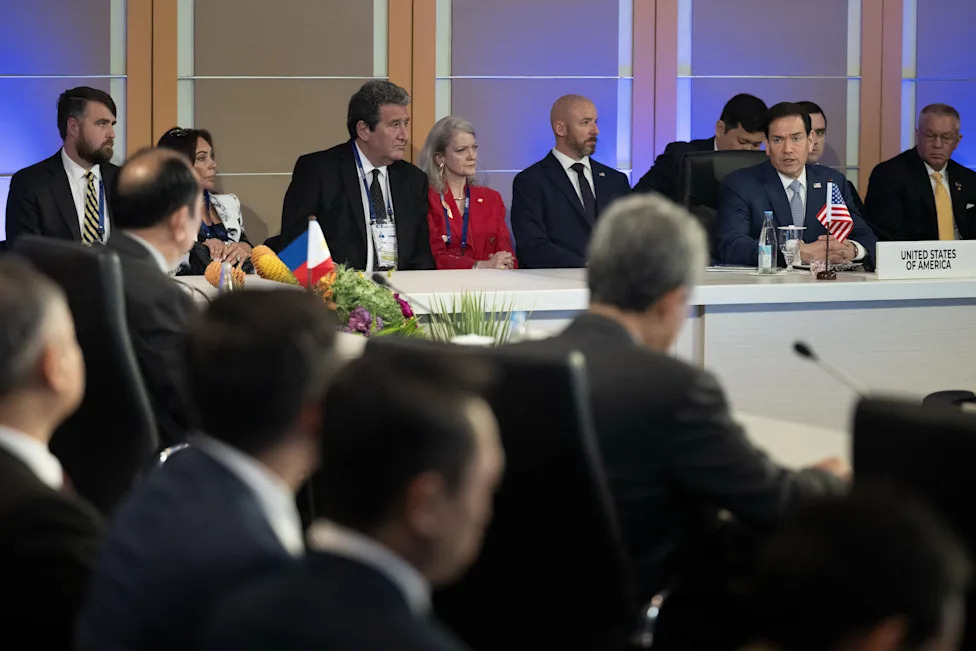
U.S. Secretary of State Marco Rubio makes an opening statement during the ASEAN Post-Ministerial Conference with U.S. on the sidelines of the Association of Southeast Asian Nations (ASEAN) Foreign Ministers' Meeting in Pasay city, Metro Manila, Philippines Wednesday, July 22, 2026. (Brendan Smialowski/Pool Photo via AP)(Brendan Smialowski/Pool AFP via AP)
Rubio later posted on X that "The Quad remains a priority, and we will meet again later this year."
U.S. officials have for years raised concerns about increasingly assertive behavior in the South China Sea that has disadvantaged smaller claimant states, including the Philippines. Territorial disputes involving Taiwan and ASEAN members Vietnam, Malaysia and Brunei were among the top items on the three-day agenda that began Tuesday in Manila.
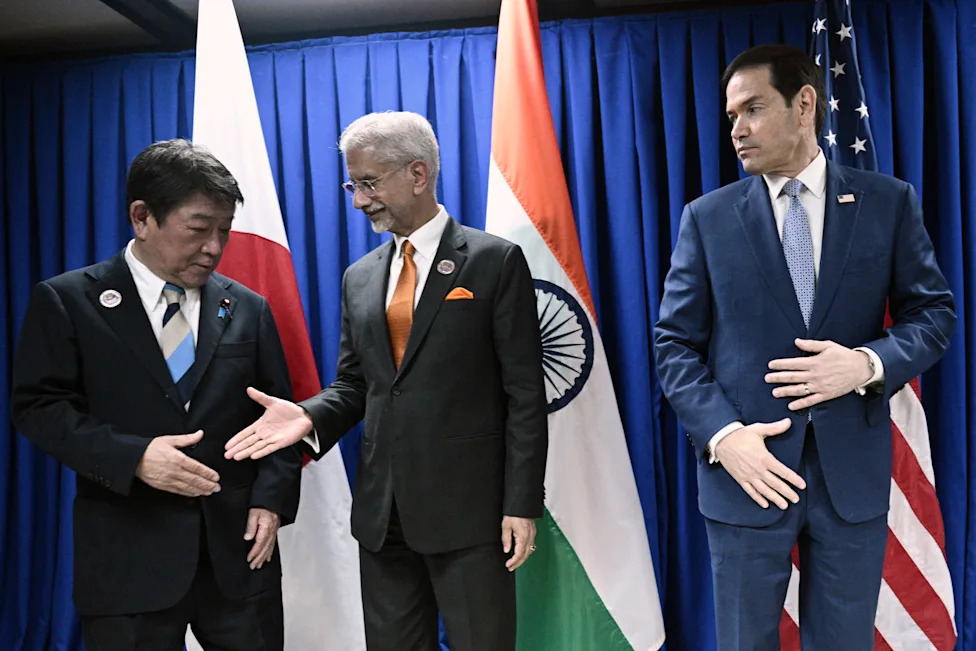
Japan's Foreign Minister Toshimitsu Motegi, left, shakes hands with India's Foreign Minister S. Jaishankar, center, as U.S. Secretary of State Marco Rubio looks on, on the sidelines of the Association of Southeast Asian Nations (ASEAN) Foreign Ministers' Meeting in Pasay city, Metro Manila, Philippines Wednesday, July 22, 2026. (Brendan Smialowski/Pool Photo via AP)(Brendan Smialowski/Pool AFP via AP)
Rubio also held talks with India's External Affairs Minister Subrahmanyam Jaishankar, where they discussed regional security concerns and tensions involving Iran, according to a U.S. State Department spokesperson. Their discussions also touched on an interim trade agreement intended to lower U.S. tariffs on some Indian goods.
"The Secretary and Minister Jaishankar agreed on the importance of finalizing the interim trade deal, which is almost complete," State Department spokesperson Tommy Pigott said.
Rubio was also scheduled to meet separately with Chinese Foreign Minister Wang Yi on the sidelines of the conference, held in a tightly secured convention complex by Manila Bay.
Help us improve.