The central hospital in Dnipro has become a primary trauma centre since Russia's 2022 invasion, treating both military and civilian casualties. Staff face a constant flow of catastrophic injuries from drones, missiles and glide bombs, with amputations and multiple surgeries now routine. The hospital recorded 1,958 trauma surgeries in the first five months of the year and has performed nearly 60,000 operations since 2022, while medical teams struggle with the emotional and logistical strain.
24 Hours at Dnipro’s Trauma Hospital: Inside the Toll of Drone Warfare
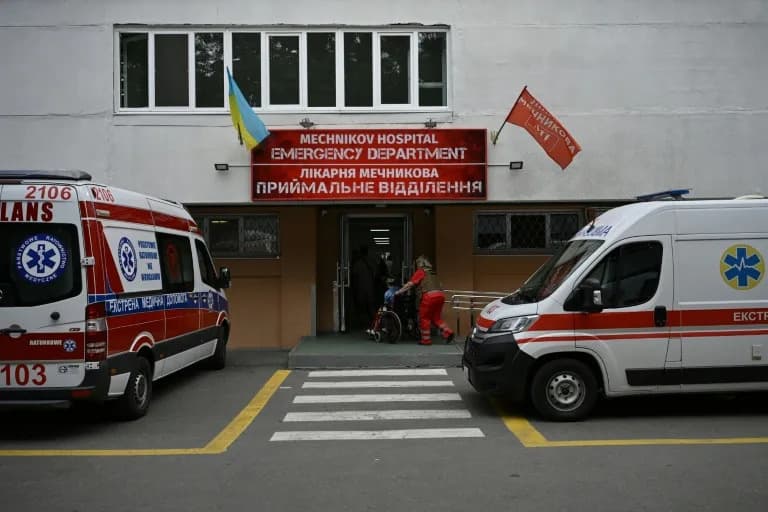
The type of war injuries being treated at the hospital has changed (Genya SAVILOV)
At 9:00 a.m. in Dnipro's central hospital, a surgeon held his scalpel for a moment, traced a cross in the air and then cut into the bloody mass of flesh and bone on the operating table. By that hour the theatre team had already performed three amputations.
Morning Rounds and Relentless Surgery
The patient under the knife was a 27-year-old soldier whose legs were obliterated by a Russian drone. Hospital director Sergiy Ryzhenko and his team watched in silence; one observer slipped from the viewing room and whispered, "I'll never get used to this." Since the 2022 invasion, the hospital has become the principal trauma centre for soldiers and civilians wounded across eastern and southern Ukraine.
The flow of casualties is relentless and the nature of injuries has shifted markedly: bullet wounds have largely been replaced by damage from drones, missiles and glide bombs, which doctors say are far more destructive. "The body is torn into pieces, chunks of flesh are ripped out, bones are shattered — everything happens in a way that makes saving them almost impossible," Ryzhenko said. Each morning he oversees between 50 and 100 operations.
Life Between Trauma and Maternity Wards
In the staff break room, the smell of antiseptic mixed with garlic and coffee as exhausted medics snacked on black bread and cherries. About 83% of arriving patients are either unconscious or have severe open wounds or amputations, according to staff. They rely on dark humour and short respites to cope. "One guy's intestines were sticking out. He was holding it in with his hands," nurse Ruslana Vorobyova recalled. "Another had his head smashed, everything was pouring out."
Despite the trauma load, parts of the hospital still feel ordinary: on the "happy" side, obstetrician Olga Fandeieva delivered a baby, and family members gathered to take photos. Since the war began, Fandeieva has split shifts between the trauma and maternity wards. "When you look at young guys who've had their arms and legs cut off, and then in the morning you hold these little hands — it's a reset," she said. "You understand what you live for and what you work for."
Scale, Specialisation and the Midnight Surge
By evening, the day's toll is visible on staff faces. Vorobyova pointed to a ledger marked 1,958 — the number of trauma surgeries performed in the first five months of the year. Since 2022 the hospital has carried out nearly 60,000 operations. Multiple-trauma cases are now routine; some patients require up to 20 operations a week. Dozens of Western doctors have visited to learn techniques for treating drone and blast injuries, which have become a growing specialty.
As midnight approaches, overnight strikes often bring fresh casualties. Paramedics in bulletproof vests wheel in patients with shattered faces and embedded fragments. Facial and head injuries are increasingly common and, Ryzhenko says, "the most terrifying thing we have to see. You look, and there should be a person there — there is nothing."
Human Cost and Coping
Ambulances keep coming until dawn. Some nights are quieter than others, but the emotional toll remains. Staff try to sleep between shifts, yet nightmares follow many home. "You come home exhausted, lie down to rest, and you still dream — there is an explosion somewhere," Vorobyova said.
By 8:00 a.m. the next day the corridor stirs again: the day shift returns, surgeons don their gowns, and Ryzhenko begins his rounds. The cycle continues — surgical skill and determination working against the steady new realities of modern warfare.
Key fact: The hospital performed 1,958 trauma surgeries in the first five months of the year and has carried out nearly 60,000 operations since 2022.
Help us improve.