Construction crews near Cuxhaven uncovered an almost intact Sturmgeschütz III (StuG III) assault vehicle buried under the Nordholz naval air base for more than 80 years. The StuG III—one of over 9,300 produced by Rheinmetall and others—carries a fixed assault gun and housed a four-person crew. At least 17 white marks on its barrel suggest wartime action; original camouflage and some running gear remain. The vehicle will be conserved in Munster in August and later displayed at the Bundeswehr Military History Museum in Dresden.
Nearly Complete WWII StuG III Assault Gun Dug Up Near Germany’s North Sea Coast
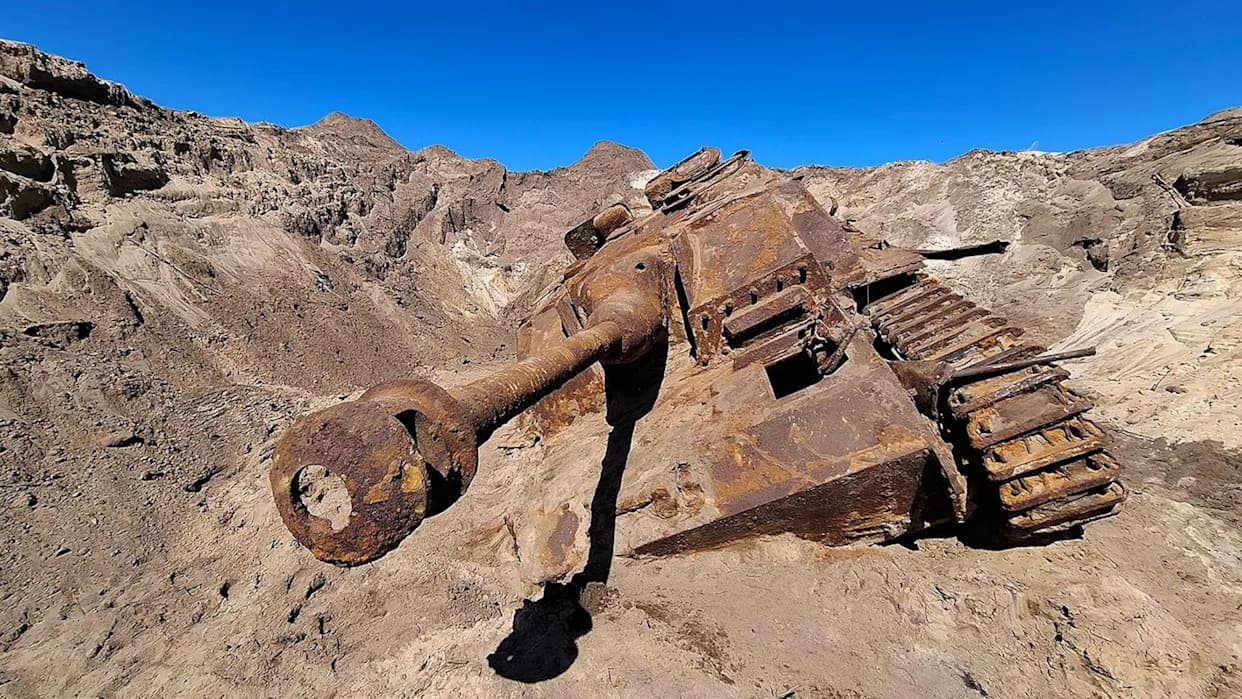
Over 9,300 StuG III were manufactured during World War II.
Construction workers digging along Germany’s rugged North Sea coast made a remarkable discovery: an almost complete Sturmgeschütz III (StuG III) assault vehicle buried in sand beneath the Nordholz naval air base. Archaeologists from the Cuxhaven district say the tracked vehicle lay hidden for more than 80 years and still bears traces of its wartime service.
Discovery And Condition
The StuG III was one of Nazi Germany’s most widely produced armored fighting vehicles. Built by Rheinmetall and other firms, more than 9,300 Sturmgeschütz III chassis were produced before manufacturing ceased in April 1945. Unlike turreted tanks, the StuG III mounted a fixed assault gun; its four-person crew had to turn the entire vehicle to aim. From inside, the fighting compartment is described as oppressively cramped, despite the vehicle’s substantial exterior.
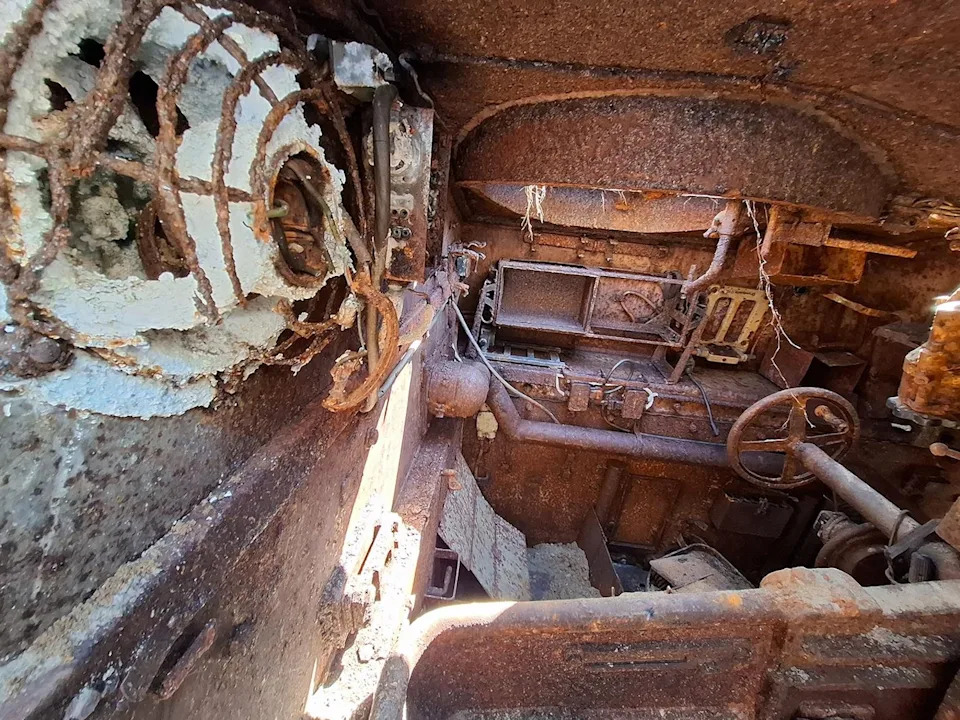
The cramped interior seated a crew of four. Credit:A. Hüser / Archaeological Monument Preservation District of Cuxhaven
“The view inside is very impressive. It feels oppressively cramped,” said Andreas Hüser, director of archaeological heritage in Cuxhaven.
Although researchers have not yet definitively proven this particular vehicle saw combat, a number of well-preserved details point to active wartime use. Inspectors counted at least 17 white marks on the gun barrel—commonly interpreted as tally marks indicating enemy tanks destroyed. Portions of the original camouflage paint remain visible, and some running gear is still intact. Archaeologists also recovered fragments of small shells and light ammunition near the vehicle.
How It Survived
The StuG III’s location—buried in dry sand at the edge of a slope—helped protect it from corrosion and decay. Burying captured or abandoned equipment after the war was a relatively common method of disposal used by occupying forces, and in this case the sand effectively preserved the vehicle’s structure and many surface details for decades.
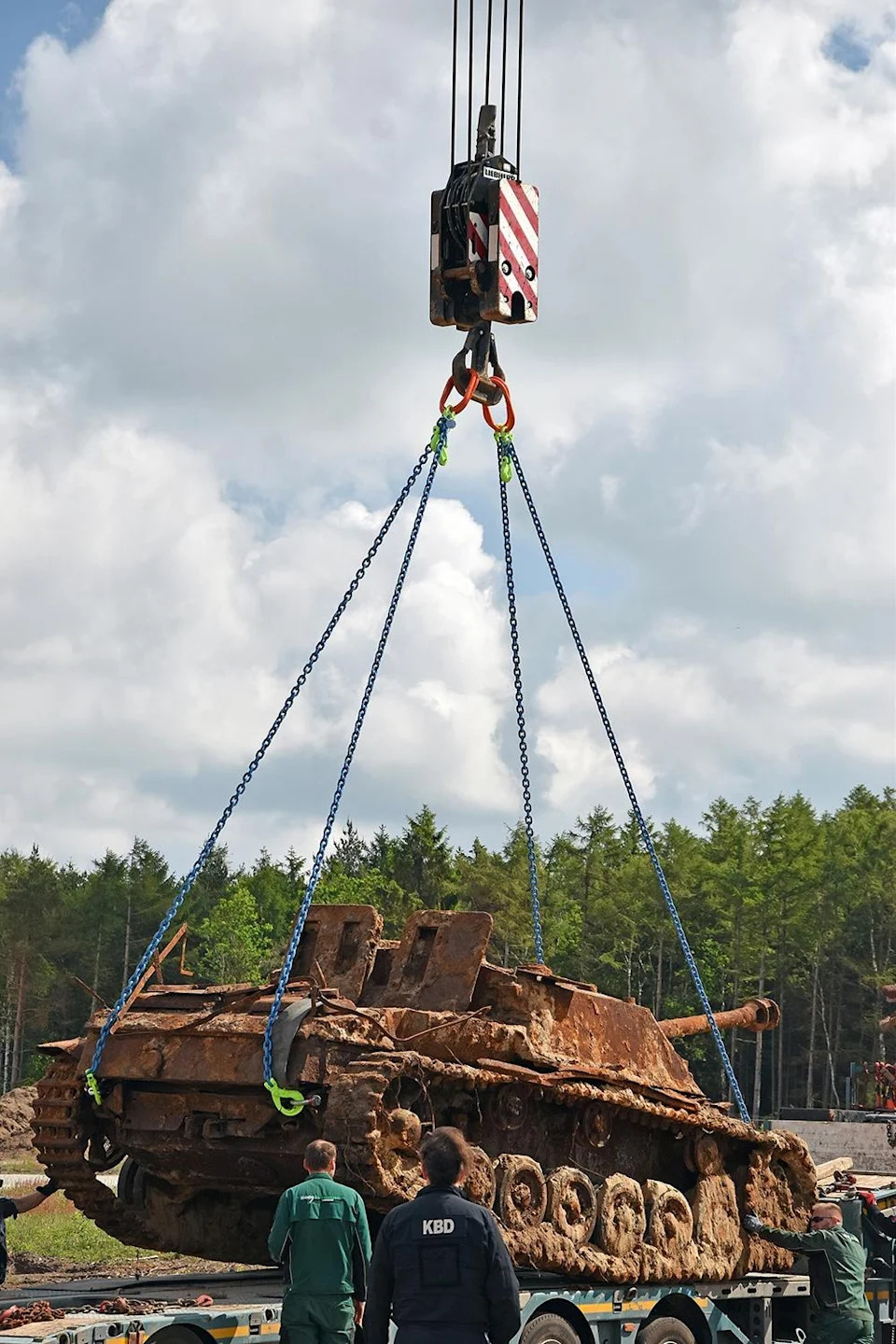
The StuG III will eventually be put on display in a museum in Dresden. Credit:A. Hüser / Archaeological Monument Preservation District of Cuxhaven
Next Steps
Conservation teams are preparing the vehicle for careful extraction and transport. The StuG III is scheduled to be moved to Munster in August for conservation and stabilization work, and after treatment it will be delivered to the Bundeswehr’s Military History Museum in Dresden for public display.
Importance: Finds of armored vehicles in such a complete state are rare, and this discovery offers historians, conservators, and the public a tangible link to the material history of World War II.
Help us improve.