The defeat of Jack Schlossberg in the June 23 Democratic primary has reignited debate about the enduring "Camelot" myth around the Kennedy family. The column argues that name recognition and media deference have often shielded the Kennedys from the consequences of personal scandals and policy failures, from JFK's affairs to Chappaquiddick and the Bay of Pigs. Schlossberg's loss, the author suggests, is a prompt to reconsider dynastic influence and place performance over pedigree.
Schlossberg Defeated — Time To Retire The ‘Camelot’ Myth
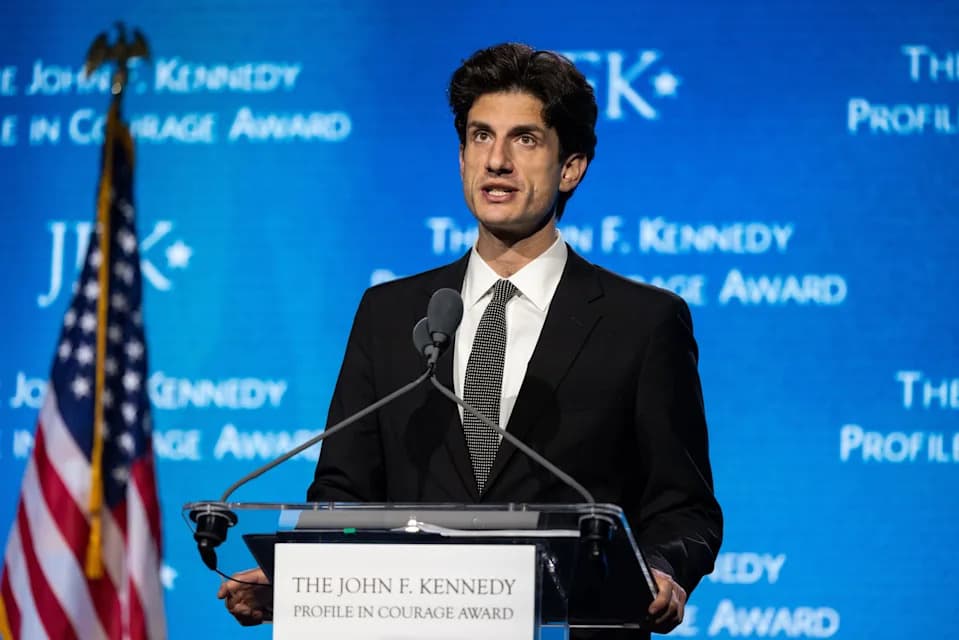
Jack Schlossberg speaks before giving the 2026 John F. Kennedy Profile in Courage Award to former Federal Reserve Chairman Jerome Powell on May 31, 2026, in Boston.
Jack Schlossberg, the only grandson of President John F. Kennedy, was defeated in New York City's Democratic congressional primary on June 23. His loss has prompted one opinion columnist to argue that the long-held "Camelot" narrative surrounding the Kennedy family may finally be coming to an end.
Coverage after the vote struck an end-of-an-era tone: as The New York Times put it, Schlossberg's defeat "dampened the dream of a renewed Camelot." But critics say nostalgia has long obscured a far more complicated and less flattering family history.
The term "Camelot" came to mean more than admiration for JFK's charisma. Over decades it evolved into the idea that the Kennedys embodied an almost sanctified form of American leadership, shielded from the ordinary consequences of politics. That reputation helped make the 33-year-old Schlossberg — son of Caroline Kennedy and Edwin Schlossberg — a media favorite early in his campaign, largely on the basis of lineage rather than policy experience.
Democratic insiders were skeptical. As longtime consultant Hank Sheinkopf told The Times, Schlossberg was "very entertaining" but "not necessarily serious." Schlossberg pushed back, telling The Associated Press that supporters backed him for his experience and ideas, not just his surname. Democratic primary voters ultimately disagreed, and his campaign struggled to translate family name recognition into a substantive platform.
Myth Versus Record
The column argues that the #MeToo era should have prompted a reappraisal of the Kennedy mystique, but that did not fully materialize. John F. Kennedy's reputation as a philanderer is widely known; some former associates and historians describe his conduct as persistent and exploitative. For example, former White House intern Mimi Alford has alleged that, when she was 19, Kennedy once directed her to perform a sexual act on another aide while he watched, and later attempted to introduce her to his brother Ted — a claim she says she rejected.
Other episodes commonly invoked to challenge the family's exalted image include Senator Ted Kennedy's role in the Chappaquiddick incident, in which Mary Jo Kopechne died and the senator reportedly delayed notifying authorities, and the 1991 trial of William Kennedy Smith on rape charges, which ended in acquittal after evidence limits. These events, along with later controversies, rarely produced a lasting collapse in the family's influence among elites.
Modern Fractures
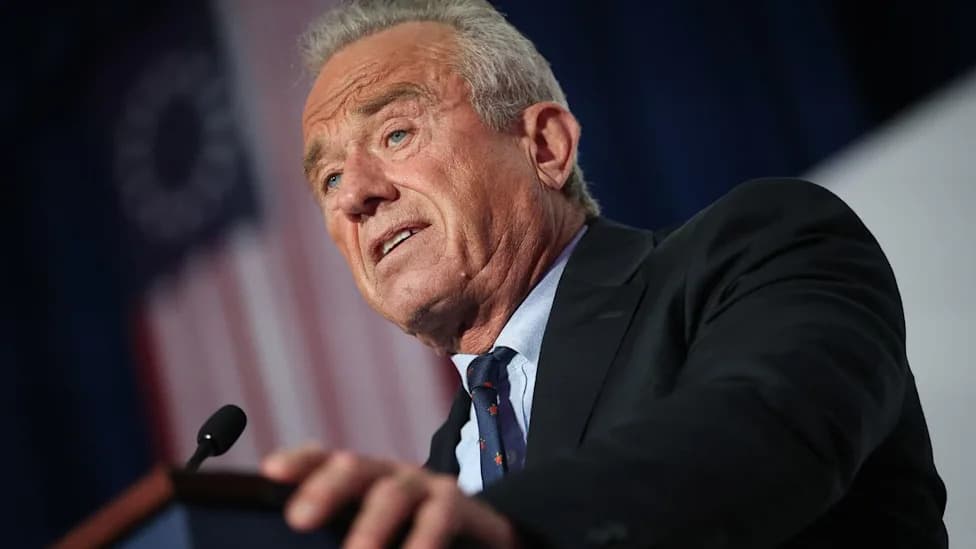
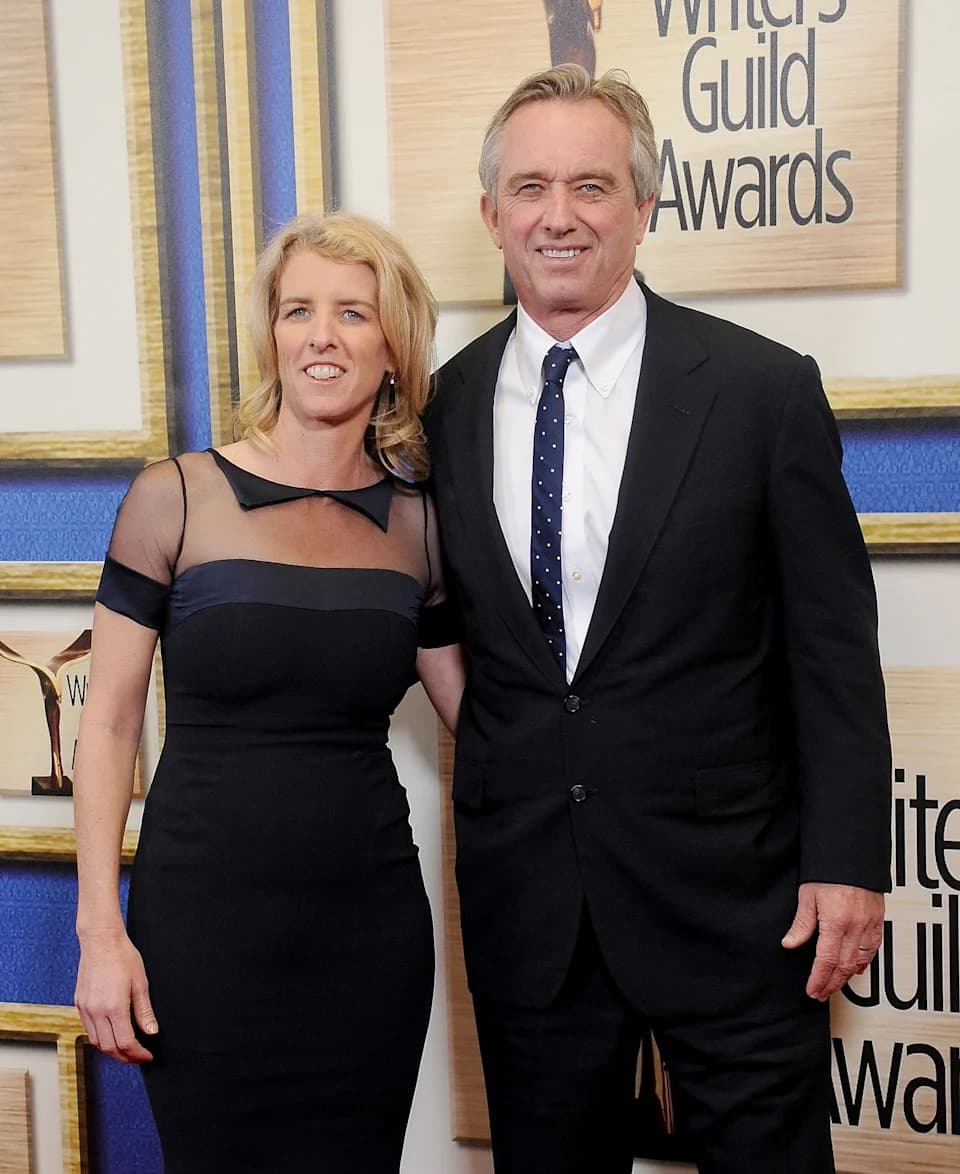
More recently, Robert F. Kennedy Jr. was estranged from parts of his family after promoting vaccine skepticism and endorsing Donald Trump; Caroline Kennedy publicly called her cousin a "predator" unfit for federal public health leadership. The columnist notes that the family's internal disputes often revolve around politics and policy as much as, or more than, alleged personal misconduct.
Schlossberg himself is not accused of the personal misconduct that has plagued other Kennedys. His weaknesses were political: a disorganized campaign and a tendency to engage in distracting online spats. Those failings, the column suggests, reveal how much of the family's political power has been sustained by reputation rather than by demonstrable accomplishment.
History, Image And Policy
The column revisits key moments from JFK's presidency to question the balance between image and outcomes. Shortly after his inauguration in 1961, about 1,400 CIA-trained Cuban exiles landed at the Bay of Pigs. Lacking promised air cover, the operation collapsed: more than 100 exiles died and roughly 1,200 were captured and held by Fidel Castro's government for about 20 months, until Attorney General Robert Kennedy secured their release for approximately $53 million in food and medicine. The fiasco is cited as helping shape Soviet perceptions of U.S. resolve and setting the stage for the Cuban Missile Crisis in 1962.
The columnist compares the deference the Kennedys received to the tolerance shown to other powerful figures whose conduct would otherwise be disqualifying, arguing that elites often protect those who share their politics or social circle.
Conclusion
The opinion piece concludes that Americans should take the country’s democratic principles seriously — that political privilege should not be inherited by birthright or sustained by nostalgia. Daniel Allott, USA TODAY's conservative opinion editor, penned the column, arguing that Schlossberg's defeat is a moment to reassess the hold of political dynasties in the national imagination.
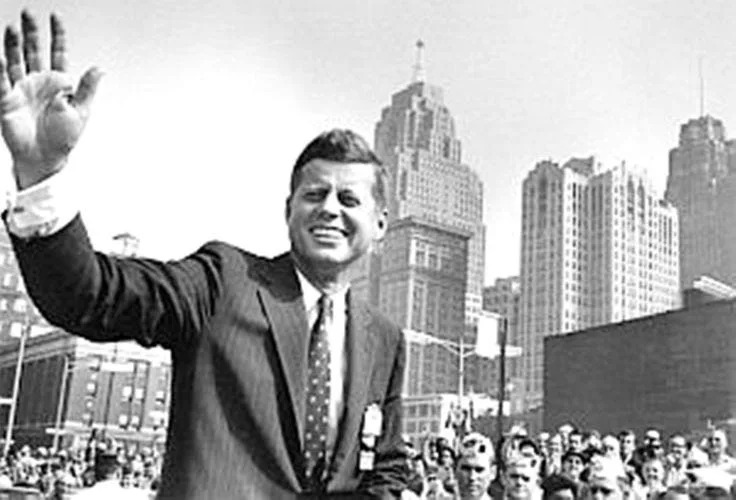
JFK on a 1960 campaign visit to Detroit.
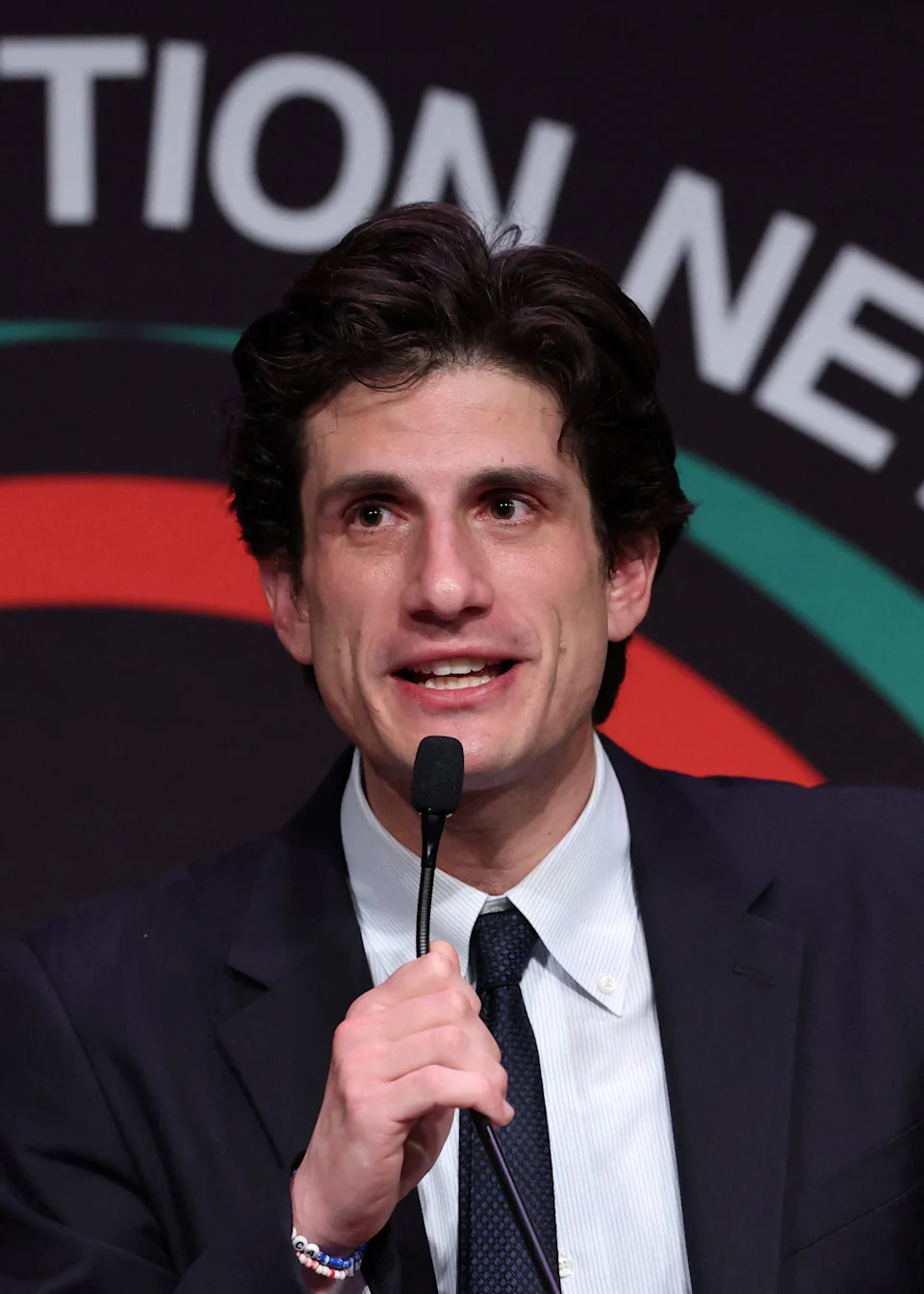
John F. Kennedy'sgrandson and Democratic influencerJack Schlossbergis running for Congress, launching a campaign to replace retiring New York Rep. Jerry Nadler inone of New York City's most notable districts.Scroll through to see his career, family and more in photos.(Brendan McDermid, REUTERS)
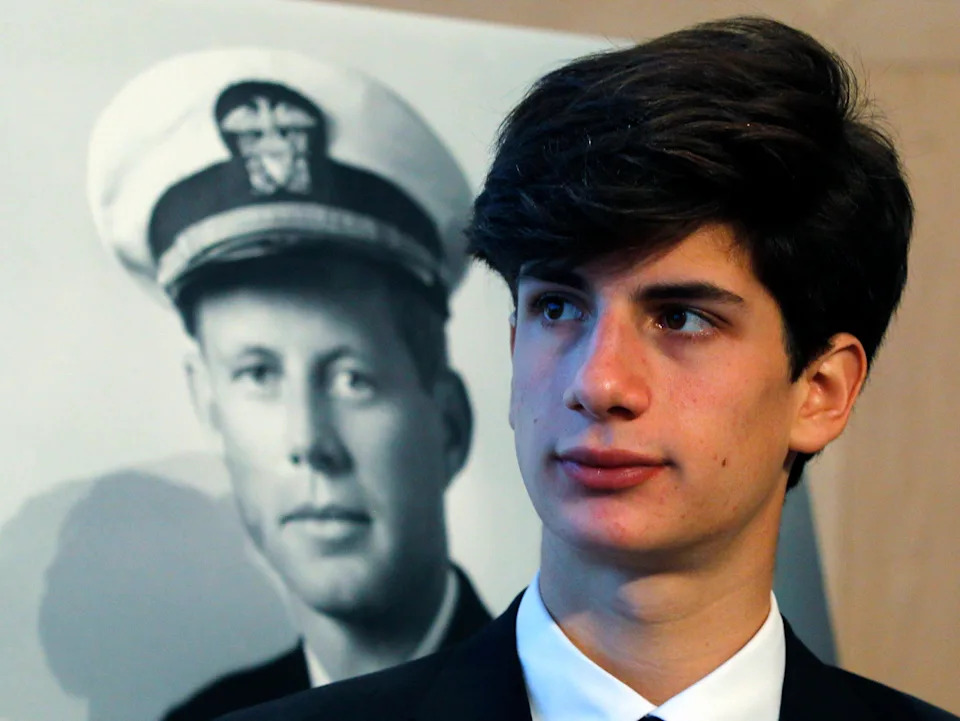
Jack Schlossberg stands in front of a photograph of his grandfather, President John F. Kennedy, during a ceremony to announce the name of the U.S. Navy aircraft carrier USS John F. Kennedy at the John F. Kennedy Library in Boston, Massachusetts May 29, 2011. The photograph shows President Kennedy as a Navy Lieutenant JG circa 1942/43.(Brian Snyder, Reuters)
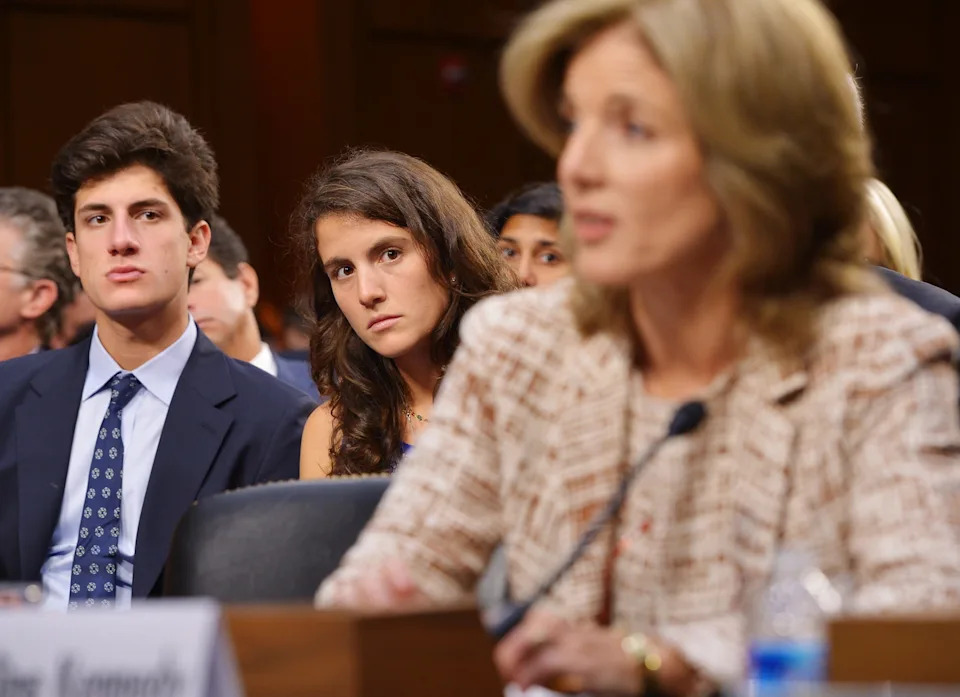
Jack Schlossberg (L) and Tatiana Schlossberg watch their mother Caroline Kennedy testify before the Senate Foreign Relations Committee on her nomination to be ambassador to Japan in the Hart Senate Office Building on Capitol Hill in Washington, DC on Sept. 19, 2013.(Mandel Ngan, AFP via Getty Images)
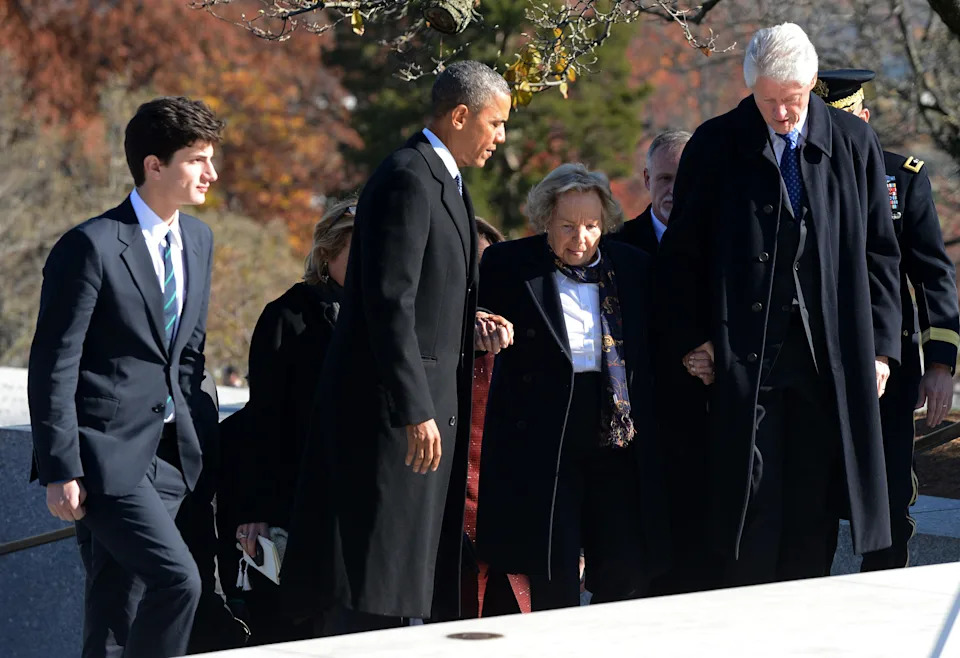
President Barack Obama and Former President Bill Clinton help Ethel Kennedy (2nd R) up a set of steps as Jack Schlossberg (L) looks on before a wreath laying ceremony at the grave site for President John F. Kennedy at Arlington National Cemetery Nov. 20, 2013 in Arlington, Va. The 50th anniversary of the assassination of John F. Kennedy was marked on Nov. 22, 2013.(Pool photo by Pat Benic via Getty Images)
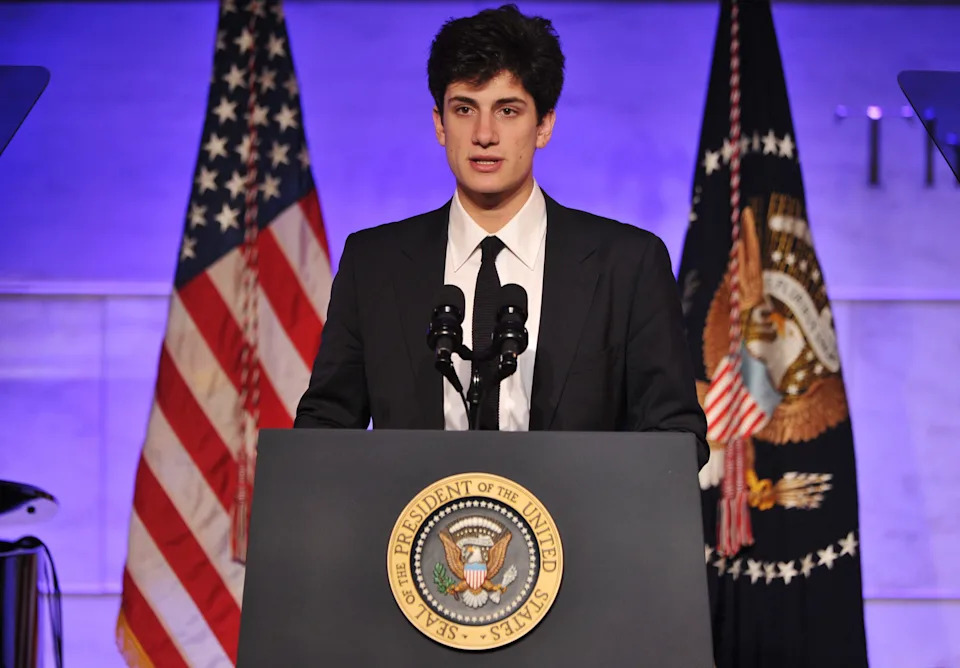
Jack Schlossberg, grandson of late US President John F. Kennedy, speaks as he intruduces President Barack Obama during a dinner honoring the Medal of Freedom recipients on Nov. 20, 2013 at the Smithsonian National Museum of American History in Washington, DC.(Mandel Ngan, AFP via Getty Images)
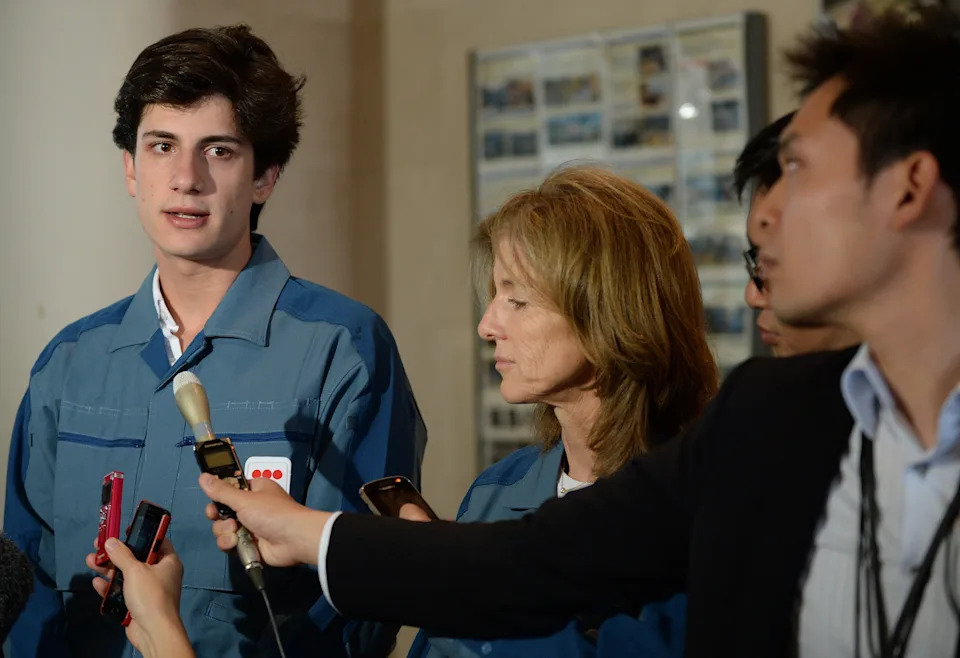
Wearing a uniform of Japan's Tokyo Electric Power Co. (TEPCO), Jack Kennedy Schlossberg (L) speaks to journalists beside his mother U.S. Ambassador to Japan Caroline Kennedy (C) at the end of their visit to TEPCO's tsunami-crippled Fukushima Dai-ichi nuclear plant in Okuma town in Fukushima prefecture on May 14, 2014. Kennedy toured the crippled Fukushima nuclear power plant for the first time on May 14, pledging continued US help with the clean-up.(Pool photo by Toru Yamanaka, AFP via Getty Images)
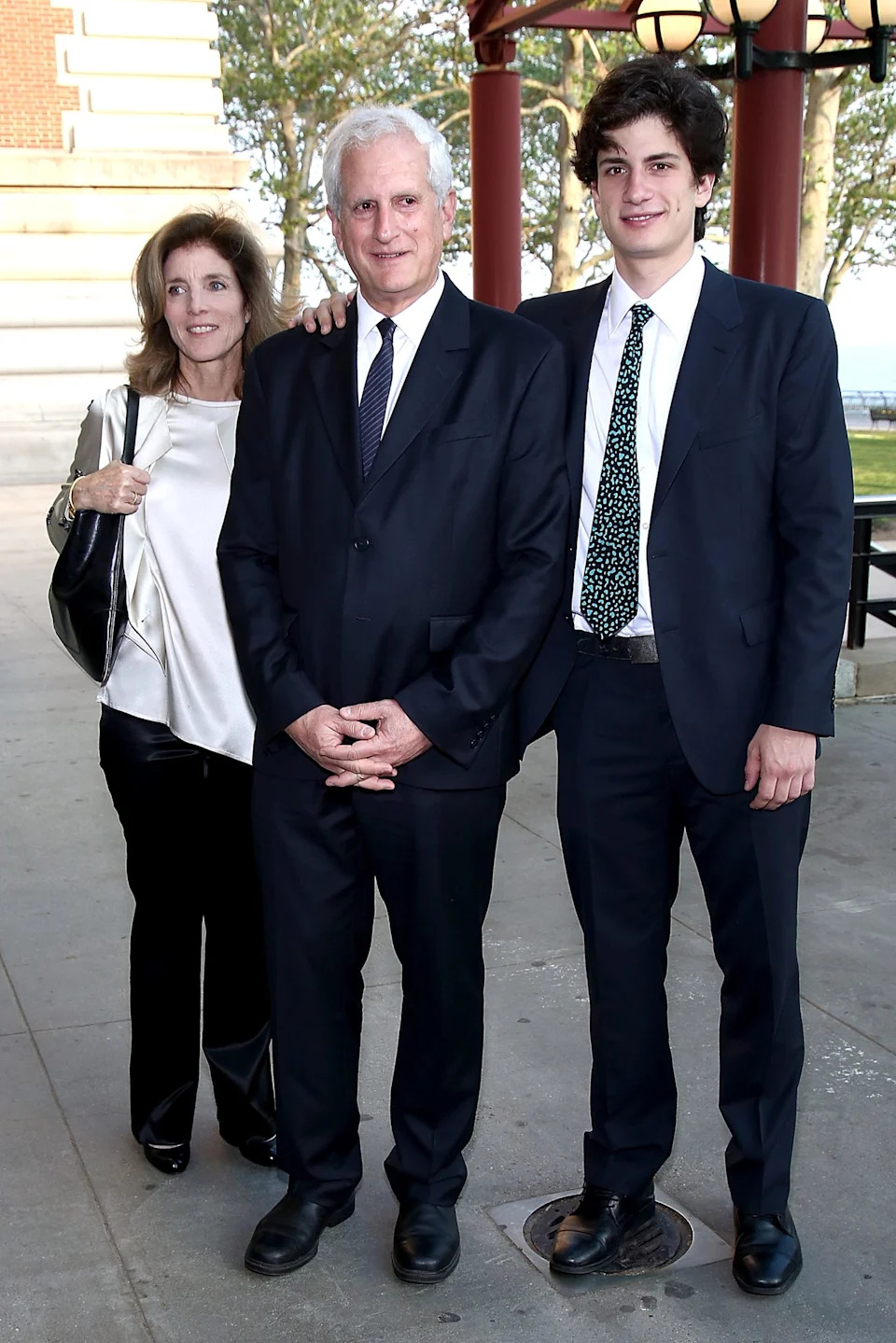
(L-R) Caroline Kennedy, Edwin Schlossberg and Jack Schlossberg attend the 2015 Statue Of Liberty-Ellis Island Foundation's Gala in the Great Hall at Ellis Island National Museum of Immigration on May 19, 2015 in New York City.(Paul Zimmerman, Getty Images)
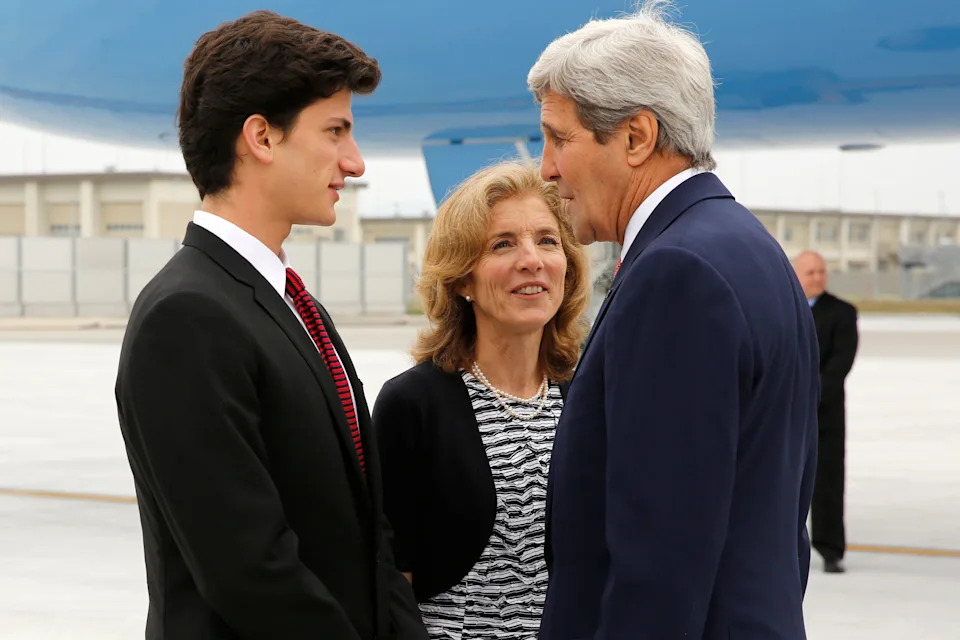
U.S. Ambassador to Japan Caroline Kennedy and her son Jack Schlossberg greet Secretary of State John Kerry (R) upon his arrival at Iwakuni Marine Corps Air Station in Iwakuni on April 10, 2016.
Kerry arrived in Japan on April 10 for a Group of Seven meeting in Hiroshima, marking the first-ever visit to the atomic-bombed city by a U.S, secretary of state.(Jonathan Ernst, AFP via Getty Images)
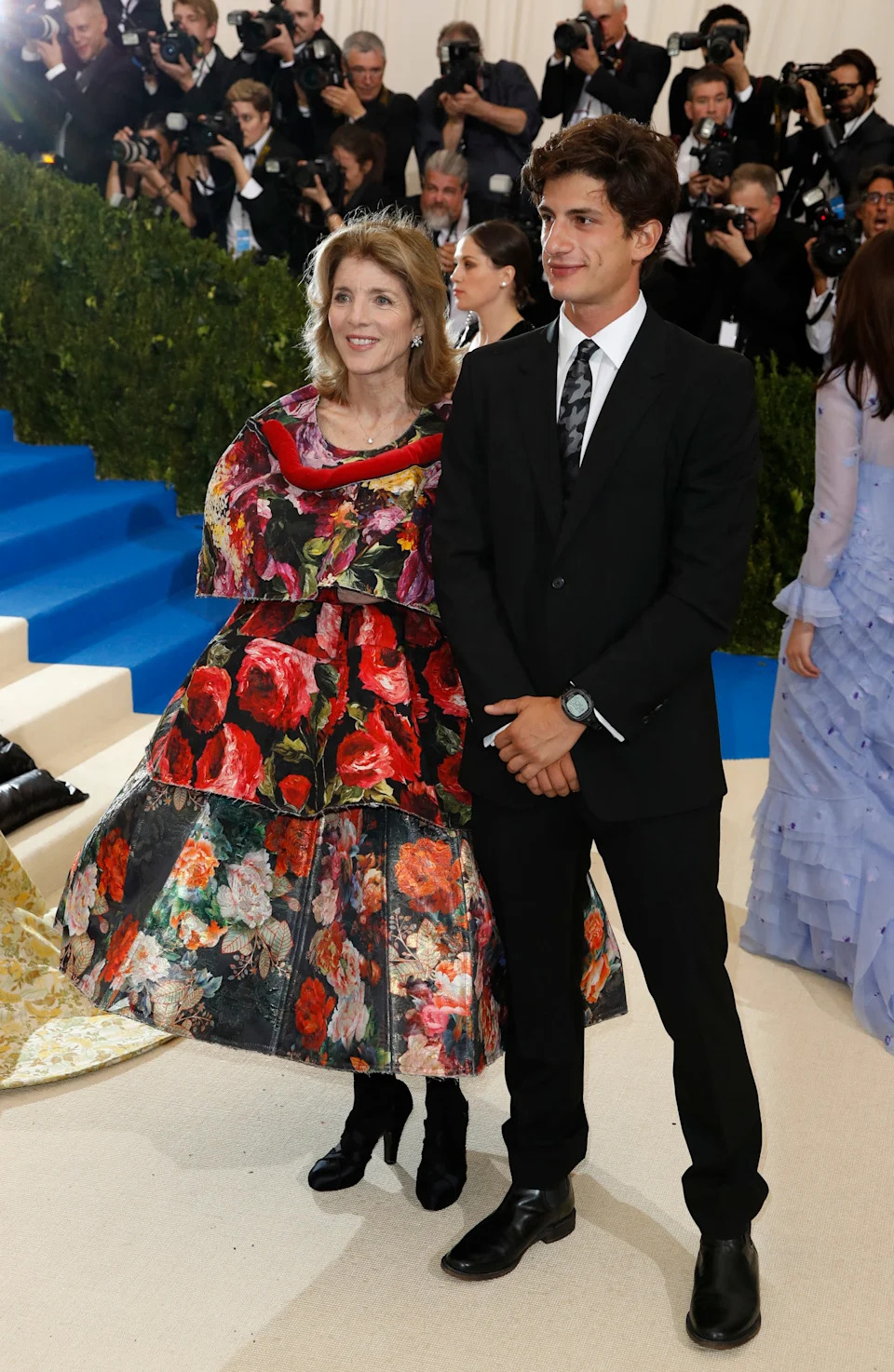
Caroline Kennedy and her son Jack Schlossberg attend the Met Gala in Jan. 5, 2017.(Lucas Jackson, Reuters)
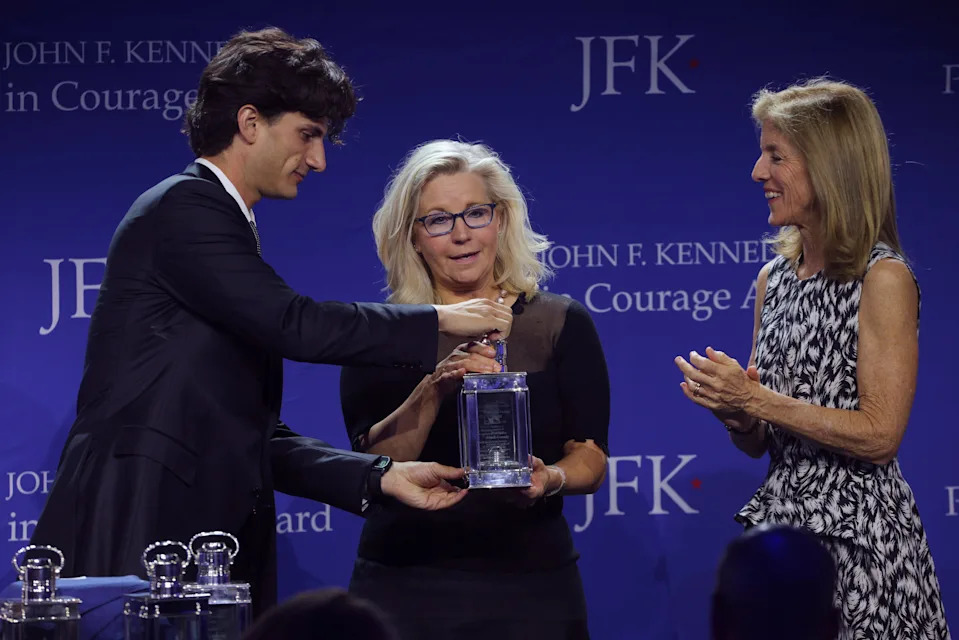
U.S. Congresswoman Liz Cheney accepts a Profile in Courage Award from Jack Schlossberg and his mother Ambassador Caroline Kennedy Schlossberg during a ceremony at the John F. Kennedy Library in Boston, May 22, 2022.(Brian Snyder, REUTERS)
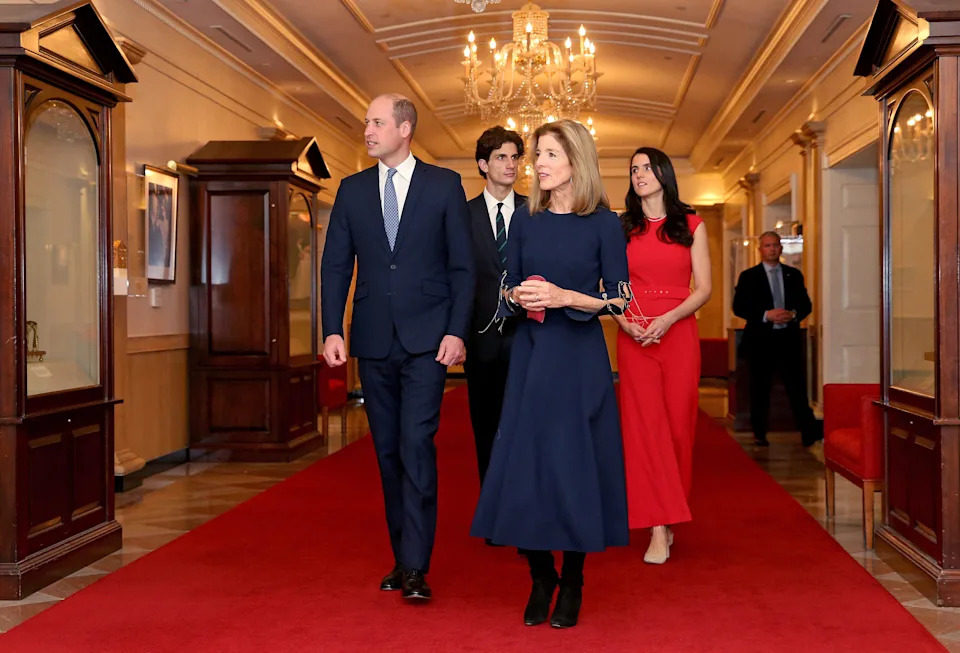
Britain's Prince William, Prince of Wales, tours the John F. Kennedy Presidential Library and Museum with U.S. Ambassador to Australia, Caroline Kennedy (R front), Jack Kennedy Schlossberg (2nd L) and Tatiana Kennedy Schlossberg (R rear) in Boston, Dec. 2, 2022.(Pool photo by Matt Stone, AFP via Getty Images)
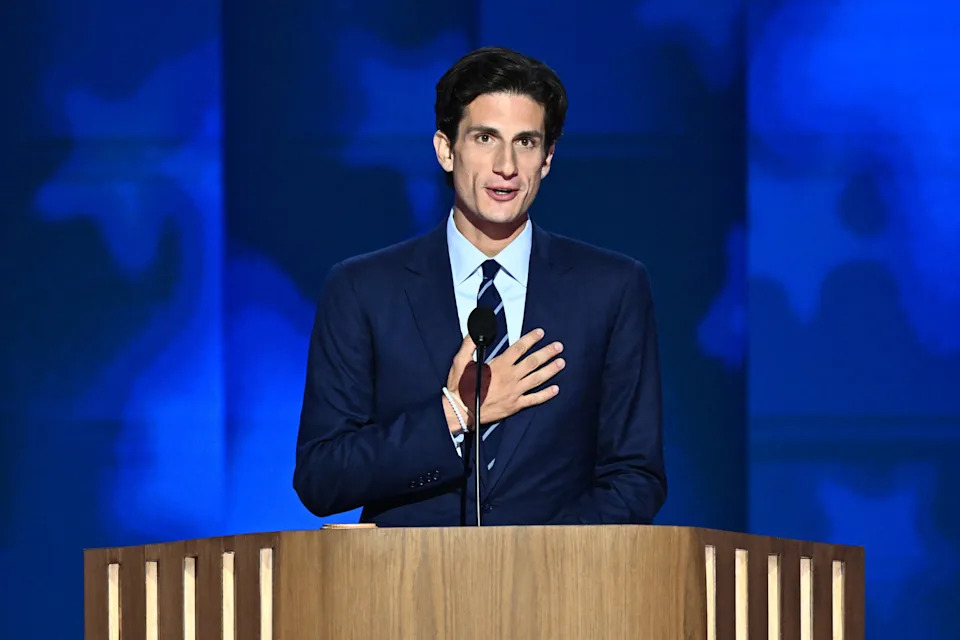
Jack Schlossberg, grandson of former US President John F. Kennedy, speaks on the second day of the Democratic National Convention (DNC) in Chicago, Illinois, on Aug. 20, 2024.(MANDEL NGAN, AFP via Getty Images)
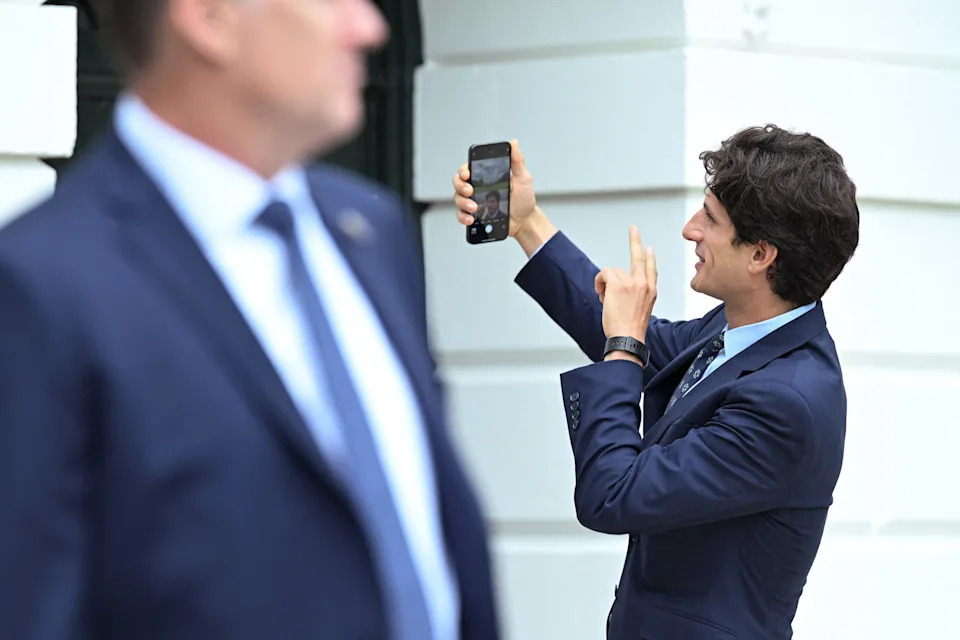
Jack Schlossberg, grandson of President John F. Kennedy, takes a selfie as President Joe Biden departs from the South Lawn of the White House in Washington, DC, on Sept. 6, 2024.(Annabelle Gordon/Reuters)
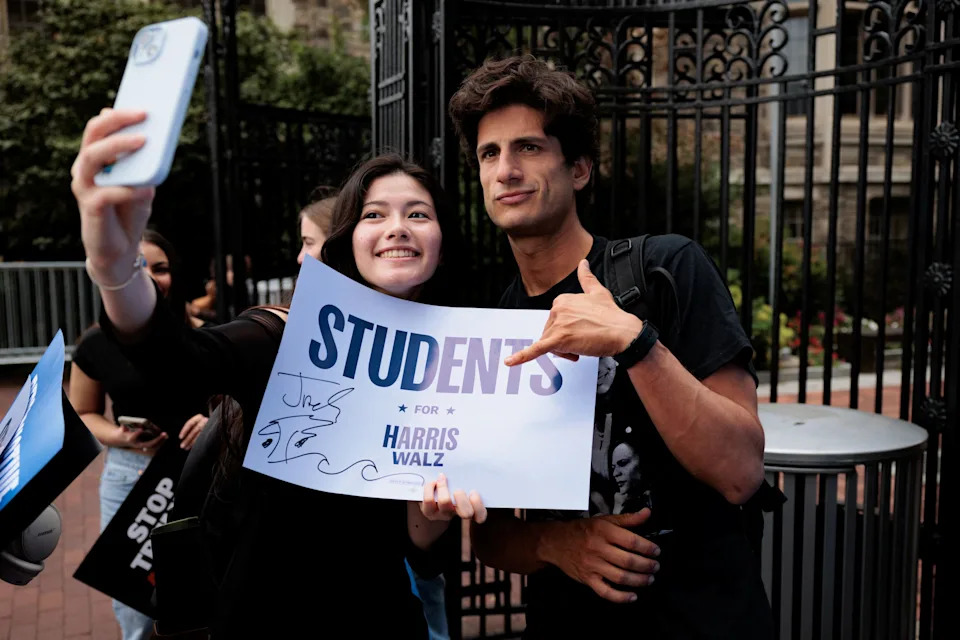
An attendee poses for a selfie with Jack Schlossberg, grandson of former U.S. President John F. Kennedy, during an event held by the Harris-Walz campaign's national "Fighting for Reproductive Freedom" bus tour at Temple University in Philadelphia, Sept. 16, 2024.(Hannah Beier, REUTERS)
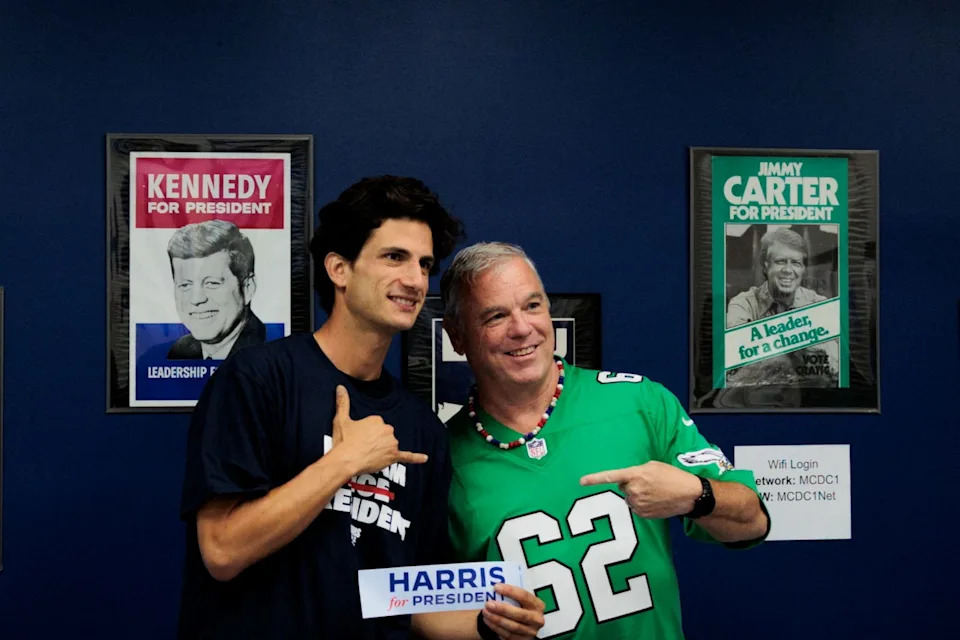
An attendee poses for a photo with Jack Schlossberg, grandson of former U.S. President John F. Kennedy, during an event held by the Harris-Walz campaign's national "Fighting for Reproductive Freedom" bus tour at a Harris-Walz campaign office in East Norriton, Penn., Sept. 16, 2024.(Hannah Beier, REUTERS)
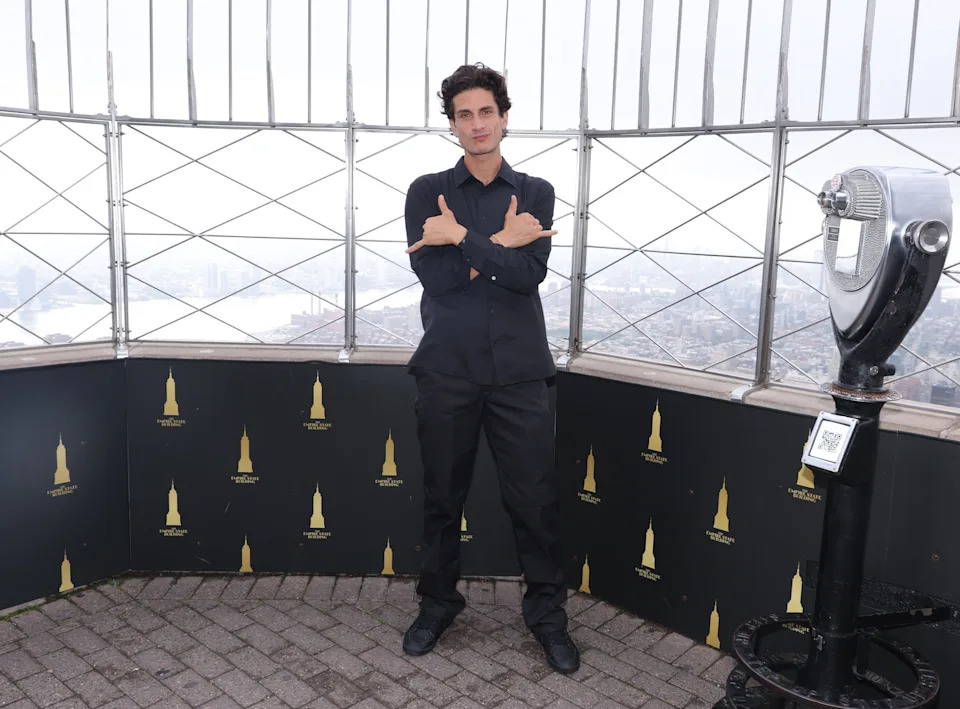
Jack Schlossberg visits The Empire State Building on Sept. 17, 2024 in New York City.(Michael Loccisano, Getty Images for Empire State Realty Trust)
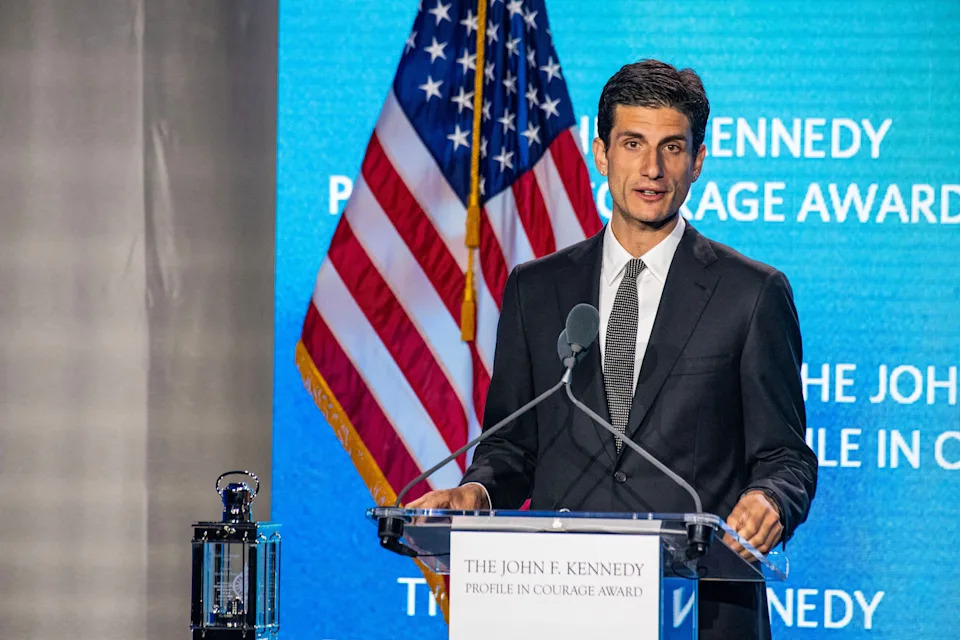
Jack Schlossberg speaks during the 2025 John F. Kennedy Profile in Courage Award Ceremony at the John F. Kennedy Presidential Library and Museum in Boston on May 4, 2025.(Joseph Prezioso, AFP via Getty Images)
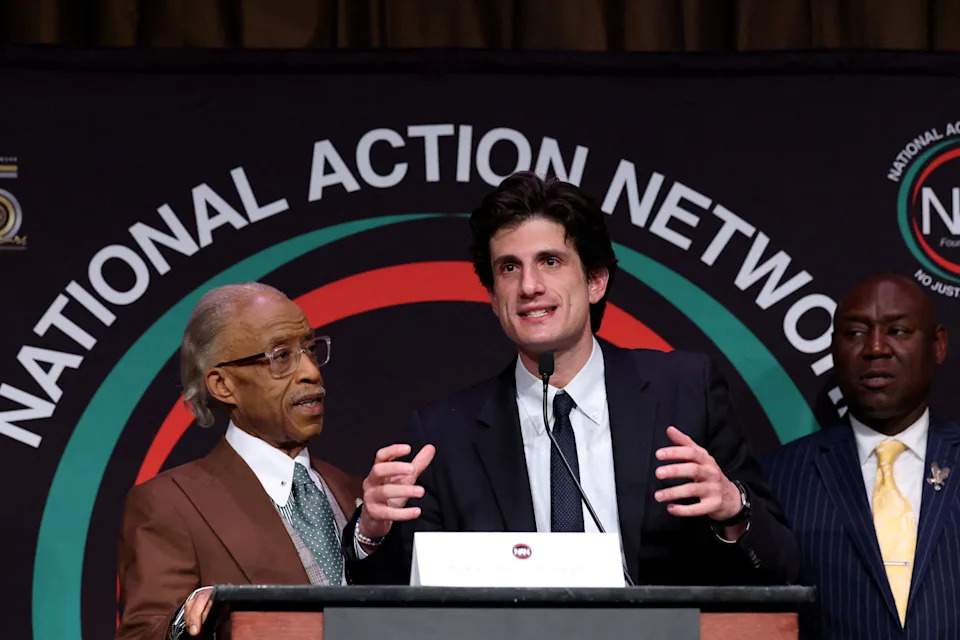
Jack Schlossberg speaks on stage with Al Sharpton and Civil rights attorney Benjamin Crump during the National Action Network (NAN) National Convention in New York City, U.S., April 8, 2026.(Brendan McDermid, REUTERS)
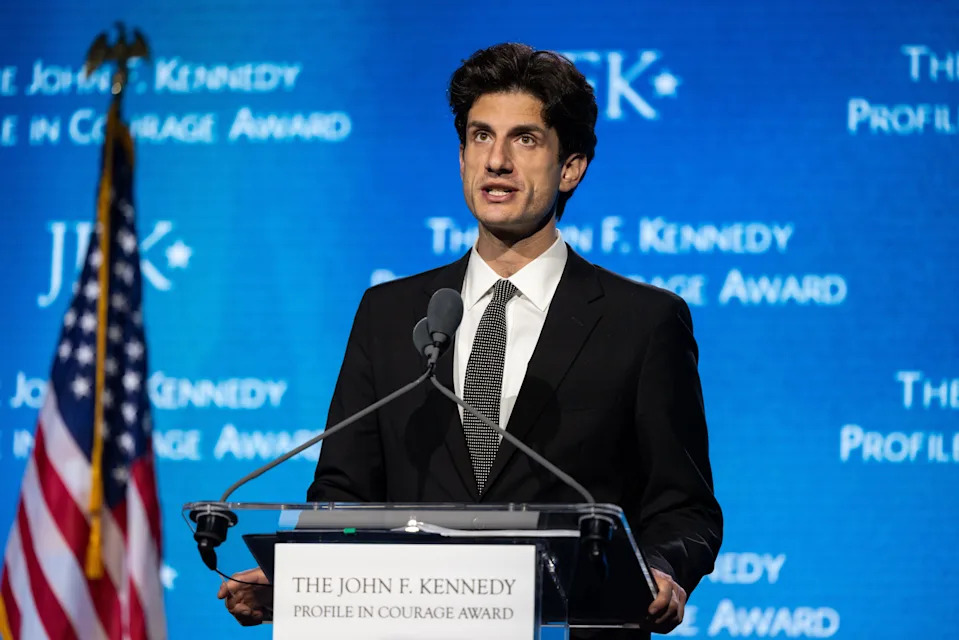
Jack Schlossberg speaks before giving the 2026 John F. Kennedy Profile in Courage Award to Jerome Powell, the 16th Chair for the U.S. Federal Reserve on May 31, 2026 in Boston.(Scott Eisen, Getty Images)
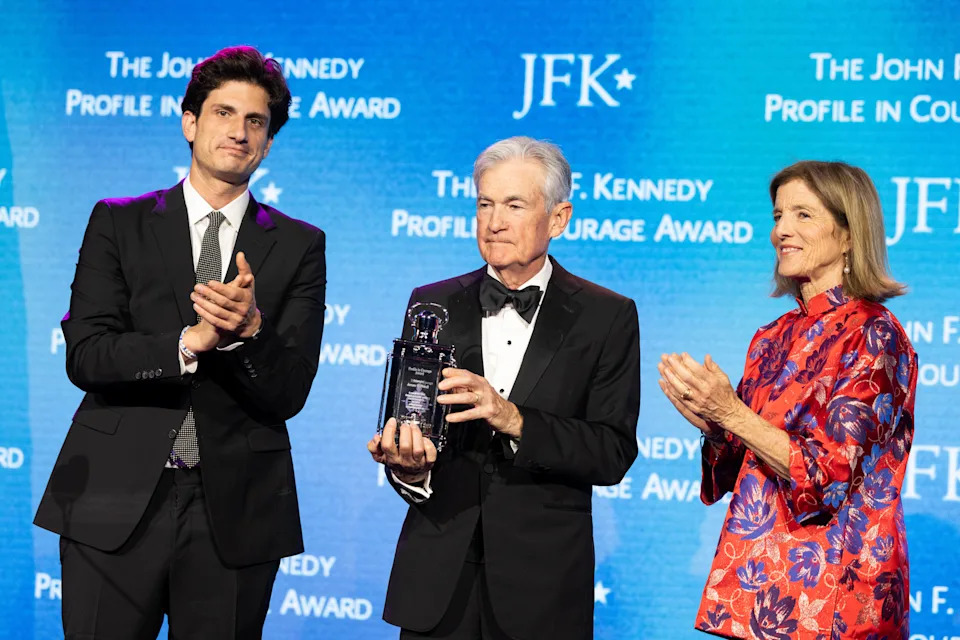
Jerome Powell poses with Caroline Kennedy and Jack Schlossberg after receiving the 2026 John F. Kennedy Profile in Courage Award on May 31, 2026 in Boston.(Scott Eisen, Getty Images)
Help us improve.