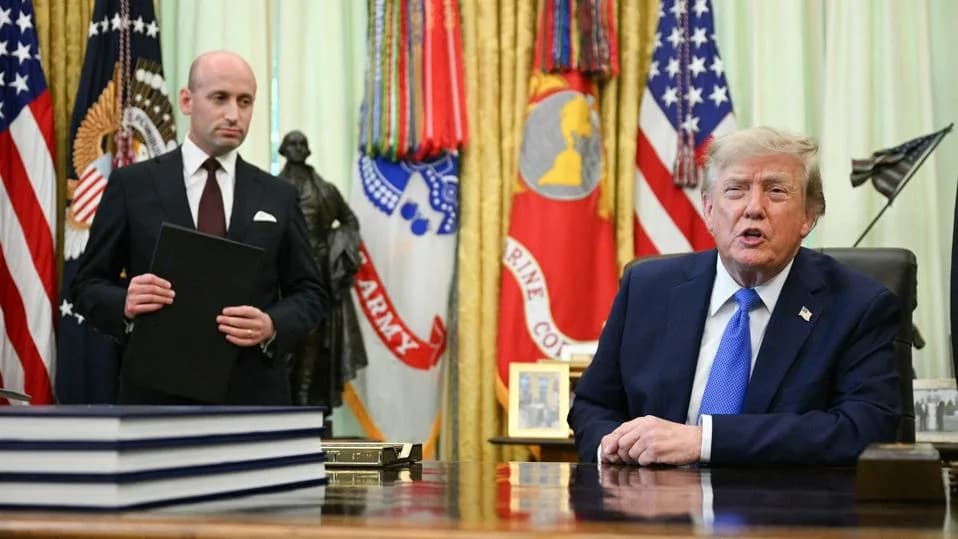
Stephen Miller urged the Supreme Court to issue a unanimous decision overturning birthright citizenship, calling anything less a sign of democratic failure. He argued the 14th Amendment’s Reconstruction context excludes aliens, while courts have long interpreted the amendment to confer citizenship on most people born in the U.S. The Court heard arguments in April after a blocked executive order; former President Trump attended part of the hearing. Several other major cases remain pending, with decisions expected by June 29.
Stephen Miller Urges Supreme Court For Unanimous Ruling To End Birthright Citizenship
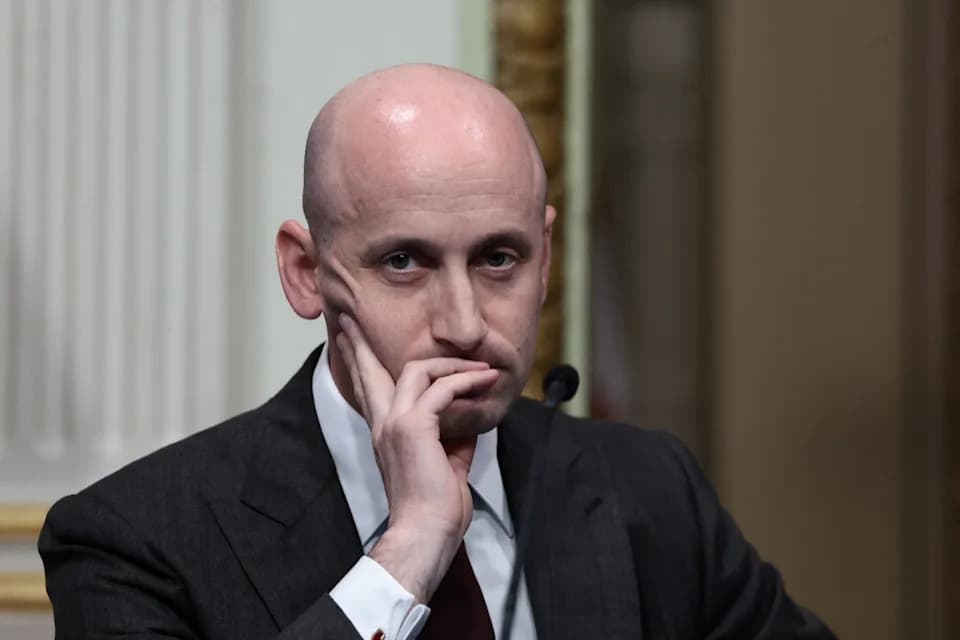
Miller said a 9-0 ruling against birthright citizenship would mean a
Stephen Miller demanded that the Supreme Court hand down a unanimous decision overturning birthright citizenship, warning that anything short of unanimity would signal a failing democracy.
Miller, a chief architect of former President Donald Trump’s immigration agenda, made the comments Thursday during an interview on Fox News as he lauded several immigration-related rulings the high court issued that morning. He focused particular attention on the remaining cases the Court is considering, especially whether the government may strip automatic U.S. citizenship from children born on U.S. soil to immigrant parents — a right the 14th Amendment has commonly been interpreted to guarantee since 1868.
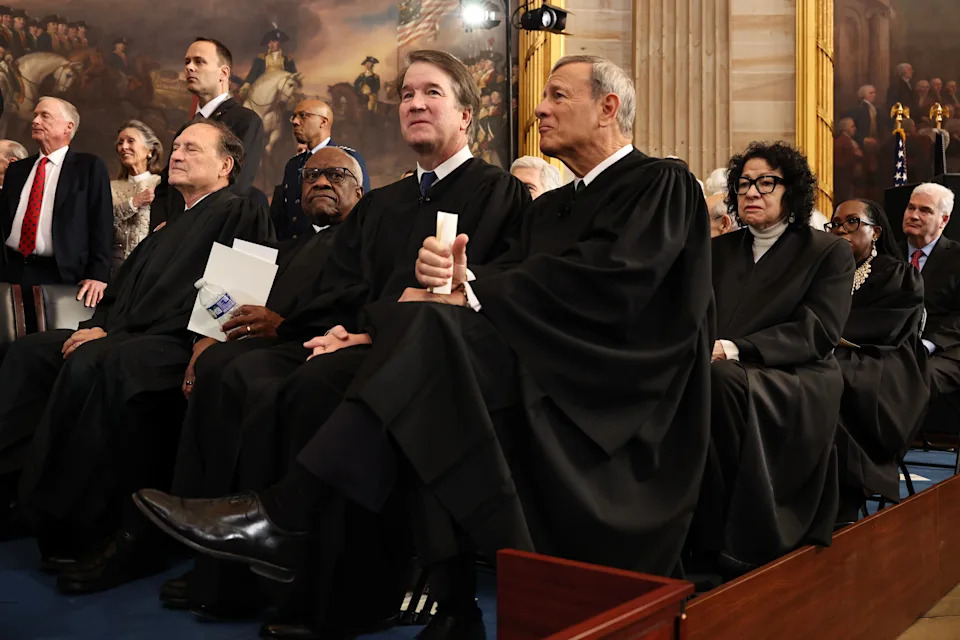
Even the court's three liberal justices should side with the Trump administration, Stephen Miller said. / Chip Somodevilla / Getty Images
“Anybody who has read even 30 seconds of American history understands that the Reconstruction amendments after the Civil War were to ensure that the children of slaves would be franchised in the United States. The author of the 14th Amendment was clear in saying it did not apply to aliens,” Miller said.
The 14th Amendment’s text reads in part: “All persons born or naturalized in the United States, and subject to the jurisdiction thereof, are citizens of the United States and of the State wherein they reside.” The amendment does not explicitly mention children of immigrants, but for nearly 160 years courts and legal scholars have largely interpreted the clause to confer citizenship on most people born on U.S. soil.
Miller insisted the matter should be an easy decision for the justices. “There should be a 9-0 ruling in a functioning democracy,” he said, punctuating the remark with hand claps. He argued that granting automatic citizenship to children born to parents who are not legal residents, and the rights that follow, undermines the nation’s sovereignty.
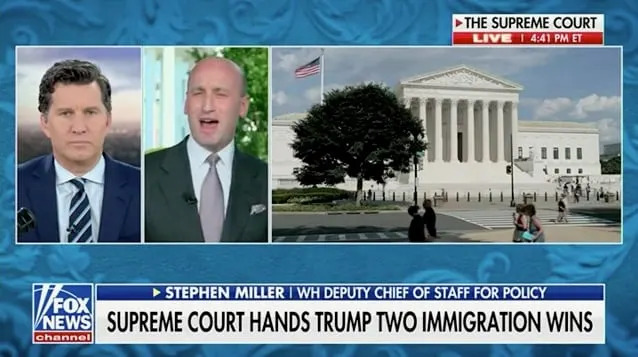
Miller, an architect of Trump's immigration agenda, went on Fox to call for a unanimous ruling from the Supreme Court overturning birthright citizenship under the 14th Amendment. / Fox News
He intensified his rhetoric, warning that if birthright citizenship remains in place “this country doesn’t have a future,” and called citizenship “sacred and precious,” invoking the nation’s 250th anniversary as a reason to protect the franchise.
The Supreme Court heard arguments in the case in early April after an executive order issued by President Trump on his first day back in office was blocked by multiple lower courts. In an unusually public moment, Trump attended part of the oral argument but left after about 90 minutes when several justices, including some he had appointed, questioned the administration’s legal rationale for overturning long-standing precedent.
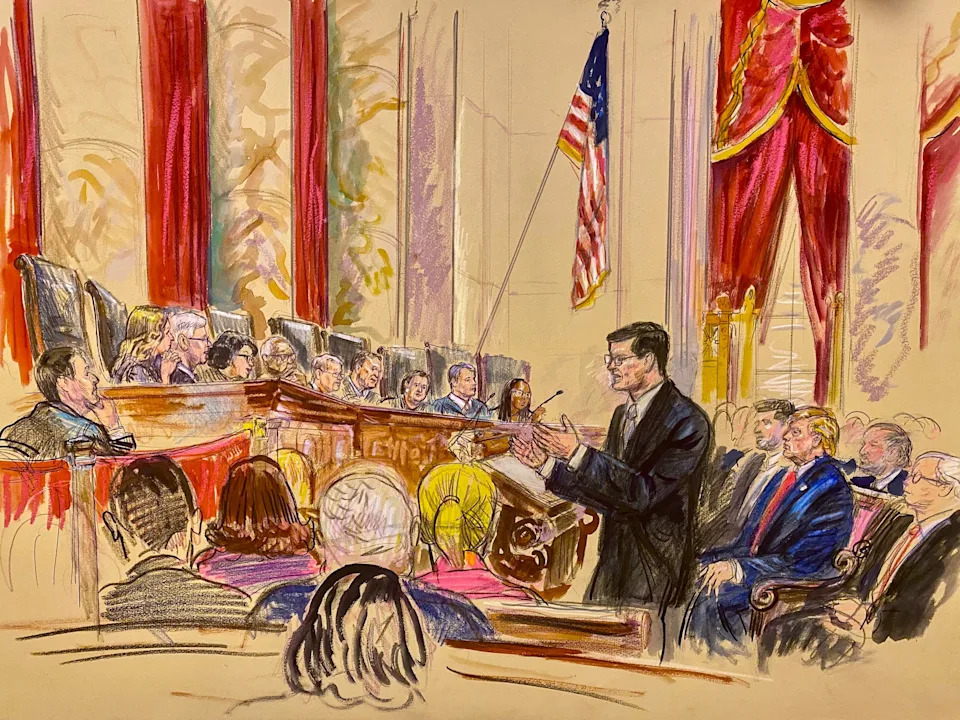
This courtroom sketch depicts the Republican administration's top Supreme Court lawyer, Solicitor General D. John Sauer, standing center, making arguments before the U.S. Supreme Court, Wednesday, April 1, 2026, in Washington. President Donald Trump is seated right. / Dana Verkouteren / AP
During the hearing, Justice Amy Coney Barrett pressed Solicitor General John Sauer: “You say the purpose of the 14th Amendment was to put all newly freed slaves on equal footing and so they would be citizens. But that’s not textual. So how do you get there?”
After the hearing, the former president posted on Truth Social, criticizing birthright citizenship even though reporting indicates that roughly three dozen countries also grant citizenship to most children born on their soil.
Beyond the birthright citizenship case, the Court still must issue rulings this term in other high-profile matters, including cases on mail-in ballots, campaign finance, transgender athletes, and the firing of regulators and members of the Federal Reserve. The next Supreme Court decision day is scheduled for Monday, June 29.
Help us improve.