
Karl Rove warns in The Wall Street Journal that President Donald Trump risks a “political and foreign-policy disaster” with a draft Iran memorandum of understanding. Citing a Reagan Institute survey, Rove says most Americans prefer regime change or a substantial weakening of Iran over a negotiated settlement. He criticizes early concessions — relaxed sanctions and immediate oil sales — and delayed inspections, and warns a $300 billion reconstruction fund and a U.S. drawdown could make the agreement look weaker than Barack Obama’s 2015 deal.
Karl Rove Warns Trump Iran MOU Could Be a “Political and Foreign-Policy Disaster,” Calls It Weaker Than Obama Deal
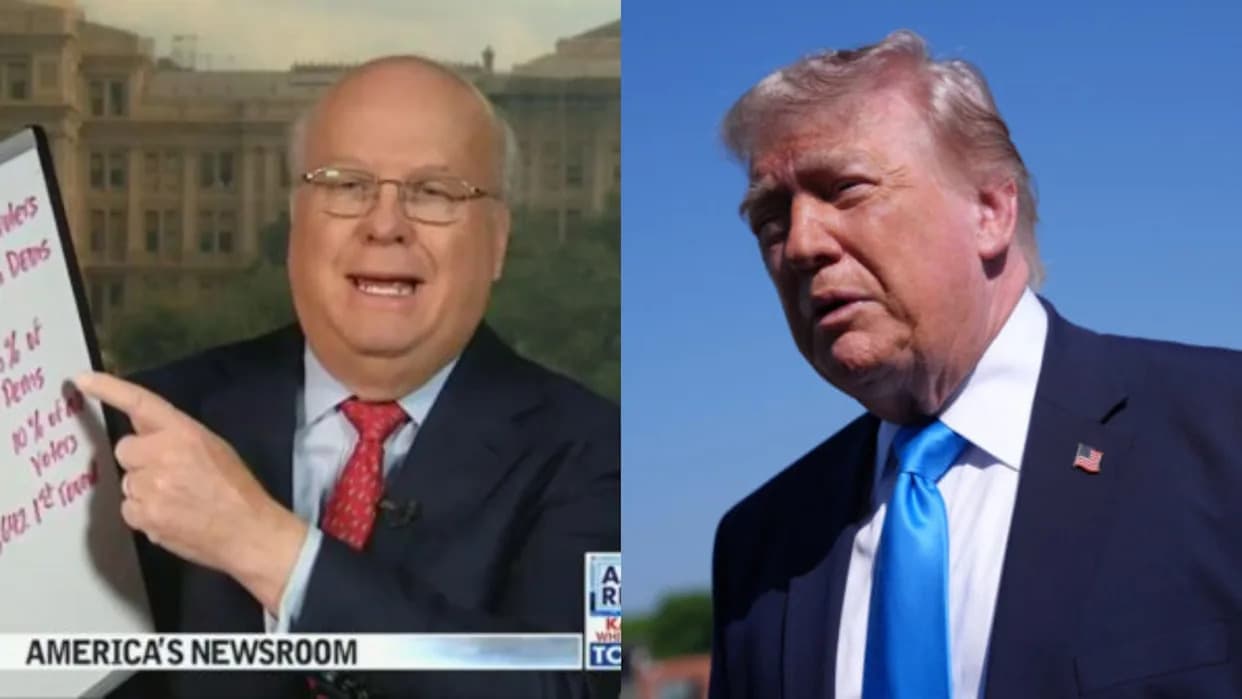
Karl Rove warned in a Wall Street Journal column that President Donald Trump risks a “political and foreign-policy disaster” with the memorandum of understanding (MOU) under negotiation over Iran.
Rove cites a recent Reagan Institute survey showing that a majority of Americans — and supermajorities of Republicans, self-described MAGA Republicans, and independents — prefer the conflict with Iran to end via regime change or a significant weakening of Iran’s government rather than through the kind of negotiated settlement Vice President JD Vance has been pursuing.
Rove argues the deal could sap Republican enthusiasm even if core supporters tolerate talks that fall short of regime change. “Republicans, especially MAGA Republicans, see Mr. Trump as a strong leader. Getting outplayed at the negotiating tables by America’s sworn enemy is sure to undermine that,” he wrote.
He singled out several elements of the current negotiating posture that he says make Team Trump vulnerable:
- Early concessions, including relaxing sanctions and allowing immediate Iranian oil sales.
- Key verification questions — inspections of nuclear facilities, removal of nuclear materials, and the status of the Strait of Hormuz — left to be resolved by mid‑August, shortly before the fall election season.
- A proposed $300 billion reconstruction fund that, Rove argues, could be perceived as reimbursing Iran for damage from prior U.S. military action and sanctions.
- Plans to draw down U.S. regional presence, which critics say could look like the United States is retreating from the region.
“That’s just before the fall election season starts. Iranians aren’t stupid. They know the president worries about the midterms. They’ll exploit that. Tehran also thinks the U.S. won’t restart the conflict over inspections,” Rove wrote.
Rove also raised concerns about Iran’s backing of militant groups in the region, notably Hezbollah in Lebanon. Rather than repeating an unclear attribution in the original summary, the column notes that some Lebanese officials have called for disarming Hezbollah — a point Rove uses to question whether the MOU adequately addresses regional security threats. Rove additionally criticized Vice President Vance for public comments that, in Rove’s view, complicated relations with Israel over efforts to neutralize threats on its northern border.
Rove concluded that, on balance, the package being negotiated appears weaker than the 2015 deal negotiated under the Obama administration and risks disappointing supporters without persuading critics. “Mr. Trump observed in 2020 that ‘Iran never won a war but never lost a negotiation.’ Does he really want to help Iran add another win to that column?” he asked.
Context: The commentary originally appeared in The Wall Street Journal and was summarized on Mediaite. This version clarifies ambiguous attributions in the original summary and preserves Rove’s central arguments and concerns about timing, concessions, and political risk.
Help us improve.





















