The Marshill burial, found in 2003 near Alloa, contains a rare and well-preserved set of Iron Age weapons and ornaments dating to about 2,000 years ago. The young man (c. 17–25) was buried with an iron sword in a leather sheath, a spear, a glass bead pendant, a bronze cloak pin and belt rings. A bronze toe ring suggests he wore sandals as a visible sign of status, while the sword—housed in a scabbard with horn and a bronze handle—is in remarkable condition. The finds and a replica cist are displayed in the "Scotland's First Warriors" exhibition at the National Museum of Scotland from June 27 through next May; admission is free.
2,000-Year-Old Scottish 'Warrior' Burial Reveals Sandals, Sword and Unexpected Status Symbols
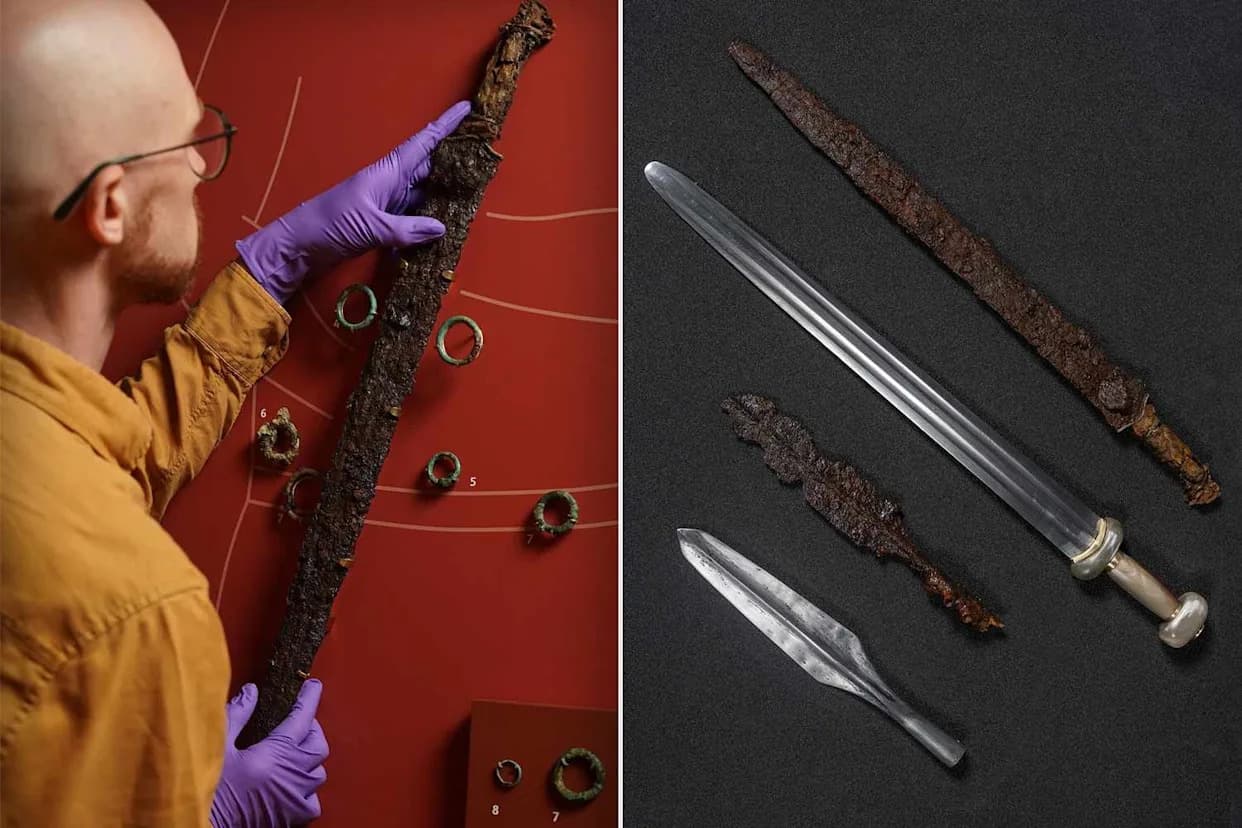
Rare iron age treasures from burial site of Scottish teen warriorCredit: Stewart Attwood/ National Museums Scotland; Neil Hanna/ National Museums Scotland
Rare treasures from an Iron Age burial discovered in central Scotland are going on public display for the first time more than two decades after excavation, shedding fresh light on dress, weaponry and social rank about 2,000 years ago.
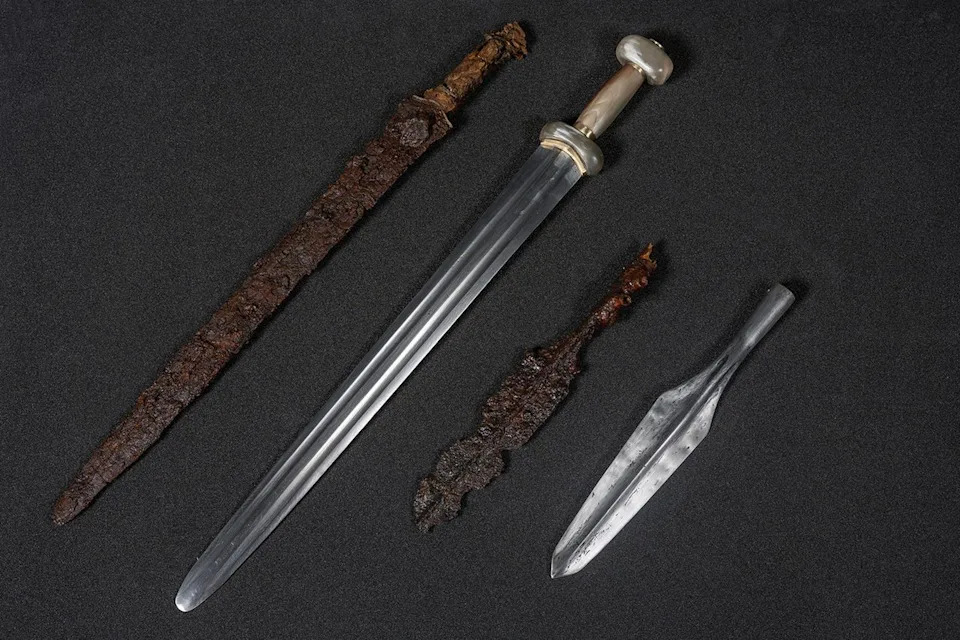
Weapons buried with the Scottish teen warriorCredit: Neil Hanna/ National Museums Scotland
Archaeologist Susan Mills uncovered the stone-lined cist during a routine dig at Marshill, near Alloa (about 37 miles west of Edinburgh) in 2003. The grave is one of only a few securely dated burials from this period in Scotland and contains an unusually complete set of weapons and personal ornaments.
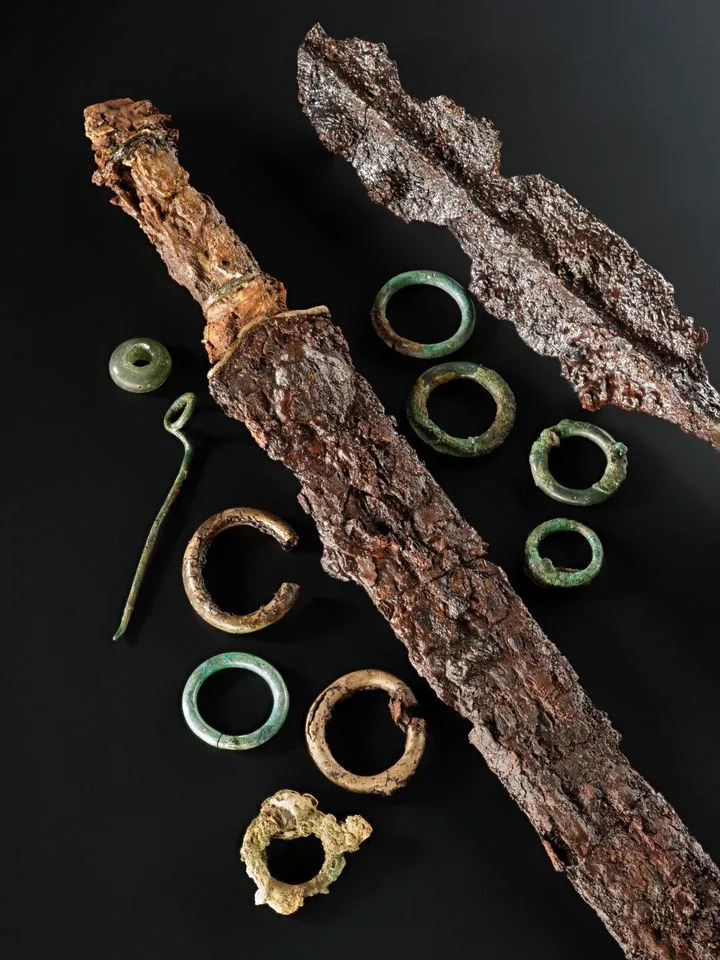
Weapons and rings from the burial of Scottish teen warriorCredit: National Museums Scotland
What Was Found
The remains are believed to be those of a young man, aged roughly 17 to 25. Grave goods included an iron sword laid across his chest inside a leather sheath, a spear placed beside him, a glass bead pendant, a bronze cloak pin and a set of bronze and iron rings that probably belonged to a belt.
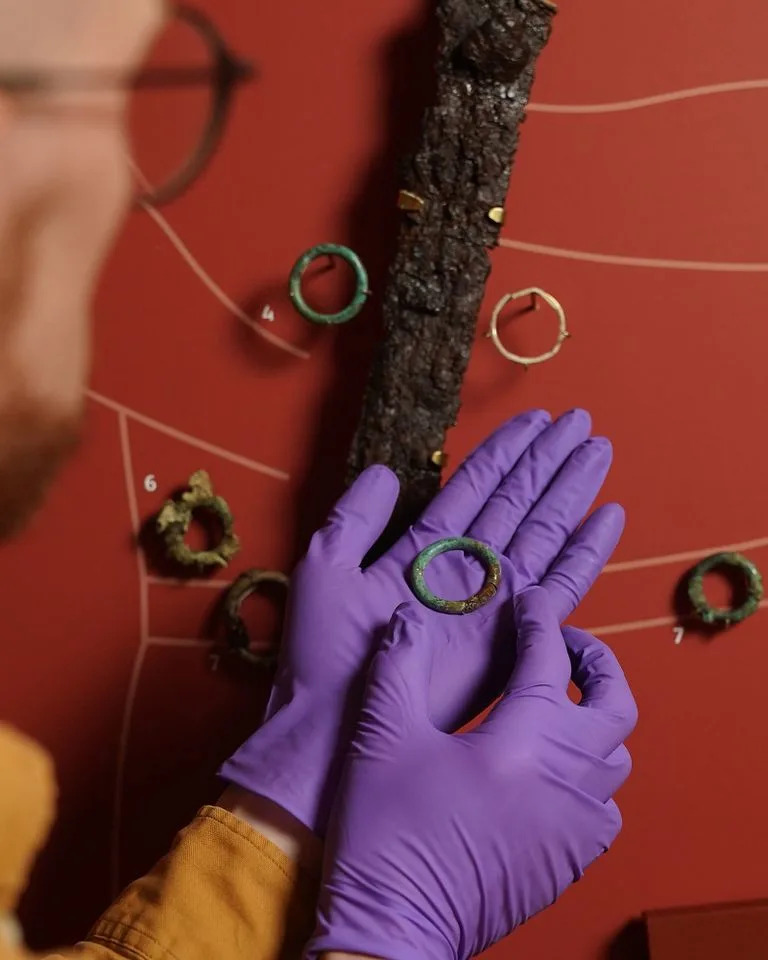
Bronze toe ring buried with Scottish teen warriorCredit: Stewart Attwood/ National Museums Scotland
A small but revealing item was a bronze toe ring found on the foot, suggesting he had been buried wearing sandals. "Wearing sandals and toe rings would have helped people recognize his status at the time," said Dr. Matthew Knight, senior curator of prehistory at National Museums Scotland.
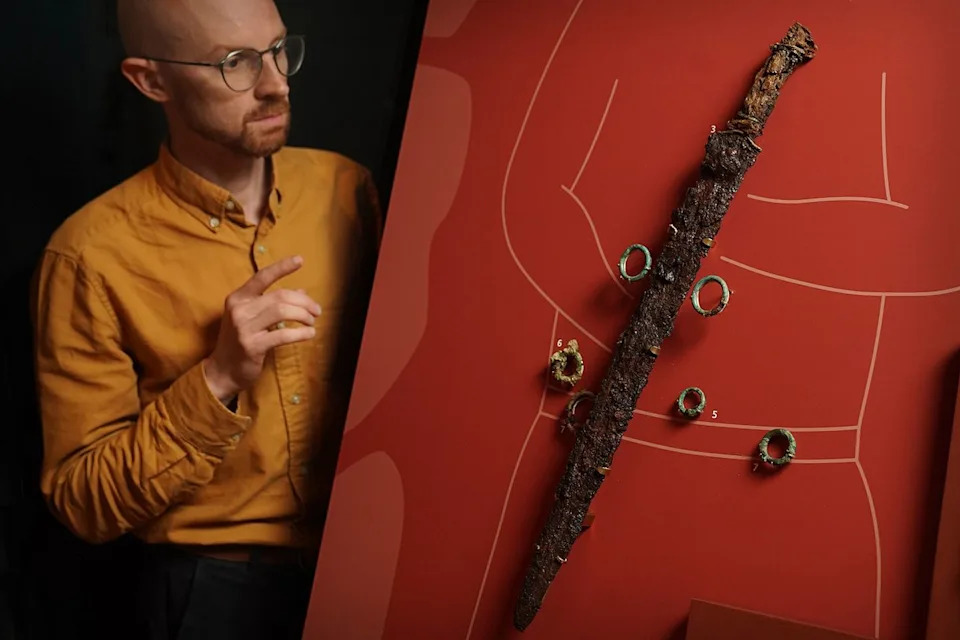
Dr. Matthew Knight with the Iron Age artifactsCredit: Stewart Attwood/ National Museums Scotland
"It contains the most complete set of weapons and ornaments from a grave at this time, around 2,000 years ago," Dr. Knight told PEOPLE. He also described the sword—its scabbard fitted with horn and a bronze handle—as "incredibly striking and in amazing condition."
Context and Interpretation
Curators believe the combination of weapons and visible dress markers was intended to communicate power and rank both in life and in death. Dr. Knight suggested the northward movement of the Roman army around this era may have made outward displays of warrior identity more important.
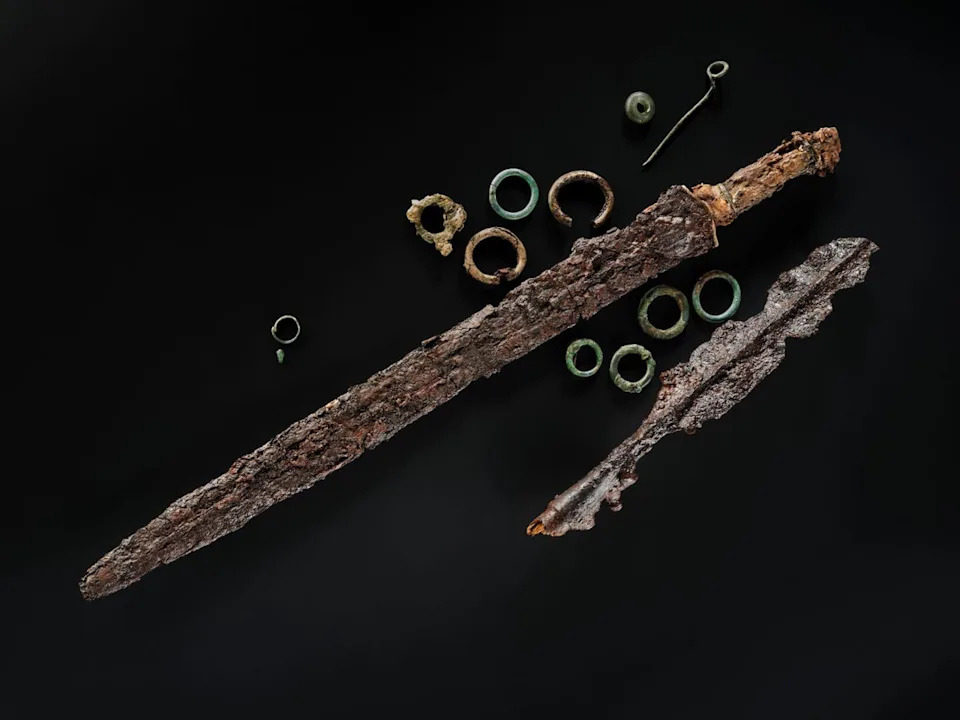
The Scottish teen warrior's burial artifactsCredit: National Museums Scotland
Because examples of young men buried with this range of martial and high-status items are rare in Scotland, the Marshill burial offers a valuable snapshot of Iron Age status practices and material culture.
Exhibition Details
Experts have produced a lifelike replica of the cist and its arrangement so visitors can compare the reconstructed burial with the original finds. The objects are part of the "Scotland's First Warriors" exhibition at the National Museum of Scotland in Edinburgh. The display opens Saturday, June 27, and runs through next May. Admission is free.
Why it matters: The Marshill burial combines exceptional preservation, a striking sword and subtle dress markers such as a toe ring and sandals, offering new evidence about how Iron Age people signalled status and identity.
Help us improve.