The US and Iran signed a framework intended to end hostilities and reopen the Strait of Hormuz, but experts say restoring normal traffic will take time. Sea mines remain the primary hazard — Iran threatened several types but has not confirmed deployments. France and the UK lead a 30-day demining effort backed by allies, using drones, ROVs and minesweeps to locate and neutralise devices. Clearing the strait is slow and risky, and even a single mine can disrupt shipping and spike insurance costs.
How Minesweeping in the Strait of Hormuz Works — A Visual Guide to Clearing a Vital Chokepoint
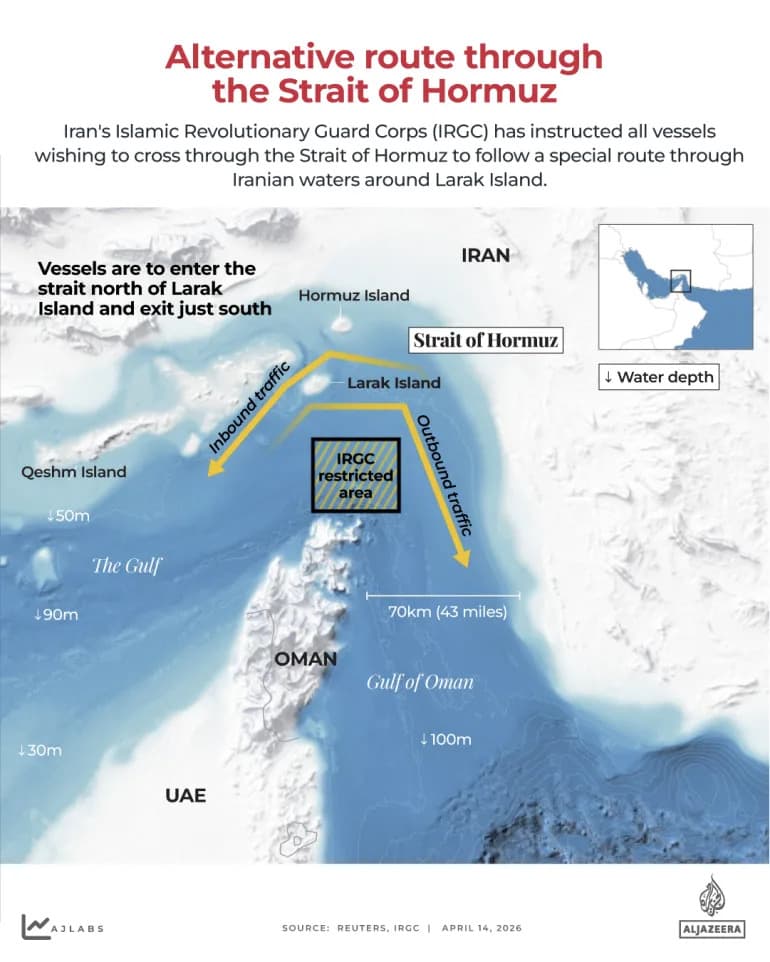
(Al Jazeera)
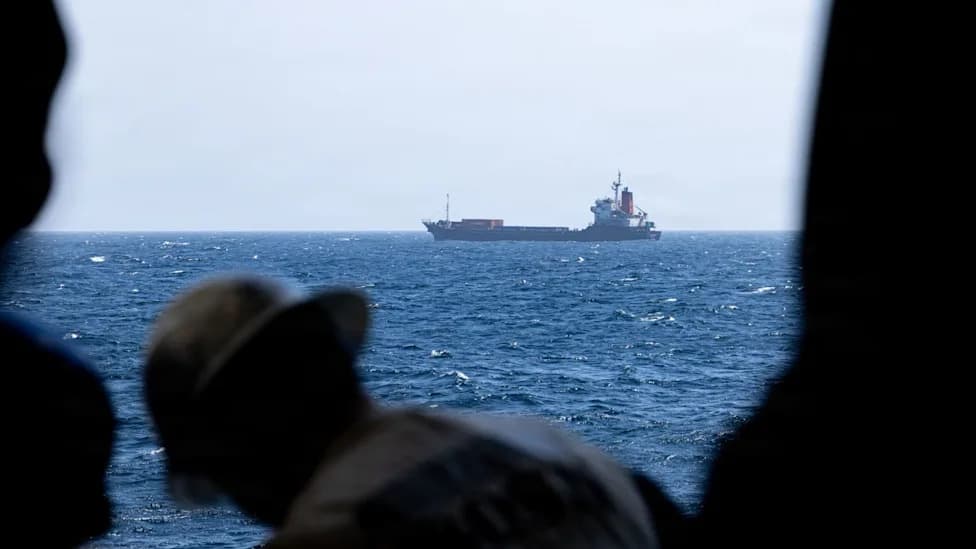
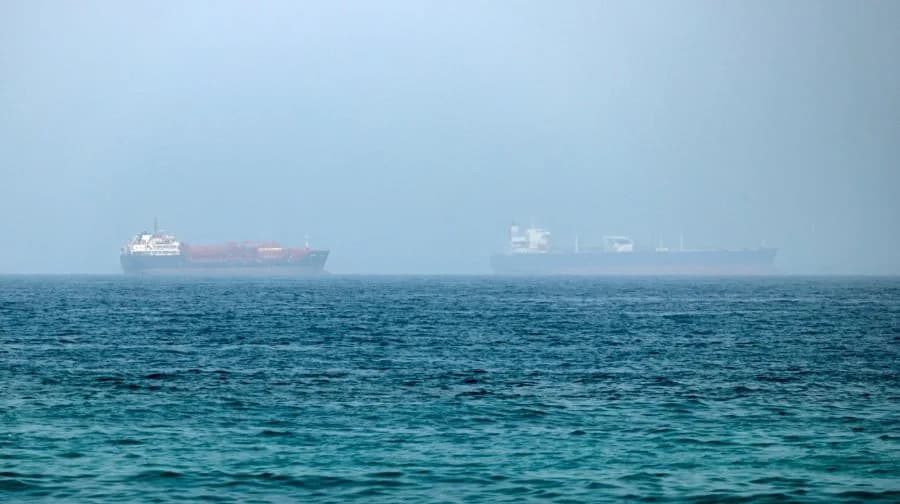
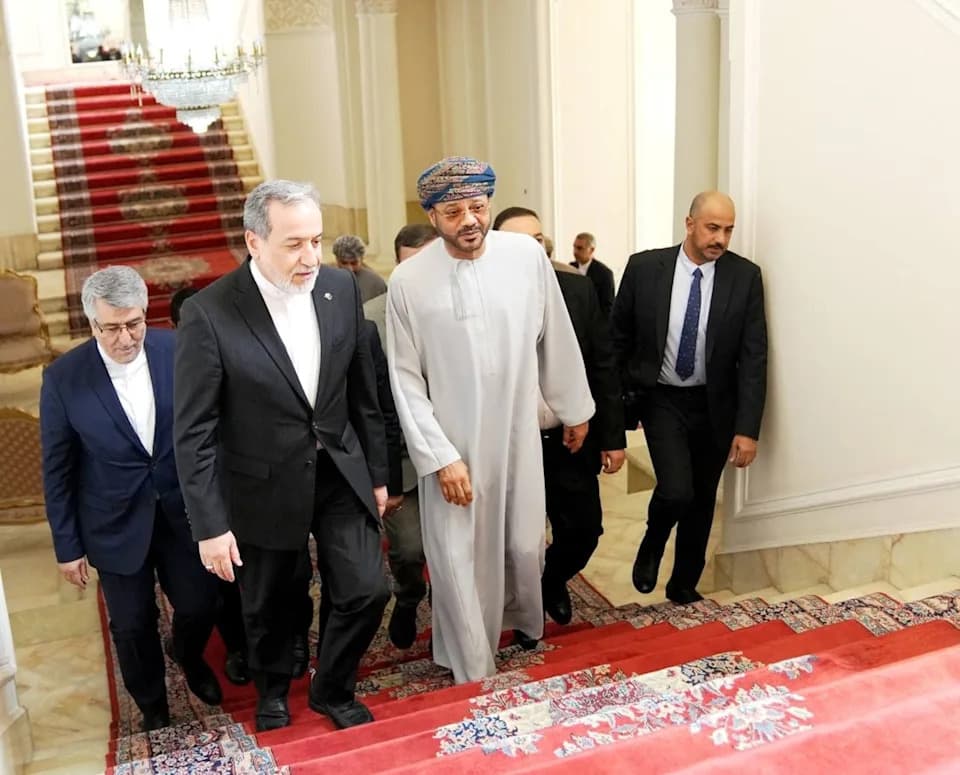
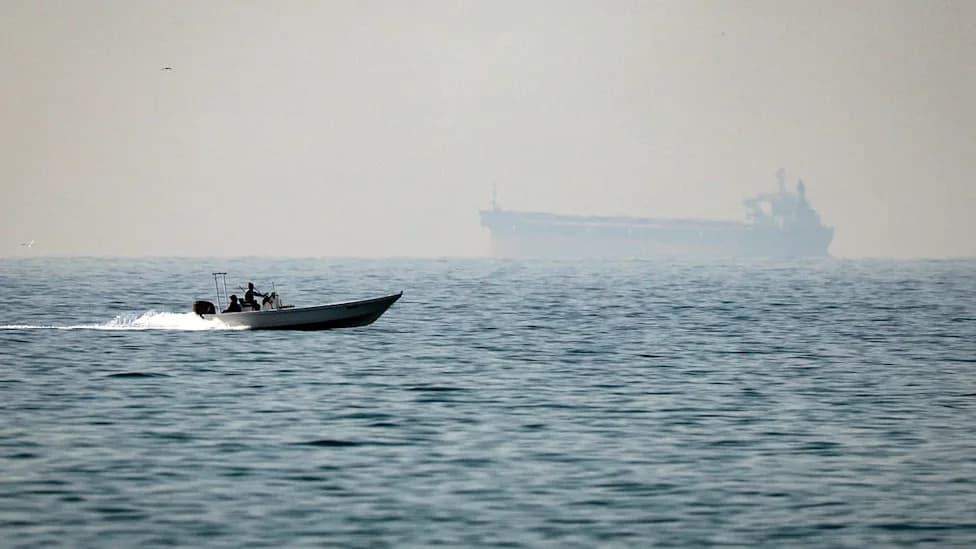
Last week the United States and Iran signed a framework agreement intended to end hostilities and allow the reopening of the Strait of Hormuz. Since the accord, vessel movements through the strait — a critical global energy chokepoint — have increased, but experts warn it will take time for traffic to return to pre-conflict levels. Shipping firms and insurers continue to flag the waterway as hazardous, largely because of the persistent risk posed by naval mines.
Tehran previously threatened to use a variety of naval mines to block passage through the strait. Iran has not publicly confirmed whether it actually laid mines, but the threat of a blockade was used as leverage during talks and contributed to a global energy shock.
Under the agreement, Iran must clear any mines within 30 days as a condition for reopening the corridor. France and the United Kingdom are leading the demining mission, supported by partners including Germany, Italy, Japan and Canada.
What Are Naval Mines?
Naval mines are explosive devices placed underwater to damage or sink ships. They are inexpensive to produce but costly and time-consuming to detect and remove, making them an efficient means of disrupting commercial shipping and naval operations. Even a small number of mines can force rerouting, raise insurance premiums and shut down busy maritime routes.
Common Types Of Mines
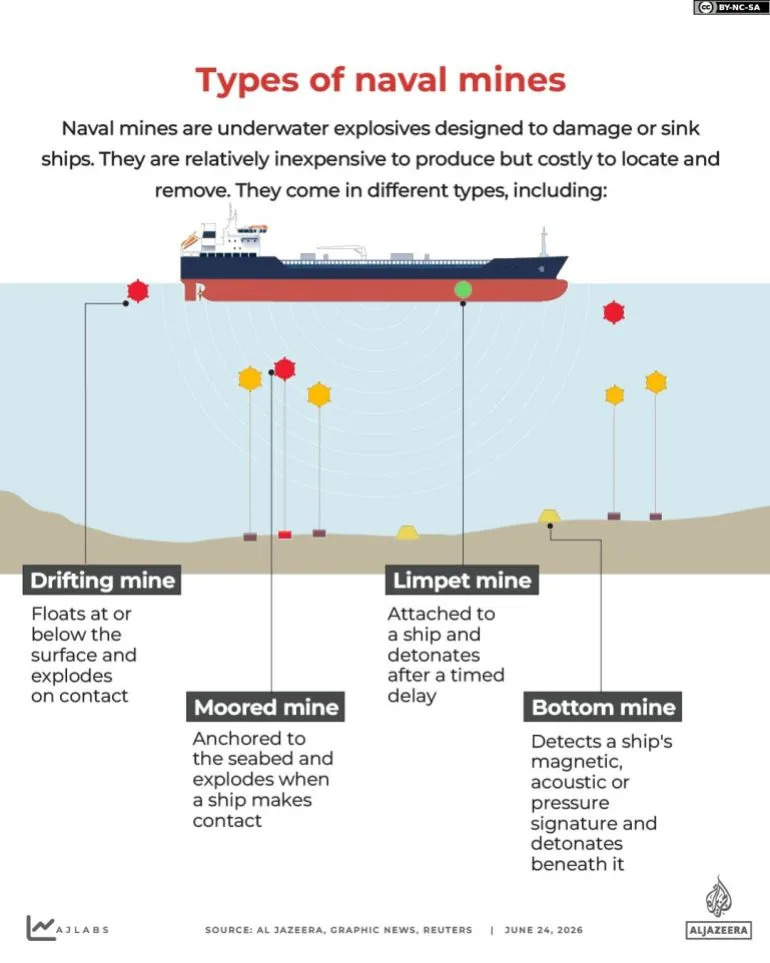
Bottom Mines: Rest on the seabed, often in shallow coastal areas, straits or shipping channels. They detect a ship's magnetic, acoustic or pressure signature and detonate beneath a hull, creating a destructive gas bubble. On sonar, bottom mines can resemble rocks, debris or other seabed features, making them hard to identify.
(Al Jazeera)
Moored Mines: Anchored to the seabed by a cable and floating below the surface. Often pictured with protruding horns, they detonate on contact or via proximity sensors. Because they float in the water column they can be difficult to spot from the surface.
Drifting Mines: Untethered and carried by currents and tides, drifting mines are highly unpredictable. A mine released in one location can travel long distances and threaten shipping lanes far from the initial deployment point — a particular concern in the Strait of Hormuz.
Limpet Mines: Smaller devices that attach directly to a ship's hull using magnets or clamps. They commonly include timers so those who plant them can leave before detonation.
How Mine Countermeasures (MCM) Work
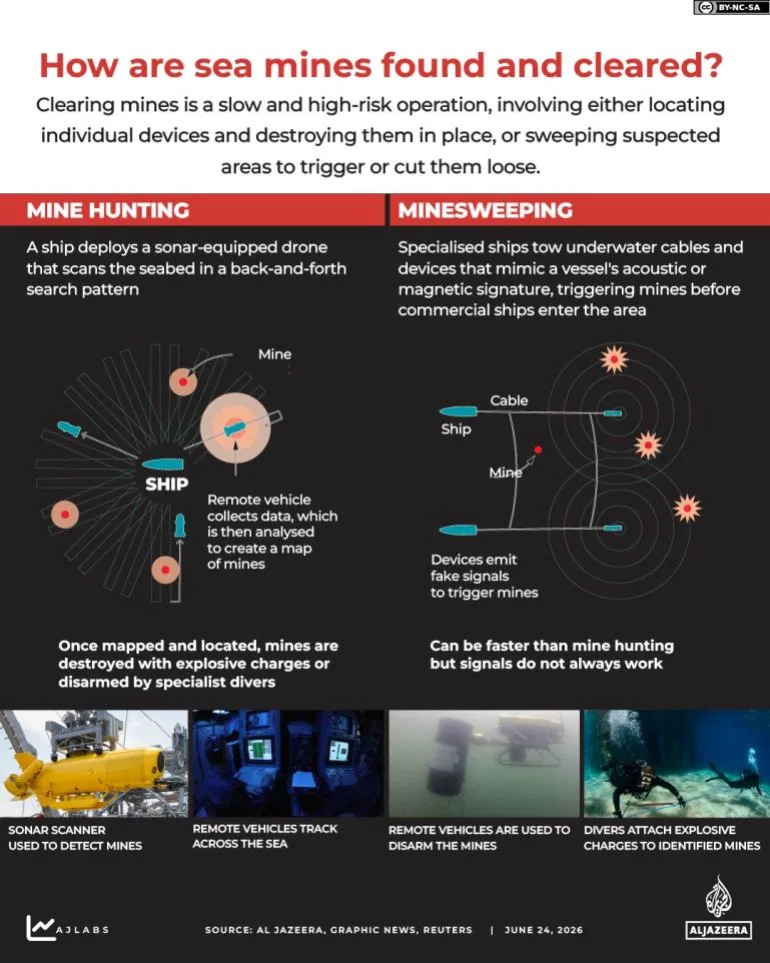
Clearing mines — known as mine countermeasures (MCM) — is slow, complex and risky. There are two main approaches: locate and neutralise individual devices, or sweep suspected areas to trigger or free mines without detecting every mine.
Detection Tools: Navies deploy sonar-equipped underwater drones, remotely operated vehicles (ROVs) and helicopters with mine-hunting sensors to survey the seabed. These platforms can cover wide areas and relay sonar imagery and video to operators in real time.
Interactive_Marine_Mining_June24_2026_MINESWEEPING
Identification Challenges: When an object of interest appears on sonar, specialists must determine whether it is a mine. The seabed is cluttered with rocks, wreckage and debris that produce false positives, so positive identification is essential before taking action.
Neutralisation Methods: Confirmed mines may be neutralised by controlled detonation, rendered safe by specialist divers or ROVs, or removed via minesweeping.
Minesweeping Techniques: Mechanical sweeps drag cables with cutters to sever a moored mine’s anchor chain, allowing the mine to float to the surface where it can be destroyed safely. Other towed systems replicate a ship’s magnetic and acoustic signature to trigger mines at a safe distance.
Why Clearing Mines Takes So Long
Finding a single mine is difficult; proving an area is completely clear is even harder. Mines can be deployed in hours but may take weeks, months or longer to remove. Unlike missiles, which strike immediately, mines create persistent uncertainty and force shipping to operate under sustained risk.
Even one confirmed mine can close a shipping lane and halt critical commerce. Rumours of mines are enough to drive up insurance costs and deter operators. Modern supertankers and cargo ships represent hundreds of millions of dollars in value; their insurance premiums climb sharply when mine threats are present.
Reuters and other outlets have noted that mine-clearing operations in the Strait of Hormuz could continue for weeks after any formal reopening because every shipping lane must be searched repeatedly before insurers and shipping companies regard the corridor as safe.
Bottom line: Mines are cheap to make but expensive to clear. International cooperation, advanced drones and persistent sweeps are essential to restore safe passage through one of the world’s most important maritime chokepoints.
Help us improve.