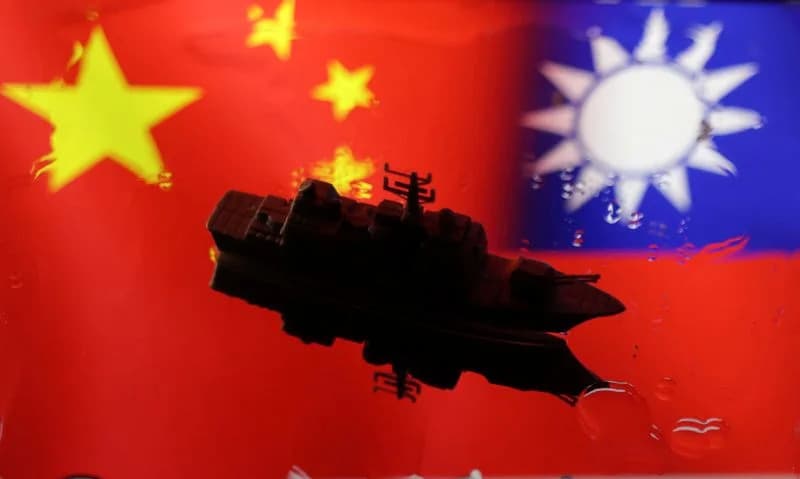
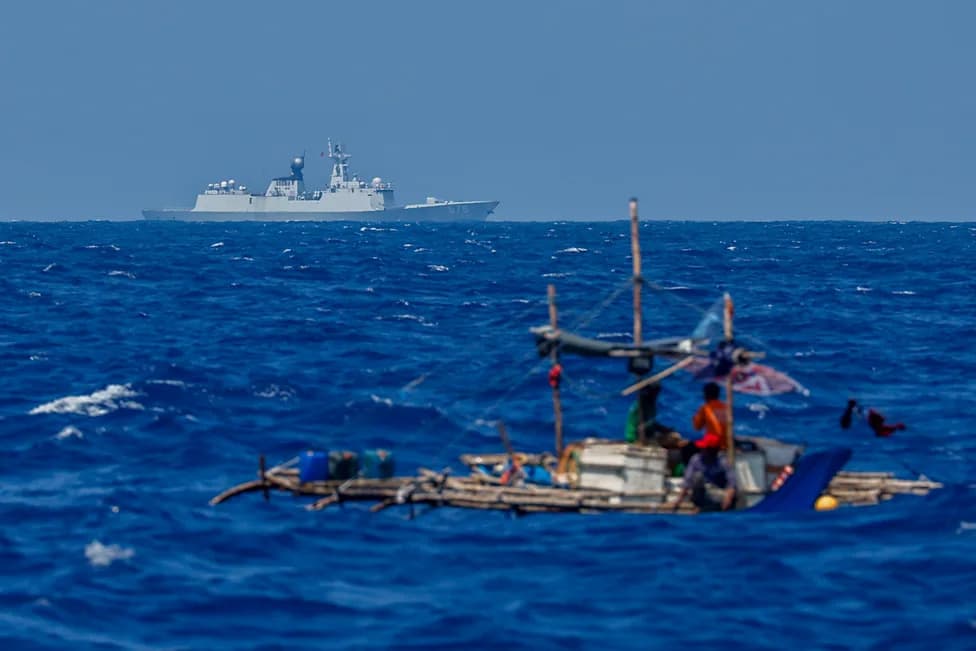
Chinese civilian vessels recently conducted enforcement, seabed mapping and research operations east of Taiwan and inside a contested lagoon more than 500 miles from China, in a pattern analysts call “salami-slicing.” These moves — including the first recorded MSA transit east of the First Island Chain — are viewed as efforts to normalize presence and extend Beijing’s control without open conflict. Experts warn seabed mapping has military implications and that coercive next steps (such as diverting ships or building permanent structures) could threaten freedom of navigation and regional stability.
‘Salami-Slicing’ in the Pacific: China Extends Reach East of Taiwan Using Civilian Vessels
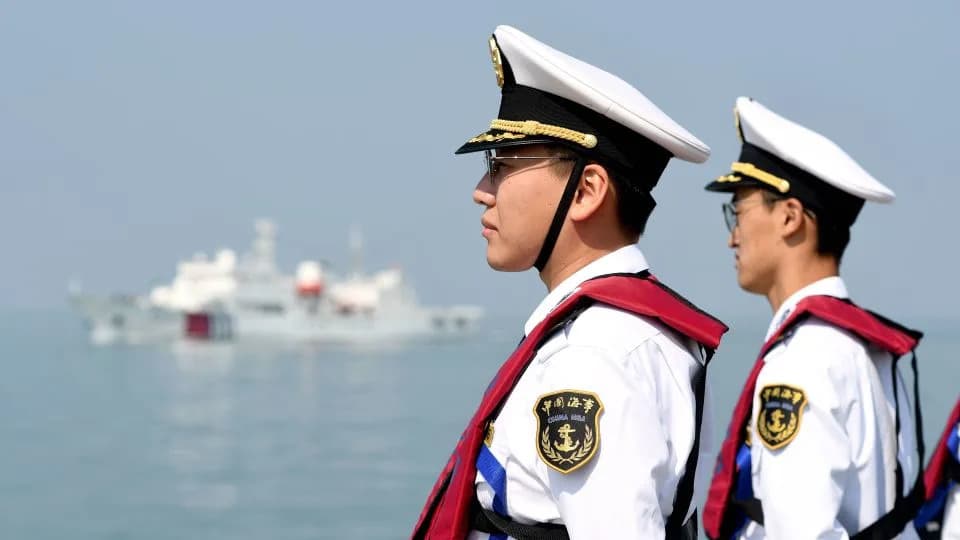
Two Chinese officers watch boats sailing in a port in Qingdao in east China's Shandong province Wednesday, October 12, 2022. - Yu Fangping/Feature China/Future Publishing/Getty Images
Over the course of a few weeks, Chinese vessels have pushed enforcement, seabed-mapping and research operations farther from the mainland than previously observed — carrying out law-enforcement activities, mapping a sensitive seabed and conducting research inside a contested lagoon more than 500 miles from China’s shores. Analysts warn these incremental moves, often called “salami-slicing,” aim to normalize Chinese presence beyond the First Island Chain and reshape maritime realities without triggering open conflict.
MSA Transit Through the Bashi Channel
Earlier this month, three vessels from China’s Maritime Safety Agency (MSA), a civilian maritime law-enforcement body, transited the Bashi Channel between the Philippines and Taiwan to begin enforcement and seabed-mapping operations in waters east of Taiwan. Observers say this is the first recorded instance of MSA ships operating east of the so-called First Island Chain — the strategic arc running from southern Japan through Taiwan and the Philippines toward Borneo and Singapore.
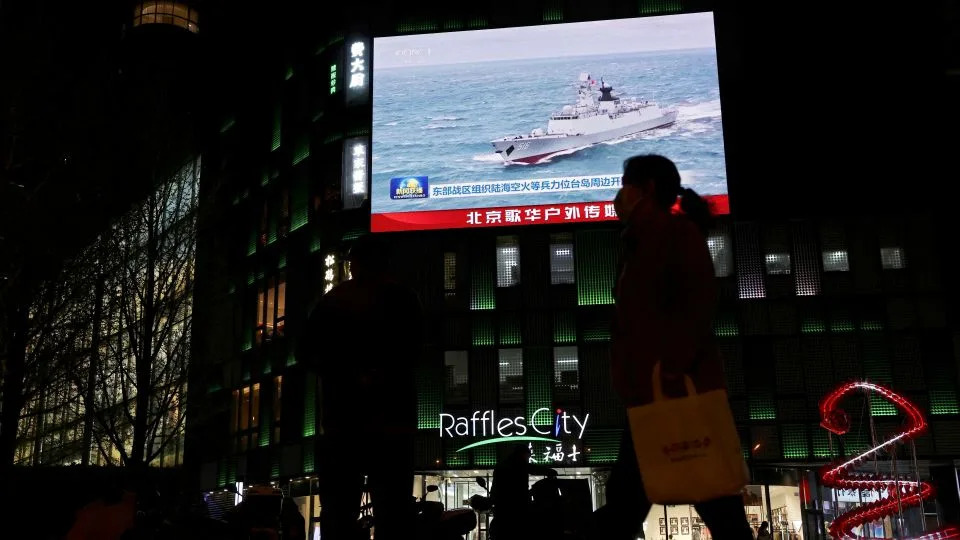
A Chinese navy vessel is seen on a news report about Chinese military drills around Taiwan in Beijing, China, April 1, 2025. - Florence Lo/Reuters
“This is the first time we’ve seen them make some kind of a sovereignty patrol outside of the 9-Dash/10-Dash Line,” said Ray Powell, director of the SeaLight project at Stanford University’s Gordian Knot Center for National Security Innovation, calling the deployment the “Bashi Breakout.”
Political Signaling and Legal Claims
State and semi-official Chinese channels framed the activity as an assertion of jurisdiction. A semi-official broadcaster account said the waters east of Taiwan now constitute China’s “nearshore waters” where Beijing intends to maintain presence and exercise governance. In 2023 Beijing introduced a 10-dash variant of its South China Sea map that extended claims to areas east of Taiwan, a move widely contested by neighboring states. The Permanent Court of Arbitration in The Hague ruled in 2016 that the broad 9-dash claims had no legal basis.
“Their real objective is to expand,” said Taiwan President Lai Ching-te, who warned that Beijing continues to innovate ways to press territorial claims and intimidate Taiwan and other Indo-Pacific states.
Gray-Zone Risks And Military Implications
Analysts say civilian agencies such as the MSA are well-suited for gray-zone operations: enforcing environmental and maritime rules while appearing less provocative than naval forces. During the recent voyage, Taiwan’s coast guard reported Chinese MSA vessels issued radio challenges to commercial ships bound for Taiwan. Experts warn the next escalation could include detaining or diverting ships, or coercing them into Chinese ports — a pressure point that could target critical energy shipments such as liquefied natural gas (LNG).
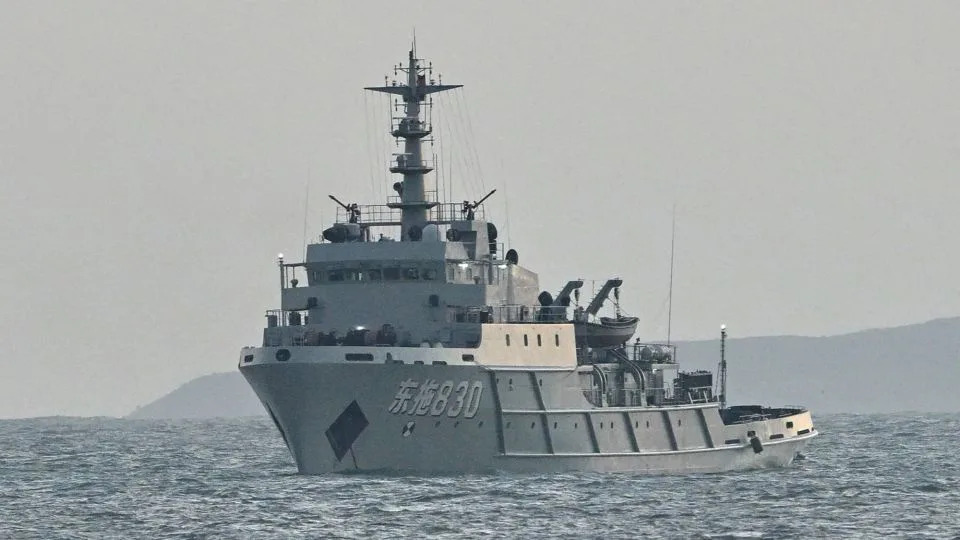
A Chinese ship is seen in waters near Pingtan Island, the closest point to Taiwan, in eastern China's Fujian province on December 29, 2025. - Adek Berry/AFP/Getty Images
Carl Schuster, a former director of the US Pacific Command’s Joint Intelligence Center, and other analysts note that detailed seabed mapping has clear military value: improved bathymetry helps submarine and surface fleet operations, and it identifies undersea cables, resources and seabed features that could be exploited strategically.
Scarborough Shoal And The South China Sea
Separately, attention has focused on Scarborough Shoal, an uninhabited feature with a central lagoon about 140 miles west of Luzon and roughly 530 miles from China’s Hainan province. The shoal lies within the Philippines’ exclusive economic zone but has been effectively controlled by China since 2012. Satellite imagery recently showed a small floating structure appear near the lagoon entrance and later being towed inside, drawing protests from Manila. Beijing said the platform was conducting maritime research and later reported it had been withdrawn.
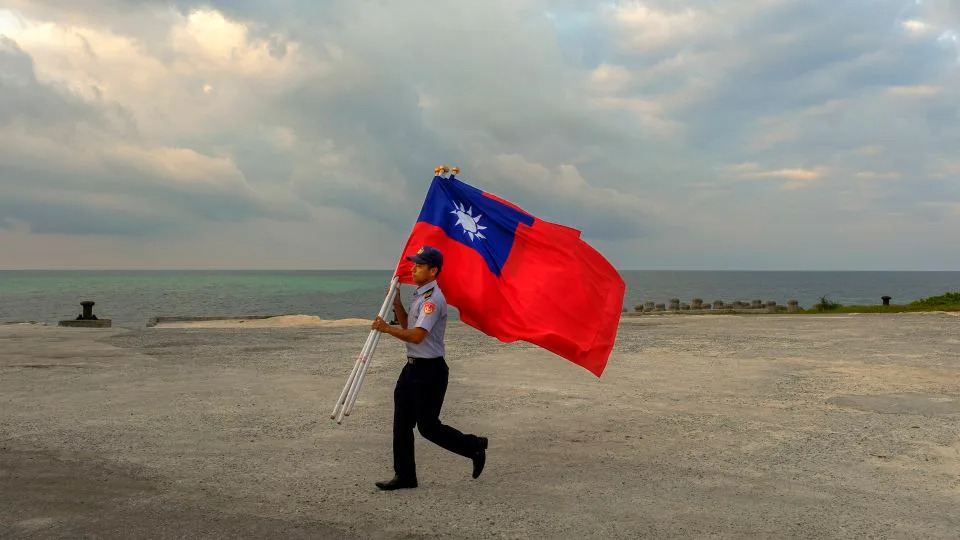
A coast guard personnel carrying some Taiwan flags after a flag raising ceremony was held near the sea shore of Pratas Island. - Alberto Buzzola/LightRocket/Getty Images
Philippine officials and outside analysts caution that temporary research platforms can become precursors to more permanent facilities, echoing past island-building and militarization in the South China Sea despite earlier Chinese promises not to do so.
International Reactions And Responses
Washington and European partners have taken note. A US State Department spokesperson described reports of coastguard harassment of commercial ships as “deeply destabilizing.” Britain, France and Germany issued a joint statement of concern about novel Chinese activity east of Taiwan, warning it threatens regional stability, freedom of navigation and the safety of international shipping. In response to rising gray-zone pressures, the US Embassy in Manila announced a $13 million package that includes four sea-going drones to help the Philippines monitor and respond to maritime challenges.
What Comes Next
Analysts stress that these incremental moves fit a pattern: China identifies opportunities, acts quickly with civilian or paramilitary forces that appear less threatening than navies, and thereby creates new facts at sea. The primary concerns going forward are coercive steps that limit Taiwan’s access to maritime approaches or the establishment of new, permanent facilities on disputed features — outcomes that could progressively tilt regional balance in Beijing’s favor if international responses are muted.
CNN has sought comment from China’s MSA. Kathleen Magramo contributed reporting.
Help us improve.