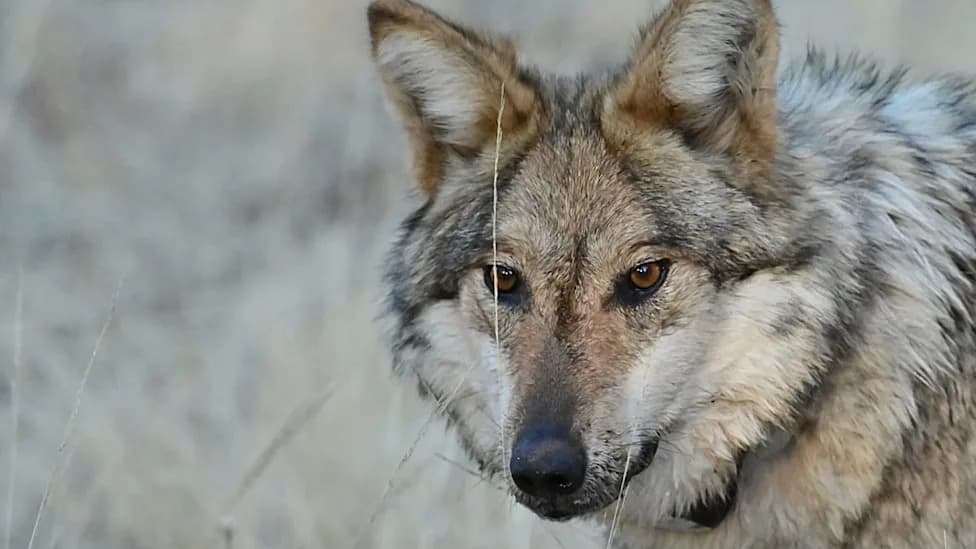
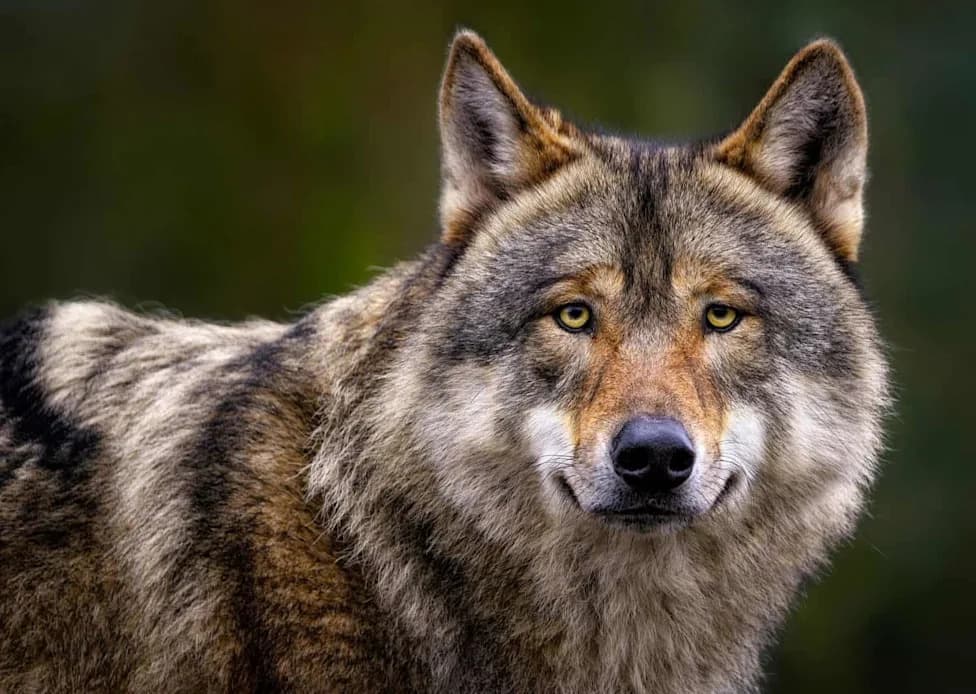
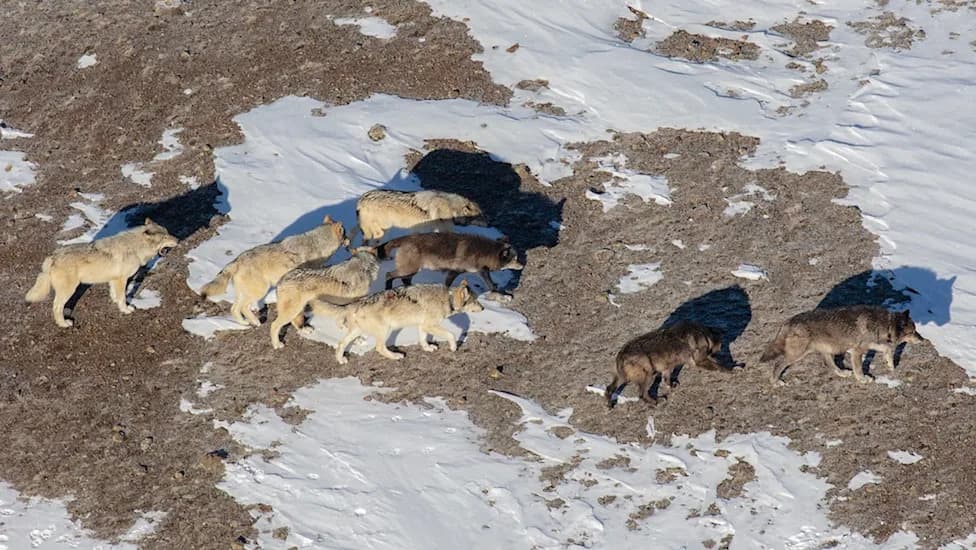
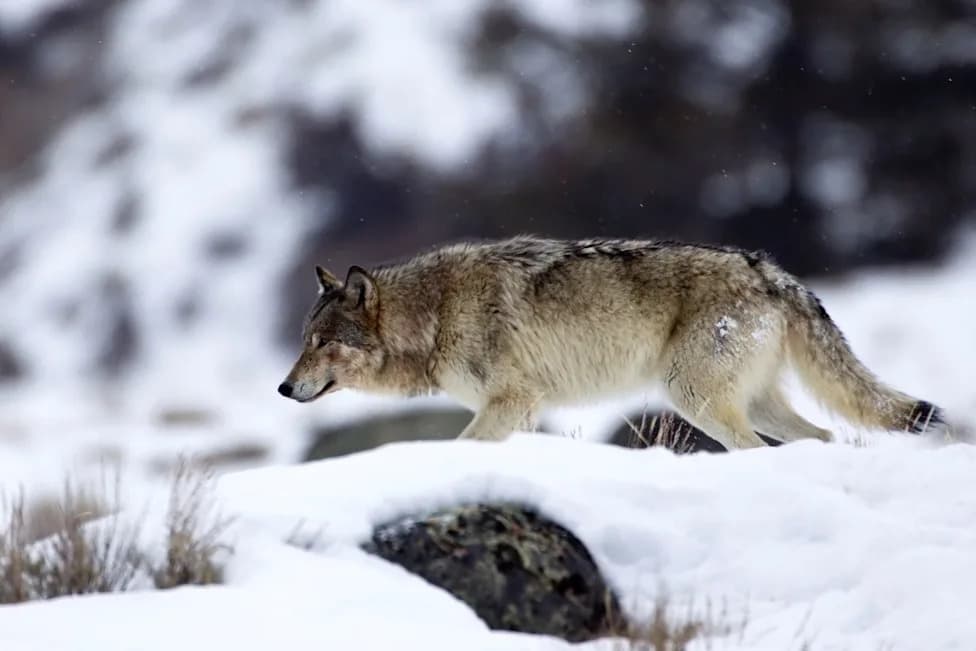
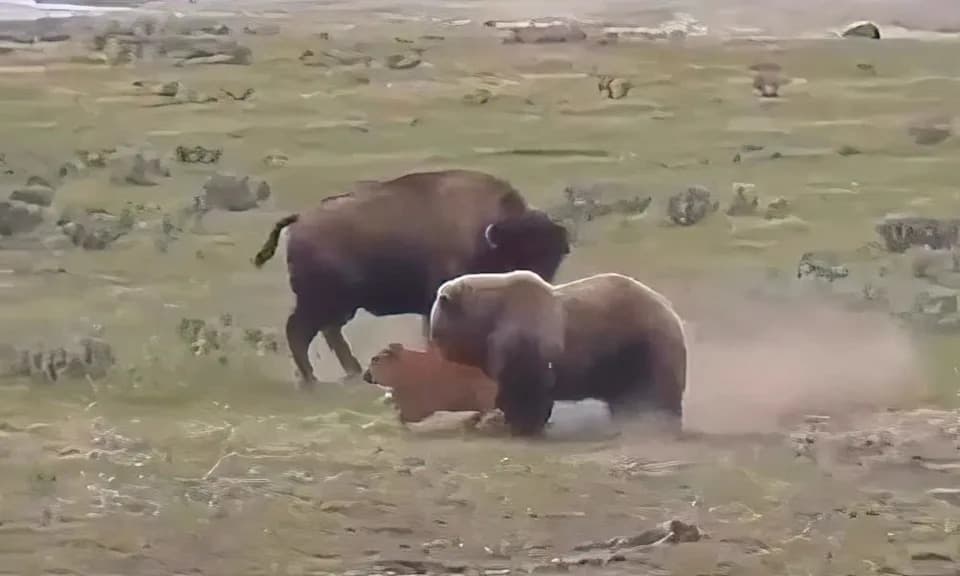
Camera traps in Poland’s Białowieża Primeval Forest recorded a pack of seven wolves pursuing 11 European bison—including a newborn calf—on September 15, 2025. Two adult females defended the calf and the pack left without a confirmed kill. Published with research in Ecology and Evolution, the footage is the first video evidence of wolves attacking a bison herd in Białowieża. Researchers say occasional predation on calves may help regulate bison numbers without undermining conservation.
Rare Camera-Trap Footage Captures Wolves Attacking European Bison Herd in Poland’s Białowieża Forest
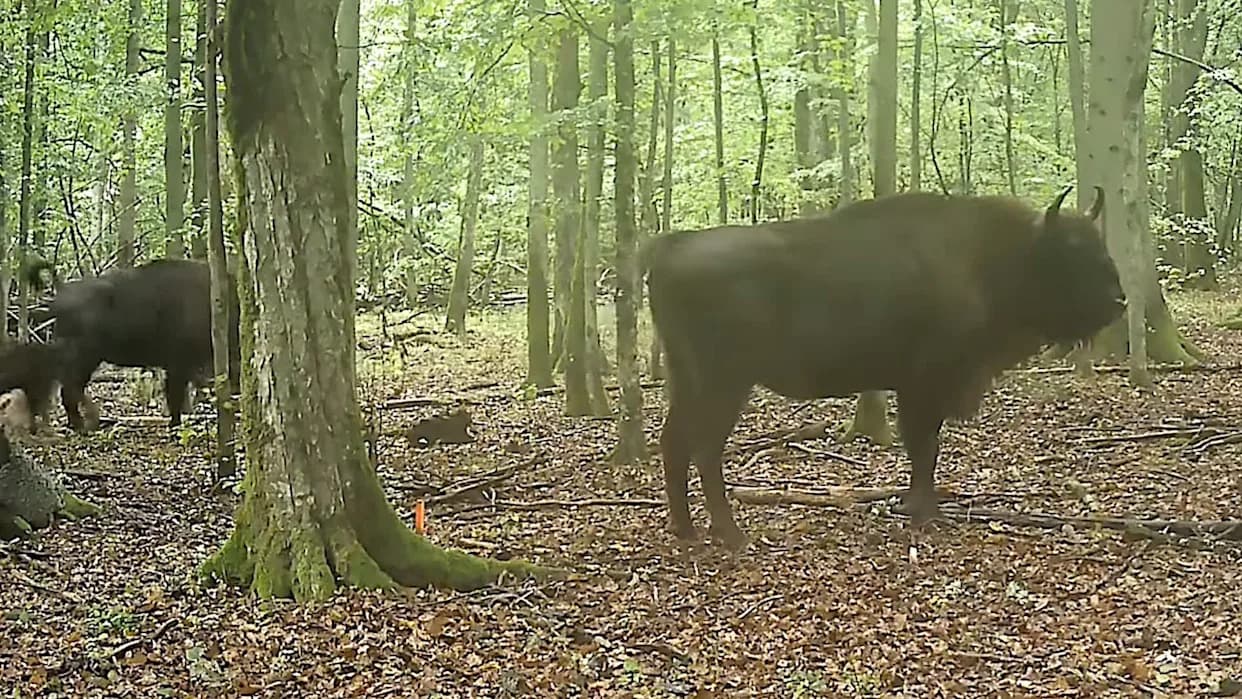
Photo Credit: YouTube
Camera traps in Poland’s ancient Białowieża Primeval Forest have recorded, for the first time in that area, wolves attacking a herd of European bison. The footage—captured on September 15, 2025—was published alongside new research in the journal Ecology and Evolution and shared by the publisher on YouTube (@IFLScienceOfficial).
What the Footage Shows
The video documents a pack of seven wolves pursuing a group of 11 European bison, including a newborn calf. The wolves latch onto the calf and begin to pull it away before two adult females charge in and drive the predators off. The wolves return for a second attempt, but the herd tightens around the calf and the confrontation ends without a confirmed kill on camera.
"To our knowledge, we present the first video-recorded evidence of wolves attacking a European bison herd in the Białowieża Primeval Forest, focusing on a newborn calf," the study's authors write in the abstract.
Context And Conservation Implications
European bison were extinct in the wild by 1919 and were reintroduced to Białowieża beginning in 1952. Today, Poland hosts the world’s largest free-ranging population of the species. While wolves are known predators of American bison in North America, confirmed wolf–bison encounters in Europe have been exceptionally rare.
The researchers emphasize a cautious interpretation. Although the wolves clearly targeted the herd’s most vulnerable member, the observed attack did not result in a documented kill. The study concludes that, if predation on young bison is more common than previously thought, wolves could play a modest but meaningful role in natural regulation of bison numbers—without necessarily threatening overall conservation efforts.
"If predation on European bison, specifically young animals, occurs more frequently than previously assumed, wolves could play a small but potentially important role in the natural regulation of bison numbers," the paper states.
Researchers say these kinds of observations help scientists better understand re-emerging predator–prey dynamics as ecosystems recover, and can inform decisions on habitat protection, land-use planning, and strategies to reduce human–wildlife conflict.
What’s next: Continued monitoring with camera traps and field studies will be needed to assess how often wolves attack bison calves, whether such predation affects population trajectories, and how managers should balance bison reintroductions with the presence of large predators.
Help us improve.