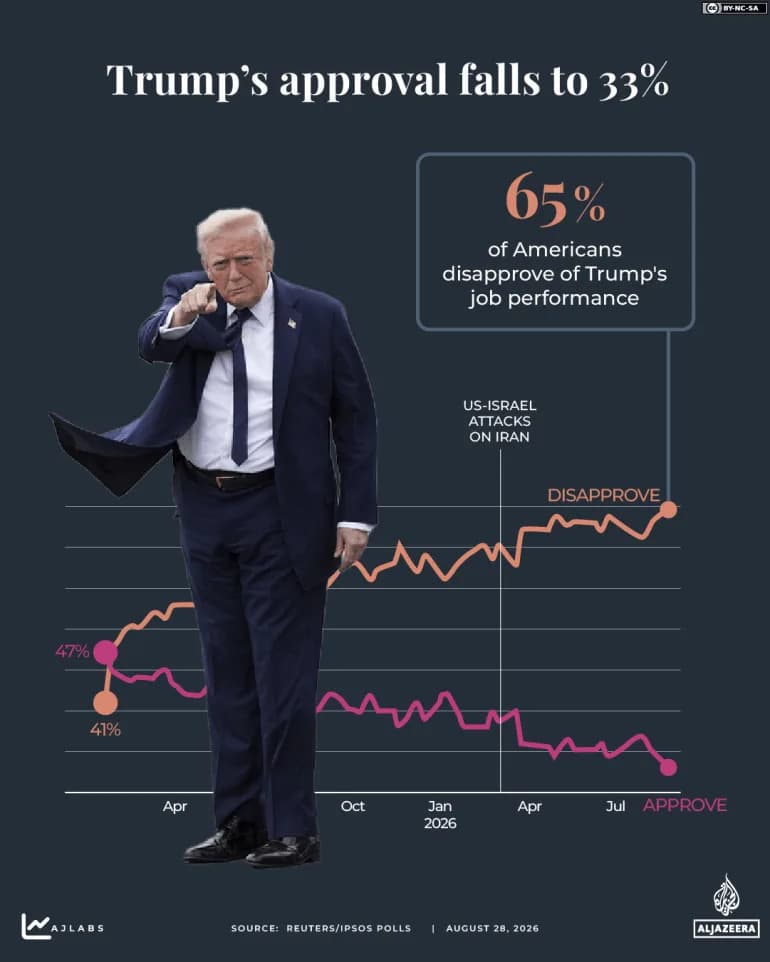
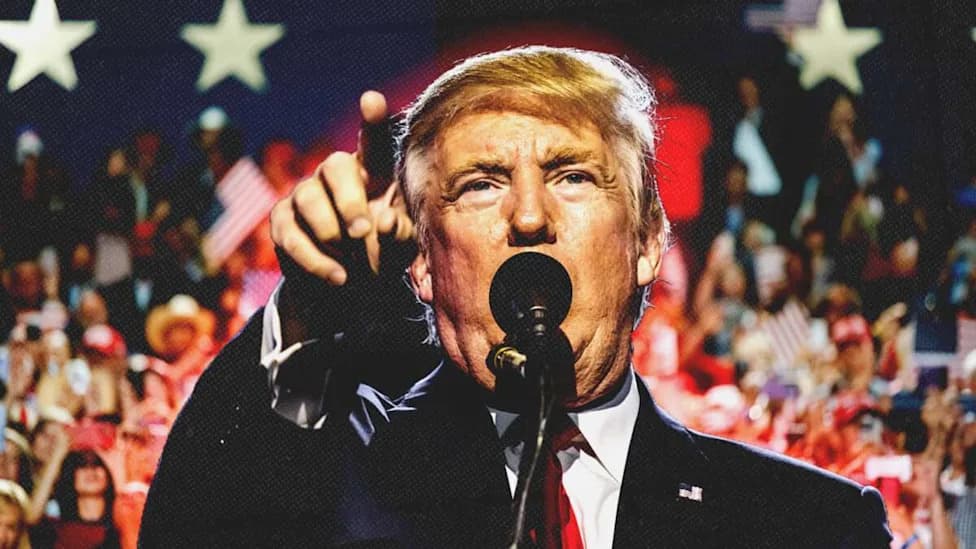
The 60-day Memorandum of Understanding has paused open hostilities after President Trump’s Feb. 28 strikes on Iran, but the truce is fragile and many questions remain. Official tallies report thousands of fatalities across Iran and Lebanon, with U.S. and Israeli losses as well, and Moody’s Analytics estimates the economic cost to Americans at roughly $132 billion so far. Military strikes degraded parts of Iran’s navy, air defenses and missile stockpiles, yet Tehran retains assets that can threaten shipping through the Strait of Hormuz. Politically, the campaign has split parts of the right, prompted congressional pushback and left the nuclear issue unresolved.
Missiles, Drones and Nukes: What Trump’s Iran War Has Won — And What It Has Cost
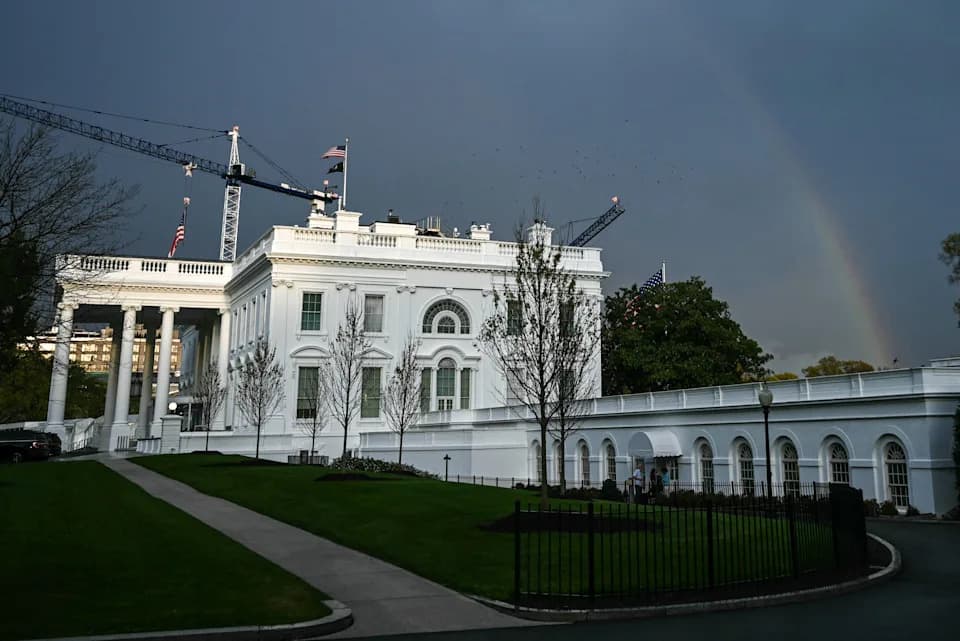
A rainbow is seen above the White House in Washington, DC on April 1, 2026. US President Donald Trump will deliver a prime-time address on April 1, 2026 on the Iran war in the face of plunging approval ratings, economic jitters and spiralling diplomatic fallout.(Brendan Smialowski, AFP via Getty Images)
With a 60-day Memorandum of Understanding in place and negotiations now under way, the ceasefire that followed President Donald Trump’s Feb. 28 strikes on Iran remains fragile. It is too soon to deliver a definitive judgment on whether the campaign was worth its costs. Still, an early review highlights what the operation has achieved and the toll it has exacted so far.
Mr. Trump began the campaign forecasting a brief conflict — “four or five weeks” — implying a swift victory and quick gains similar to an earlier U.S. operation in January. Instead, the confrontation has stretched into a fourth month and counting, despite repeated presidential assurances that peace was imminent. As earlier leaders from Lyndon Johnson to George W. Bush discovered, deploying force is often far easier than extracting a country from war.

Israeli security and rescue personnel work next to part of a projectile after a missile attack by Iran in northern Israel on June 8, 2026.
Official tallies paint a grim human cost: 13 U.S. service members killed, 26 fatalities in Israel, roughly 3,500 dead in Iran (a figure that reportedly includes more than 100 children killed when a strike hit a girls’ school on the first day of the fighting), and more than 3,500 fatalities reported in Lebanon. Beyond lives lost, the fighting has sent shock waves through the global economy, reshaped regional alliances and intensified partisan conflict at home. Those consequences will continue to unfold for months or years.
Military Effects: Gains — And Enduring Threats
Joint U.S. and Israeli strikes have substantially degraded Iran’s naval forces, damaged much of its air-defense infrastructure and reduced portions of Tehran’s ballistic missile inventory. Nevertheless, Iran retains enough small boats, attack drones, short-range missiles and sea mines to disrupt shipping through the Strait of Hormuz and menace partners in the Persian Gulf.
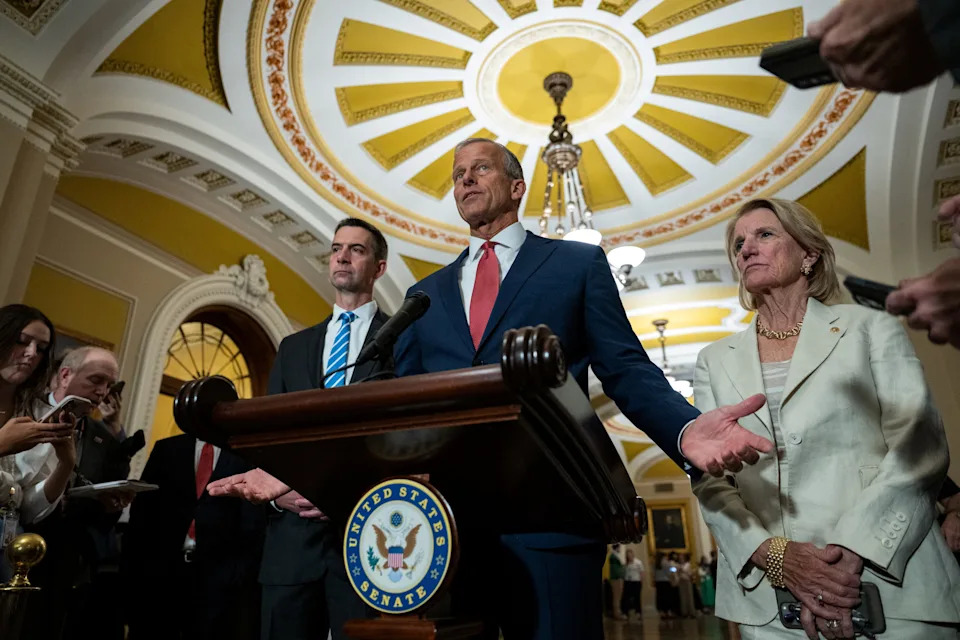
Senate Majority Leader John Thune (R-SD) speaks as Senate Republican leaders hold a news conference following their weekly policy lunch on Capitol Hill on June 16, 2026.
“Am I going to let Saudi Arabia have missiles, but they can’t have them? Doesn’t work that way, you know; it doesn’t work that way,” Mr. Trump said at the G7 summit, signaling a different tolerance for regional missile capabilities than Israel sought.
Political Fallout: Fractures on the Right
The campaign has opened fractures within the MAGA coalition. Some conservative commentators and Republican leaders who usually back Mr. Trump argue he has abandoned his “America First” pledge to avoid open-ended foreign entanglements. Critics contend the pending deal is worse than the 2015 multilateral agreement negotiated under President Barack Obama, which Mr. Trump withdrew from during his earlier term.
On social media and conservative outlets, voices such as Tucker Carlson and Senator Bill Cassidy have labeled the outcome a humiliation or a major foreign-policy error; Mr. Trump replied on Truth Social by denouncing critics as “the fools.” The White House issued a release titled "President Trump's Iran Agreement Is America First in Action," citing supportive quotes from GOP politicians and commentators — and including an unusual attribution to "Pope Leo XIV," a detail that readers and analysts have questioned.
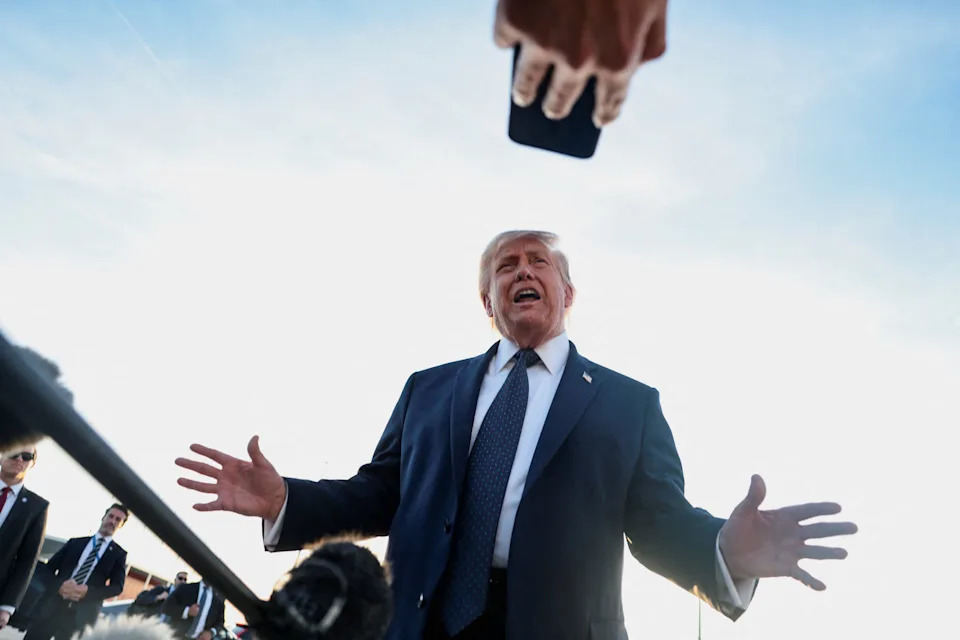
President Donald Trump speaks to reporters upon arriving in Orly, France, on June 17, 2026, for the G7 summit. Seven leading industrialized nations, in addition to the European Union, make up the G7: Canada, France, Germany, Italy, Japan, the United Kingdom and the United States.
Congressional Pushback
Mr. Trump did not seek congressional authorization for the strikes. Growing unease about the war’s direction and the lack of consultation have produced bipartisan resistance. The Senate advanced a War Powers resolution on May 19 by a 50–47 procedural vote with four Republicans joining Democrats. The House approved a mostly symbolic measure to end the hostilities on June 3, passing it 215–208 with four Republicans joining Democrats.
Economic Impact and the Strait of Hormuz
The agreement to reopen the Strait of Hormuz for 60 days helped calm energy markets: U.S. average gasoline prices have fallen below $4 per gallon from a May peak, though they remain well above the pre-conflict average of about $2.96. Economists and political strategists note that this easing of energy prices is politically significant for the president and Republican candidates facing voter concerns about inflation and affordability.
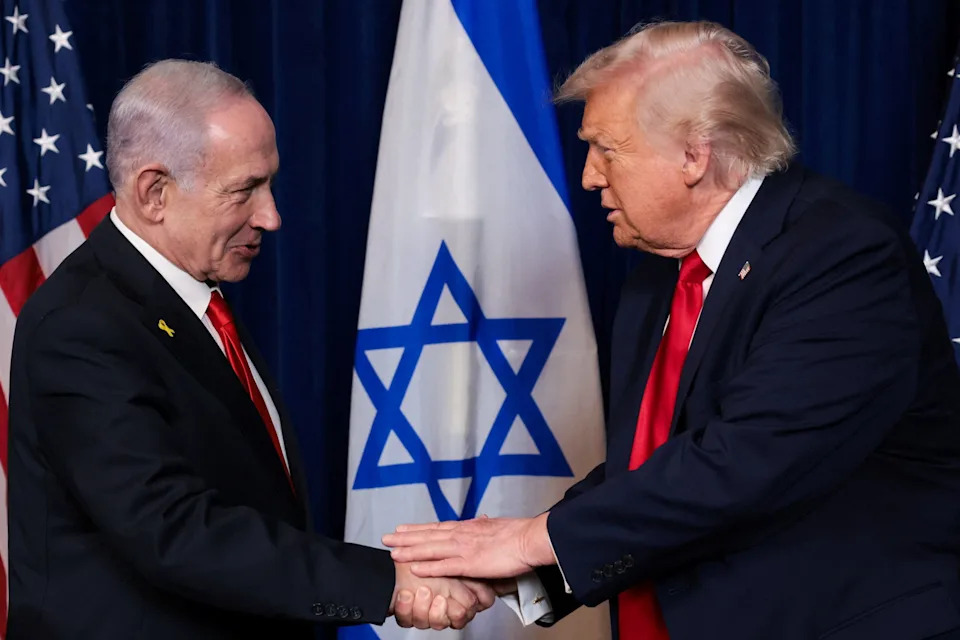
President Donald Trump and Israeli Prime Minister Benjamin Netanyahu shake hands during a press conference after meeting at Trump’s Mar-a-Lago club in Palm Beach, Florida, on Dec. 29, 2025.
Moody’s Analytics estimates that the conflict has already cost American consumers and taxpayers at least $132 billion through higher prices, interest-rate impacts and increased military spending. Experts caution it will take sustained, reliable transit through the strait for months before the costs of fuel, fertilizer, food and other goods normalize, and observers worry Iran might try to extract fees or concessions once the 60-day window expires.
Allied Relations and the Nuclear Question
What began as a joint U.S.-Israeli military campaign has become a source of diplomatic friction between Mr. Trump and Israeli Prime Minister Benjamin Netanyahu. Jerusalem was not shown the draft ceasefire before it was released and Netanyahu has said parts of the agreement undermine Israeli security. Mr. Trump publicly criticized Netanyahu at the G7 summit, using harsh language that underscored the strain.
The war has not yet achieved Israel’s primary objectives: Iran’s missile capability has not been completely eliminated and Tehran’s nuclear activities remain unresolved. The 14-page memorandum does not fully settle the nuclear question; negotiators have a 60-day window to press for restrictions and inspections. Washington and Tehran have provided differing accounts of progress. Vice President J.D. Vance called an Iranian agreement to invite U.N. inspectors back to damaged facilities a “major milestone,” while Iranian officials denied making a new commitment.
As negotiators continue, the key questions are whether the 60-day pause leads to a sustainable diplomatic settlement, whether regional stability can be restored, and how the long-term balance of military power in the Gulf will be shaped by this costly episode.
Susan Page, Washington bureau chief of USA TODAY, contributed reporting. This article originally appeared on USA TODAY as "What the Iran war has cost the US, from drones to nukes."
Help us improve.