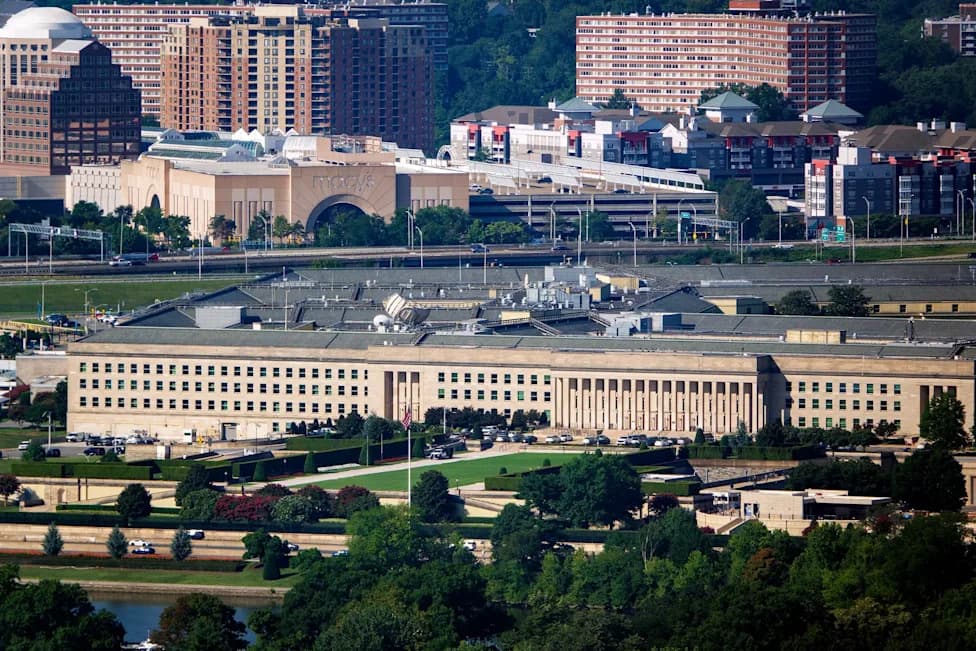
The Pentagon has informed senators it is seeking roughly $80 billion, mainly to replenish munitions, repair equipment and cover operational costs tied to the U.S. war with Iran. The White House OMB has not yet filed a formal request, but Defense Department officials have briefed lawmakers. Lawmakers are divided: some insist the funds are necessary for readiness, while opponents object to approving major new war spending amid high domestic living costs. Leaders are exploring bundling the supplemental with disaster and farm aid to win broader support.
Pentagon Seeks Roughly $80 Billion From Congress to Fund Iran War as Lawmakers Split

Defense Secretary Pete Hegseth speaks in the Oval Office of the White House during an executive order signing about quantum computing with President Donald Trump, Monday, June 22, 2026, in Washington. (AP Photo/Jacquelyn Martin)(AP Photo/Jacquelyn Martin)
WASHINGTON — The Pentagon has notified senators it needs approximately $80 billion, primarily to cover costs tied to the U.S. war with Iran, adding to a broader surge in military spending sought by President Donald Trump.
The White House Office of Management and Budget has not yet submitted a formal request to Congress. Still, Defense Secretary Pete Hegseth has been making the rounds on Capitol Hill to make the case, and a senior deputy defense official told senators the administration is pursuing the supplemental funding. The Wall Street Journal first reported the developments.
Background and Cost Estimates
The $80 billion request is intended largely to replenish munitions, repair equipment and cover operational costs for forces deployed in the region. That figure is well above an earlier $29 billion estimate provided to Congress but below an initial $200 billion estimate the Pentagon floated at the start of the conflict. Early estimates also placed the first week of the war’s costs at about $11.3 billion.
Political Reaction and Negotiations
Lawmakers are divided. Some Republicans and defense advocates argue the funds are essential to restore depleted stockpiles and sustain readiness. Senate Majority Leader John Thune said he expects a supplemental request and will "work through it and see where the votes are." Senator Jim Banks framed the request as an investment in the defense industrial base and a chance to reshore production.
“We need to make sure we’re doing everything we can to replenish, resupply a lot of our munitions that have been depleted,”
Opponents — including many Democrats and some fiscally conservative lawmakers — say they are reluctant to approve large new war spending while Americans face high living costs at home. "You’re spending families’ hard-earned tax dollars on a war that many strongly oppose," Democratic Sen. Patty Murray told Defense Secretary Hegseth.

Defense Secretary Pete Hegseth listens as President Donald Trump speaks in the Oval Office of the White House during an executive order signing about quantum computing, Monday, June 22, 2026, in Washington. (AP Photo/Jacquelyn Martin)(AP Photo/Jacquelyn Martin)
How It Could Be Structured
Republican leaders are pursuing a broader spending strategy that includes roughly $1.1 trillion through the regular appropriations process and an additional $350 billion later this summer. Some lawmakers are urging that any Iran supplemental be bundled with other priorities — such as disaster relief for states hit by fires and severe weather, and agricultural assistance — to build bipartisan support.
Sen. Jack Reed, the top Democrat on the Senate Armed Services Committee, said the supplemental should follow bipartisan agreement on total defense and non-defense spending levels. Sen. John Hoeven has discussed adding disaster and farm aid to the package to improve passage prospects.
Outlook
The administration has sent the request to OMB for review, and congressional committees have been notified. Congressional approval is far from certain: some lawmakers expect the final price tag to be higher than $80 billion, while others oppose any supplemental tied exclusively to the Iran war.
When asked about the cost of confronting Iran’s nuclear ambitions at a Senate hearing, Hegseth replied rhetorically, "What is the cost of Iran obtaining a nuclear weapon?" and acknowledged that addressing that threat "comes with cost — and we recognize that."
Associated Press writers Konstantin Toropin and Ben Finley contributed to this report.
Help us improve.