
Experts say the reported U.S.-Iran MOU could create a dangerous verification gap over Iran’s enriched uranium unless inspectors first locate, secure and verify stockpiles. The MOU lists on-site downblending under IAEA supervision as a minimum, but critics argue that is insufficient without immediate, unfettered access. With follow-up talks postponed and a 60-day window to reach a final deal, analysts stress that recoveries, verifiable dismantlement and unrestricted inspections are essential for any lasting agreement.
Experts Warn Trump‑Iran MOU Leaves Dangerous Nuclear Blind Spot Over Uranium Stockpile
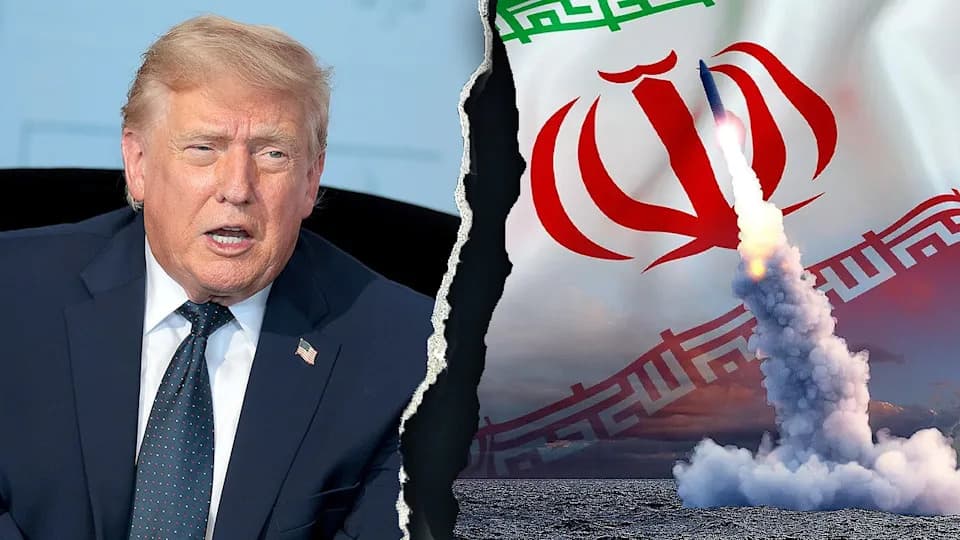
A composite image shows President Donald Trump alongside a missile launch with the Iranian flag in the background. Nuclear experts are warning that Trump’s reported Iran framework could leave Tehran too much control over its uranium stockpile unless inspectors first fully account for and secure the material.(Getty Images)
President Donald Trump’s newly reported memorandum of understanding (MOU) with Iran has prompted sharp warnings from nuclear experts who say the framework could leave Tehran undue control over its enriched uranium unless inspectors first locate, secure and verify the material.
Verification Remains The Core Concern
The MOU reportedly defers the final disposition of Iran’s enriched-uranium stockpile to a later-negotiated process, listing on-site "downblending" — diluting enriched uranium to make it less suitable for weapons — under International Atomic Energy Agency (IAEA) supervision as the minimum acceptable approach. Critics say downblending on its own is not sufficient if inspectors do not first regain full, verifiable access to Iran’s stockpiles and facilities.
"Unfettered verification is everything," Chuck DeVore, Chief National Initiatives Officer at the Texas Public Policy Foundation, told Fox News Digital. "There can be no denial for teams to inspect on the ground. Remote, technological means can achieve a lot, but nothing beats in-person inspections."
The MOU does not explicitly state whether Iran will retain a civilian nuclear program, but it says both sides will address enrichment and other issues tied to Iran’s "nuclear needs" in a final agreement. The MOU also begins a 60-day clock for negotiators to convert framework understandings into a binding deal. Planned technical follow-up talks in Switzerland were postponed amid regional tensions, leaving critical details unresolved.
IAEA Access And Accounting Problems
A recent IAEA report highlighted the agency’s limited visibility into Iran’s declared program after last year’s military strikes. The report said that, aside from a single inspection at a nuclear power plant, the agency "has not received information from Iran" about the status of other declared facilities or their nuclear material, and "nor has the Agency had access" for in-field verification. Experts warn IAEA supervision is meaningful only if inspectors first can account for existing inventories.
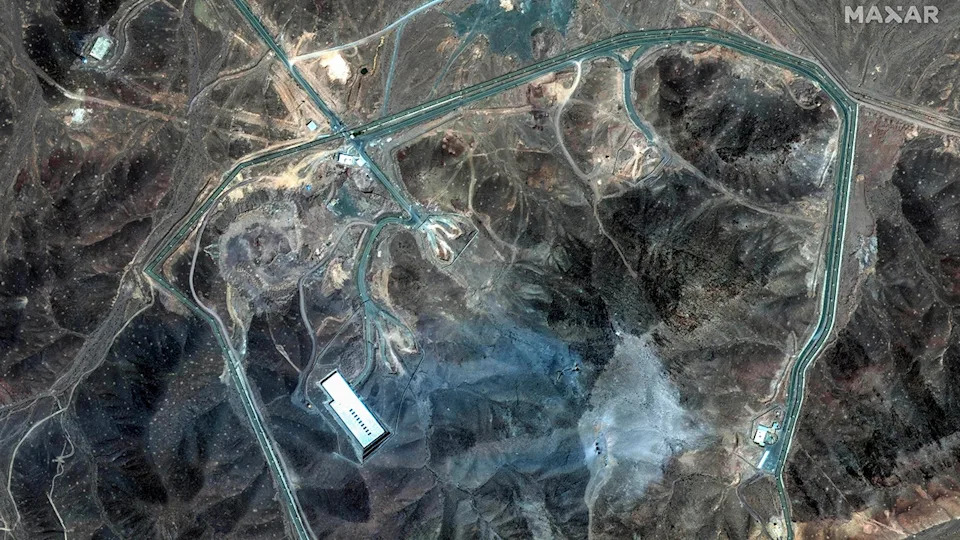
A satellite image shows damage at the Fordo enrichment facility in Iran after U.S. strikes on June 22, 2025.
A senior U.S. administration official, speaking to Fox News Digital on background, said the MOU requires Iran to reaffirm it will not pursue nuclear weapons and that the agreement represents a first step toward tangible results: reductions in enriched-uranium stockpiles, dismantlement of nuclear sites, an enrichment ban and stronger inspection access. U.S. officials say productive discussions have already taken place and that negotiators hope to make rapid progress now that the MOU is formalized.
"They have promised not to enrich. They have promised that they would allow inspectors in to destroy that highly enriched stockpile... But it doesn't do anything if they don't actually meet those promises," Vice President J.D. Vance told Fox News Digital.
Andrea Stricker, deputy director of the Foundation for Defense of Democracies' Nonproliferation Program, said any credible agreement must begin by recovering and safeguarding Iran’s enriched-uranium stockpile rather than allowing Tehran to retain control while diluting the material inside the country. She warned that without verifiable dismantlement of nuclear material, facilities, centrifuges, manufacturing and weaponization capabilities, Iran’s commitments would be merely transactional and fragile.
Experts estimate Iran’s existing inventory of roughly 1,000 pounds of 60% enriched uranium could — if recovered and further enriched — yield enough weapons‑grade material for multiple nuclear weapons, though precise weapon counts depend on design sophistication. DeVore stressed that on-site downblending, if properly verified, could render that 60% material unavailable for near-term further enrichment, but only if inspectors have unrestricted access and the verification regime is robust.
DeVore and others cautioned against repeating weaknesses of the 2015 JCPOA, such as allowing Tehran to delay, limit or steer inspections or to require excessive notice before visits. They argued the coming negotiations must secure unfettered, in-person verification powers for the IAEA to ensure any agreement is enforceable.
Fox News Digital contacted the IAEA for comment on whether the agency can currently account for Iran's enriched-uranium stockpile and for a response to the verification concerns raised by the reported framework; the agency's assessment remains central to resolving the questions experts have raised.
Help us improve.





















