Key Takeaway: The Trump administration denies any direct U.S. taxpayer payments to Iran, but a memorandum it signed proposes a $300 billion privately financed Reconstruction and Development Fund. A detailed plan is to be drafted within 60 days, though talks have been delayed and many details remain unresolved. Gulf states — especially the UAE — and private firms are expected to provide much of the capital, while congressional sanctions, frozen assets and SWIFT access pose major hurdles. If implemented, the fund could ease short‑term economic pressure in Iran but is unlikely to be a complete solution.
What a $300 Billion Reconstruction Fund Could Mean For Iran’s Fragile Economy
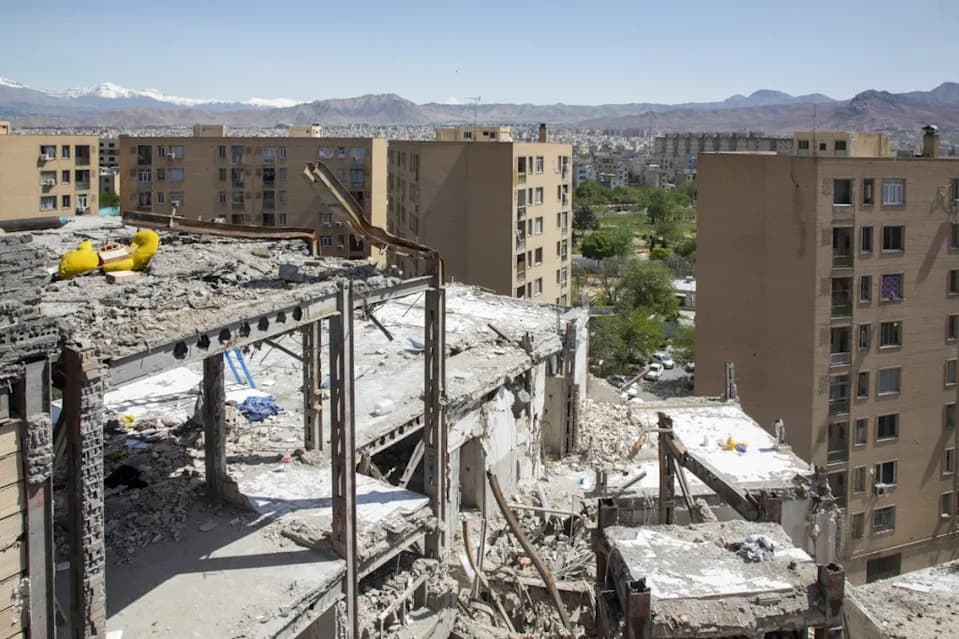
The remains of a residential building in Tehran hit by joint U.S.-Israeli strikes on March 4, 2026.
Is the United States preparing to hand Iran $300 billion to rebuild after damage from American and Israeli strikes? The Trump administration insists the U.S. will not send taxpayer money to Tehran. "Not a cent," Vice President J.D. Vance told reporters. Yet a memorandum of understanding signed by President Donald Trump includes a proposed $300 billion “Reconstruction and Development Fund” to help Iran recover — and that has prompted questions about how the money would be raised and who would benefit.
What The Memorandum Actually Says
Paragraph 6 of the 14‑point memorandum calls for a "definitive, mutually agreed plan" to be drawn up within 60 days as part of broader negotiations over Iran’s nuclear program. With planned talks in Switzerland canceled, details about the plan’s timetable and mechanics remain unclear: who would invest, what projects would be prioritized, and how sanctions would be handled.
Who Would Finance The Fund?
U.S. officials emphasize the proposed fund would be privately financed, not paid for by American taxpayers — a politically sensitive position ahead of the November midterms. The administration says it would retain final authority over waivers and permissions required to exempt investment deals from existing sanctions. Officials have suggested Gulf Arab states — particularly the United Arab Emirates — and other "regional partners" would provide much of the capital. Reuters reported, citing unnamed sources, that companies from the U.S., Middle East, Asia, Africa and South America have agreed to participate and that more than half of the funding has been pledged.
Possible Projects And Motives
Officials and analysts point to infrastructure work as plausible early targets: rebuilding power plants, repairing the energy grid, mending hospitals and restoring civilian infrastructure damaged by strikes. Vance offered a specific example: lifting some sanctions to allow UAE firms to invest in an Iranian power plant. Observers say such projects are likely to be highlighted because they visibly help ordinary Iranians rather than directly enriching the regime.
"This could be framed as helping the population, not the regime," said H. A. Hellyer, senior associate fellow at the Royal United Services Institute in London. Fawaz Gerges of the London School of Economics added that Emirati companies have the capacity and expertise for large projects if an agreement is finalized.
Sanctions, Congress And Legal Hurdles
Analysts warn that the $300 billion figure may not survive into any final arrangement. While the president can rescind some executive‑level sanctions, many restrictions were enacted by Congress and would be far harder to unwind. These include penalties targeting companies that invest in Iran’s energy sector and rules that make foreign banks wary of Iranian transactions for fear of losing access to U.S. financial systems.
"It's really early days," Hellyer said. "The mechanics of unfolding the sanctions, because they're not just all subject to an executive order from Trump, are very problematic." As a result, potential investors face legal and financial risks unless Washington provides clear and durable exemptions.
Frozen Assets And SWIFT Access
The memorandum also contemplates making frozen or limited Iranian assets "fully available." Tehran claims at least $100 billion is frozen abroad, though other estimates are lower and some funds have been seized for decades. Iran has said releasing an initial $12 billion is a top priority. U.S. officials have signaled that some assets might be released incrementally if Iran complies with other parts of any deal.
Restoring Iran’s access to SWIFT — the global financial messaging system — is another critical step for normalizing trade and investment. Iranian banks have at times been cut off from SWIFT under past sanctions, significantly restricting international commerce and foreign investment.
Political Context And Historical Comparisons
The U.S. rarely makes direct reparations after conflicts, though it has funded reconstruction programs historically. Comparisons to postwar reparations (such as those following World War I and II) and to Iraq’s long compensation payments after the 1990 invasion of Kuwait provide context, but the current proposal is framed primarily as a privately financed recovery initiative tied to diplomatic aims.
What This Could Mean For Iran
If implemented in some form, a multi‑billion dollar reconstruction effort could help Iran avert immediate economic collapse and buy time for broader reforms. However, experts caution that even $300 billion — if raised and delivered — would not be a "silver bullet" for structural economic problems made worse by war, sanctions and political dysfunction. Much depends on the final legal framework, investor protections, and whether the funds reach civilian reconstruction rather than entrenching vested interests.
Bottom line: The memorandum signals a potentially large international investment effort to rebuild Iran — funded privately and conditioned on diplomacy and sanctions relief — but significant legal, political and logistical barriers mean its ultimate shape remains uncertain.
Help us improve.