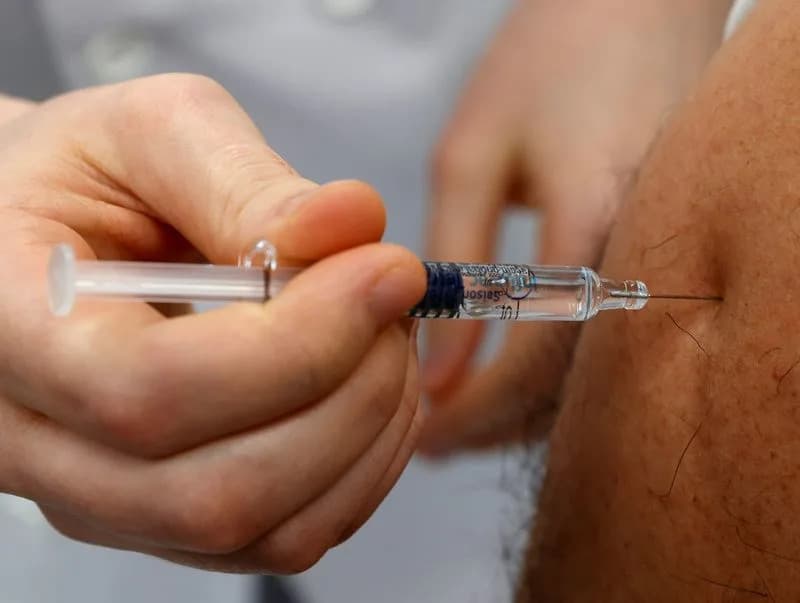
Laboratory studies show AD-NP1, an experimental drug developed to block ENPP1 after heart attacks, also improved kidney repair and function in mice and is entering pilot human trials. Separately, Ebola replicated for up to 120 days in human cerebral organoids, with mutations that may aid long-term persistence. A genomic survey found multidrug-resistant Klebsiella pneumoniae spreading across 42 U.S. states, with nearly 70% of strains resistant to three common oral antibiotics and CTX-M-15 implicated.
Heart Drug AD-NP1 May Repair Kidneys — New Insights on Ebola Persistence and a Spreading Superbug
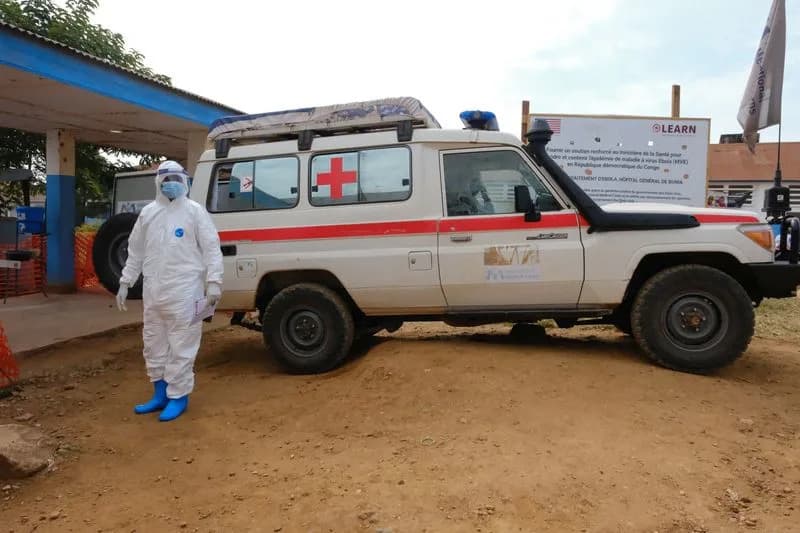
FILE PHOTO: A doctor wearing personal protective equipment (PPE) stands near an ambulance at the Ebola Virus Disease Treatment Center at the Bunia General Reference Hospital, one month after cases were confirmed in Bunia, eastern Democratic Republic of Congo, June 15, 2026. REUTERS/Gradel Muyisa Mumbere/File Photo
Laboratory studies suggest AD-NP1, an experimental therapy developed to limit damage after heart attacks, may also accelerate repair in injured kidneys. Separate research illuminates how Ebola can persist in the brain for months and finds a multidrug-resistant Klebsiella pneumoniae strain expanding beyond hospitals into U.S. communities.
Experimental Heart Drug Shows Promise For Kidney Repair
Researchers at UCLA report that AD-NP1, a first-in-class molecule moving into pilot human trials, blocks the protein ENPP1, which interferes with tissue healing after injury. Biopsies from people with chronic kidney disease showed elevated ENPP1 compared with healthy tissue.
In mouse experiments, animals genetically engineered to lack ENPP1 recovered from induced kidney injury with less scarring and better function than normal mice, the team reported in Cell Stem Cell. In a follow-up experiment, ordinary mice given AD-NP1 after kidney injury demonstrated improved kidney function and signs of healing within one week of dosing.
"The ENPP1 protein disrupts key cellular pathways that supply energy to cells," said study leader Arjun Deb of UCLA. "We found the same mechanisms we observed in the heart were also applicable in the kidney."
Development of AD-NP1 has been supported by the U.S. National Institutes of Health, the Department of Defense and the California Institute for Regenerative Medicine.
How Ebola Can Lurk In The Brain For Months
Laboratory work using human cerebral organoids — spherical, brain-like structures grown from stem cells — shows Ebola virus can infect multiple central nervous system cell types and replicate for as long as 120 days, according to a study in Nature Microbiology. The virus spread both by direct cell-to-cell transmission and by budding from infected cells.
Researchers noted that immune-privileged sites such as the testes and central nervous system mount a muted immune response to protect delicate tissue, which can allow viruses to evade complete clearance. Genome sequencing of virus recovered from infected organoids revealed mutations that may help Ebola persist undetected; some of these mutations have not previously been reported in survivors.
Study leader Lina Widerspick of the Bundeswehr Institute of Microbiology said the organoid model can help scientists investigate the long-term effects of persistence, including severe inflammation and meningoencephalitis seen in some survivors, and urged further study of lesser-known filoviruses such as Bundibugyo virus.
Drug-Resistant Klebsiella Pneumoniae Spreading Outside Hospitals
A genomic survey of multidrug-resistant Klebsiella pneumoniae from urine and blood samples collected at outpatient Quest Diagnostics sites in 42 U.S. states identified 267 distinct strains, nearly 70% of which were resistant to the three most commonly prescribed oral antibiotics, the researchers report in Nature Communications. Geographic patterns showed regional, statewide and multi-state spread, suggesting underrecognized community reservoirs.
Investigators highlighted the CTX-M-15 gene as a major driver of resistance; it confers antibiotic resistance and gives bacteria increased tolerance to stress and metal exposure, traits that may aid survival and dissemination. The study provides a genetic map that could inform development of vaccines or new therapies for vulnerable patients.
According to the World Health Organization, K. pneumoniae causes roughly 600,000 deaths globally each year and remains a leading cause of hospital-acquired pneumonia in the United States.
(Reporting by Nancy Lapid; Editing by Bill Berkrot)
Help us improve.