Several Republican officials have proposed alternative June observances — including “Nuclear Family Month,” “Strong Families Month,” and “Fidelity Month” — that critics say promote heteronormative definitions of family and sideline Pride. These proclamations, plus inflammatory social media posts like a deleted remark from Rep. Andy Ogles, have sparked accusations of exclusion and erasure. Pride commemorates the 1969 Stonewall Riots, and advocates warn the movement faces real pressures, from funding shortfalls to event cancellations such as Phoenix Pride’s recent Chapter 11 plans.
‘Nuclear Family Month’ Won’t Erase Pride — Why June Proclamations Matter
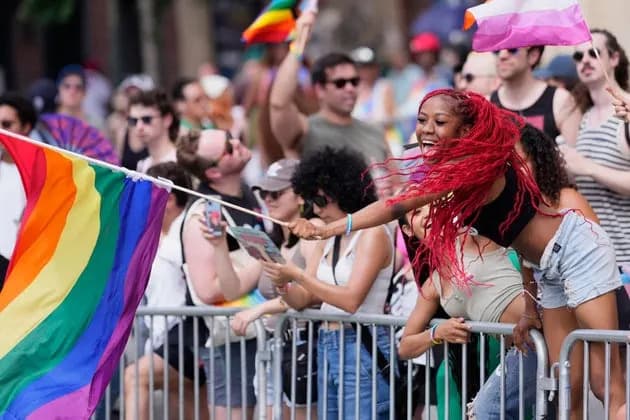
Spectators cheer on parade-goers during the NYC Pride March, Sunday, June 29, 2025, in New York.Charles Sykes via Associated Press
Pride Month is in full swing, and several conservative officials have moved to counter it by promoting alternative June observances that emphasize traditional family structures. While many people outside the LGBTQ+ community simply notice rainbow displays or local events, some governors and lawmakers have pushed proclamations critics say are aimed at shifting attention away from Pride.
What officials are proposing
Governors in Indiana and Tennessee have proposed declaring June “Nuclear Family Month,” described by NBC as celebrating families defined as “one husband, one wife, and any biological, adopted or fostered children.” In Alabama, Governor Kay Ivey has backed calling June “Strong Families Month,” and Utah and Arkansas have promoted “Fidelity Month.”
Controversial comments
GOP Rep. Andy Ogles posted (and later deleted) on X: “homosexuality has no place in America… Happy Nuclear Family Month.”
Critics say such rhetoric and proclamations implicitly exclude LGBTQ+ relatives and transgender children by elevating a narrow definition of family over more inclusive ones.
Historical context and stakes
Pride is not a random celebration: it commemorates the Stonewall Riots of 1969, a pivotal moment that launched the modern gay and transgender rights movement. Legal protections are relatively recent — same-sex sexual activity was decriminalized nationwide by the U.S. Supreme Court’s 2003 ruling in Lawrence v. Texas — and many advocates say the community still faces significant political and cultural backlash.
Practical impacts
Organizers also warn that Pride events are under strain: funding has fallen or been redirected in some places, and some celebrations have been canceled. For example, earlier this month Phoenix Pride announced plans to file for Chapter 11 bankruptcy, highlighting the financial pressures facing community events.
Why critics call these proclamations harmful
Opponents characterize the so-called wholesome proclamations as ahistorical and exclusionary. By elevating heteronormative ideals during June, lawmakers risk delegitimizing LGBTQ+ identities and erasing the movement’s history without directly naming it — an effect many describe as harmful and politically motivated.
The response
Despite these pushes, organizers and supporters say they will continue to hold events, preserve the historical memory of Stonewall, and assert the ongoing importance of Pride as both celebration and political action. Those behind “Nuclear Family Month” may attempt to reclaim part of June for a different message, but for advocates the month remains a vital affirmation of queer existence and rights.
Help us improve.