Researchers compiled maximum adult lifespans for ten butterflies in the Heliconiini tribe and found an extraordinary range, from 14 to 348 days. Pollen-eating Heliconius species tended to live much longer (average max ~177 days) than non-pollen relatives (~58 days). Experiments showed diet helps but does not fully explain the advantage, indicating heritable adaptations in Heliconius. The study, published in Nature Communications, highlights how ecological specialization and genetics can drive extreme lifespan differences.
Pollen-Eating Butterflies Live Far Longer — Clues to Extreme Lifespans
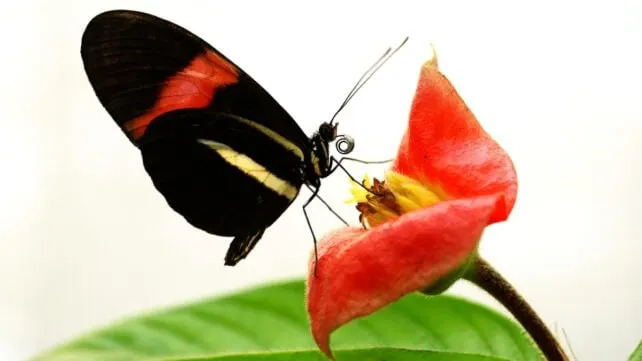
A Heliconius erato butterfly snacking on some of its favorite fare, pollen loaded with immunity-boosting healthy fats and nutritious amino acids. (Sebastián Mena)
Evolution produces staggering differences in lifespan across the tree of life, from animals that live only minutes to creatures that may outlive recorded human history. Now, a new study finds extraordinary variation in lifespan among closely related butterflies — and points to pollen-eating as one important piece of the puzzle.
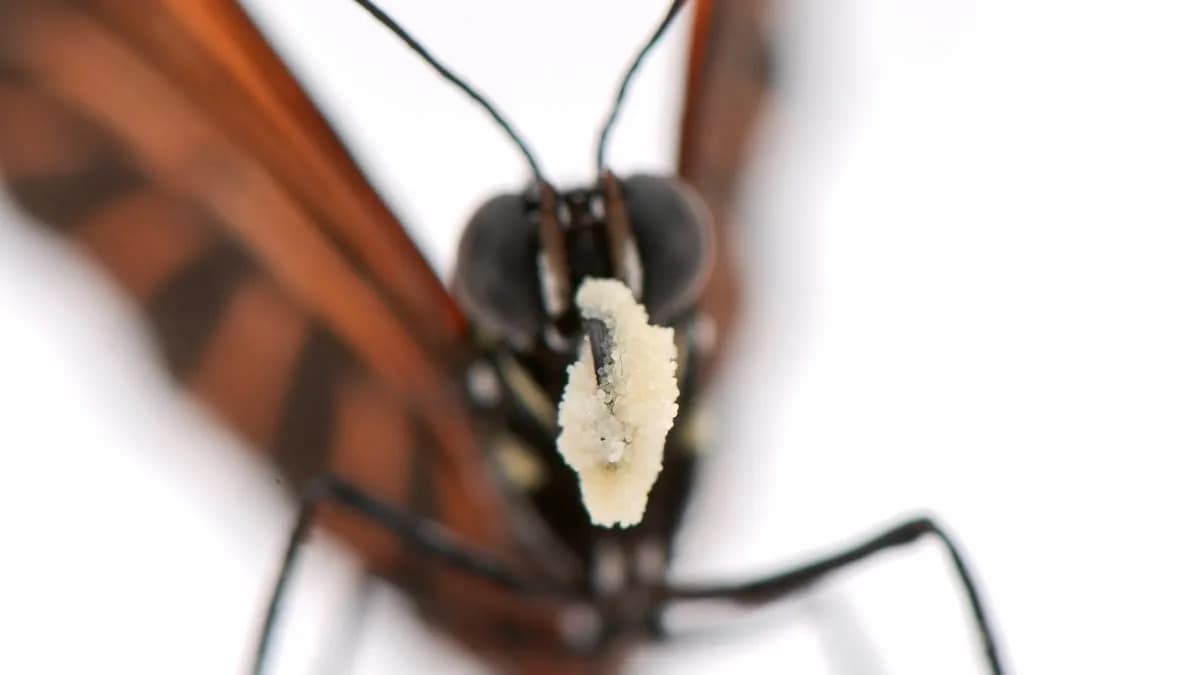
AHeliconius melpomene,or postman butterfly, with a partly digested load of pollen grains. Butterflies of theHeliconiusgenus are the only ones known to consume pollen. (Louise Bestea)
Researchers compiled maximum reported adult lifespans for ten species in the Heliconiini tribe using field observations, public butterfly houses and mark–release–recapture studies. Lifespans ranged from just 14 days for Dione juno to 348 days for Heliconius hewitsoni — the largest span recorded among closely related non-fish animals, the authors report.

Subscribe to ScienceAlert's free fact-checked newsletter
Diet, Genetics, and Longevity
One striking pattern emerged: members of the genus Heliconius, the only adults known to consume pollen, dominated the long-lived end of the spectrum. On average, pollen-eating Heliconius had maximum lifespans near 177 days, compared with roughly 58 days for non‑pollen-consuming relatives. In addition to longer median and maximum lifespans, Heliconius showed lower baseline mortality, slower rates of aging and, as the authors playfully note, stronger grip strength in a Lepidopteran analogue of a deadlift.
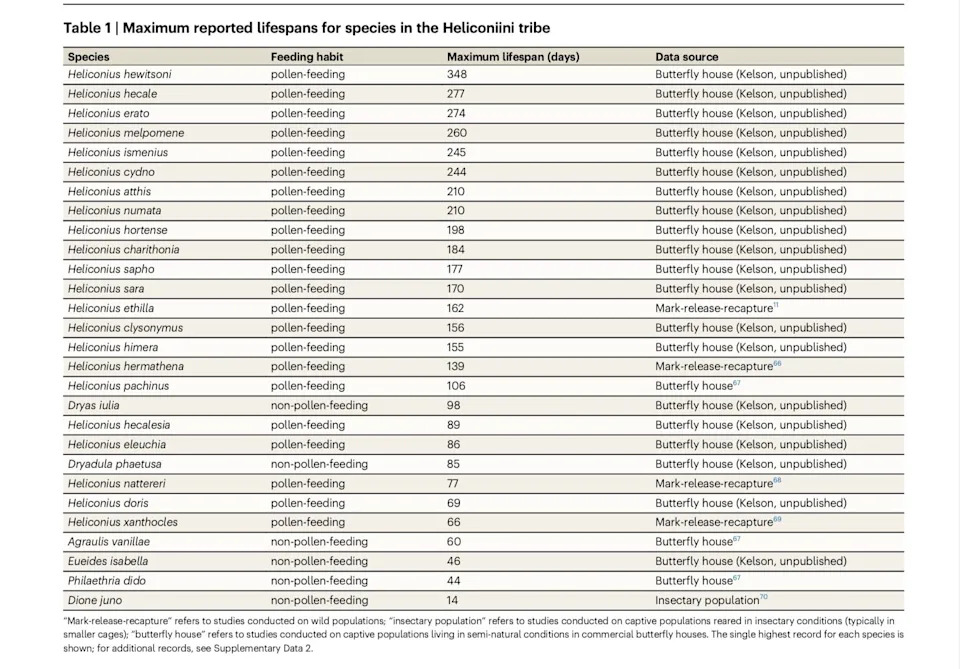
Maximum reported lifespans for various butterfly species in the Heliconiini tribe. (Foley et al.,Nature Communications, 2026)
Experiment Points To Heritable Adaptations
The team performed a pollen-manipulation experiment: even when deprived of pollen, Heliconius hecale outlived a non-Heliconius species, Dryas iulia. That result suggests that heritable physiological adaptations — not diet alone — contribute to the lifespan advantage. Because pollen provides fats, amino acids and other nutrients that support immune function and energy stores, it likely helps longevity in species that can exploit it, but simply feeding pollen to non-adapted species did not confer the same benefits.
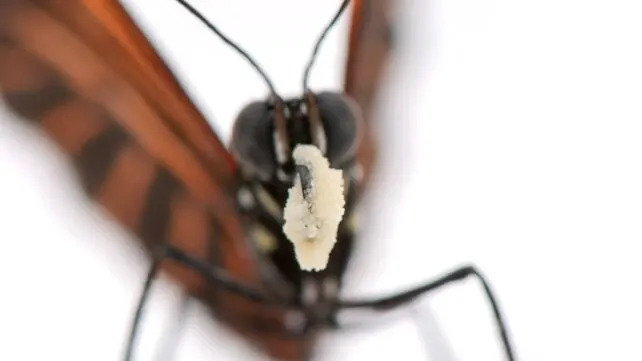
AHeliconius erato, or red postman, with a proboscis full of nutritious, fat-and-amino-acid-laden pollen. (Sebastián Mena)
The published record also includes a reported 380-day maximum for Myscelia cyaniris, which, if confirmed, would exceed the 348-day record for H. hewitsoni. The authors caution that maximum lifespan is sensitive to sample size and the presence of unusually long‑lived individuals, so further study is needed to disentangle environmental and genetic drivers and to quantify typical adult lifespans more robustly.
Why It Matters
These findings reveal how a combination of diet and evolved traits can produce dramatic lifespan differences even among close relatives. While direct applications to human aging are speculative, understanding how specific ecological strategies and genetic adaptations affect aging in other animals can guide broader research into the biology of longevity. The study appears in Nature Communications.
Note: Science is iterative—additional field data and experiments will help confirm reported maxima and clarify the mechanisms behind these striking lifespan differences.
Help us improve.