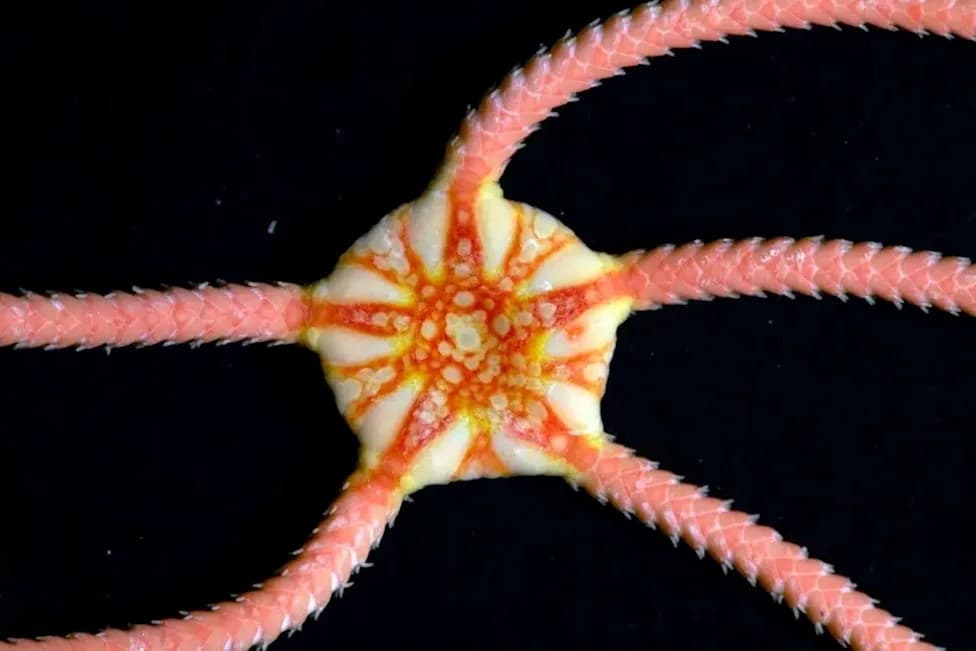
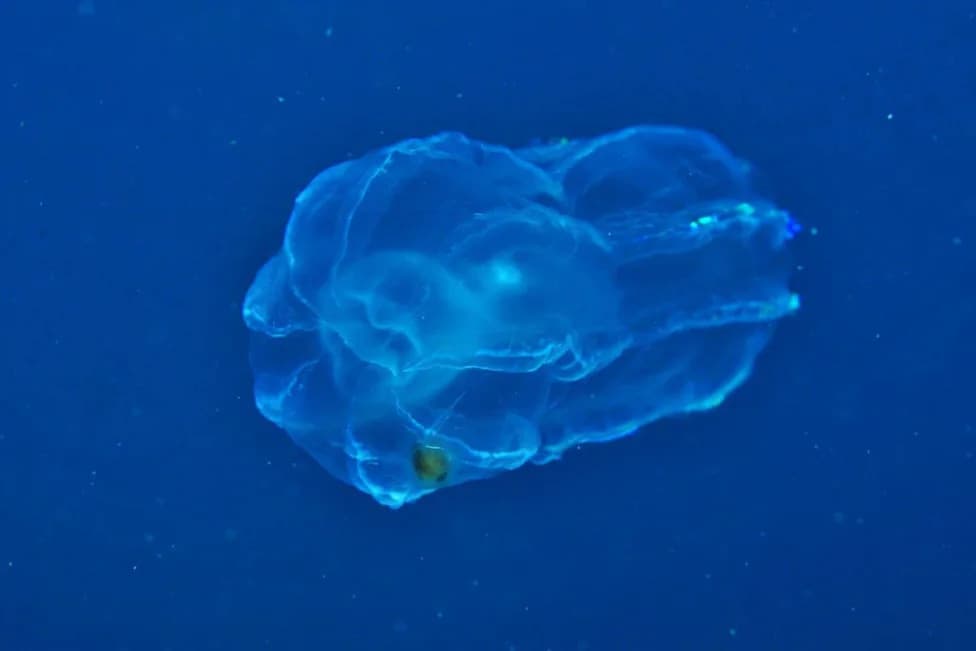
Scientists aboard a South Atlantic expedition documented 31 previously unknown marine species off Brazil, including jellyfish, comb jellies, worm-like animals and giant single-celled organisms. Many discoveries came from the ocean's vast midwater zone — the largest but least-explored habitable ecosystem. Using non-invasive 3D imaging paired with onboard genetic analysis, researchers identified species quickly without harming fragile specimens. Expedition leaders emphasized the findings as a reminder of how much of the ocean remains mysterious and worthy of study.
Scientists Identify 31 Strange New Deep‑Sea Species Off Brazil — Many Look Alien
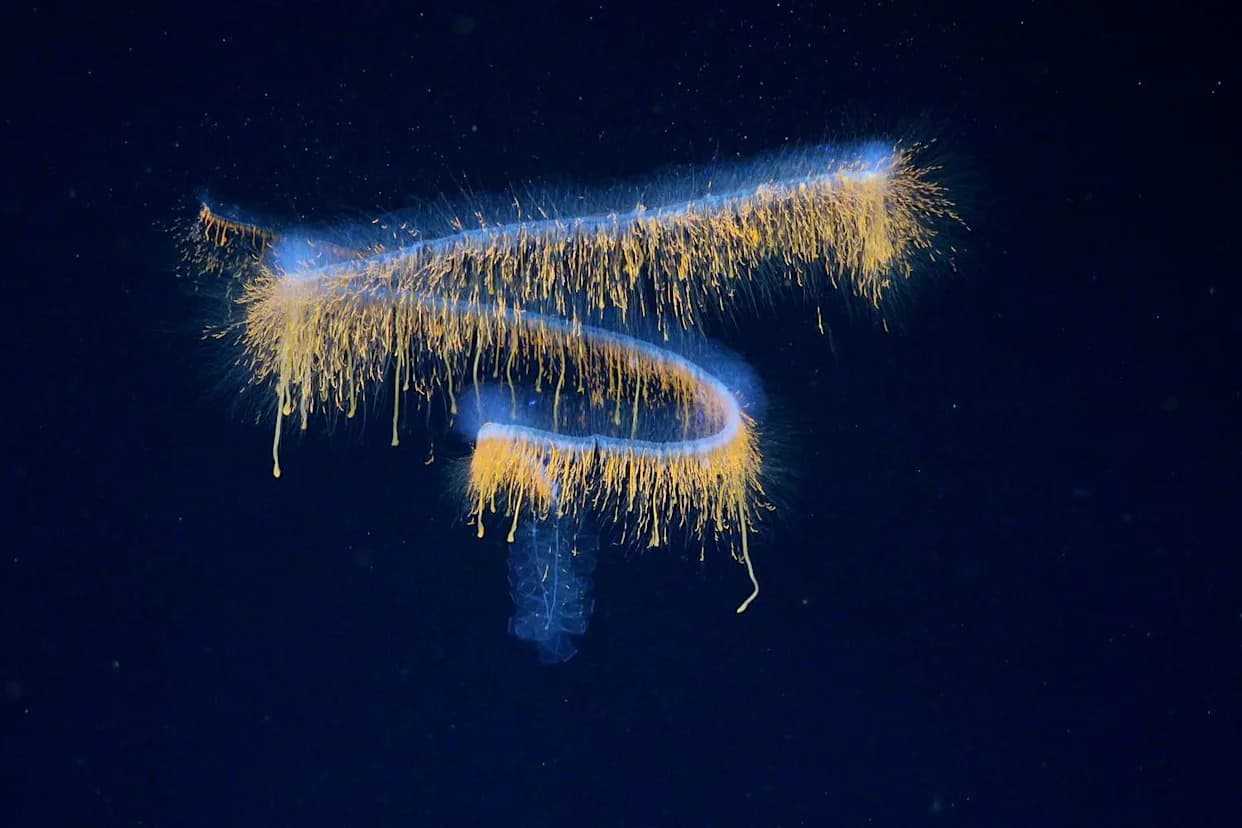
Siphonophore found on the coast of BrazilCredit: ROV SuBastian / Schmidt Ocean Institute
Scientists exploring deep waters off the coast of Brazil have identified 31 previously unknown marine species, shedding new light on one of the ocean's least-understood habitats.
Strange Shapes From the Midwater
The discoveries, documented during a South Atlantic expedition led with support from the Schmidt Ocean Institute, include a startling variety of animals: jellyfish and comb jellies, unusual worm-like creatures, giant single-celled organisms that are visible without a microscope, and fragile glass squid. Researchers also recorded a pelagic octopus feeding on a bright red jellyfish.
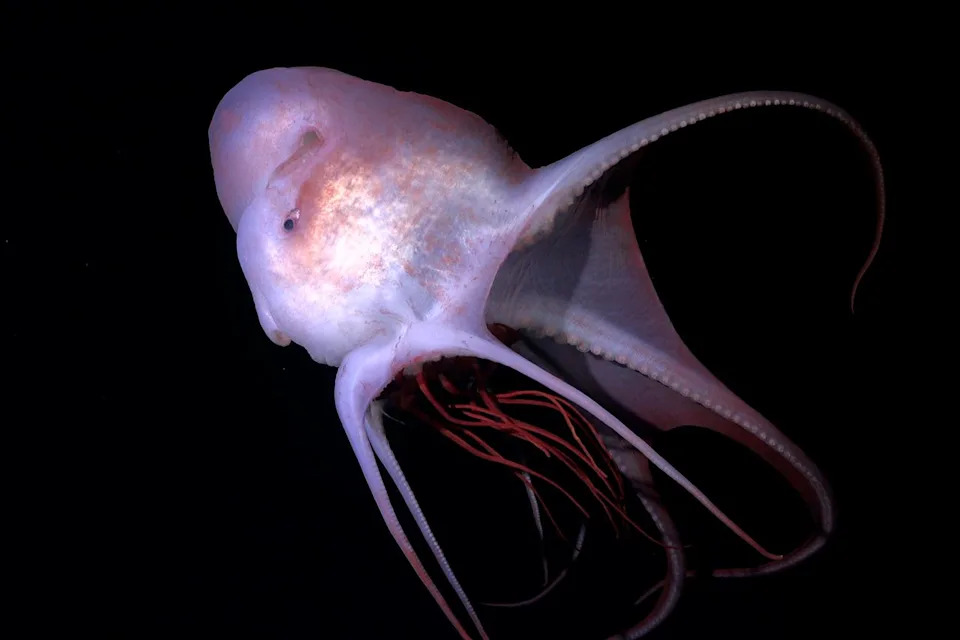
Haliphron Atlanticus found on the coast of BrazilCredit: ROV SuBastian / Schmidt Ocean Institute
Why These Animals Look So Unusual
Many of the newly identified species inhabit the ocean's "midwater" zone — the vast region between the sunlit surface and the seafloor. Though it is the largest habitable ecosystem on Earth, the midwater remains one of the least explored. In response to the dim, high-pressure environment, many animals have evolved transparent bodies, delicate tentacles and other unusual morphologies that can appear ghostly or otherworldly.
Non‑Invasive Technology Accelerates Discovery
Researchers used advanced, non-invasive imaging systems capable of producing detailed 3D images of fragile animals without collecting or damaging them. When combined with onboard genetic analysis, these tools allowed teams to recognize and begin identifying new species in days rather than the years required by traditional collection-and-analysis workflows.
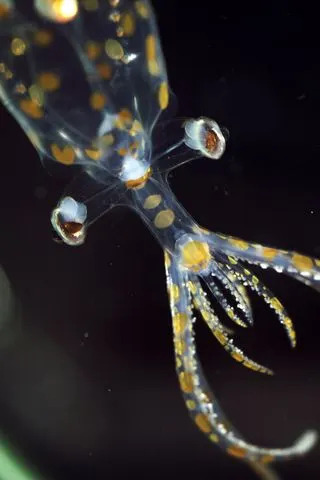
Juvenile Glass Squid found on the coast of BrazilCredit: Emily Clark / MBARI via Schmidt Ocean Institute
"The largest habitat on Earth, the midwater, is filled with incredible animals we are only just starting to understand," said expedition chief scientist Dr. Karen Osborn of the Smithsonian National Museum of Natural History in a statement released by the Schmidt Ocean Institute.
Dr. Kakani Katija, principal engineer of the Bioinspiration Lab at the Monterey Bay Aquarium Research Institute (MBARI), added: "It's an incredible honor to not only view and experience this rare and inspiring midwater life, but also to be able to work towards describing and sharing that life broadly through the use of novel, non-invasive technologies."
What This Means For Ocean Science
The findings underscore how much of the ocean remains unseen and how many scientific questions about midwater life are still open. The new species expand our understanding of biodiversity in the South Atlantic and highlight the value of combining imaging and genetic tools to study delicate deep-sea fauna without harming them.
Funding and Collaboration: The work involved collaborative teams and technologies from institutions including the Schmidt Ocean Institute, the Smithsonian National Museum of Natural History and MBARI.
Help us improve.