Chinese universities have cut about 12,000 arts, humanities and language degree programmes as they reorient toward technology and AI-related courses, with Ministry of Education data showing nearly a third of programmes affected. Around 10,200 new undergraduate programmes were introduced between 2021 and 2025 to prioritise technical fields. The shift mirrors global efforts—from India to Spain and the UK—to embed AI skills in education systems.
China Cuts 12,000 Arts Degrees As Universities Pivot Toward an AI-Driven Future
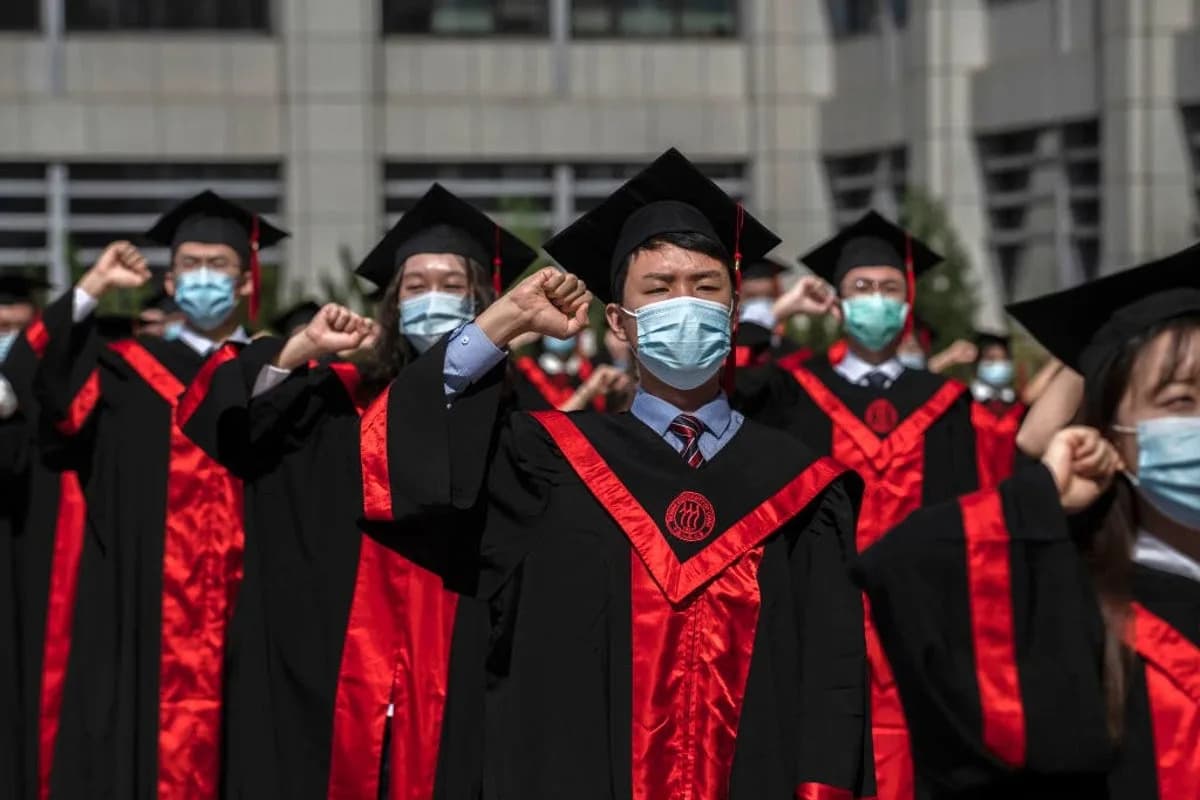
Chinese students from Renmin University of China say an oath during their graduation ceremony at the school's campus on 30 June, 2020 in Beijing (Kevin Frayer/Getty Images)
Chinese universities have eliminated roughly 12,000 degree programmes in the arts, humanities and languages as institutions reorient curricula toward technology and AI-related fields, local reports say.
According to data from the Ministry of Education, nearly a third of university programmes have been affected by the restructuring, a change that impacts millions of students nationwide. Between 2021 and 2025, universities reportedly added about 10,200 new undergraduate programmes aimed at technical and AI-focused disciplines.
Why The Change?
University administrators have increasingly described traditional arts and humanities degrees as 'oversupplied' or 'obsolete', arguing that new specialisms better align with Beijing's economic and technological priorities. Emerging programmes, including ones labelled 'embodied intelligence', are being promoted as more directly relevant to industry demand.
'The rapid development of AI has hit product design hard,' an anonymous recent graduate of the University of Shanghai for Science and Technology told the South China Morning Post. 'Many core tasks, such as modelling and rendering, can now be handled by AI.'
The move is part of a broader global trend to update curricula and embed AI skills across education systems. India has introduced AI modules into its national school syllabus; the United Arab Emirates has launched a National AI Education Initiative; Kazakhstan has rolled out a strategy framing AI adoption as a matter of national survival; and Spain has revised its curriculum to emphasise AI literacy under a 'Digital Spain' plan.
In the UK, Education Secretary Bridget Phillipson said the Department for Education is exploring a new data science and artificial intelligence qualification to sit alongside GCSEs and A-levels. The largest review of the national curriculum in a decade is due to be published next year, with phased implementation beginning in September 2028.
Implications
Critics warn that rapid curricular shifts risk sidelining disciplines that contribute critical thinking, ethics and cultural understanding, while universities and policymakers argue the changes are needed to prepare graduates for an AI-transformed labour market. The restructuring highlights an intensifying debate over how to balance vocational and humanistic education in the age of AI.
Help us improve.