Harvard's annual FAS survey (Sept. 14, 2026) finds 64% of faculty now say AI has had a somewhat or very negative effect on their courses, up from 42% a year earlier. The survey collected 463 responses and reports that nearly nine in ten faculty have seen student work they suspect was generated by AI. Division-level attitudes vary — social sciences are most permissive, humanities least — and many instructors are redesigning assessments (drafts, oral exams, timed in-person tasks) to limit misuse.
Two-Thirds Of Harvard Faculty Say AI Is Harming Courses — Rapid Shift Prompts 'AI‑Proof' Assessments
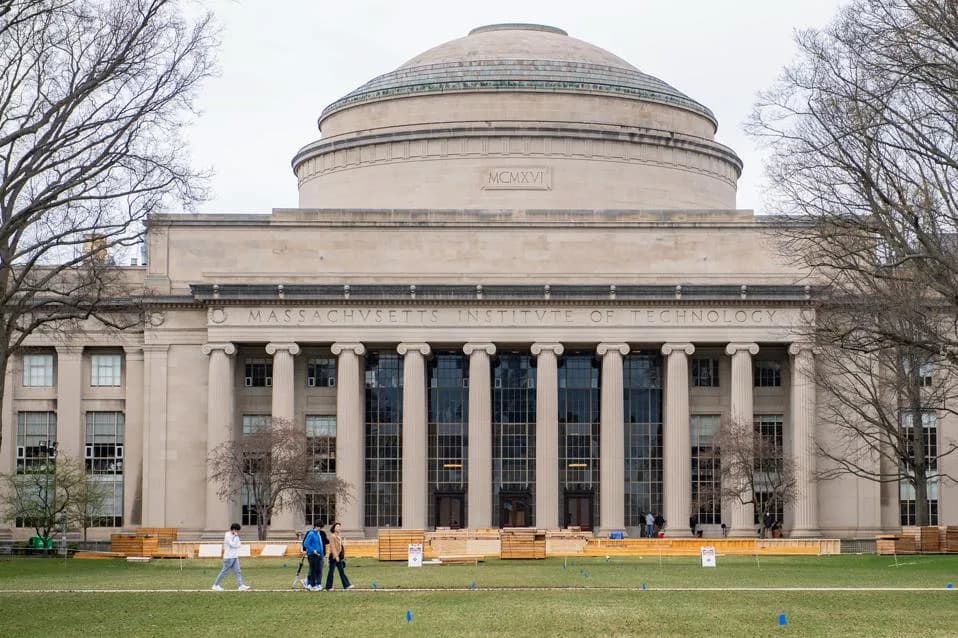
Image: Hugo C. Chiasson
Sixty-four percent of respondents from Harvard's Faculty of Arts and Sciences (FAS) now report that artificial intelligence has had a "somewhat negative" or "very negative" impact on their courses, up from 42% a year earlier, according to The Harvard Crimson's annual FAS faculty survey published Sept. 14, 2026. That 22-point jump is the largest single-year shift the survey has recorded.
Survey Snapshot
The survey gathered 463 responses from more than 1,400 faculty members contacted across FAS's academic divisions and the School of Engineering and Applied Sciences. Nearly nine in ten faculty members reported receiving student work they knew or suspected had been produced using AI.
Policies and Detection
Explicit policies on AI are now nearly universal across FAS: just 3.5% of faculty said they had no explicit policy, down from 10% the prior year. Faculty reporting full bans rose to 25% (from 20%), while fully permissive policies fell to 4% (from 8%).
Detection remains a major challenge. Only 64% of faculty said they felt confident distinguishing AI-produced work from student-created work, and only 12% reported referring an unauthorized-AI case to the Honor Council in the past year.
How Attitudes Vary by Discipline
Responses differ sharply by division. Social science faculty are the most permissive, with 84% allowing at least some AI use in their courses; science and engineering faculty follow at 79%; arts and humanities faculty report the lowest permissiveness at 63%.
A separate Crimson analysis of roughly 600 fall 2026 courses finds more than 50% of STEM classes allowed some AI use, compared with 35% of social science courses and just 27% of humanities courses — suggesting that course-level rules can be stricter than individual faculty attitudes.
Institutional Voices And Classroom Responses
Harvard College Dean David Deming has urged instructors to accept or even encourage AI in writing- and project-heavy classes while also promoting "AI-proof" assessments — for example, more in-person exams and assignments explicitly designed to resist AI shortcuts. President Alan Garber, in a first-day-of-classes address, praised AI as a research tool, placing institutional leadership visibly at odds with shifting faculty sentiment.
What Faculty Are Changing
Rather than waiting for a perfect detection tool, many instructors are redesigning coursework and assessment. Reported changes include requiring drafts and version histories, increasing in-person and oral exams, and shifting to process-focused assignments that are harder for chatbots to complete. These tactics aim to emphasize student process and authorship over product alone.
From Prediction To Reality
In 2023 roughly 47% of Harvard faculty predicted AI would have a negative impact on higher education overall; today, 64% say it already has in their own courses. For students, that shift is showing up as new requirements: expect more oral defenses, mandatory draft submissions, and timed in-person assessments across the FAS experience.
Bottom Line: Faculty opinion toward classroom AI has shifted sharply in a single year, producing more restrictive policies and widespread course redesigns intended to preserve academic integrity and center student-authored work.
Help us improve.