
Germany, France, the UK and Italy have offered a coordinated, strictly defensive mission to help reopen the Strait of Hormuz after the US–Iran agreement, stressing the need for "unconditional and unrestricted freedom of navigation." The leaders said the mission could reassure commercial shipping and perform mine-clearance operations, and they reaffirmed that Iran must never be allowed to acquire a nuclear weapon. They are ready to support rapid implementation of the deal and could consider easing sanctions if Iran takes clear, verifiable steps on its nuclear programme.
Europe Pledges Defensive Mission To Reopen Strait Of Hormuz After US–Iran Deal
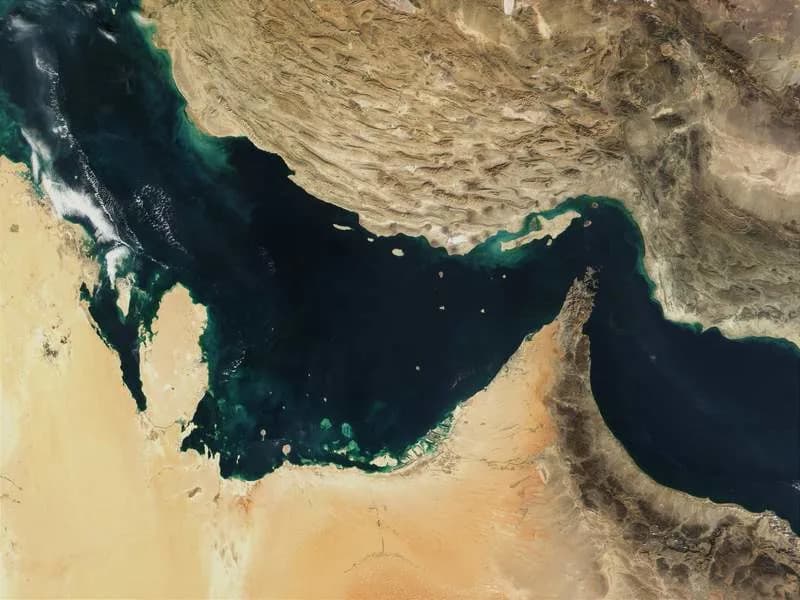
FILE PHOTO - An undated handout satellite picture provided by the National Aeronautics and Space Administration (NASA) the Arabian Gulf (Persian Gulf), the Strait of Hormuz, and the Gulf of Oman. US and Iran are expected to sign a deal to end the war between them and to reopen the Strait of Hormuz (is associated with: «European leaders ready for mission in Strait of Hormuz») -/The Visible Earth/NASA/dpa
Germany, France, the United Kingdom and Italy have pledged coordinated support to help reopen the Strait of Hormuz following the announced agreement between the United States and Iran. In a joint statement, the four leaders said restoring "unconditional and unrestricted freedom of navigation" in the vital waterway is urgent for both regional stability and the global economy.
What the Leaders Announced
The joint statement, signed by German Chancellor Friedrich Merz, French President Emmanuel Macron, British Prime Minister Keir Starmer and Italian Prime Minister Giorgia Meloni, outlined a commitment to "play our part" in achieving a safe reopening. The leaders said this could include a "strictly defensive and independent mission" to reassure commercial shipping and carry out mine-clearance operations, undertaken in accordance with each country's constitutional requirements.
"We are committed to playing our part to achieve this – in accordance with our respective constitutional requirements – including through a strictly defensive and independent mission to reassure commercial shipping and conduct mine clearance operations."
They noted that Germany and other European partners had already signalled their willingness, in principle, to support reopening the strait once hostilities end. The statement also reiterated a long-standing Western position that Iran must never be allowed to acquire a nuclear weapon.
Conditions And Next Steps
The leaders said it is "vital" that the detailed negotiations are concluded and that any agreement be implemented rapidly and comprehensively. They expressed readiness to support both the implementation of the deal and measures to stabilise maritime traffic and regional security.
Finally, the four governments held out the prospect of lifting relevant sanctions at a later stage, provided Iran takes clear, verifiable steps regarding its nuclear programme.
Why it matters: The Strait of Hormuz is one of the world's most important shipping chokepoints for oil and gas. Ensuring freedom of navigation there is considered essential to global energy markets and international trade.
Help us improve.





















