Researchers revisited a moth long treated as a single species and found it is actually eight distinct species across Brazilian habitats. The team combined molecular analyses, careful morphology and field ecology—especially observations of caterpillar host-plant use—to separate visually similar taxa. Female genital anatomy proved particularly diagnostic. Most new species were named after Orixás to challenge colonial naming traditions.
Eight Moth Species Hid Within One For 200 Years — Scientists Reveal a Cryptic Complex in Brazil
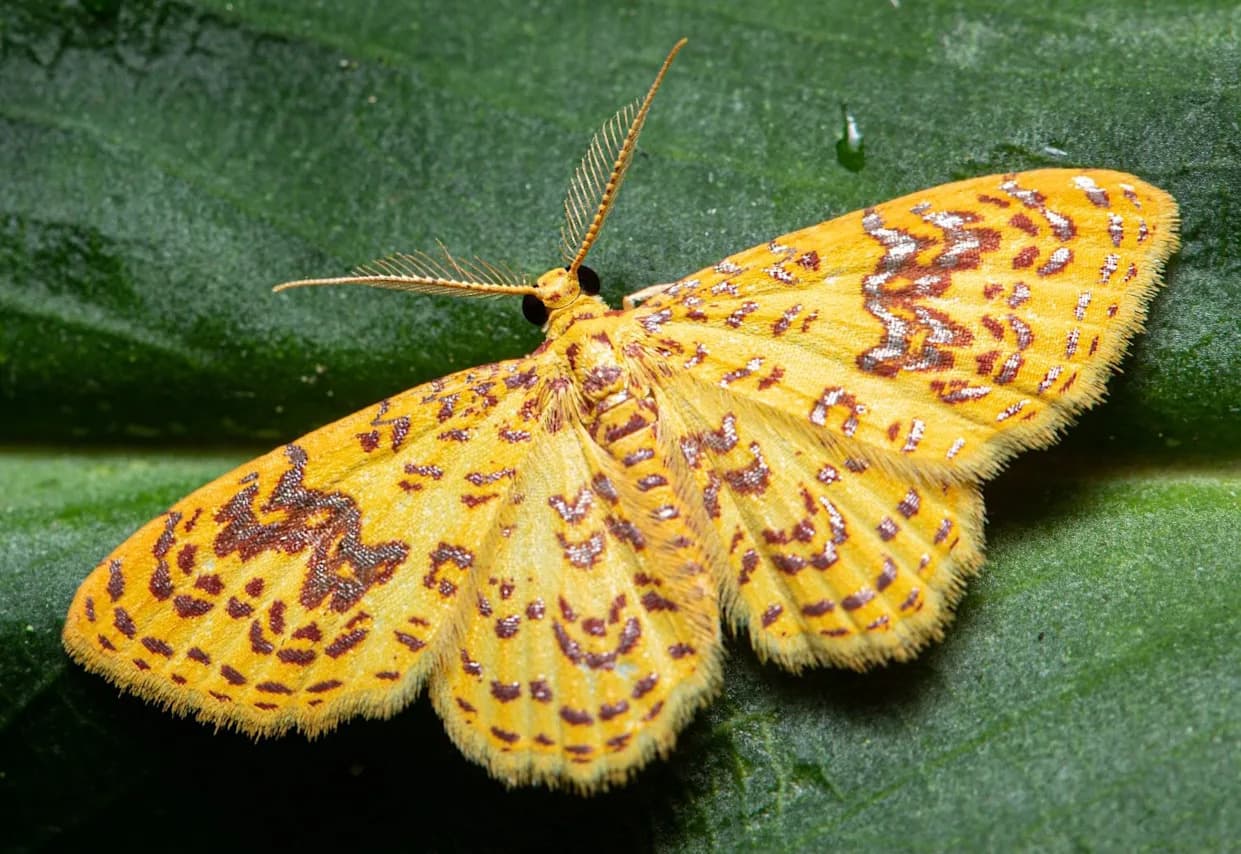
Close up of a beautiful yellow Geometer moth, Eois sp., (Geometridae) from Ecuador. Yellow moth.© Ana Dracaena/Shutterstock.com
Although the concept of “species” underpins much of biology, defining a species is often messier than textbooks imply. A new study shows this clearly: moths long treated as a single species since 1818 are actually a complex of eight distinct species, all native to Brazil.
The moth historically identified as Eois russearia is small and distinctive, with yellow wings banded in red. Superficial similarity, however, masked deeper biological differences that only modern techniques and careful fieldwork could reveal.
From 19th-Century Descriptions to Modern Revision
In the early 1800s entomologist Jacob Hübner established the genus Eois. Working without molecular tools, early naturalists sensibly grouped visually similar moths under broad descriptions. Over time, researchers began to suspect that this apparent uniformity hid substantial cryptic diversity—different species that look almost identical.
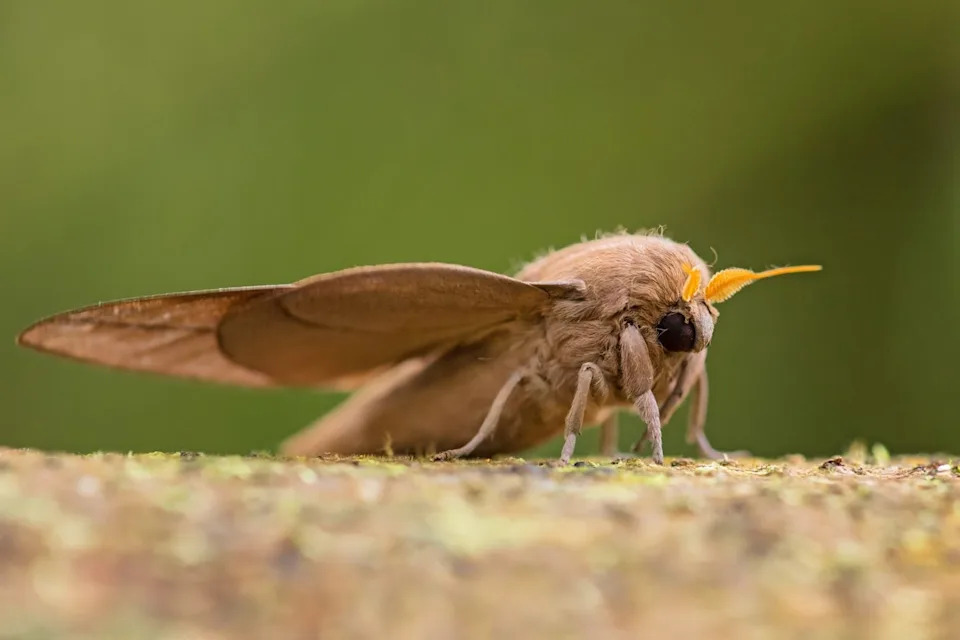
Before the discovery, researchers realized that theEoisgenus of moths was likely underestimated.©David Havel/Shutterstock.com
How the Team Uncovered Eight Species
The new paper, published in Scientific Reports, was led by researchers at the State University of Campinas (UNICAMP) and the University of São Paulo. Building on a 2021 study that suggested Eois richness could be more than 150% higher than previously thought, the team combined multiple approaches: integrated molecular analyses, careful morphological study, and detailed ecological and field observations.
Most specimens are superficially nearly identical, so the researchers relied on several converging lines of evidence. They located a pepper plant used by some moth larvae and observed different caterpillar behaviors and host-plant associations. Crucially, they also examined reproductive anatomy—and focused on female genital structures, which are often overlooked in lepidopteran taxonomy.
“When analyzing the female sexual organ of moths, the difference is very big,” said Simeão de Souza Moraes, a UNICAMP researcher and study coordinator, in a statement reported by Eureka Alert. He added that combining female genital morphology with caterpillar host-plant records could allow reliable species discrimination even without molecular tools.
Geography, Ecology, and Speciation
The eight species form a surprising geographic patchwork: three species were found in a forest reserve, two in a transitional zone, and two in the Pantanal—the world’s largest wetland. The authors argue that highly specialized larva–host-plant interactions create distinct selective pressures over short distances, enabling speciation even in lowland regions previously thought to be less diverse for this group.
Instead of submitting to colonial traditions, the researchers named many of the newly discovered moth species in honor of Afro-Brazilian culture.©CCinar/Shutterstock.com
An Intentional, Anti-Colonial Naming Choice
Rejecting long-standing Eurocentric naming conventions, the researchers named seven of the newly described species after Orixás—deities honored in Afro-Brazilian traditions such as Candomblé. Another species was named in honor of a co-author who died before publication. As Moraes explained, this deliberately anti-colonial approach counters the common practice of borrowing names from Greek, Roman, or other Global North cultural references when naming Neotropical organisms.
Why This Matters
Beyond documenting new species, this study highlights why integrating molecular tools, detailed morphology (including female anatomy), and ecological context is vital for revealing biodiversity. The findings have direct implications for conservation, since cryptic species may have unique ecological roles and habitat needs that are obscured when they are lumped together.
Study citation: Researchers from UNICAMP and the University of São Paulo, published in Scientific Reports. Additional coverage appeared via Science Daily and Eureka Alert.
Help us improve.